 Fairhaven Siding
 Building Decks for Sunnyland's Particular Climate
Sunnyland sits close enough to Fairhaven and Bellingham Bay that homes here deal with a specific mix of conditions: salt-tinged marine air, long stretches of driving rain off the Sound, and a moss season that can run from October well into spring. A deck built without those three factors in mind will look fine the first summer and start showing problems by the second winter — soft spots at the ledger board, corroding fasteners, and a green film that never fully goes away no matter how much you scrub it. A deck built for Sunnyland specifically holds up because every material and detail was chosen with this exact climate in mind, not a generic Pacific Northwest average.
This page covers what a correctly built custom deck looks like for a Sunnyland property — the decisions that matter, the ones that don't, and how our process works from first look to final walkthrough.
What Whatcom County Weather Actually Does to a Deck
It helps to be specific about the damage mechanisms, because they drive every material and construction choice that follows.
Salt Air
Proximity to the bay means airborne salt settles on exposed hardware and finishes even on homes that aren't waterfront. Salt accelerates corrosion in fasteners, brackets, and any metal railing components. Standard hardware-store screws and brackets rated for general exterior use often aren't rated for a marine or near-marine environment, and that's usually where premature rust stains and loosening connections start.
Driving Rain
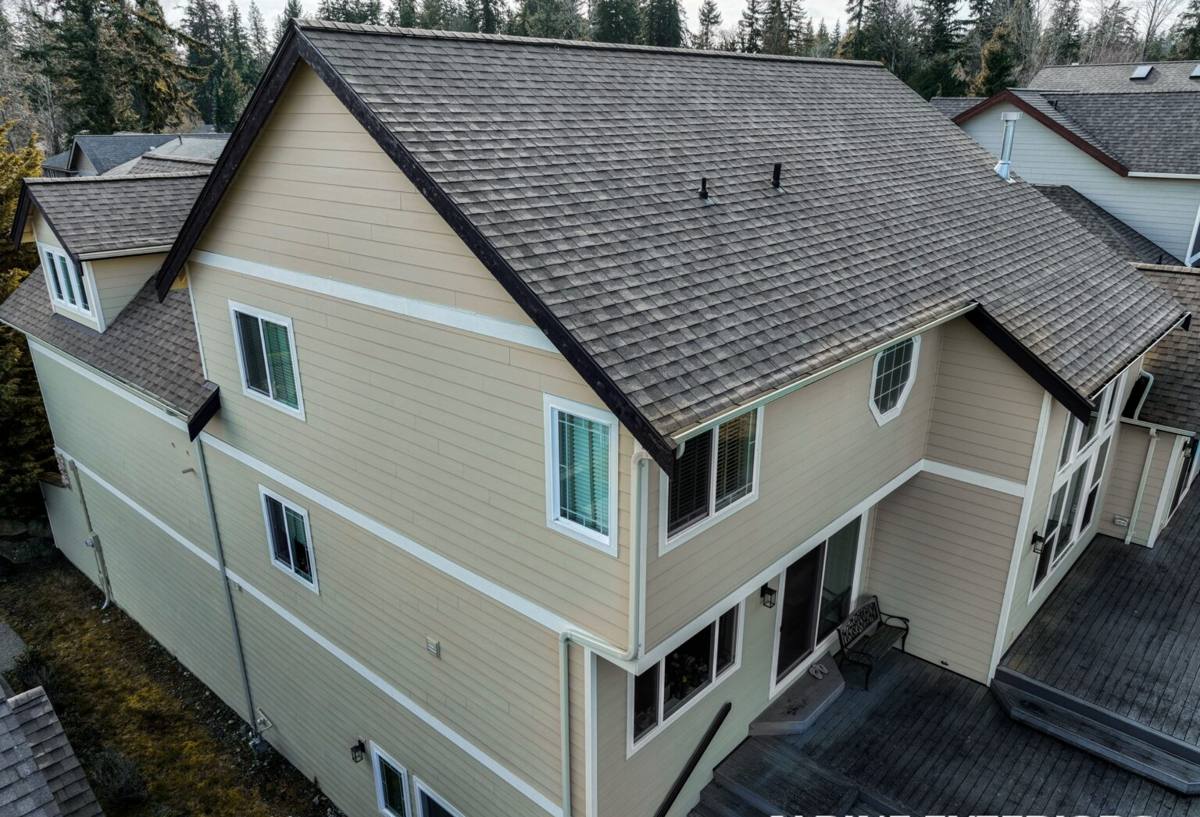
Fairhaven-area storms don't just fall straight down — wind-driven rain gets pushed sideways into ledger connections, under railing posts, and into any gap where flashing was skipped or done poorly. Water intrusion at the ledger board (where the deck attaches to the house) is the single most common structural failure point on decks in this region, and it's almost always preventable with proper flashing.
Extended Moss Season
Shaded, north-facing, or tree-covered lots in Sunnyland can stay damp for months at a time. Moss and algae need that sustained moisture to establish, and once they take hold on a deck surface they hold water against the boards, which speeds up rot in wood and can stain composite surfaces. Deck orientation, surface drainage, and material choice all affect how much moss pressure a deck will face over its life.
Choosing Decking Material for a Sunnyland Property
There's no single "best" decking material — the right choice depends on how much sun and shade the site gets, how the homeowner wants to spend their maintenance time, and budget. Here's how the common options actually compare under our local conditions:
| Material | Moisture/Moss Behavior | Maintenance | Typical Lifespan Here |
|---|---|---|---|
| Pressure-treated fir/hem-fir | Absorbs moisture, needs sealing to resist moss and rot | Annual cleaning, re-sealing every 2-3 years | 15-20 years with upkeep |
| Cedar | Naturally rot-resistant, still needs finish to prevent graying and moss in shaded spots | Cleaning plus finish renewal every 2-4 years | 20-25 years with upkeep |
| Composite decking | Doesn't absorb water like wood, but surface can still hold algae film if not cleaned | Periodic washing, no sealing or staining | 25-30+ years, backed by manufacturer warranty |
| PVC decking | Fully water-resistant, best resistance to moss staining | Lowest maintenance of the group | 25-30+ years, backed by manufacturer warranty |
For a shaded or damp Sunnyland lot, we lean homeowners toward composite or PVC unless they specifically want the look and feel of real wood — in that case cedar with a proper finish schedule is the more honest recommendation than pressure-treated lumber left to gray out. This isn't a knock on wood; it's a maintenance-burden conversation we have honestly, because a homeowner who knows the upkeep going in is a lot happier three years later than one who assumed a deck was "install and forget."
Fasteners and Hardware Matter as Much as the Boards
A deck is only as good as what's holding it together, and this is where salt air actually does the most damage. We spec stainless steel or hot-dip galvanized fasteners and structural hardware rated for coastal/wet-climate exposure — not the standard-grade coated screws that are fine two counties inland but start showing rust bleed within a couple of seasons here. The same goes for railing brackets, post bases, and any joist hangers: exposure-rated hardware costs a bit more up front and is the difference between a deck that looks the same at year ten and one that's showing rust streaks by year three.
Framing and Structure — The Part That Determines Everything Else
The visible decking gets all the attention, but the framing underneath is what actually determines whether a deck lasts. A correct build starts with:
- Ledger board flashing that properly sheds water away from the house band joist — this is the single most common failure point we see on older decks in this area
- Footings sized and set to local frost depth and soil conditions, not just poured to a guess
- Joist spacing appropriate to the decking material chosen (composite and PVC often need tighter spacing than solid wood)
- Joist tape or another moisture barrier on top of framing lumber to slow rot at the fastener points
- Proper structural connections at posts and beams, not just toe-nailed or under-hardware framing
None of this is visible once the decking goes down, which is exactly why it's worth asking a contractor to walk you through it before the boards go on, not after.
Drainage and Airflow: The Anti-Moss Strategy
Moss and rot both need standing moisture to get established, so the real fix isn't a stronger cleaner — it's designing the deck so water doesn't sit in the first place. A few things we build in as standard practice:
- Slight slope away from the house on the decking surface so water sheds instead of pooling
- Gapping between boards sized correctly for the material, so water and debris can pass through instead of collecting
- Clearance underneath the deck for airflow, so the underside can dry out between rain events instead of staying damp for weeks
- Keeping planters, rugs, and furniture footprints in mind during layout, since those are common spots where moss gets a foothold first
On heavily shaded Sunnyland lots, we'll sometimes also talk through whether a bit of selective tree trimming (by others, or coordinated with an arborist) would meaningfully cut down on moss pressure — it's often a cheaper long-term fix than fighting moisture with maintenance alone.
Our Process, Start to Finish
Every custom deck follows the same basic sequence, though the details flex based on the site:
- On-site assessment. We look at sun/shade exposure, existing drainage patterns, house structure at the ledger location, and how the space will actually be used before recommending anything.
- Design and material selection. We walk through the material comparison above in the context of your specific lot and budget, not a generic pitch.
- Permitting. Deck permits are typically required for structures above a certain height or attached to the house — we handle the permit application and inspections so you don't have to chase it down.
- Framing and structural work. Footings, ledger flashing, and framing go in first, with an inspection checkpoint before decking is installed.
- Decking, railing, and finish work. Surface material, railings, stairs, and any built-in features (benches, planters) go in last.
- Final walkthrough. We go over the finished deck together, including a plain-language rundown of what maintenance (if any) the material you chose actually needs.
Permitting in Fairhaven and Whatcom County
Deck projects in this area generally need a building permit once the structure exceeds a certain height above grade or attaches to the house, and inspections typically happen at the framing stage and again at completion. Requirements can shift depending on the specific jurisdiction and lot, so rather than guess, we confirm what applies to your address and handle the paperwork and inspection scheduling as part of the job — it's one less thing for the homeowner to track down.
A Realistic Maintenance Checklist for Sunnyland Decks
Whatever material you choose, a small amount of seasonal upkeep goes a long way toward avoiding the moss and moisture problems common here:
- Sweep debris (leaves, needles, seed pods) off the surface regularly, especially in fall — trapped organic matter is where moss gets started
- Rinse or wash the deck surface once or twice a year to clear early algae film before it establishes
- Check railing posts and stair connections annually for any looseness, which can signal a hardware or moisture issue underneath
- Keep gutters and downspouts near the deck clear so roof runoff isn't dumping extra water onto or near the structure
- For wood decks, re-seal or re-stain on the schedule appropriate to the finish product — don't wait until it's visibly gray and worn
- For composite or PVC, an occasional wash is typically all that's needed — resist the urge to seal or stain these surfaces, which isn't necessary and can void warranties
Why Working With a Crew That Already Builds in Sunnyland Matters
A lot of deck problems in this area trace back to a contractor applying general Pacific Northwest practices without accounting for how much harder salt air and sustained dampness hit a specific neighborhood. A crew that already works Sunnyland and greater Fairhaven knows which lots run damp and shaded, which fastener grades actually hold up near the bay, and how local permitting typically goes — none of which shows up on a generic estimate. That familiarity shows up less in the sales pitch and more in the parts of the deck you never see again once it's built: the ledger flashing, the hardware grade, the footing depth.
If you're planning a new deck or replacing one that's showing its age, we're happy to take a look and put together a straightforward, no-pressure estimate — just fill out the form below.