 Fairhaven Siding
 Building Decks for South Hill's Coastal Climate
South Hill sits close enough to the water and to the weather patterns that move through Fairhaven and the rest of Whatcom County that a deck here is under a different kind of stress than a deck built inland. Salt-laden air moves through year-round, driving rain comes in sideways off the Sound during fall and winter storms, and the shaded, damp stretches of the growing season keep moss and algae established on any horizontal surface that doesn't get real sun or airflow. None of that is unusual for this part of Washington, but it does mean a deck built with generic, catalog-standard methods and hardware will show its age faster here than the same deck would somewhere drier and further from the coast.
A deck that's actually built for South Hill isn't dramatically different in appearance from one built anywhere else. The difference is underneath: the fasteners, the flashing details, the gaps between boards, and the way the frame sheds water instead of trapping it. Those choices are invisible on the day the deck is finished and very visible five or ten years later, which is exactly why they're worth getting right the first time.
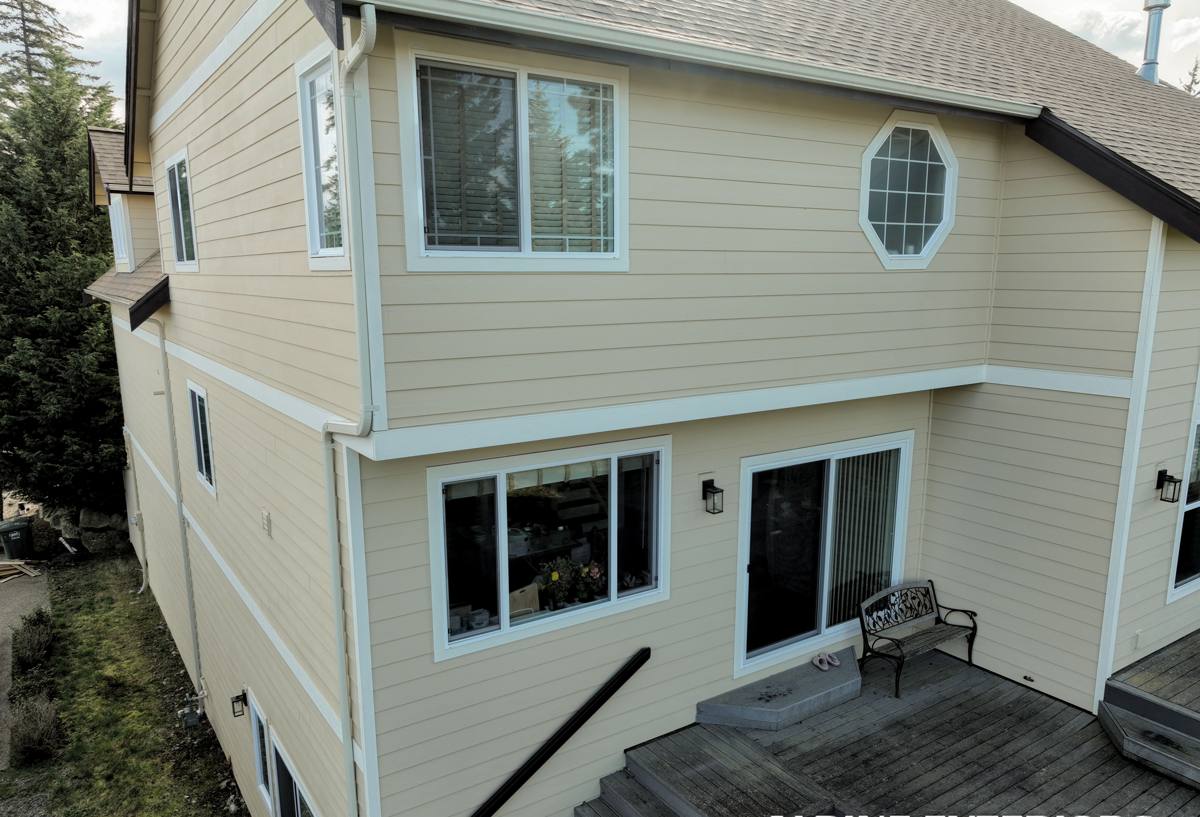
What South Hill Properties Typically Demand
Lots in and around South Hill often have some combination of slope, mature tree cover, and view orientation toward the water, all of which affect how a deck should be designed before a single board goes down.
Slope and Elevation
Sloped lots are common in this part of Bellingham and Fairhaven, and a deck on a slope usually means taller posts, more engineered footings, and more attention to how water moves underneath and around the structure rather than pooling against the house foundation. We look at drainage on sloped sites as part of the deck design, not as an afterthought.
Tree Cover and Shade
Shaded decks under fir, cedar, or maple canopy dry out slower after rain, which is the single biggest driver of moss growth and premature wood decay. On heavily shaded lots we talk with homeowners about board spacing, decking material, and whether some selective clearing or pruning (done by the homeowner or a qualified arborist, not us) would meaningfully extend the life of the deck.
Wind and Salt Exposure
Properties with more open exposure toward the water take more direct salt air and driving rain on railings, fasteners, and any exposed metal. That exposure is a major factor in which hardware and railing systems we recommend, covered below.
Choosing the Right Decking Material
There is no single "best" decking material for South Hill — there's a best material for a given budget, sun exposure, and how much maintenance a homeowner actually wants to do. Here's how the common options compare in this climate specifically.
| Material | Moisture Performance | Moss/Algae Resistance | Maintenance | Typical Lifespan Here |
|---|---|---|---|---|
| Pressure-treated fir/pine | Good if properly sealed and maintained | Needs regular cleaning in shaded areas | Annual cleaning, re-sealing every 2-3 years | 15-20 years with upkeep |
| Western red cedar | Naturally moisture- and rot-resistant | Still needs cleaning in shade; grays without maintenance | Periodic cleaning and optional staining | 20-25 years with upkeep |
| Composite decking | Excellent — doesn't absorb water or rot | Can still grow surface algae in deep shade; cleans off easily | Occasional washing, no sealing or staining | 25-30+ years, backed by manufacturer warranty |
| PVC/capped polymer | Excellent — fully sealed surface | Best resistance of the group; smooth surface sheds moisture fastest | Lowest — occasional washing only | 25-30+ years, backed by manufacturer warranty |
Composite and capped polymer boards cost more up front, but in a shaded, damp South Hill yard the reduced maintenance and moisture resistance often make them the more practical choice over the life of the deck. Cedar and pressure-treated lumber are still good options for homeowners who want a traditional wood look and are willing to keep up with cleaning and sealing — we're honest about that maintenance commitment up front rather than glossing over it.
Framing and Substructure: Where Decks Actually Fail
Most deck failures in this region don't start with the decking boards — they start underneath, where nobody's looking. Moisture gets trapped against the house, a ledger board isn't flashed correctly, or joists sit directly on a concrete footing with no separation, and rot sets in from the inside out over several seasons.
Ledger Board Flashing
Where a deck attaches to the house, proper flashing is what keeps rain from working its way behind the siding and into the wall framing. This is one of the most common failure points we see on older decks in wet climates, and it's also one of the least visible until there's already damage.
Joist Protection
Joist tape or an equivalent moisture barrier on top of framing lumber keeps water from sitting in fastener holes and wicking into the wood grain, which is where rot typically starts even on treated lumber.
Airflow Underneath
Low-to-the-ground decks with poor ventilation underneath stay damp longer after rain, which accelerates both wood decay and moss/algae growth on the underside of the decking. Proper post height and skirting design that still allows airflow makes a real difference over the life of the structure.
Railings, Fasteners, and Hardware for Salt Air
Standard galvanized fasteners can start showing corrosion within a few years in coastal Whatcom County conditions, especially on more exposed South Hill lots. We use stainless steel or coated fasteners rated for the specific decking material, and hidden fastener systems on composite decking where the connection points are otherwise most exposed to standing moisture.
Metal railing components — cable rail, aluminum pickets, or post hardware — need the same consideration. Lower-grade metal railing hardware is one of the more common places we see visible corrosion on decks in this area within five to seven years, which is why we spec hardware rated for coastal exposure rather than the minimum the code requires.
Our Deck Building Process
- Site visit and design: We walk the property, assess slope, drainage, sun/shade exposure, and existing structure before recommending materials.
- Design and material selection: We go over decking, railing, and framing options with real trade-offs — cost, maintenance, and expected lifespan for that specific spot on the lot.
- Permitting: We handle the permit application and coordinate required inspections through the local jurisdiction.
- Demolition or prep: If replacing an existing deck, we remove and dispose of the old structure and inspect the ledger and house framing underneath.
- Footings and framing: Footings are set to engineered depth for the site's soil and slope, and framing is built with moisture protection at every connection point.
- Decking, railing, and finish work: Boards, railings, stairs, and any lighting or trim are installed and finished.
- Final walkthrough: We go over the finished deck with the homeowner, including care and maintenance specific to the material chosen.
Permitting and Code Considerations in Whatcom County
Most new decks and many deck replacements require a building permit, and elevated decks have specific requirements around railing height, guard spacing, and footing depth tied to local soil and frost conditions. Because we work in this area regularly, we know the current permitting process for decks in this jurisdiction and build that timeline into the project schedule rather than treating it as a surprise delay. Skipping permitting on an elevated deck isn't a shortcut worth taking — it can create real problems at resale and, more importantly, it skips inspections that exist specifically to catch structural issues before they become safety issues.
Deck Maintenance Checklist for This Climate
Whatever material a deck is built from, a little seasonal attention goes a long way toward keeping moss and moisture damage from taking hold. A basic maintenance routine for South Hill conditions should include:
- Sweeping debris (needles, leaves, seed pods) off the deck surface regularly, especially in fall
- Cleaning moss and algae off boards and stairs before it becomes slick, particularly in shaded areas
- Checking that gaps between boards aren't clogged with debris that traps moisture
- Inspecting railing posts and hardware for early signs of corrosion or loosening
- Re-sealing or staining wood decking on the manufacturer's or installer's recommended cycle
- Checking underneath the deck periodically for standing water or signs of rot on framing
- Clearing gutters and downspouts near the deck so roof runoff isn't draining onto it
Why Hire a Crew That Already Works South Hill
Deck building isn't exotic work, but building one that holds up in this specific climate takes more than following a generic set of blueprints. A crew that already works in and around Fairhaven and South Hill knows which fastener grades actually hold up to the salt air here, which slopes need extra footing engineering, and which shaded lots are going to need decking that resists moss rather than just looking good on installation day. That local experience shows up in fewer callbacks, fewer surprises during permitting, and a deck that's still solid well past the point where a corner-cut version would already need repairs.
If you're planning a new deck or replacing one that's showing its age, we'd be glad to take a look at your property and talk through what makes sense for your site, your budget, and how you actually want to use the space. Reach out for a free, no-pressure estimate using the form below.