 Fairhaven Siding
 Why Birchwood Decks Wear Differently Than Decks Inland
Decks in the Birchwood area of Fairhaven don't fail the same way a deck in a dry inland climate does. Three things work against wood and composite decking here at the same time: salt-laden air drifting in off the water, long stretches of driving rain, and a moss season that can run half the year in a shaded Whatcom County yard. Any one of those is manageable on its own. Together, they speed up the exact problems that make a deck unsafe or ugly before its time — corroded fasteners, soft framing, and slick, moss-covered boards.
We've repaired decks across Birchwood long enough to know the pattern: the deck that looks fine from the porch often has a compromised ledger board, rusted-out joist hangers, or rot starting under a planter no one's moved in years. Repair work here isn't just "replace the bad board." It's understanding how coastal moisture actually moves through a structure and fixing the cause, not just the symptom.
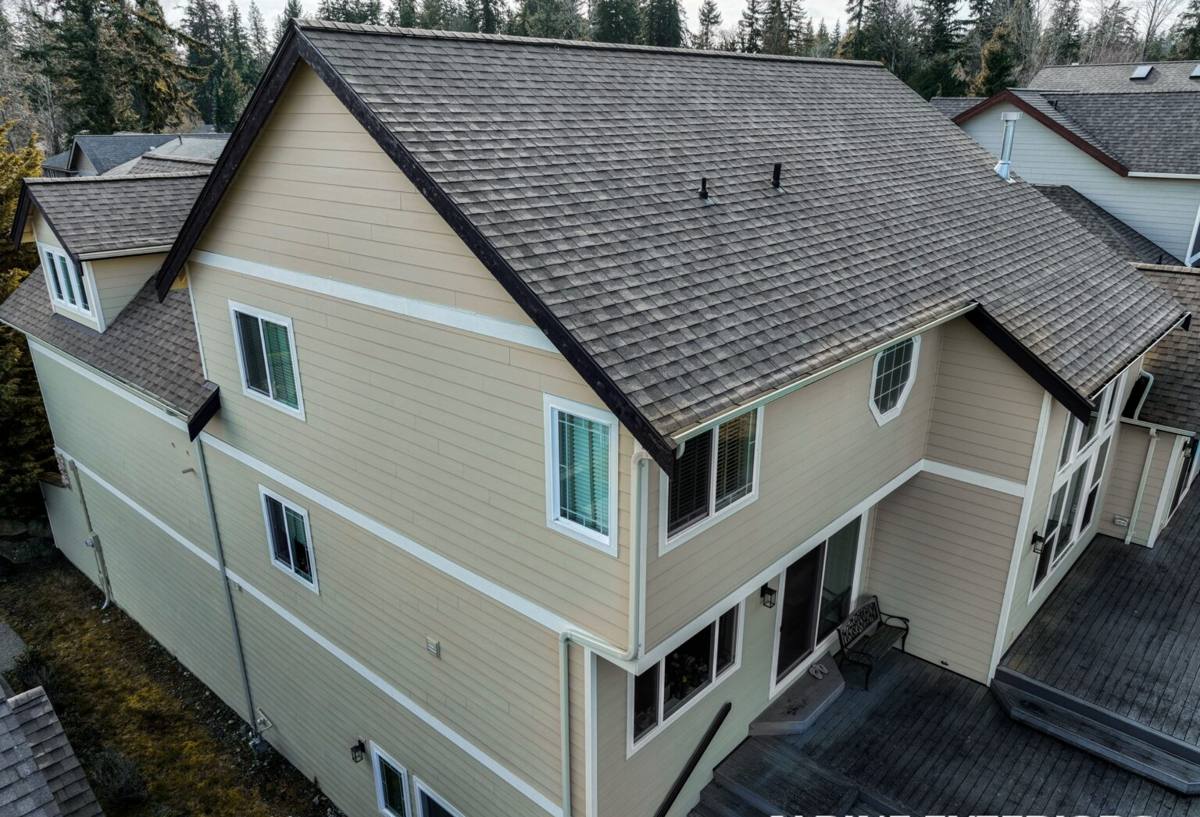
Signs Your Deck Needs Repair, Not Full Replacement
Most decks we look at in Birchwood don't need to be torn out. They need targeted repair aimed at the parts actually failing. Here's what usually points to a repair job rather than a full rebuild:
- Soft or spongy spots on the decking surface, especially near the house or in shaded corners
- Visible rust streaking around fasteners or joist hangers
- Railings that wiggle or flex when leaned on
- Gaps opening up between boards, or boards cupping and pulling away from joists
- Green or black film that keeps coming back within weeks of cleaning
- Stairs that feel less solid than they used to, particularly the stringers
The exceptions are decks with widespread rot in the main framing (ledger, beams, or multiple joists) or structures built without proper flashing at the house connection — those often make more sense to rebuild correctly than to keep patching. A straight assessment on which category your deck falls into is the first thing we give you, before any work starts.
What a Correct Deck Repair Actually Involves
It starts underneath, not on top
A repair that only addresses what you can see from the deck surface is a repair that comes back. Before we touch decking boards, we check the ledger board connection to the house, the condition of the beams and posts, and whether the original flashing is doing its job or letting water track behind the siding. This matters more in a marine climate like ours, where wind-driven rain gets pushed sideways into places it wouldn't reach in a calmer inland setting.
Fasteners and hardware matter more here than most places
Standard galvanized hardware corrodes faster in salt air than most homeowners expect, and a rusted joist hanger or bolt is a weak point you can't see until it fails. On repair work in Birchwood, we default to stainless steel or high-grade coated fasteners rated for coastal and marine exposure, even when that costs a bit more up front than the fastener a big-box contractor might grab.
Then the visible work
Once the structure underneath is sound, we move to what's visible: replacing damaged boards, resetting or rebuilding railings, addressing stair stringers, and cleaning up any surface staining or moss growth that's built up. We also check drainage — a deck that traps water instead of shedding it will keep growing moss no matter how many times it's cleaned.
How Common Deck Materials Hold Up in Birchwood's Climate
| Material | Typical Weak Point Locally | What Repair Usually Involves |
|---|---|---|
| Pressure-treated wood | Rot at fastener points, moss buildup in shade | Board replacement, hardware upgrade, cleaning/sealing |
| Cedar | Graying and softening if sealant isn't maintained | Sanding, refinishing, spot board replacement |
| Composite decking | Fading, mildew staining in low-sun areas, edge swelling if cut ends weren't sealed | Cleaning, board swap, checking underlying joists |
| Older/mixed framing | Corroded original hardware, undersized ledger flashing | Hardware replacement, flashing correction |
Composite decking has a reputation for being maintenance-free, and the surface mostly is. But composite doesn't fix a bad structure underneath it — we still see composite decks in this area with solid-looking boards sitting on a compromised frame, because the framing was never inspected when the composite went down.
Our Deck Repair Process
- On-site assessment. We walk the full deck, check underneath when access allows, and test railings, stairs, and suspect boards by hand.
- Honest scope, in writing. You get a clear breakdown of what's structural, what's cosmetic, and what we'd recommend versus what's optional.
- Repair, not over-repair. We fix what's actually failing. We won't pad a job with work your deck doesn't need.
- Hardware and moisture protection first. Structural fixes and corrosion-resistant fasteners go in before any surface work.
- Surface and finish work. Board replacement, railing repair, cleaning, and sealing or finishing as needed.
- Final walk-through. We show you what was done and what to watch going forward.
Repair vs. Replace: What Actually Drives the Decision
| Factor | Leans Toward Repair | Leans Toward Replacement |
|---|---|---|
| Framing condition | Solid, isolated soft spots | Widespread rot in joists/beams |
| Ledger connection | Sound, properly flashed | Failed flashing, water damage at the house wall |
| Age of deck | Under 15-20 years, decking is the main issue | Original construction is older and undersized by current standards |
| Extent of damage | Contained to boards, railings, or stairs | Structural issues throughout |
| Budget goal | Extend usable life at lower cost | Want a different layout, size, or material |
Cost for repair-scale work in this area typically runs from a few hundred dollars for isolated board and railing fixes up to several thousand for larger structural repairs — the range depends heavily on how much of the frame is affected and how much access we have to it. We'll give you real numbers once we've actually seen the deck, not a phone-quote guess.
Moss, Mildew, and Slip Safety
Whatcom County's moss season isn't a minor nuisance on a deck — it's a safety issue. Moss and algae hold moisture against the wood or composite surface, which accelerates rot underneath and turns the deck slick, especially on stairs and shaded sections that don't get direct sun. A repair job that ignores drainage and airflow will see the moss come right back within a season.
Part of correcting a moss-prone deck is addressing why that section stays damp longer than the rest — overhanging branches, poor gutter drainage above the deck, or boards spaced too tight to shed water all contribute. We address the cause during repair, not just the symptom on the surface.
Maintenance Checklist After Repair
A repaired deck holds up longer with a small amount of seasonal attention. This is the routine we recommend for Birchwood homes:
- Sweep debris and standing leaves off the deck regularly, especially in fall
- Clean moss and algae before it spreads, rather than after it's established
- Check that gutters and downspouts aren't draining onto or near the deck
- Look under railings and around posts once a year for early rust or soft wood
- Re-seal wood decking on the manufacturer's recommended schedule, not "when it looks bad"
- Keep planters and heavy furniture off the same spot long-term — trapped moisture underneath is a common rot starting point
Why a Crew That Already Works Birchwood Makes a Difference
Deck repair advice that works in a dry climate can be the wrong advice here. A contractor unfamiliar with Fairhaven's marine exposure might spec standard hardware, skip a flashing check, or miss that a "clean" looking deck has moisture damage building underneath from salt air and driving rain most of the year. We work on homes throughout this area regularly, so we're not guessing at how the local climate affects a deck's structure — we're applying what we've already seen hold up and what doesn't.
That local familiarity also means a more accurate first assessment. We know which parts of a Birchwood deck tend to fail first, so we check those areas specifically instead of a generic top-to-bottom inspection that might miss the actual problem.
Get a Straight Answer About Your Deck
If your deck has soft spots, rust streaks, moss that won't stay gone, or railings that don't feel as solid as they should, it's worth having someone look before those issues get worse over another wet season. We offer free, no-pressure estimates for deck repair in Birchwood and the surrounding Fairhaven area — you'll get an honest read on what's actually needed, not an upsell. Fill out the form below to schedule a time for us to come take a look.