 Fairhaven Siding
 Deck Replacement Built for York's Position Near the Water
The York neighborhood sits close enough to Fairhaven's shoreline and Bellingham Bay that homes here take on a different kind of weathering than decks a few miles inland. Salt-laden air moves through year-round, driving rain comes in sideways off the water during fall and winter storms, and the shaded, tree-lined lots common in York hold moisture long after a storm passes. A deck that would hold up fine in a drier part of Whatcom County can fail early here if it wasn't built with those conditions in mind. When we replace a deck in York, we're not just swapping out old boards for new ones — we're building a structure that accounts for what this specific pocket of Fairhaven throws at it every season.
Deck replacement is different from a repair or a resurfacing job. It means the ledger, framing, joists, posts, and footings all get evaluated, and in most cases the substructure gets rebuilt to current code along with the decking itself. That's the right approach when a deck has reached the point where patching no longer makes sense — which, for many York homes with older decks, is exactly where things stand.
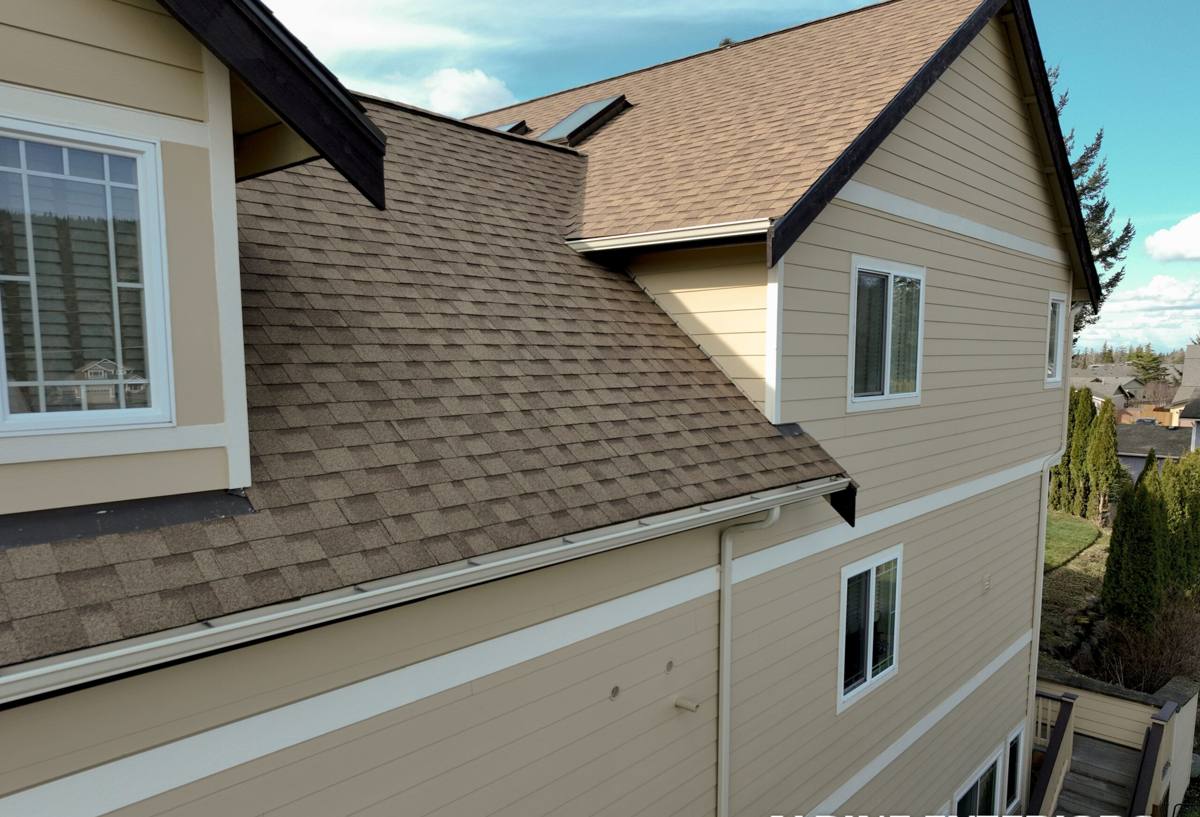
Why York's Climate Wears Decks Down Faster
Three factors combine here in a way that's worth understanding before you plan a replacement:
Salt Air
Airborne salt from Bellingham Bay accelerates corrosion on any exposed metal — fasteners, joist hangers, post bases, and railing hardware. Standard construction screws and generic hangers corrode faster near the water than they would twenty miles inland, and once a fastener starts rusting, it weakens the connection it's supposed to hold. This is one of the most common hidden failure points we find when we open up an old York deck.
Driving Rain
Storms that come off the water tend to drive rain at an angle rather than straight down, which pushes moisture into places a flat-on top surface wouldn't normally see — under railings, into end-grain cuts, behind ledger flashing, and into any gap where two boards meet. Decks with poor flashing or insufficient drainage slope collect water in these spots instead of shedding it.
Moss and Shade
York's mix of mature trees and marine-layer cloud cover means many decks here stay damp for stretches of the year, and shaded areas grow moss readily. Moss isn't just cosmetic — it holds moisture against the deck surface, keeps wood from drying out between rains, and makes boards slick and dangerous underfoot. A deck built without moss and drainage in mind will need moss treatment or pressure washing every year just to stay usable.
Signs a York Deck Needs Replacement, Not Repair
Homeowners often ask us to look at a "few soft boards" and the honest answer is sometimes that the whole structure needs to come out. Here's how we tell the difference:
- Soft or spongy spots in more than one area of the decking, not just one board
- Rust staining running down from fastener heads or hardware
- A ledger board that's pulling away from the house or shows water staining behind it
- Joists or posts that feel soft when probed with a screwdriver, especially near ground contact
- Persistent moss or algae that returns within weeks of cleaning
- Railings that flex or wobble under normal hand pressure
- A deck more than 20-25 years old that has never had the substructure inspected
If you're seeing two or more of these, replacement is almost always the more honest recommendation than another round of patching. Spot repairs on a deck with failing framing just move the problem, and they can mask real safety issues.
What a Correct Deck Replacement Involves
A deck replacement done right in a climate like York's isn't just decking boards. It's a full-system rebuild, and each part matters:
Footings and Posts
Footings get inspected or replaced to current frost and load requirements, and posts are set with post bases that keep the wood off the concrete — direct wood-to-concrete contact is one of the fastest ways to invite rot in a wet climate.
Framing and Joists
We use joist tape or a comparable barrier on the tops of joists to keep standing water out of the wood, and we space joists appropriately for the decking material being used. This is also where corrosion-resistant hardware matters most — coated or stainless fasteners and hangers cost more up front but they're the difference between hardware that lasts and hardware that's rusting through in five years near the bay.
Ledger Attachment and Flashing
Where the deck attaches to the house, proper flashing is non-negotiable. This is the single most common failure point we find on older decks in wet coastal areas — water gets behind an improperly flashed ledger and rots both the ledger and the house's rim joist behind it, which turns a deck project into a structural repair on the house itself.
Drainage and Slope
The decking surface should have a slight slope away from the house so water sheds instead of pooling. On decks with usable space underneath, we also look at whether a drainage system makes sense to keep that area dry.
Decking Material
Whether you go composite or wood, the boards need proper spacing for expansion and drainage, and fastening methods that don't create water traps at every screw hole.
Decking Material Comparison for a York Home
| Material | Moss/Moisture Behavior | Maintenance | Typical Lifespan |
|---|---|---|---|
| Pressure-treated wood | Absorbs moisture, needs sealing to resist moss and rot | Annual cleaning, re-sealing every 1-3 years | 10-15 years in this climate with upkeep |
| Cedar | Naturally rot-resistant but still needs sealing near the water | Regular cleaning and periodic finish | 15-20 years with consistent care |
| Composite decking | Doesn't absorb water into the board itself; still needs surface cleaning where moss can grow on the film | Occasional washing, no sealing or staining | 25-30+ years, manufacturer-dependent |
| PVC decking | Fully moisture-resistant board; surface can still host moss/algae film in shade | Low — periodic washing | 25-30+ years, manufacturer-dependent |
There's no single "right" material for every York property — a sun-exposed deck has different needs than one shaded by mature trees, and budget is a real factor. What we won't do is install decking over framing that hasn't been brought up to a standard that will actually support it for the material's expected lifespan. That mismatch — good boards on a weak substructure — is how homeowners end up disappointed a few years in.
Our Process for a York Deck Replacement
- On-site assessment. We look at the existing deck's framing, footings, ledger connection, and overall condition, and we're straightforward about what's salvageable and what isn't.
- Plan and permit. Deck replacements of most sizes require a permit in Whatcom County jurisdictions; we handle that paperwork and build to code, including guardrail height, baluster spacing, and stair requirements.
- Demolition. The old deck comes out, and we take a close look at the ledger and house framing behind it before anything new goes up — this is where we sometimes find rot that wasn't visible from the surface.
- Rebuild the structure. New footings or post bases as needed, new framing with corrosion-resistant hardware, and properly flashed ledger attachment.
- Install decking, railings, and stairs. Whatever material you've chosen, installed with the spacing and fastening approach that material calls for.
- Final walkthrough. We go over the finished deck with you, including what maintenance it will and won't need going forward.
Pre-Winter Checklist for a New York Deck
Once your new deck is in, a little seasonal attention keeps it performing the way it should through Whatcom County's wet months:
- Clear leaves and debris from between boards and off any drainage system before fall rains pick up
- Check that gutters and downspouts near the deck are directing water away, not onto it
- Look for early moss growth in shaded corners and address it before it spreads
- Inspect railings and stair connections for any looseness at the start of each season
- If you chose wood decking, plan your sealing schedule around the drier summer months, not right before the rains start
Why Hire a Crew That Already Works in York
A contractor who works regularly in the York area already knows how the salt air, rain patterns, and tree cover here behave differently than in drier parts of Whatcom County — that's not something you can fully account for from a generic spec sheet. We've seen what happens when a deck is built to a standard that works fine forty minutes inland but wasn't built with this specific microclimate in mind, and we build accordingly: the right hardware, the right flashing, the right drainage details, from the start. That local familiarity means fewer surprises during the project and a deck that's actually suited to where it sits, not just built to a minimum code.
We also know that a deck replacement is disruptive to your outdoor space and your budget, so we're upfront about scope, timeline, and what's actually necessary versus what's optional. If a repair genuinely makes more sense than a full replacement for your situation, we'll tell you that too.
Get a Free Estimate for Your York Deck Replacement
If your deck is showing soft spots, rust stains, persistent moss, or you're just not sure whether it needs a repair or a full replacement, we're happy to take a look. Reach out through the form below for a free, no-pressure estimate — we'll walk the deck with you, tell you honestly what we find, and lay out your options.