 Fairhaven Siding
 Downtown Bellingham Roofs Work Harder Than Most
A roof over Downtown Bellingham deals with a combination of stresses that most inland homes never see. You're close enough to Bellingham Bay to get salt-laden air working on metal fasteners, flashing, and vent caps. You get driving, wind-pushed rain off the water that finds every marginal seam instead of just running off a clean slope. And you get a moss season that, depending on the year, can run from fall through spring — long enough that a roof left unchecked can grow a real mat of growth before anyone notices from the ground.
None of that means Downtown Bellingham roofs are doomed to constant repair. It means the repairs that do come up need to be done with those specific stresses in mind, not treated like a generic patch job. A fix that would hold up fine in a drier part of the state can fail here in a season or two if it doesn't account for how much moisture this area actually sees.
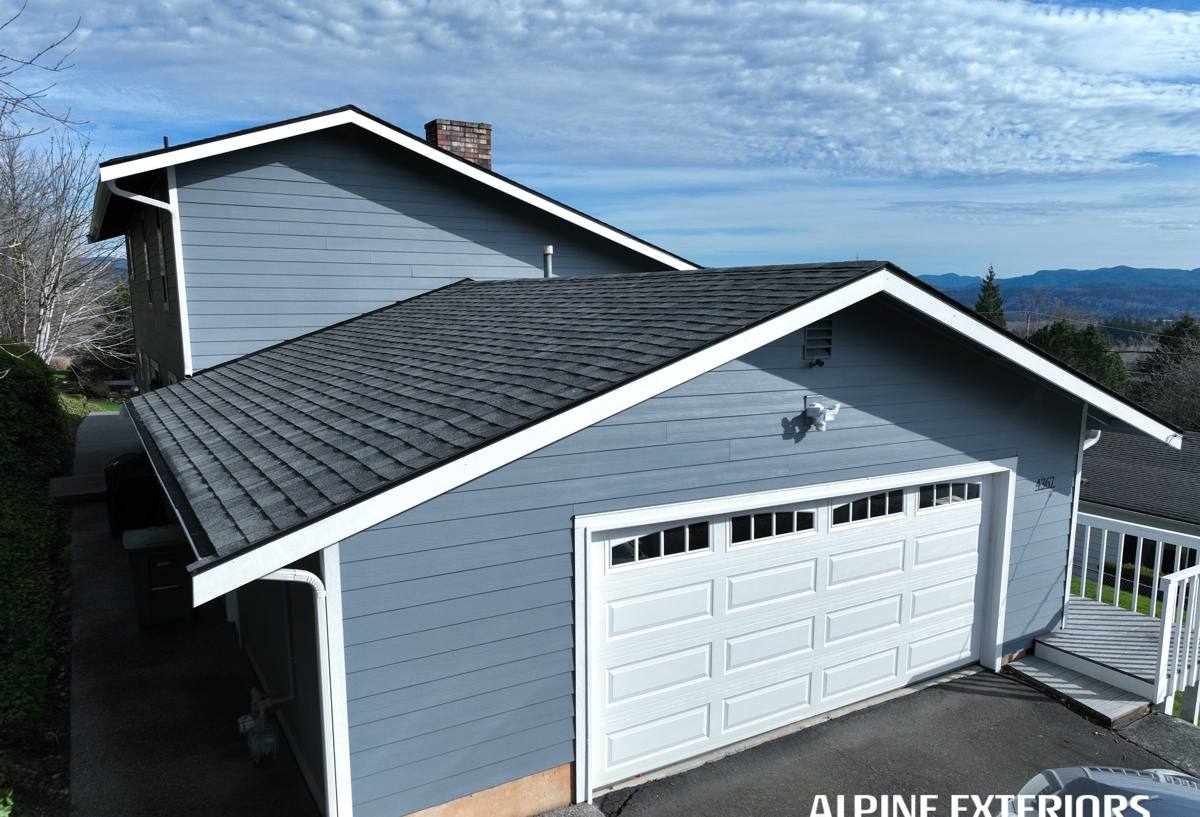
Signs Your Roof Needs Repair — Not a Full Replacement
Most roofs don't fail all at once. They show localized problems first, and catching them early is usually the difference between a repair bill and a replacement bill. Watch for:
- Dark streaking or a fuzzy green-black texture on north-facing slopes — early moss and algae growth
- Granules collecting in gutters or at downspout outlets — a sign asphalt shingles are wearing thin
- Curling, cupping, or lifted shingle edges, especially on slopes that catch the most wind-driven rain
- Rusty streaks below metal flashing or vent stacks — a sign the metal itself is corroding, not just dirty
- Soft spots, sagging, or visible daylight in the attic near roof penetrations
- Interior water stains on ceilings, especially after a stretch of heavy rain
Any one of these on its own is usually a repair. Several of them together, especially combined with a roof that's already 18-20+ years old, is when we start talking honestly about whether repair is still the right call or whether you're better off putting that money toward a replacement instead.
What a Correct Roof Repair Actually Involves
A roof repair done right is not just "find the leak, cover the hole." It's a diagnostic process, because the spot where water shows up inside the house is very often not the spot where it's getting in on the roof. Water travels along the underlayment, framing, and sheathing before it drips somewhere visible. A repair that only addresses the drip point without tracing the actual entry point tends to come back within a year or two — often worse, because the framing underneath has been sitting wet in the meantime.
What we're actually checking
A proper repair visit includes checking the roofing material itself, but just as important is checking the flashing around chimneys, skylights, and wall intersections, the condition of the underlayment where it's exposed, the state of the vent boots and pipe collars, and how water is actually shedding off the roof edge into the gutter system. In this climate, flashing and boot failures cause at least as many leaks as worn-out shingles do.
Common Roof Types Around Downtown Bellingham
Downtown Bellingham has a mix of older homes and newer builds, and the roofing on them varies accordingly. Here's how the common types tend to hold up and what repair usually looks like for each:
| Roof Type | Common Issue Locally | Typical Repair Approach |
|---|---|---|
| Asphalt composition shingle | Granule loss, moss/algae staining, curling edges from repeated wet-dry cycling | Spot shingle replacement, flashing resealing, moss treatment |
| Wood shake (older homes) | Moisture absorption, rot at butt ends, moss taking hold between shakes | Individual shake replacement, ventilation check, moss removal |
| Metal roofing | Fastener backing out, sealant washers failing, salt-air corrosion at cut edges | Fastener replacement, seam and penetration resealing |
| Low-slope/flat sections (additions, porches) | Ponding water, membrane seam separation | Seam repair or membrane patching, drainage correction |
Many homes downtown actually have more than one of these on the same roof — a main gable roof plus a lower-slope porch or addition roof with a different material. Each section needs to be evaluated on its own terms.
Age Matters More Than It Seems
An asphalt shingle roof in Whatcom County's marine climate rarely gets the full manufacturer-rated lifespan you'll see quoted for drier regions — the constant damp shortens shingle life on the margins, especially on shaded, north-facing slopes that don't get enough sun to dry out between rain events. That doesn't mean every older roof needs replacing; it means age should factor into whether a given repair is worth doing versus planning ahead for replacement.
Moss, Algae, and Salt Air: The Maintenance Piece Nobody Talks About Enough
Repair and maintenance aren't the same thing, but around here they're closely linked. Moss doesn't just sit on top of a roof looking bad — its root structure lifts shingle edges, holds moisture against the roofing material, and accelerates the exact wear patterns that lead to leaks. Left long enough, a mossy roof stops shedding water efficiently and starts absorbing it instead.
Salt air compounds this on homes closer to the water. It accelerates corrosion on exposed fasteners, metal flashing, and any galvanized components that aren't fully protected. A fastener that's rusted through is a fastener that's no longer holding a shingle or flashing piece down, and that's exactly the kind of small failure that turns into a bigger repair if it sits through a few storms unaddressed.
Part of any honest repair visit here includes flagging moss growth and metal corrosion even if that's not the reason you called — because addressing it now is a lot cheaper than repairing the water damage it causes in two years.
Our Repair Process, Step by Step
- Assessment. We walk the roof (or inspect from a lift/ladder where walking isn't safe) and check attic-side conditions where accessible, not just the surface.
- Diagnosis. We trace the actual water path, not just the visible symptom, so the repair addresses the real entry point.
- Honest recommendation. We tell you plainly whether this is a targeted repair, a larger repair, or a situation where repair isn't the responsible long-term answer.
- Written scope and price. You know what's being done and what it costs before we start — no surprises mid-job.
- The repair itself. Matching materials as closely as possible, correcting flashing and sealant work, not just the shingle or membrane surface.
- Follow-up check. We confirm the fix is holding, especially after the next real rain event.
Repair vs. Replacement: How to Think About the Decision
This is the question we get asked most, and it deserves a straight answer rather than a sales pitch either direction. Here's how we walk homeowners through it:
| Factor | Leans Toward Repair | Leans Toward Replacement |
|---|---|---|
| Roof age | Under 12-15 years | Approaching or past expected lifespan |
| Extent of damage | Localized — one slope, one penetration | Multiple slopes, widespread granule loss or moss |
| Underlying deck condition | Sheathing solid, no rot found | Soft or rotted sheathing discovered |
| Repair history | First or second repair on this roof | Repeated repairs to the same areas |
| Budget timeline | Need to extend roof life a few years | Planning to stay long-term and want it settled |
Broad repair costs on a typical residential roof usually run from a few hundred dollars for a small, targeted fix up to a few thousand for a larger repair involving multiple areas or significant flashing work. We won't know which category your situation falls into until we've actually looked at it — anyone quoting a firm number sight unseen is guessing.
What to Look for When Hiring a Roof Repair Contractor Here
Downtown Bellingham has enough roofing work available that you'll find no shortage of contractors willing to quote you something. The difference shows up in follow-through. Before hiring anyone for roof repair work, it's worth checking:
- Do they carry current WA state contractor licensing and liability insurance, and will they show you proof without hesitation?
- Do they inspect in person before quoting, or are they pricing off a phone call and a guess?
- Do they explain what's actually failing and why, or just tell you "it needs a new roof"?
- Do they put the scope of work and price in writing before starting?
- Do they have experience specifically with this area's climate — moss, salt air, and heavy seasonal rain — not just general roofing experience from a drier region?
- Will they warranty the repair work itself, not just materials?
Why Local Experience in Downtown Bellingham Actually Matters
A roof repair crew that works this specific area regularly knows things that don't show up in a general roofing manual — which roof types are common on the older downtown housing stock, how quickly moss reestablishes on shaded slopes near the water, and how wind-driven rain off the bay behaves differently than a straight-down rain in a more sheltered part of Whatcom County. That local pattern recognition is what separates a repair that holds up through the next few wet seasons from one that's a temporary patch.
It also matters for something more practical: being nearby means we can get to a leak quickly when timing matters, and we're not learning this area's housing stock and climate behavior on your roof for the first time.
If you're seeing early signs of trouble — or you just want an honest opinion on whether that spot on the ceiling is something urgent — we're happy to come take a look. The estimate is free, there's no pressure, and you'll get a straight answer about what's actually going on with your roof.