 Fairhaven Siding
 Decks in Edgemoor Face a Different Set of Conditions
Edgemoor sits close enough to Bellingham Bay that salt-laden air, wind-driven rain, and heavy tree cover are simply part of owning a home here. A deck built the way you'd build one further inland — standard fasteners, minimal ventilation gaps, whatever decking looks good at the yard — will show its age fast in this neighborhood. Corrosion shows up in the hardware first, then moss and soft wood follow wherever water sits and shade lingers. None of that is unusual for Whatcom County. It just means a deck here needs to be planned for the climate it's actually going to live in, not a generic one.
This page is about what that means specifically for a custom deck project in Edgemoor: the terrain, the materials, the hardware, and the build process that hold up under salt air, driving rain, and a moss season that runs longer here than in drier parts of the state.
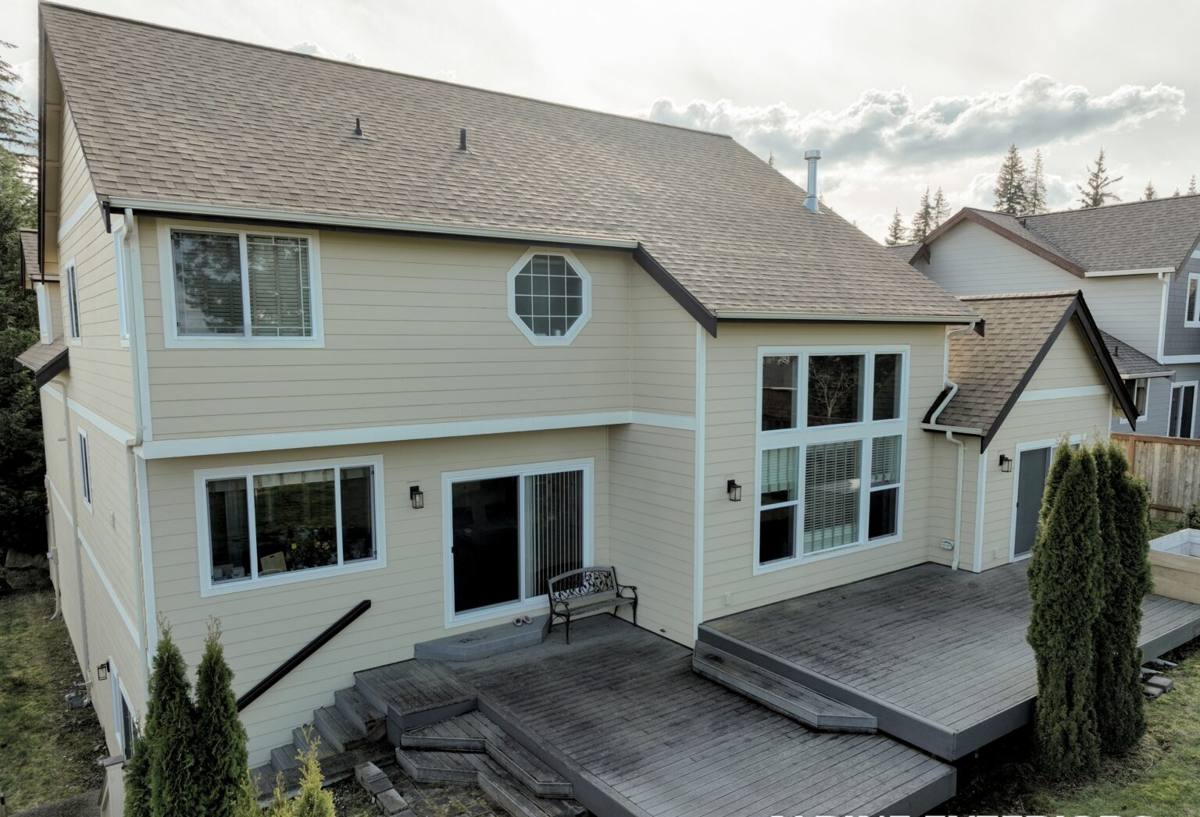
What Edgemoor's Terrain Adds to the Job
Many Edgemoor lots slope toward the water or sit under mature fir and cedar canopy, sometimes both. That combination changes how a deck should be designed before a single board goes down.
Sloped and Bluff-Adjacent Lots
A deck on a sloped lot usually needs taller posts, more bracing, and careful footing placement to keep the structure rigid and level. On lots closer to the bluff, drainage and soil stability matter as much as the deck framing itself — water that isn't directed away from the structure will find the low point, and on a slope that's often right where your footings are.
Tree Cover and Shade
Heavy tree cover keeps a deck shaded and slower to dry after rain, which is exactly the environment moss and algae prefer. It's not a reason to avoid a wooded lot, but it does change decking spacing, ventilation underneath the deck, and how often the surface will need cleaning to stay ahead of buildup.
Framing and Structure That Actually Hold Up
The framing is the part of a deck nobody sees once it's finished, and it's also the part that determines whether the deck is still solid in fifteen years or needs rebuilding in eight.
Fasteners and Hardware for Salt Air
Standard galvanized hardware corrodes faster in a coastal air environment like Fairhaven's than it would inland. On Edgemoor projects we use stainless steel or heavy-duty coated fasteners and structural hardware rated for coastal exposure, particularly at ledger connections, post bases, and joist hangers — the spots where a failure isn't cosmetic, it's structural.
Ledger Board Flashing
Where a deck attaches to the house, proper flashing is what keeps driving rain from working its way behind the siding and into the rim joist. This is one of the most common failure points on older decks in wet climates, and it's cheap to do right at construction and expensive to fix once rot has set in behind the wall.
Footings and Frost Depth
Whatcom County building code sets minimum footing depth requirements to get below the frost line and reach stable bearing soil. On sloped or tree-root-heavy Edgemoor lots, footing placement sometimes needs to shift slightly from the "ideal" layout to avoid roots or unstable fill — that's a judgment call made on site, not from a plan set drawn up somewhere else.
Joist Protection and Ventilation
Joist tape over the top of framing lumber sheds water before it can soak into end grain and fastener holes — the two spots where rot typically starts. Underneath the deck, keeping enough clearance for airflow helps the structure dry out between rain events instead of staying damp for days, which matters more here than in a drier climate.
Choosing a Decking Material for This Climate
There's no single right answer for every home — it depends on your budget, how much upkeep you want to do, and how exposed the deck is to sun, shade, and salt air. Here's how the common options compare for an Edgemoor property specifically.
| Material | Moisture & Salt Air Behavior | Maintenance | Typical Lifespan |
|---|---|---|---|
| Pressure-treated pine | Resists rot when sealed regularly; end grain and fastener holes are the weak points | Needs re-staining or sealing every 1-2 years in this climate | 10-15 years with upkeep |
| Cedar | Naturally rot- and insect-resistant; still needs sealing to prevent graying and moisture uptake | Annual cleaning, periodic sealing | 15-20 years with upkeep |
| Composite decking | Doesn't absorb water or rot; good performer in wet, shaded conditions | Periodic washing to keep moss and algae from taking hold on the surface | 20-30 years, manufacturer-dependent |
| PVC decking | Fully moisture-resistant; least affected by driving rain or standing damp | Low — occasional washing | 25+ years |
We install all of these depending on what the homeowner wants, but we're honest about trade-offs. Composite and PVC cost more up front and carry manufacturer warranties, but they hold up with far less attention on a shaded, damp lot. Cedar and pressure-treated wood cost less initially and can look excellent, but only if the sealing schedule actually gets kept up — skip a year or two in a climate like this and moisture damage catches up quickly.
Moss, Mildew, and Drainage
Whatcom County's moss season runs long, and a shaded Edgemoor deck can stay damp for extended stretches between dry spells. Moss on a deck surface isn't just cosmetic — it holds moisture against the boards and turns a walking surface slippery, which is a real safety concern on stairs and landings.
Design choices that help: proper board spacing so water drains through rather than pooling, a slight slope away from the house on the decking itself, and gaps or venting underneath so air can circulate. None of these details are visible once the deck is built, but they're the difference between a deck that needs a pressure wash once a year and one that's growing moss in the shaded corners every few months.
Permits and Code in Fairhaven and Bellingham
Most new deck construction and many deck replacements in this area require a building permit, with inspections tied to footings, framing, and guardrail height and spacing. Requirements can vary depending on deck height, size, and whether it's attached to the house, so we handle the permit process as part of the job rather than leaving it for the homeowner to sort out. Skipping this step is a common shortcut on lower-budget deck jobs, and it's the kind of thing that surfaces as a problem later — at resale, at insurance claim time, or if the structure is ever inspected.
Our Process for an Edgemoor Deck Project
- On-site assessment — we look at slope, tree cover, drainage, and how the deck will attach to the house before talking materials.
- Design and material selection — sized and laid out for your lot, with a materials conversation that's honest about maintenance and cost trade-offs.
- Permitting — we pull the required permits and coordinate inspections so the finished deck is code-compliant, not just finished-looking.
- Framing and flashing — footings to frost depth, coastal-rated hardware, proper ledger flashing, and joist protection before decking goes down.
- Decking installation — spacing and fastening appropriate to the material and to a wet, shaded climate.
- Final walkthrough — we go over basic care so the deck holds up the way it's supposed to.
Keeping a New Deck in Good Shape
- Sweep or blow off leaves and debris regularly, especially in fall when tree cover sheds onto the deck
- Wash the surface at least once a year to stay ahead of moss and algae buildup
- Check and re-seal wood decking on the schedule the product actually calls for, not just when it looks dry
- Keep gutters and downspouts near the deck clear so runoff isn't draining straight onto or under it
- Inspect hardware and railings annually for corrosion or looseness, particularly after a hard winter
- Trim back overhanging branches that keep the deck shaded and slow to dry
Why Local Experience Matters for This Job
A deck built without accounting for Edgemoor's slope, shade, and salt air will usually look fine on day one — the problems show up two, five, or ten years down the road, in the form of soft framing, corroded hardware, or a decking surface that never really dries out. A crew that already works this neighborhood knows which lots need extra drainage attention, which fastener grade actually holds up this close to the bay, and how to frame around root systems and slope without cutting corners on the footings.
If you're planning a new deck or replacing one that's showing its age, we're happy to take a look and put together a straightforward estimate — no pressure, no obligation. Use the form below to get started.