 Fairhaven Siding
 Building a Deck That Can Actually Take What Bellingham Bay Sends It
Edgemoor sits close enough to the water that every deck built there is fighting three things at once: salt-laden air off the bay, long stretches of driving rain, and a moss season that can run most of the year under tree cover. A deck design that works fine in a dry inland climate will start showing problems here within a few seasons — soft spots at the ledger, rusted fastener heads bleeding down the boards, and a green film on every shaded surface by late fall. Building a deck correctly in this neighborhood isn't about upgrading everything to "premium" — it's about knowing which few details actually matter in this climate and getting those right the first time.
As a siding contractor, we look at a deck project a little differently than a pure deck-building outfit does. We spend our days dealing with how water moves behind and around exterior materials, and a deck is really just another place where a wood or composite structure meets your home's wall — with all the same flashing and moisture questions that come with any siding tie-in.
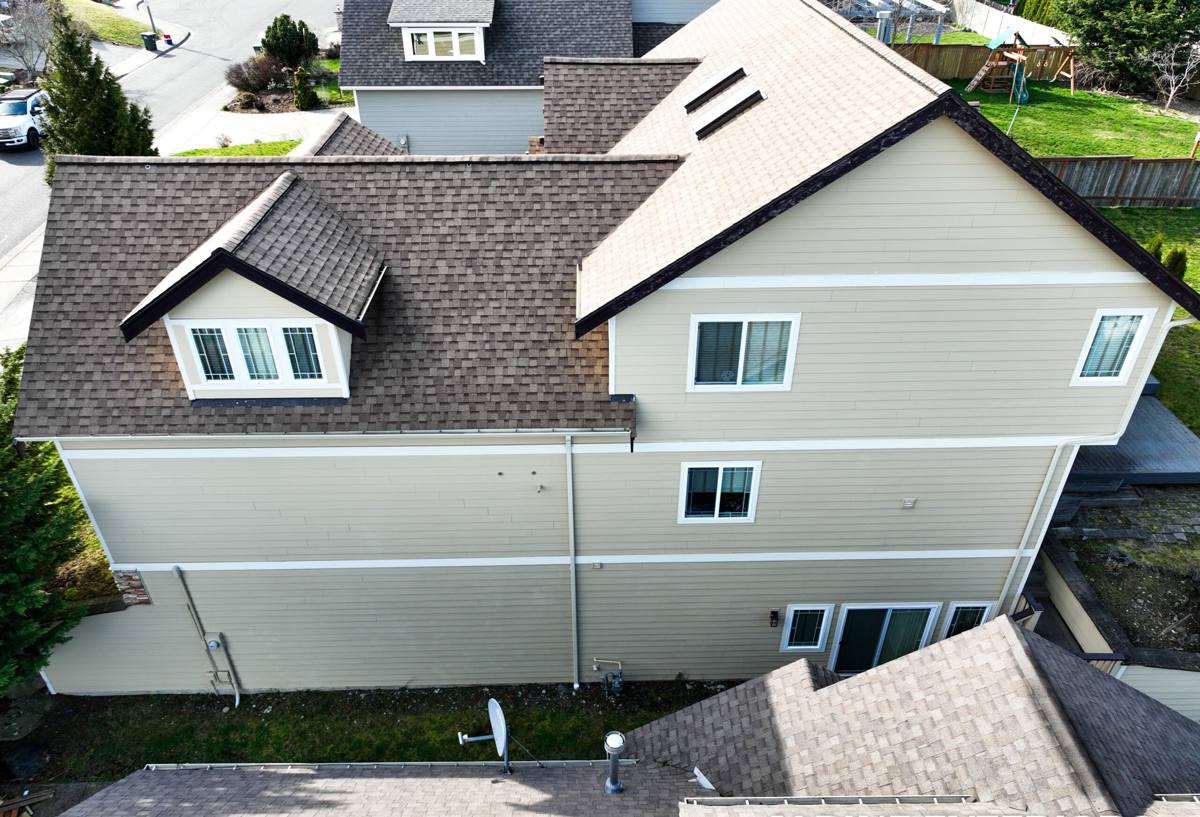
Where the Deck Meets Your Siding
The Ledger Board Is the Weak Point
Almost every deck failure we get called out to inspect in this area starts at the same spot: the ledger board, where the deck attaches to the house. If that connection isn't flashed correctly, rain running down your siding gets channeled directly into the house framing behind it instead of shedding away. In a climate with as much driving rain as Whatcom County sees, an under-flashed or unflashed ledger will eventually rot out the rim joist, the sheathing behind it, and sometimes the siding above it — often before it's visible from outside.
Doing this right means proper step or Z-flashing above and behind the ledger, a water-resistant barrier lapped correctly with your existing siding's weather-resistant barrier, and a gap or flashing tape that keeps the ledger itself from sitting flush against wet sheathing. This is exactly the kind of detail that gets skipped by crews who only build decks and never have to think about what's happening behind the wall covering — and it's exactly the kind of detail we don't skip, because it's the same work we do on every siding job.
Decking Material Choices for a Salt-Air, Long-Moss Climate
There's no single "best" decking material — there's a best material for your budget, your maintenance appetite, and how much shade and salt exposure your particular lot gets. Here's how the common options actually perform in this environment:
| Material | Upfront Cost | Maintenance | How It Handles Moss & Salt Air |
|---|---|---|---|
| Pressure-treated wood | Lowest | Annual cleaning, re-staining every 2-3 years | Prone to moss in shaded spots if not cleaned; treatment resists rot but not surface mildew |
| Western red cedar | Mid-range | Cleaning and oiling every 1-2 years to hold color and resist mildew | Naturally more rot-resistant than treated wood, but still needs upkeep to fend off moss in damp, shaded areas |
| Composite / capped PVC decking | Highest | Occasional washing; no staining or sealing | Doesn't absorb moisture the way wood does, which slows moss growth, but moss and algae can still grow on the surface film if the deck stays wet and shaded |
For heavily shaded, tree-covered lots — which describes a lot of Edgemoor's wooded, bluff-side properties — composite decking earns its higher upfront cost by cutting down the yearly cleaning and re-sealing that wood decking demands. For sunnier or more open sites, a well-maintained cedar deck can perform just as well for a lot less money. Either way, the fasteners and framing underneath matter more than which decking material sits on top.
Framing, Footings, and Hardware Built for the Long Haul
Fasteners
Salt air corrodes standard galvanized fasteners faster than most homeowners expect. We use stainless steel or coated fasteners rated for coastal and treated-lumber exposure throughout the structure — not just on the visible surface boards. A deck with premium decking held down by fasteners that start rusting in five years isn't actually a long-term fix.
Footings and Frost Depth
Deck footings here need to be dug to a depth that accounts for our local frost line and reviewed against the soil conditions on the specific lot — wooded, bluff-adjacent sites can have different drainage and soil stability than open, flat yards nearby. This is one of the areas where a permit and inspection process actually protects you; footings that are too shallow or undersized are invisible once the deck is built, and they're the hardest thing to fix after the fact.
Joist Spacing and Structural Screws
Composite decking in particular often requires tighter joist spacing than the framing lumber industry standard, because composite boards can sag more than wood between supports over time. We frame to the decking manufacturer's spec, not a generic layout, and we use structural wood screws or approved connectors at every joist hanger rather than relying on nails alone.
Designing for Drainage and Moss Control
A long moss season isn't just a cosmetic nuisance here — moss and algae hold moisture against the deck surface, which accelerates wood decay and makes boards genuinely slick and dangerous underfoot, especially on stairs. Good deck design fights this in a few ways:
- Slight slope built into the frame so water runs off the surface instead of pooling
- Consistent gapping between boards for airflow and drainage, sized correctly for whichever decking material is used
- Keeping decking clear of overhanging branches where practical, since trapped leaf litter under a canopy holds moisture directly against the boards
- Ventilated space underneath the deck rather than framing tight to grade, so the underside can dry out between rain events
None of this eliminates the need for periodic cleaning, but it's the difference between a deck that needs a yearly wash and one that's growing moss in the board gaps by its second winter.
Signs Your Current Edgemoor Deck Needs Attention
If you already have a deck and you're not sure whether it needs repair, partial rebuild, or full replacement, walk it and check for these:
- Soft, spongy, or bouncy spots underfoot, especially near the house
- Rust streaks running down from screw or nail heads
- Any gap or separation where the ledger board meets the siding or wall
- Persistent green or black film on boards that doesn't scrub off easily
- Wobble in the railing posts when you push on them
- Visible daylight or gaps at joist connections underneath the deck
Any one of these on its own might just mean a repair. Several at once, or anything at the ledger connection specifically, usually means it's worth a proper inspection before you use the deck through another wet season.
How We Build a Deck, Start to Finish
- Site walk and assessment — we look at sun and shade exposure, tree cover, drainage, and how close the deck will sit to the water-facing side of the house, since that affects both material choice and flashing detail.
- Design and material selection — sized to your budget and maintenance preference, with framing specified to match whatever decking material we land on.
- Permitting — we handle the application with the local building department, including footing and structural details.
- Demo and footings — removing any old structure and setting footings to proper depth for our frost line and the site's soil conditions.
- Framing and ledger flashing — including full flashing integration with your existing siding at the ledger connection, our top priority detail on every deck we build.
- Decking, railing, and stairs — installed to code for guardrail height and baluster spacing, with attention to slope and gapping for drainage.
- Final inspection and walkthrough — confirming everything passes local inspection and going over basic maintenance for whatever material you chose.
Permits and Local Building Requirements
Most attached decks, and many freestanding ones above a certain height, require a permit from the local building department, along with inspection of the footings and framing before the decking goes on. This isn't paperwork for its own sake — it's the only outside check that your footings and structural connections are actually sized correctly, and it protects you if you ever sell the home and a buyer's inspector looks closely at the deck. We handle the permit process as part of the job rather than leaving it for the homeowner to sort out.
Why It Matters That We Already Work in Edgemoor
A deck built by a crew that mostly works drier, inland climates will often make reasonable decisions for that climate — decisions that don't hold up against the salt air, driving rain, and shaded, moss-prone conditions common around Edgemoor and the Fairhaven waterfront. We do siding and exterior work across Whatcom County's coastal neighborhoods, so the flashing details, fastener choices, and drainage design we build into a deck here are the same ones we rely on to keep water out of the houses we side. That overlap is exactly why we treat the ledger connection, the fasteners, and the drainage as the parts of the job that actually decide how long your deck lasts.
If you're planning a new deck in Edgemoor or need an honest look at whether your current one needs repair or replacement, we're happy to walk the site and give you a straightforward, no-pressure estimate — just fill out the form below.