 Fairhaven Siding
 Storm Damage Roof Repair Built for Edgemoor's Waterfront Exposure
Edgemoor sits along Bellingham Bay just north of Fairhaven, and that location comes with a trade-off. The views and tree cover that make the neighborhood desirable also put roofs squarely in the path of wind coming off the water, salt-laden air, and the kind of sustained damp weather that Whatcom County is known for. When a storm rolls through, Edgemoor roofs don't fail the same way a roof in a dry inland climate would. The damage is often quieter — a lifted shingle tab, a bent flashing edge, a soft spot under moss that's been building for years — and it's easy to miss until it turns into a leak.
This page is about one thing: doing storm damage roof repair correctly for homes in this specific area, not a generic patch job. That means understanding what the local climate does to a roof over time, knowing what actual storm damage looks like versus ordinary wear, and having a repair process that accounts for both.
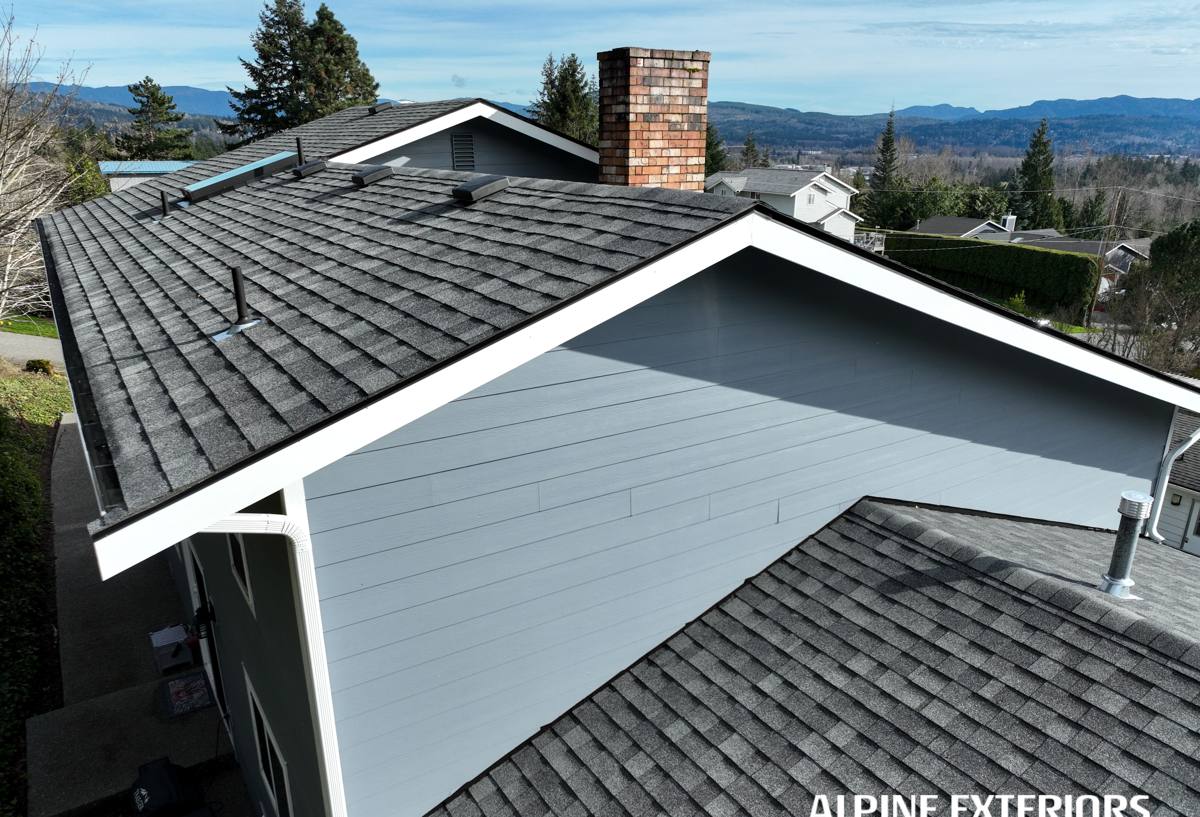
What Edgemoor's Climate Actually Does to a Roof
Storm damage rarely happens in isolation. A roof that's already stressed by years of salt exposure, driving rain, and moss growth is far more likely to suffer real damage in a windstorm than one that's been maintained. Understanding the background conditions matters as much as understanding the storm itself.
Salt Air and Metal Components
Homes close to Bellingham Bay deal with a steady drift of salt-laden air, even on calm days. Salt accelerates corrosion on exposed fasteners, flashing, gutter hangers, and any unpainted or poorly coated metal on the roof. A nail head or flashing seam that would last decades inland can start showing rust streaks and pitting years sooner here. Once metal components corrode, they lose their grip and their seal — which is exactly where wind gets a foothold during a storm.
Wind-Driven Rain and Flashing Points
Rain in this part of Washington doesn't always fall straight down. Storms moving through the Salish Sea corridor often push rain sideways, which means water gets tested against every horizontal seam, valley, and flashing detail on a roof — not just the open field of shingles. Flashing around chimneys, skylights, and roof-to-wall transitions is where wind-driven rain finds weak points first, and it's also where storm damage tends to show up as a leak days or weeks after the wind has died down.
A Long Moss Season
Whatcom County's damp season runs long, and Edgemoor's mature tree canopy adds shade that keeps north-facing and low-slope sections of roof wet well after the rest of the roof has dried out. Moss and lichen take hold in those conditions, and as they grow they lift shingle edges and hold moisture against the roof deck. A roof with an established moss problem is already compromised before a storm ever arrives — the wind just finds the damage that moss already started.
What Counts as Storm Damage (And What Doesn't)
Not every issue found after a windstorm is actually storm-caused, and it's worth knowing the difference before you call anyone out. Storm damage is sudden and traceable to a specific weather event — wind, falling debris, or a heavy accumulation. Wear from age, moss, or poor original installation is ongoing and shows up gradually. Both need attention, but only one is likely to be relevant if you're filing an insurance claim.
After a windstorm, a walk around the outside of the house (not on the roof) can tell you a lot:
- Shingle pieces or granules collecting in gutters or on the ground
- Shingles that look lifted, curled, or missing in patches, especially on the side facing the wind
- New or worsened rust streaks running down from flashing or vent pipes
- A branch, limb, or debris resting on or near the roofline
- Sagging or a visible dip anywhere along the roof plane
- Water stains on ceilings or in the attic that weren't there before the storm
- Gutters pulled away from the fascia or hanging loose
Any one of these is worth a professional look. None of them require you to get on the roof yourself.
How Urgent Is It? Reading the Signs
Some storm damage needs a tarp today. Some can wait for a scheduled repair. The table below is a general guide — an actual inspection is the only way to know for sure, but it's a reasonable starting point for deciding how fast to move.
| Sign | Likely Cause | How Soon to Act |
|---|---|---|
| Active ceiling leak or water dripping indoors | Breached roof deck or failed flashing | Same day — needs temporary cover |
| Missing shingles in a visible patch | Wind uplift | Within a few days, sooner if rain is forecast |
| Granules in gutters after a storm | Wind or impact abrasion on shingle surface | Schedule an inspection soon |
| Rust streaking near flashing or vents | Salt-air corrosion, worsened by the storm's rain | Non-urgent, but plan for repair this season |
| Moss lifting shingle edges | Long-term moisture retention, not storm-specific | Address before next storm season |
| Branch or debris resting on the roof | Wind or tree failure during the storm | Same day — remove carefully, check for puncture |
What a Correct Storm Repair Actually Involves
A storm repair that's done right goes past the visible damage. It's easy to replace a few obviously missing shingles and call it finished, but that approach misses the conditions that made the damage possible in the first place.
Checking the Deck, Not Just the Surface
Wind and water damage aren't always limited to the shingle layer. Once shingles are pulled back, the roof deck underneath needs to be checked for soft spots, delamination, or moisture staining. Repairing over a damaged deck just hides a problem that will resurface at the next storm.
Matching Materials and Reworking Flashing
Patch repairs should use materials that match the existing roof in type, weight, and where possible, color — mismatched patches age differently and stand out over time. Just as important: any flashing in the damaged area gets reworked, not just re-caulked. Caulk is a temporary answer; properly lapped and fastened flashing is the actual fix, especially given how much wind-driven rain tests those seams here.
Our Process, Step by Step
- Inspection and documentation. We assess the full extent of the damage, not just what's visible from the ground, and photograph everything — this record matters if you're filing an insurance claim.
- Temporary weatherproofing. If there's an active leak or exposed decking, we get it covered and watertight before anything else happens.
- Written scope and estimate. You get a clear, itemized description of what's damaged, what needs to be repaired versus replaced, and an honest cost range before work begins.
- Repair work. Deck repair, matching shingle or material replacement, and full flashing rework at every affected seam.
- Cleanup and walkthrough. Debris and old material cleared, gutters checked and cleared, and a final walkthrough so you know exactly what was done.
On the insurance side, we're glad to provide the documentation an adjuster needs — photos, a written scope, and material specifications. We can't speak for how an insurer will rule on a claim, but we can make sure the damage is recorded accurately and thoroughly from the start.
Repair or Replace? The Real Cost Factors
Storm damage doesn't always mean a full roof replacement, and it doesn't always mean a simple patch either. The right call depends on a few honest factors, not on upselling one option over the other.
| Factor | Favors Repair | Favors Replacement |
|---|---|---|
| Extent of damage | Isolated to one section or slope | Spread across multiple slopes |
| Roof age | Roof is mid-life with remaining service years | Roof is already near the end of its expected life |
| Deck condition | Deck is solid once uncovered | Widespread soft spots or rot found under damaged area |
| Moss/wear history | Minimal prior moss or wear issues | Long-standing moss damage compounding the storm damage |
| Material availability | Close match available for existing roof | Original material discontinued or badly weathered/faded |
We'll always recommend the option that solves the actual problem for the least money — a repair when a repair holds up, and a replacement recommendation only when patching would just be delaying a bigger job.
Why a Crew That Already Works Edgemoor Matters
Storm repair work in this neighborhood has its own logistics. Lots along Bellingham Bay are often wooded and sloped, which affects how equipment gets positioned and how safely a crew can access certain roof sections. Mature trees that give Edgemoor its character also mean more limb debris after a windstorm, and more care needed around landscaping during repair work. A crew that's worked in the area already knows what access looks like on these properties, what permitting a given repair scope requires in Whatcom County, and how to schedule around the weather patterns that roll through this stretch of coastline. That familiarity translates into fewer surprises and a repair that's planned around the property, not fought against.
After the Repair: Preventing Repeat Damage
A storm repair is a good time to also address the conditions that made your roof vulnerable in the first place. A few habits go a long way in this climate:
- Have moss and lichen removed and treated on a regular schedule, especially on shaded, north-facing slopes
- Clean gutters at least twice a year, more often if you're under heavy tree cover
- Trim back branches that overhang or rub against the roofline
- Have flashing and metal components checked periodically for salt-air corrosion
- After any significant windstorm, do a ground-level visual check even if nothing seems obviously wrong
If you're dealing with storm damage now, or you just want an honest read on how your roof came through the last windstorm, we're happy to take a look. The estimate is free, there's no pressure to move forward, and you'll get a straight answer about what actually needs to happen — just fill out the form below.