 Fairhaven Siding
 Why Ferndale Roofs Wear Differently
Ferndale sits close enough to the water and to the timber country east of it that roofs here take a specific kind of beating. It's not one big storm that does the damage — it's the accumulation. Salt-laden air off the bay works into fasteners and flashing over years. Driving rain, pushed sideways by wind off the water, finds every gap a roof crew left in the flashing or underlayment. And the long, wet, shaded stretches of fall through spring give moss and moisture a head start that roofs in drier climates never have to deal with.
An asphalt shingle roof installed the same way you'd install it in a dry inland climate will underperform here. The materials aren't the problem — the detailing is. Ferndale roofs need extra attention paid to ventilation, underlayment coverage, and edge protection, because those are the parts of the job that determine whether a roof lasts 15 years or 25+ in this environment.
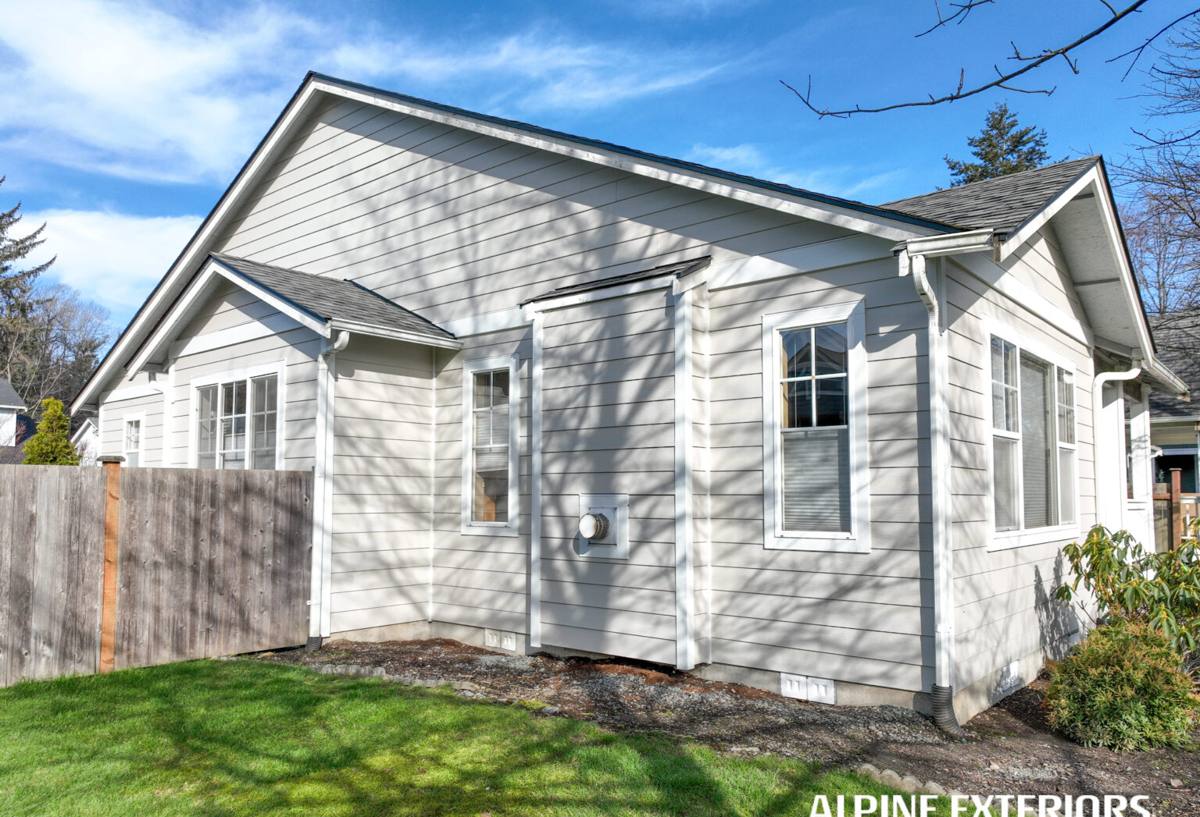
What Local Homes Actually Need From a Shingle Roof
Moss Resistance Starts Before the Shingles Go On
Moss doesn't grow because a roof is old — it grows because a roof stays damp longer than it should. Tree cover, north-facing slopes, and our extended wet season all give moss a foothold. Algae-resistant shingle granules help, but the bigger factor is airflow: a roof that dries out between rain events resists moss far better than one that stays saturated under a shaded, poorly ventilated deck.
Wind-Driven Rain Needs More Than Good Shingles
Standard asphalt shingles are rated for wind uplift, but the real vulnerability in a coastal-influenced climate is water pushed sideways and upward under the shingle tabs during storms. That's a job for underlayment and flashing detail, not the shingle itself. A roof can have premium shingles and still leak if the underlayment, valleys, and step flashing weren't installed with sideways-driven rain in mind.
Salt Air and Metal Components
Nails, flashing, and vents corrode faster near the water. We spec corrosion-resistant fasteners and flashing on every Ferndale job, not as an upsell but because standard hardware simply doesn't hold up as long in this air.
What a Correct Installation Involves
A proper asphalt shingle roof is a system, not a single product. Each layer has a job, and skipping or shortcutting any one of them is where premature leaks and moss problems come from.
- Full tear-off to inspect the deck — never shingling over an existing layer, which traps moisture and hides deck rot
- Deck repair or replacement of any soft, water-damaged sheathing before anything new goes down
- Ice-and-water shield membrane at eaves, valleys, and around penetrations — the areas most exposed to driving rain and ice damming
- Synthetic underlayment across the full deck, lapped correctly for water shedding
- Properly integrated step flashing at walls and chimneys, and continuous flashing in valleys
- Correct nailing pattern and placement — high-nailing is one of the most common causes of early shingle failure
- Balanced intake and exhaust ventilation so the attic and roof deck can actually dry out between wet spells
- Ridge cap and starter strip shingles installed per manufacturer spec, not cut from field shingles
Any one of these steps done wrong won't necessarily show up as a leak in year one. It shows up in year five or eight, usually as moss buildup, granule loss, or a leak that seems to come from nowhere because it's actually tracking along a flashing gap or an underlayment lap installed backward.
Choosing the Right Shingle for This Climate
Most Ferndale homes do best with a mid- to upper-tier architectural (dimensional) shingle. They're heavier, resist wind uplift better than 3-tab shingles, and most come with algae-resistant copper or zinc granules built in, which matters given how much moss and algae pressure this area sees.
| Shingle Type | Typical Lifespan Here | Best For |
|---|---|---|
| 3-tab asphalt | 12–18 years | Budget-conscious projects, rentals, outbuildings |
| Architectural (dimensional) | 20–30 years | Most Ferndale homes — better wind and algae resistance |
| Premium/designer architectural | 25–30+ years | Homes prioritizing curb appeal and longer warranty coverage |
We don't push the most expensive option by default. On a shaded, moss-prone lot, spending more on algae-resistant granules is worth it. On an open, sun-exposed roof with good airflow, a mid-tier architectural shingle often performs just as well for less money. Part of an honest estimate is telling you which of those situations you're actually in.
Our Process for Ferndale Roofing Projects
- On-site inspection — we walk the roof and attic, not just look from the ground, and check for existing moisture damage, ventilation problems, and flashing condition
- Written estimate — scope, materials, and cost broken out clearly, with options where they make sense
- Tear-off and deck inspection — old roofing removed, deck checked board by board for soft spots
- Underlayment and flashing install — ice-and-water shield at vulnerable areas, synthetic underlayment across the field, new flashing at all penetrations
- Shingle installation — correct nailing, exposure, and ridge cap detail per manufacturer requirements
- Ventilation check — intake and exhaust balanced for the specific attic, adjusted if the existing setup was inadequate
- Final walkthrough — cleanup, debris and magnetic nail sweep, and a review of the finished work with you
Roof Ventilation and Moss Prevention
Ventilation is the most overlooked part of a shingle roof and the biggest reason moss comes back even after a roof is cleaned or replaced. If hot, moist air can't escape the attic, it condenses against the underside of the deck, keeping the roof damp from below while rain keeps it damp from above. That combination is exactly what moss and algae need to thrive.
On a re-roof, we check whether the existing intake (soffit) and exhaust (ridge or box vents) venting is adequate for the attic's size, and correct it if not. This isn't a separate add-on service — it's part of doing the roofing job correctly in a climate where moss pressure is a year-round concern, not a seasonal one.
What Roof Repairs and Replacement Cost Depend On
We don't publish flat prices because roof cost depends on real variables specific to each house. What we can tell you honestly is what drives the number up or down.
| Factor | Why It Matters |
|---|---|
| Roof size and number of stories | More square footage and steeper access both add labor time |
| Roof pitch and complexity | Multiple valleys, dormers, and steep slopes take longer to flash and shingle correctly |
| Deck condition | Rotted or soft sheathing found during tear-off adds material and labor |
| Shingle tier chosen | 3-tab vs. architectural vs. premium changes material cost and expected lifespan |
| Ventilation upgrades needed | Adding or correcting intake/exhaust venting affects labor and materials |
| Layers to remove | Tearing off one layer versus two adds disposal and labor cost |
Generally, a full tear-off and re-roof on an average single-family home runs from the low five figures for a straightforward gable roof to well above that for larger or more complex rooflines. An honest estimate walks through which of these factors apply to your specific roof rather than quoting a number over the phone.
Signs Your Roof Needs Attention
Catching problems early is almost always cheaper than waiting. Some signs are obvious; others are easy to miss from the ground.
- Granules collecting in gutters or at downspout outlets
- Shingles that look curled, cupped, or lifted at the edges
- Moss or dark streaking building up on north-facing or shaded slopes
- Soft spots or sagging visible along the roofline
- Daylight visible through the attic roof deck
- Water stains on interior ceilings, especially after wind-driven rain
- Flashing that looks rusted, lifted, or separated from the roof surface
- Roof age approaching or past 20 years without a full inspection
Any one of these on its own isn't necessarily an emergency, but a few together usually mean it's time for an inspection rather than a wait-and-see approach.
Why a Crew That Already Works Ferndale Matters
Roofing crews who mostly work drier, inland climates tend to under-detail the parts of the job that matter most here — ventilation balance, edge protection, and flashing at valleys and walls. A crew that regularly works Ferndale and the surrounding Whatcom County area already knows which details can't be shortcut and builds them into every estimate and every install, not just the ones where a homeowner specifically asks.
That local familiarity also shows up in smaller ways: knowing which slopes tend to hold moss longest, which attic configurations commonly need ventilation correction, and how to sequence a tear-off around the wetter stretches of the year so the deck isn't left exposed longer than necessary.
Maintaining Your Roof Between Services
- Keep gutters clear so water isn't backing up under the shingle edge
- Trim back tree limbs that shade the roof and slow drying
- Have moss physically removed rather than left to spread — pressure washing shingles isn't the right method and can strip granules
- Schedule a professional inspection every couple of years, or after any major windstorm
- Address small flashing or shingle issues promptly rather than waiting for a leak
If you're noticing moss buildup, granule loss, or you just haven't had your roof looked at in a few years, we're happy to come take a look. The estimate is free, there's no pressure attached to it, and you'll get a straight answer about what your roof actually needs — use the form below to get in touch.