 Fairhaven Siding
 Building Decks for Ferndale's Wet, Salty Climate
Ferndale sits close enough to Bellingham Bay and the Fairhaven waterfront that homes here deal with a specific mix of conditions: salt-tinged marine air, long stretches of driving rain from fall through spring, and a moss season that can run eight months or more on shaded lots. A deck built the way it might be built inland — standard fasteners, minimal drainage planning, decking chosen on looks alone — tends to show its age fast here. Boards cup, hardware streaks with rust, and moss creeps into joints within a couple of seasons.
None of that is exotic. It's just Whatcom County weather doing what it does. The fix isn't a gimmick product — it's building the deck's structure, fasteners, and surface materials to match what this specific stretch of coastline actually throws at a house year-round.
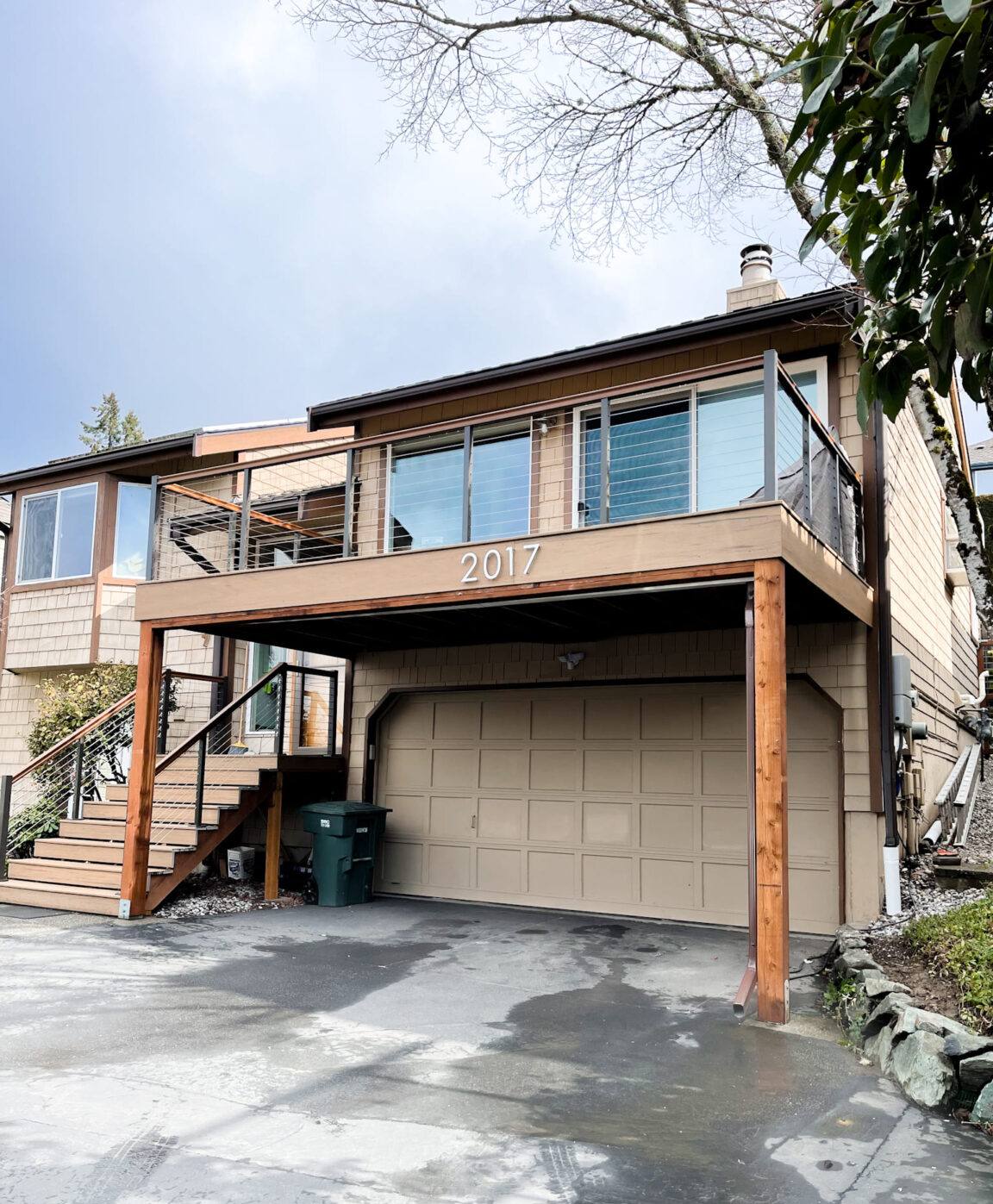
What Ferndale Homes Need From a Deck
Moisture Management Starts Below the Boards
Most deck failures we see aren't failures of the decking itself — they're failures of what's underneath it. A deck that traps water against the ledger board, the joists, or the posts will rot from the inside long before the surface boards look bad. In a climate where the ground rarely dries out completely between October and June, that hidden moisture has months to do damage every single year.
Proper ledger flashing (the metal or membrane barrier between the deck's ledger board and the house) is not optional here. It's the single most common point of rot on older decks in this area, because driving rain gets pushed sideways against the house and finds any gap in that flashing.
Moss and Algae on Horizontal Surfaces
Any flat wood or composite surface that stays shaded and damp for long stretches will grow moss and algae in Whatcom County — it's a matter of when, not if. The goal isn't to prevent it entirely; it's to choose materials and gap spacing that let a deck dry out between rains and make cleaning it a seasonal chore rather than a structural problem.
Corrosion-Resistant Fasteners
Being close enough to the bay to get salt-laden air matters more for a deck than for most other parts of a home, because deck hardware is fully exposed and often galvanically connected to wet wood. Standard zinc-coated screws and joist hardware will streak, weaken, and eventually fail years before they would in a drier, inland climate. This is a place where the fastener spec matters as much as the decking brand.
What a Correctly Built Deck Involves
A deck that holds up here is built in layers, and each layer has a job:
- Footings below the frost line — sized and set to local code depth so the structure doesn't heave or shift over winter freeze-thaw cycles.
- Structural connectors rated for exterior/coastal exposure — hot-dip galvanized or stainless hardware at every joist hanger, post base, and ledger bolt.
- Flashed ledger connection — a physical water barrier between the house band board and the ledger, installed before the ledger ever goes up.
- Joist spacing and blocking matched to the decking material chosen, since composite and PVC boards often call for tighter spans than solid wood.
- Airflow underneath — enough clearance and, where grade doesn't allow it, venting details so the underside of the deck can actually dry out.
- Surface drainage — a slight pitch away from the house and gap spacing between boards that lets water shed instead of pooling.
Skip any one of these and the deck will still look fine on installation day. The problems show up in year three or four, not year one — which is exactly why cutting corners here is so common and so costly to fix later.
Decking Material Comparison for This Climate
There's no single "best" decking material — there's a best fit for the site, the budget, and how much upkeep the owner wants to do. Here's how the common options actually perform under Whatcom County's rain and moss pressure:
| Material | Moisture Behavior | Moss/Algae Resistance | Maintenance | Relative Cost |
|---|---|---|---|---|
| Pressure-treated wood | Absorbs and releases moisture; needs sealed end cuts | Low — needs regular cleaning and re-sealing | Annual cleaning, re-stain/seal every 2-3 years | Lowest |
| Cedar | Naturally moisture-resistant, moves less than PT wood | Moderate — still needs periodic cleaning | Cleaning and oil/sealant every 1-2 years to hold color | Moderate |
| Capped composite | Doesn't absorb water into the core | Good — smooth cap sheds grime, but can still film over | Occasional wash, no sealing or staining | Higher |
| PVC decking | Fully moisture-inert | Best of the group, though still needs washing in shade | Lowest — wash only | Highest |
For shaded, low-airflow spots common on wooded Ferndale lots, we lean homeowners toward capped composite or PVC even though the upfront cost is higher, simply because the annual upkeep on wood in full shade near the coast is a real, recurring cost most people underestimate when they're pricing the initial build.
Our Deck-Building Process
1. Site Assessment and Drainage Read
Before any design talk, we walk the site and look at how water actually moves across it — where runoff collects, how much sun the deck area gets through the year, and what the soil and grade are doing near the house foundation. This shapes footing placement and pitch decisions before we ever get to material selection.
2. Design and Material Selection
We talk through decking material, railing style, and layout with the moisture and moss factors above on the table, not just aesthetics. Budget matters, so we're upfront about where spending more up front (better fasteners, a capped material) saves money in avoided maintenance and repair later.
3. Permitting
Deck permits in Whatcom County jurisdictions typically require footing depth, structural connection details, and guard/railing height to meet current code, especially for decks attached to the house or elevated above grade. We handle the permit submission and inspection scheduling as part of the job — it's not an add-on.
4. Framing and Flashing
This is the stage that determines whether the deck lasts 10 years or 25. Ledger flashing, joist hanger hardware, post-to-footing connections, and blocking all get installed to spec before a single deck board goes down.
5. Decking, Railing, and Finish
Board spacing is set for drainage and airflow, not just visual tightness. Railing hardware gets the same corrosion-resistant treatment as the structure below, since railing posts take direct weather exposure on all sides.
6. Final Walkthrough
We walk the finished deck with the homeowner, cover basic seasonal care for whatever material was chosen, and answer questions about how it'll behave through its first wet season.
Cost Factors Worth Understanding
Deck pricing swings on a handful of variables more than on brand names. Before getting quotes, it helps to know what actually drives the number:
| Factor | Why It Moves the Price |
|---|---|
| Height above grade | Taller decks need deeper footings, more structural bracing, and code-required guardrails |
| Decking material | Wood is cheapest up front; composite and PVC cost more but reduce recurring maintenance |
| Site access | Sloped, wooded, or tight-access Ferndale lots can add labor time for material staging and footing work |
| Ledger vs. freestanding | A freestanding deck (its own posts on all sides) avoids house-attachment flashing work but needs more footings |
| Railing style | Cable, glass, or custom railing systems cost more than standard baluster railing |
Rough ranges vary a lot by size and material, which is why we prefer to walk a site and give a real number rather than quote a per-square-foot figure that doesn't account for grade, access, or material choice.
A Practical Pre-Build Checklist
Before we finalize a deck design, we walk homeowners through a short list of decisions that are much easier to make up front than to change mid-project:
- How much direct sun does the deck area get — does moss and algae control need to be a bigger design factor?
- Is the deck attached to the house (ledger-mounted) or freestanding?
- What's the intended use — dining and grilling, hot tub support, entertaining space — since load and layout follow from this
- Composite/PVC vs. wood: how much annual maintenance is the household actually willing to do?
- Does the railing need to meet a specific view, privacy, or wind-exposure need?
- Is there an existing deck to demo, and does it have hidden rot that will affect the schedule?
Why a Crew That Already Works Ferndale Matters
A deck built by a crew unfamiliar with this specific corner of Whatcom County is guessing at things a local crew already knows: which permit offices to expect inspection timelines from, how a given lot's drainage typically behaves after a heavy fall rain, and which fastener and flashing specs actually hold up against the salt air coming off the bay versus what a manufacturer's general spec sheet assumes for a drier region. That local pattern recognition shows up in fewer callbacks and a deck that's still solid a decade in, not just a deck that looks good at handoff.
We also keep relationships with local building departments and suppliers that carry the corrosion-resistant hardware and coastal-rated materials this area calls for — not every supplier stocks it as standard, and substituting the wrong hardware is one of the more common shortcuts that shows up as rust streaks and loosening connections a few years down the line.
Maintenance That Actually Matters Here
Whatever material a deck ends up with, a few habits go a long way in this climate:
- Clear leaves and debris from board gaps and along the house ledger before the fall rains set in
- Rinse or lightly brush shaded areas where moss tends to establish, ideally before it gets a foothold each spring
- Check railing posts and stair connections annually for hardware corrosion, especially on decks facing prevailing weather
- Reseal wood decking on the schedule appropriate to the product — skipping a cycle in a wet climate compounds fast
- Keep gutters and downspouts near the deck clear so roof runoff isn't adding extra water load to the structure
None of this is heavy work, but skipping it is exactly how a well-built deck starts showing problems early, and how a poorly built one fails outright.
Get a Straight Answer for Your Property
Every lot in and around Ferndale drains differently, gets a different amount of shade, and has its own quirks worth walking through in person before any design or pricing conversation makes sense. If you're planning a new deck or replacing one that's showing its age, we're happy to come take a look and give you a straightforward, no-pressure estimate — just fill out the form below.