 Fairhaven Siding
 Custom Windows Built for Ferndale's Weather
Ferndale sits close enough to the water and to Fairhaven that homes here take on the same weather punishment our crews see all along this stretch of Whatcom County: salt-laden air rolling in off the Strait, long stretches of driving rain, and a moss season that seems to start earlier every year. Stock windows bought off a shelf at a big-box store are built to a national average. Ferndale homes don't get average weather — they get months of saturation, wind-driven moisture, and enough humidity to keep organic growth going nearly year-round. Custom windows, sized and detailed for the specific opening and orientation of your house, hold up to that in a way off-the-shelf units often don't.
"Custom" doesn't have to mean expensive or exotic. It means the window is built to fit your rough opening correctly, uses glass and frame materials suited to a marine climate, and gets installed with flashing and sealant details that actually shed water instead of trapping it. That last part matters more here than almost anywhere — a beautiful window installed with the wrong flashing sequence will leak into your wall cavity long before the glass itself ever fails.
Salt Air and Metal Fatigue
Salt in the air accelerates corrosion on anything metal — window hardware, screen frames, and especially older aluminum sashes. Over years, that corrosion works into hinges, cranks, and locking mechanisms until windows stop closing tightly. A window that doesn't close all the way isn't just annoying; it's a gap that lets moist air into the wall assembly behind it. Custom windows let us spec hardware and cladding finishes that resist salt exposure instead of fighting it for a decade and losing.
Driving Rain and Wind-Driven Moisture
Wind off the water doesn't just fall — it pushes rain sideways into siding and window openings. That's a very different load than a calm vertical rain, and it's the reason we treat every window opening in this area as a wind-driven-rain detail, not a standard one. The flashing, the sill pan, and the sealant joints all have to be built assuming water WILL reach them, and giving that water a way back out instead of a way in.
Moss Season and Sustained Moisture
Long stretches of mild, wet weather keep moss and algae active on north-facing walls and shaded window trim for much of the year. That sustained moisture is hard on wood trim and can find its way into any gap in old caulking or failed flashing. It's less dramatic than a big storm, but it does more cumulative damage because it never really stops.
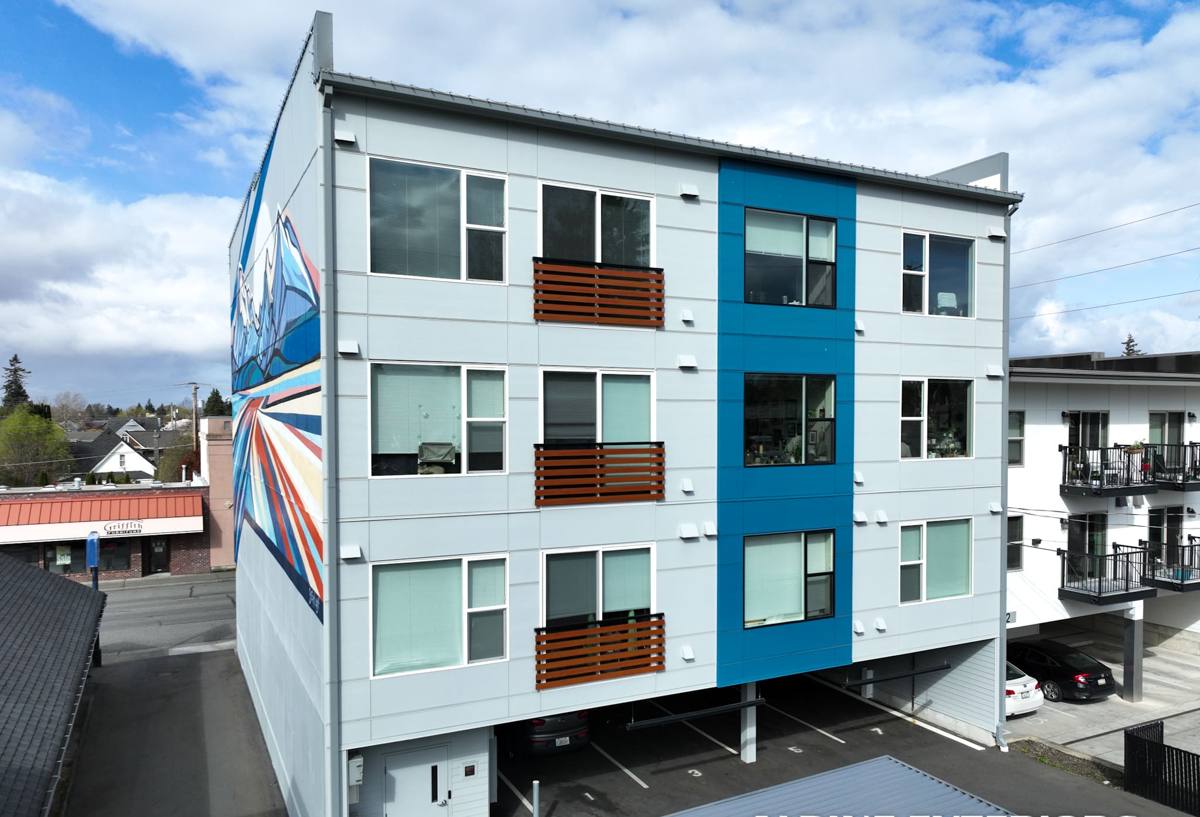
Signs Your Current Windows Are Losing the Fight
Most window failures in this climate don't announce themselves with a dramatic leak. They show up as small, steady clues first. Walk your house and check for these:
- Soft or discolored wood trim around the window frame, especially on the north or west side
- Fogging or a permanent haze between panes of double-glazed glass (a sign the seal has failed)
- Windows that are hard to open, close, or lock — often a sign of frame swelling or hardware corrosion
- Visible gaps between the window frame and siding, or cracked/missing caulk
- A musty smell near a window, or peeling paint on interior trim below a sill
- Noticeable drafts on windy days, even with the window fully latched
- Moss or dark streaking building up on the sill or exterior trim faster than on the rest of the wall
Any one of these on its own might just mean a caulking touch-up. Several together, especially on an older window, usually mean the frame or seal has failed and a patch job will only buy a season or two.
What "Custom" Means in Practice
Custom windows aren't about unusual shapes or high-end finishes, though we can do those if a project calls for it. For most Ferndale-area homes, custom simply means:
- Exact-fit sizing for the actual rough opening, not a "close enough" stock size that needs shimming and extra sealant to make work
- Frame material matched to exposure — a window on the weather side of the house may call for a different frame than one tucked under a deep eave
- Glass package suited to orientation — more solar control on south and west exposures, standard low-E elsewhere
- Hardware finish rated for coastal or near-coastal air, so locks and cranks are still working smoothly in ten years, not two
None of this requires a premium up-charge across the board. It requires actually looking at each opening and building the order around what that specific window needs to do.
Frame Material Comparison for This Climate
| Material | Moisture Behavior | Maintenance | Typical Fit |
|---|---|---|---|
| Vinyl | Won't rot; seams need quality welding to stay watertight long-term | Low — occasional cleaning | Most standard replacement windows, good value |
| Fiberglass | Very stable in wet/dry cycling, resists warping | Low | Larger openings, higher-exposure walls |
| Aluminum-clad wood | Good exterior protection if cladding and flashing are done right; interior wood still needs sealed joints | Moderate | Homes wanting a wood interior look with exterior protection |
| Bare wood | Requires diligent painting/sealing; most exposed material to this climate's moisture | High | Historic or period-specific homes where appearance is the priority |
We'll talk through which of these fits your specific walls and exposure during the estimate — a house with deep overhangs can often support a lower-maintenance choice on the weather side than a house with minimal roof protection.
What a Correct Installation Actually Involves
The window itself is maybe a third of the job. The other two-thirds is what happens around it, and it's where most leaks originate — not from a bad window, but from a rushed or out-of-sequence installation.
Removal and Opening Inspection
We don't just pull the old window and drop in the new one. Once the old unit is out, we inspect the framing and sheathing for hidden rot or moisture damage, which is common on older Ferndale-area homes that have had years of moss and rain working at hidden gaps. Any soft framing gets addressed before a new window ever goes in — installing a new window over damaged framing just hides the problem for a while.
Sill Pan and Flashing
A sloped sill pan directs any water that gets past the window back outside instead of into the wall. Flashing tape gets layered in the correct shingle-style order — each layer overlapping the one below it — so water is always directed down and out, never trapped behind a layer above it. This sequencing is the single biggest factor in whether a window leaks five years down the road.
Sealing and Fastening
Windows get fastened per manufacturer spec and sealed with sealant rated for exterior, wet-climate use — not general-purpose caulk that will crack and shrink within a couple of seasons. Interior air sealing gets addressed too, since a gap on the inside can pull moist air into the wall cavity from the room side.
Trim and Finish
Exterior trim gets back-primed and sealed at all joints before it's reinstalled, since end grain and joint seams are where wood trim starts to fail first in a wet climate.
Our Process, Start to Finish
- Free on-site estimate — we look at your specific openings, exposure, and existing condition, not just a phone quote
- Product selection — we walk through frame material, glass package, and hardware options suited to that wall's exposure
- Written scope and timeline — clear on what's included, what the sequence looks like, and how long the job will take
- Installation — old window removal, opening inspection, correct flashing sequence, new window set, sealed and finished
- Walkthrough — we go over the finished work with you before we consider the job done
Cost Factors to Expect
| Factor | Why It Matters |
|---|---|
| Number and size of openings | Bigger jobs get some efficiency, but each opening still needs full flashing attention |
| Frame material chosen | Vinyl is typically the most budget-friendly; fiberglass and clad-wood cost more upfront |
| Condition of existing framing | Hidden rot found during removal adds labor and material to repair before the new window can go in |
| Exposure and access | Second-story or hard-to-access windows on the weather side take more time to do right |
| Trim and finish work | Matching existing trim profiles or repainting takes additional time beyond the window swap itself |
We give real, project-specific numbers at the estimate — we're not going to quote a ballpark over the phone on a job where the actual scope depends on what's behind your old trim.
Why Hiring a Crew That Already Works Ferndale Matters
A lot of window problems we get called out to fix started with an installer who does great work in a drier climate but treated this job like any other. Flashing sequence, sealant choice, and even how long you can leave an opening exposed mid-install all change when you're working this close to the water in Whatcom County. A crew that installs windows here regularly already knows which walls in this area take the worst of the wind-driven rain, how long the moss season really runs, and why a sill pan detail that works fine in a dry inland climate isn't enough here. That local pattern recognition is the difference between a window that's still tight in fifteen years and one that needs re-caulking every other spring.
After Installation: Keeping Custom Windows Performing
New windows still need a little seasonal attention in this climate:
- Check exterior caulk lines once a year, typically before the fall rains pick up
- Keep moss and organic growth cleared off sills and trim, especially on shaded walls
- Operate locks and cranks periodically so hardware doesn't seize from disuse
- Clean weep holes on vinyl or clad frames so they can still drain properly
None of this is heavy maintenance, but skipping it is how a well-installed window ends up with the same problems as the one it replaced.
If your windows in the Ferndale area are showing any of the wear signs above, or you're planning ahead for a remodel, we're happy to come take a look. The estimate is free, there's no pressure to sign anything on the spot, and you'll get a straight answer about what your home actually needs — just fill out the form below to get started.