 Fairhaven Siding
 Roofs in Ferndale Take a Different Kind of Beating
Ferndale sits close enough to the water that salt-laden air reaches roofing materials year-round, and that air doesn't just smell different — it accelerates corrosion on fasteners, flashing, and any exposed metal. Add in Whatcom County's long, wet stretch of fall through spring, where driving rain comes sideways off the water on windier days, and you get a roofing environment that punishes shortcuts. Shingles that would last two decades in a dry climate can fail early here if they weren't installed with the right underlayment, flashing detail, and ventilation for this specific area.
Then there's moss. Whatcom County's moss season isn't a few weeks — it's most of the year. Moss holds moisture against the roof surface, works its way under shingle tabs, and lifts them just enough to let water in. A roof that looks fine from the ground can already have moss growing in the shaded, north-facing slopes and around valleys where debris collects. None of this means Ferndale homes need exotic materials. It means they need a replacement done correctly, with details that a lot of standard installs skip.
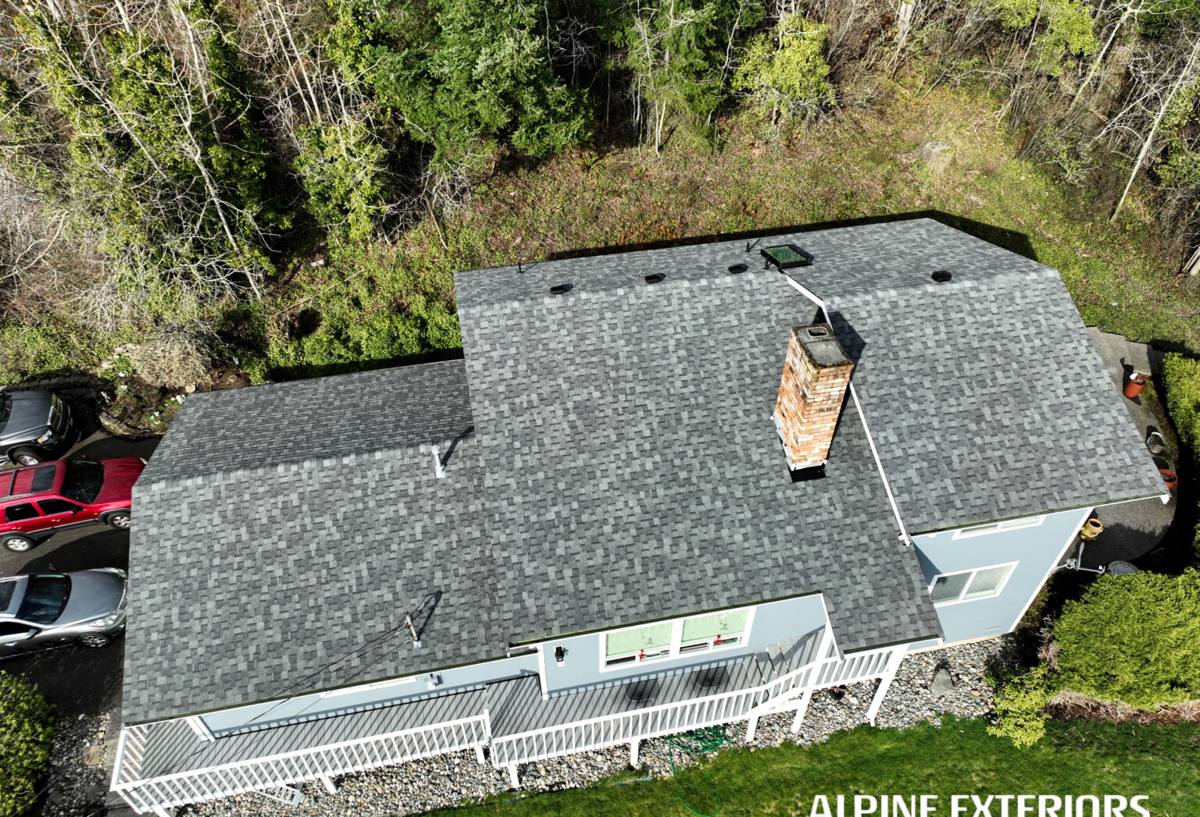
Signs a Ferndale Roof Needs Replacing, Not Just Patching
Not every roof problem calls for a full replacement. But a few signs consistently mean patching is a temporary fix at best:
- Granule loss heavy enough that you're finding grit in gutters and downspouts every time it rains
- Shingles that are curling, cupping, or cracking across multiple slopes, not just one isolated spot
- Moss or moisture staining that keeps coming back in the same areas even after cleaning
- Soft spots in the decking when walked on, or sagging visible from the ground or attic
- Daylight visible through the roof deck from inside the attic
- A roof approaching or past the manufacturer's expected service life for asphalt shingle products in this climate — typically shorter here than in drier regions
- Repeated leak calls to the same area despite prior repairs
If a roof shows two or more of these at once, especially combined with age, replacement is almost always the more cost-effective path than continuing to chase leaks one at a time.
What a Correct Roof Replacement Actually Involves
Full Tear-Off, Not Overlay
Roofing over existing shingles can be tempting because it's faster and cheaper, but it hides the condition of the deck underneath and traps moisture between layers — a real problem in a climate this wet. A full tear-off lets the crew inspect every square foot of decking, which matters most on older Ferndale homes where roof leaks may have gone unnoticed for a while.
Deck Inspection and Repair
Once the old roofing is off, any decking that's soft, delaminated, or water-damaged gets replaced before anything new goes down. Installing new shingles over compromised decking is one of the most common reasons a roof fails early, and it's not something you can verify without pulling the old material off first.
Ice-and-Water Shield in the Right Places
Even though Whatcom County doesn't see the ice damming that colder inland regions get, self-adhering waterproof membrane still belongs at eaves, valleys, and around penetrations, because wind-driven rain here can push water uphill under shingles in a way a standard underlayment alone won't stop.
Ventilation That Matches the Climate
Balanced intake and exhaust ventilation keeps moisture from condensing in the attic, which matters in a region where the air outside is often nearly as damp as the air you're trying to vent. Poor ventilation shortens shingle life from the underside, not just the top.
Flashing and Fastener Choices for Salt Air
Around chimneys, skylights, and roof-to-wall transitions, flashing quality determines whether a roof stays watertight for its full lifespan. In a coastal-influenced area, corrosion-resistant fasteners and flashing materials aren't an upgrade — they're the standard, because standard-grade metal degrades faster here than it would further inland.
Material Options for a Ferndale Roof Replacement
There's no single "right" material for every home, but here's how the common options compare for this specific climate:
| Material | Moss/Moisture Behavior | Wind Performance | Typical Lifespan Here | Maintenance |
|---|---|---|---|---|
| Architectural asphalt shingle | Good with proper ventilation; algae-resistant granules help but don't eliminate moss | Solid with correct nailing pattern and rated shingle | 20-30 years, often shorter without good airflow | Periodic moss treatment and gutter clearing |
| 3-tab asphalt shingle | More prone to curling and moisture intrusion over time | Lower wind rating than architectural | 15-20 years | More frequent inspection needed |
| Standing seam metal | Sheds moss and debris very well; smooth surface resists buildup | Excellent | 40-50+ years | Low, but coating and fastener checks over time |
| Composite/synthetic shake | Good moisture resistance; varies by product | Good | 30-40 years | Moderate |
For most Ferndale homes, architectural asphalt shingle remains the practical choice on cost versus performance, as long as ventilation and moss prevention are built into the install rather than treated as an afterthought. Metal roofing is a legitimate upgrade for homeowners planning to stay long-term or who want to largely stop dealing with moss altogether, but it comes with a higher upfront cost and different installation skill requirements — we'll walk through whether it makes sense for your specific roof rather than pushing one material by default.
Our Roof Replacement Process
- On-site inspection. We walk the roof, check the attic for ventilation and moisture signs, and look at decking condition where accessible.
- Written estimate. You get a clear scope covering material, tear-off, disposal, and any decking repair allowance, with straight answers about what's included.
- Scheduling around the weather. Given how much rain this area gets, we plan tear-off and dry-in on days with a workable weather window, and we don't leave a roof open overnight without protection.
- Tear-off and deck inspection. Old material comes off, decking gets inspected and repaired as needed, and we do a magnetic sweep for nails around the property.
- Underlayment, flashing, and shingle installation. Installed to manufacturer specification, with the waterproofing and ventilation details this climate requires.
- Final walkthrough and cleanup. We review the finished roof with you and make sure the property is left clean.
Cost Factors for a Ferndale Roof Replacement
| Factor | Why It Matters |
|---|---|
| Roof size and number of facets | More square footage and more valleys/hips mean more material and labor time |
| Roof pitch and accessibility | Steep or hard-to-access roofs take longer and require more safety setup |
| Number of existing layers | Removing multiple layers of old roofing adds tear-off time and disposal cost |
| Decking condition | Rot or soft spots found during tear-off add repair cost that's hard to quote sight-unseen |
| Material selection | Asphalt shingle, metal, and composite options carry different material and labor costs |
| Ventilation upgrades needed | Adding proper intake/exhaust venting where it's missing affects scope and price |
Rather than quote a number without seeing the roof, we give homeowners a real range once we've inspected the specific conditions, since two roofs of the same size can price very differently depending on decking condition and detail work.
Why a Crew That Already Works Ferndale Makes a Difference
A roofing crew that regularly works in Whatcom County knows to plan tear-off around actual weather windows instead of a generic schedule, understands which roof details tend to fail first in this moisture and moss environment, and has already worked through the local permitting process enough times that it doesn't slow the job down. That local experience shows up in things homeowners don't always think to ask about — how flashing is detailed around penetrations, how ventilation is balanced for a damp climate, and how tear-off is handled on a wet day without letting water into the house.
It also means we're not guessing about how a roof in this area typically ages. We've seen what moss does to a north-facing slope that never gets sun, and what salt-influenced air does to unprotected metal over time, and we build the replacement around avoiding those specific failure points rather than following a one-size-fits-all install.
What to Ask Before You Hire
- Are you licensed and insured to work in Washington, and can you provide proof?
- Will you do a full tear-off and inspect the decking, or is overlay on the table?
- What underlayment and ice-and-water shield placement do you use, and why?
- How will you handle ventilation if the current attic isn't properly vented?
- What's covered under workmanship warranty versus manufacturer material warranty?
- How do you handle disposal and site cleanup, including a nail sweep?
- Can you provide a written, itemized estimate before work begins?
A contractor who answers these clearly and specifically, without dodging into vague reassurance, is usually a good sign. One who can't explain their underlayment or ventilation approach for this climate is worth a second thought.
Keeping a New Roof Performing in This Climate
A correctly installed roof still benefits from basic upkeep in Ferndale's conditions. Gutters need clearing more often than in drier climates, since clogged gutters push water back under the roof edge during heavy rain. Moss treatment on a schedule — rather than waiting until it's visibly thick — keeps it from lifting shingle tabs. And an occasional check of flashing around chimneys and skylights catches small issues before they become interior leaks. None of this requires a maintenance contract, just periodic attention, which we're happy to advise on even after the job is done.
If you're weighing repair versus replacement, or just want a straight assessment of where your roof actually stands, we're glad to come take a look. The estimate is free, there's no pressure attached to it, and you'll get a clear answer either way — use the form below to get started.