 Fairhaven Siding
 Why Ferndale Windows Wear Faster Than the Instruction Manual Says
Every window comes with a manufacturer spec sheet that assumes fairly average conditions. Ferndale doesn't get average conditions. Sitting close to the water in Whatcom County means homes here deal with a steady mix of salt-laden air, wind-driven rain that hits siding and window assemblies sideways rather than straight down, and a wet season that can stretch on long enough to grow moss on anything that stays damp. None of that is dramatic on its own, but stacked together over years it's exactly the kind of exposure that finds every weak point in a window installation.
Salt air is slow but relentless on metal hardware — hinges, locks, and cranks on older aluminum or lower-grade vinyl windows can start binding or corroding well before the glass itself fails. Driving rain punishes flashing and sealant details more than it punishes the window unit itself; most leaks we find in Ferndale homes aren't a bad window, they're a window that was never properly integrated with the wall's water management. And the long moss season adds a moisture load that keeps sills, tracks, and exterior trim damp for weeks at a stretch, which accelerates rot in wood-framed windows and breaks down cheap caulking faster than a drier climate would.
None of this means Ferndale is a hard place to keep windows in good shape — it just means the installation has to be done with this specific exposure in mind, not a generic one.
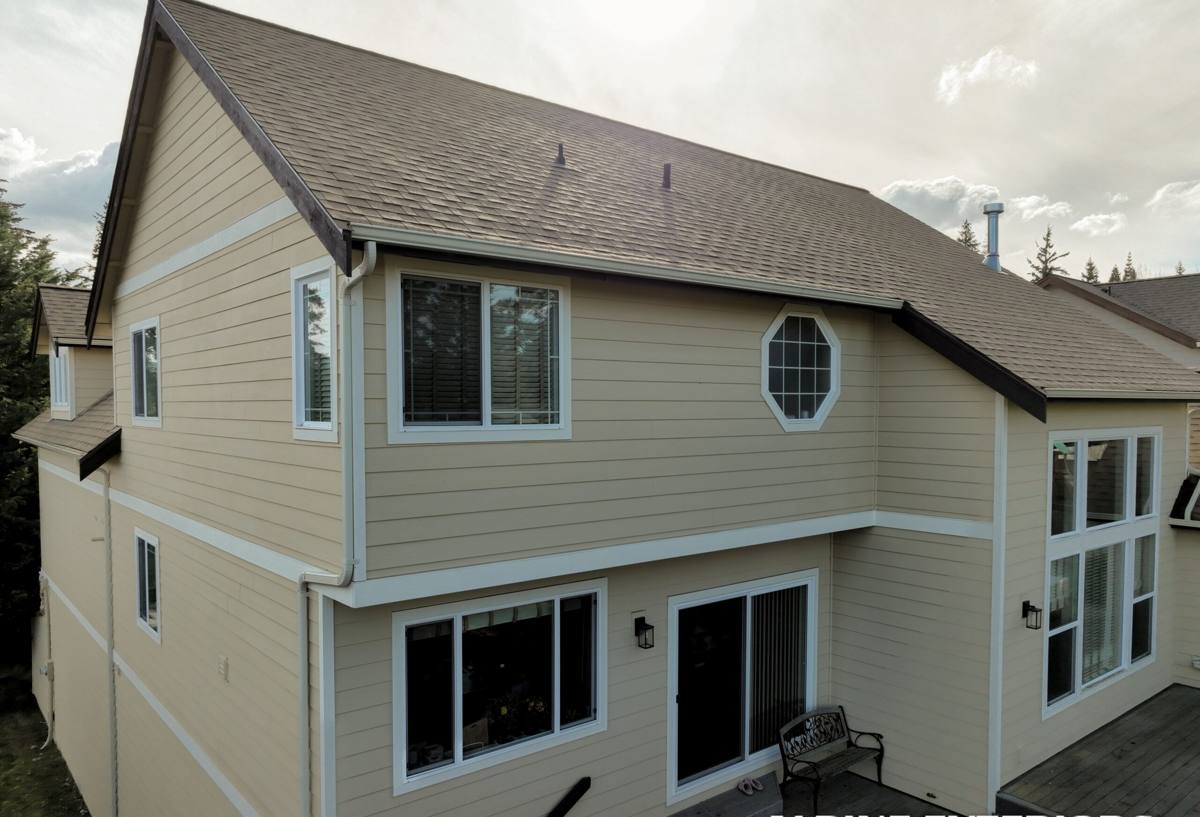
Signs a Ferndale Home Actually Needs Replacement (Not Just Repair)
Not every drafty or foggy window needs to come out. But there's a point where repair stops being the honest recommendation. Here's what we actually look for during an evaluation:
- Fogging or a visible haze between double-pane glass — the seal has failed and the gas fill is gone; this can't be repaired, only replaced
- Soft or spongy wood at the sill, jamb, or corners — a sign moisture has been getting behind the frame, common on the weather-facing sides of a house
- Visible moss or persistent green staining on the sill or exterior trim, even after cleaning — usually points to water sitting where it shouldn't
- Windows that won't stay open, won't latch fully, or have hardware that's stiff or corroded from salt exposure
- Noticeable draft or cold spot near the frame in winter, even with the window fully closed and locked
- Condensation forming on the interior frame or sill regularly, not just occasionally on the coldest mornings
- Visible daylight or gaps around the frame from outside, especially after the house has settled over the years
If a window is showing one or two of these and the frame is otherwise sound, repair or reglazing can still make sense. Once you're seeing several of these together, replacement is usually the more honest answer — patching a frame that's already taking on water just delays the same conversation for another year or two.
What a Correct Window Replacement Actually Involves
The window unit itself is only part of the job. In a climate that throws driving rain at a wall, the flashing and sealing details around the window matter as much as the glass and frame — arguably more, since a good window installed poorly will leak, and a mediocre window installed correctly usually won't.
Full-Frame vs. Insert Replacement
There are two basic approaches. An insert (or "pocket") replacement fits a new window into the existing frame, leaving the old frame and exterior trim in place. It's faster and less invasive, and it's a reasonable option when the existing frame is still solid and dry. A full-frame replacement removes the window down to the rough opening, which lets us inspect and repair the sheathing, flashing, and framing underneath — necessary any time there's evidence of past water intrusion, rot, or a frame that's out of square. We'll tell you honestly which one your situation calls for; it's not something we decide based on which is easier for us.
Flashing and Water Management
This is the step that separates a window that lasts from one that leaks in three years. Proper installation means integrating the window's flashing with the existing weather-resistive barrier in the correct shingle-lap order (each layer overlapping the one below it, so water is always directed outward and down), sealing the head flashing correctly above the window, and never relying on caulk alone to do a flashing detail's job. Caulk is a backup, not a strategy — it degrades, especially with the amount of driving rain this part of Whatcom County gets, and a window that depends on a perfect caulk line to stay dry is a window that will eventually fail.
Sealing and Insulation
Gaps around the new frame get filled with a proper low-expansion foam or backer rod and sealant system, not just stuffed with fiberglass. This affects both drafts and long-term moisture control — an incompletely sealed gap can let humid air condense inside the wall cavity, which is a slower but just as damaging problem as a direct leak.
Frame Material: What Actually Holds Up Near the Water
Frame material choice matters more here than in a drier, inland climate. We steer most Ferndale homeowners toward vinyl or fiberglass for a reason — not because wood or aluminum are bad products in general, but because of how they behave under this specific combination of salt air and sustained moisture.
| Frame Material | Behavior in Salt Air / Wet Climate | Maintenance | Typical Trade-Off |
|---|---|---|---|
| Vinyl | Doesn't corrode or absorb moisture; stable in coastal air | Low — occasional cleaning | Fewer color/finish options than wood or fiberglass |
| Fiberglass | Very stable dimensionally, resists moisture and salt well | Low | Higher upfront cost than vinyl |
| Wood (clad or unclad) | Attractive but vulnerable at unclad joints; needs consistent upkeep in moss season | High — repainting, sealing, sill inspection | Best appearance, but highest long-term maintenance burden here |
| Aluminum | Conducts cold and can corrode over time with salt exposure | Moderate | Prone to condensation and hardware corrosion near the coast |
Wood-frame windows aren't a bad product — plenty of homes use them well — but we're upfront that they demand real maintenance discipline in this climate, and a homeowner who's not planning to keep up with repainting and sealant checks every few years will get more trouble-free years out of vinyl or fiberglass. That's a maintenance-burden conversation, not a knock on the material.
Our Process, Start to Finish
- On-site evaluation. We look at the actual condition of each window and its surrounding frame and trim, not just take measurements — this is where we catch hidden rot or past water intrusion before it becomes a surprise mid-project.
- Honest scope and estimate. We tell you which windows genuinely need full-frame replacement versus insert replacement, and why, along with a clear cost range.
- Scheduling around the weather. Window openings are exposed to the elements during the swap. We plan installation days around the forecast — not something to rush during an active system off the water.
- Removal and inspection. Old units come out, and any sheathing, framing, or flashing issues we find get addressed before anything new goes in.
- Correct flashing and sealing. Installed in the proper order, tied into the existing weather barrier, with sealant used as a backup layer, not the primary defense.
- Interior and exterior finish work. Trim, sills, and casing are finished to match the home, inside and out.
- Walkthrough and cleanup. We check operation on every window — smooth open, close, and lock — and leave the site clean.
What Affects Cost
We won't quote a number without seeing the actual openings, but these are the factors that move the price up or down on most Ferndale jobs:
| Factor | Effect on Cost |
|---|---|
| Insert vs. full-frame replacement | Full-frame costs more but is necessary if there's frame damage or rot |
| Frame material chosen | Vinyl is typically most affordable; fiberglass and clad wood cost more |
| Number of windows and access | Second-story or hard-to-access windows take more time and labor |
| Hidden damage discovered at removal | Rot or past water intrusion found once old trim is off can add scope |
| Glass package | Higher-performance glass (better U-factor, tinting, sound control) adds cost |
Why a Crew That Already Works in Ferndale Makes a Difference
A window installer who mostly works in a dry, inland climate can still do competent work, but they may not default to the flashing and sealant details that matter most here. A crew that's already replacing windows across Fairhaven and the surrounding Whatcom County coastline treats correct flashing sequencing and salt-tolerant hardware as standard practice, not an upsell — because we've seen what happens when those details get skipped on a house exposed to this kind of weather. That local pattern recognition is worth more than it sounds like on paper: it's the difference between catching a rot problem during removal versus a homeowner finding it themselves in three years.
Keeping New Windows Performing Through Moss Season
A correctly installed window shouldn't need much attention, but a little seasonal awareness extends its life. Keep sills and tracks clear of debris and standing moisture, especially through the wetter months when moss growth picks up on shaded or north-facing sides of the house. Check exterior caulk lines once a year for cracking or gaps — catching a small crack early is a five-minute fix; ignoring it for a few wet seasons is not. And if you notice a window sticking, dragging, or its hardware getting stiff, get it looked at before forcing it — that's often an early, cheap fix rather than a sign of failure.
If you're weighing whether your Ferndale home's windows need attention now or can wait another season, we're glad to take a look and give you a straight answer either way. Use the form below to request a free, no-pressure estimate.