 Fairhaven Siding
 Sehome's Climate Is Hard on Siding — Here's Why
Homes in and around Sehome deal with a specific combination of weather that not every siding product, or every installer, accounts for. Whatcom County sits close enough to Bellingham Bay that salt-laden air reaches inland neighborhoods, and it combines with a wet season that can stretch for months at a time. Add in the shade and moisture that many mature-tree lots hold onto, and you get long stretches where exterior walls simply don't dry out.
That combination — salt air, driving rain, and a long moss season — is exactly what breaks down siding that isn't built or installed for it. Wood-based products absorb moisture and swell. Paint films chalk and peel faster near the coast. Seams and laps that aren't flashed correctly stay damp behind the surface even when the face looks fine. None of this is exotic engineering knowledge; it's just what happens when a wall assembly is exposed to this climate for years without a break.
A siding job done right in this area isn't about picking a good-looking product off a sample board. It's about choosing a material that tolerates sustained moisture exposure and installing it with the clearances, flashing, and fastening details that keep water moving away from the wall instead of into it.
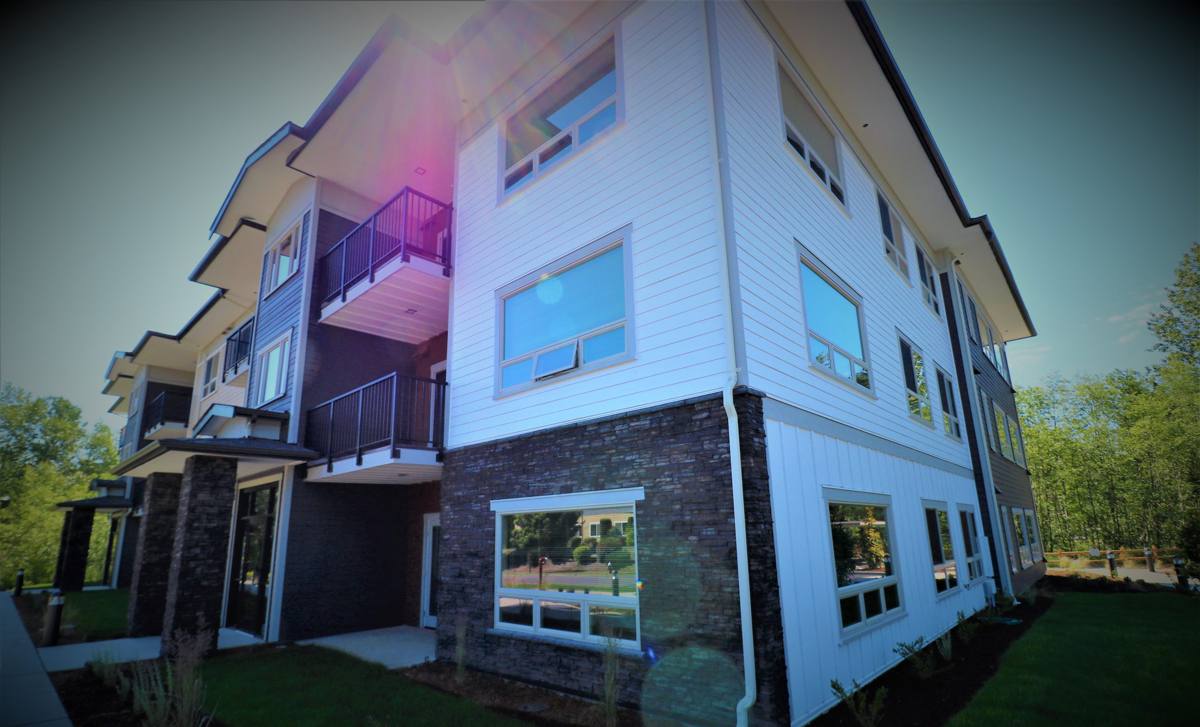
What Fiber Cement Siding Needs to Get Right in This Climate
Fiber cement is a strong starting point for a wet, coastal-influenced climate because it's dimensionally stable — it doesn't swell, cup, or rot the way wood-based sidings can. But the material only performs as well as the installation. Fiber cement siding, done wrong, will fail in the same wet-climate ways as any other product: trapped moisture, paint failure, and soft trim.
Clearances and Flashing
Fiber cement siding needs proper clearance from grade, roof lines, decks, and hardscape — typically a minimum gap so water can't wick up into the bottom edge of the panel. It also needs correct flashing at every horizontal transition: window and door heads, roof-to-wall intersections, and butt joints between courses. In a climate where rain doesn't let up for days, a missed flashing detail isn't a cosmetic miss — it's a slow leak that shows up as rot in the sheathing a few years later.
Fastening and Panel Selection
Manufacturer fastening schedules exist for a reason: correct nail placement and embedment keep panels locked down through wind-driven rain events without working themselves loose over time. We also select HardieZone-engineered products matched to this region's exposure category, rather than a generic panel that happens to be in stock. That matching matters more here than it does in a dry climate, because the margin for error with moisture is smaller.
Signs Your Current Siding Is Losing the Fight
If you're trying to decide whether it's time to replace siding on a Sehome-area home, a few signs are worth taking seriously rather than just repainting over:
- Moss or algae that returns within a season or two of cleaning, especially on north-facing or shaded walls
- Paint that's peeling or bubbling rather than just fading — often a sign of moisture trapped underneath
- Soft or spongy spots when you press on siding or trim, particularly near the bottom courses or under windows
- Visible gaps, warping, or cupping in lap boards
- Rising heating bills that track with drafts near exterior walls
Any one of these can be a localized repair. Several at once, especially combined with moss that keeps coming back, usually points to a wall assembly that's been staying wet longer than it should — which is a climate problem as much as a product problem.
Our Installation Process for Sehome Homes
The process doesn't change much from house to house, but the details we pay closest attention to are the ones this climate punishes fastest.
- On-site assessment. We look at existing siding condition, trim, window flashing, and any moisture damage before quoting anything — not just the visible surface.
- Moisture and substrate check. Where we suspect trapped moisture behind existing siding, we check sheathing condition before covering anything back up.
- Weather-resistive barrier and flashing. We install or verify a correct water-resistive barrier and flash every penetration and horizontal transition before the first course of siding goes up.
- Panel installation to manufacturer spec. Correct clearances, fastening schedule, and joint treatment — the details that determine whether the job holds up in year eight, not just year one.
- Finish and detail work. Trim, caulking at appropriate joints only (not as a substitute for flashing), and a final walkthrough.
We don't skip the parts of this process that aren't visible in the finished photo. In a dry climate, a shortcut on flashing might not show up for a decade. Here, it can show up in two or three winters.
Why a Fairhaven-Based Crew Matters for Sehome Jobs
Siding performance in this region isn't generic — it depends on how a specific wall faces the weather, how much shade and airflow it gets, and how much salt-air exposure it sees over a year. A crew that works this part of Whatcom County regularly builds a feel for which walls need extra attention to flashing and which products handle the local moss and moisture load best, instead of applying the same approach everywhere.
Being based in Fairhaven also means shorter lead times for punch-list items, warranty callbacks, and follow-up questions after the job is done — no waiting on a crew that has to travel in from out of the area. For a job that's meant to last decades on a wall exposed to this weather, that ongoing accessibility matters as much as the installation day itself.
Why We Only Install James Hardie Fiber Cement
We install James Hardie exclusively — not vinyl, not LP SmartSide, not Cemplank or Allura, not primed wood. That's a deliberate standard, not a brand preference for its own sake. Hardie's fiber cement is non-combustible, holds up to sustained moisture exposure without swelling or rotting, and its ColorPlus factory finish is baked on and warrantied against fading in a way field-applied paint isn't. The HardieZone HZ product system is engineered specifically for climates like this one — wet, coastal-influenced, with real freeze-thaw variation.
Other products have real strengths, and we're upfront about them when homeowners ask. But we've made a professional call that for this climate, and for the kind of long-term performance we're willing to put our name behind, James Hardie fiber cement is what we install. It's the product we'd choose for our own homes in this weather.
What a Fiber Cement Siding Job Costs — And What Drives the Price
Every home is different, but the factors below are what actually move the number on a Sehome-area fiber cement job. We give firm numbers after an on-site look, not before.
| Cost Factor | Why It Matters Here |
|---|---|
| Existing wall condition | Hidden moisture damage found during tear-off adds repair scope before new siding can go on |
| Home size and wall complexity | More corners, gables, and trim details mean more cutting, flashing, and labor time |
| Siding profile chosen | Lap siding, panel systems, and shingle-style Hardie products differ in material and install time |
| Trim and accessory scope | Window and door trim, fascia, and soffit work are often bundled with a siding project |
| Access and site conditions | Tree cover, slope, and tight lot lines affect scaffolding and crew efficiency |
| Color and finish | Factory ColorPlus finishes vs. field painting affect both cost and long-term maintenance |
Living With Fiber Cement Siding in a Marine Climate
Correctly installed Hardie siding is low-maintenance, but "low" isn't "none" — especially with salt air and a long moss season working against it year-round. A short routine keeps it performing the way it's designed to:
- Rinse siding once or twice a year to clear salt residue, pollen, and organic buildup before it feeds moss growth
- Keep gutters clear so overflow doesn't run down the wall face repeatedly
- Trim back vegetation and tree limbs that keep a wall section shaded and damp
- Inspect caulking at trim joints annually and re-caulk where it's cracked or separated
- Address any soft trim or paint bubbling early, before moisture spreads behind the surface
None of this is heavy upkeep — it's the kind of maintenance that takes an afternoon and prevents the moss and moisture problems that shorten the life of any siding in this climate, Hardie included.
If you're weighing a siding replacement for a Sehome-area home, we're happy to take a look and walk you through what we'd actually do — no pressure, no upsell script. Reach out below for a free estimate.