 Fairhaven Siding
 Why Happy Valley Roofs Wear Differently
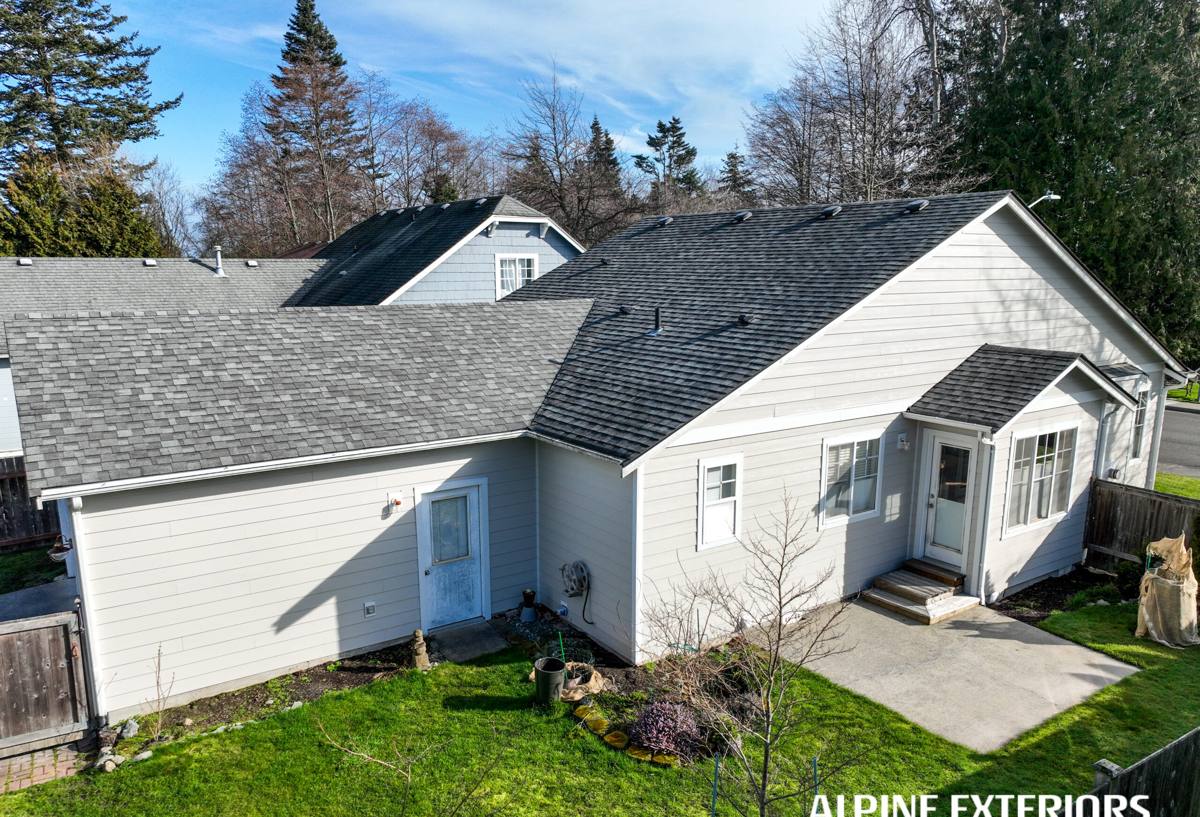
Happy Valley sits close enough to Bellingham Bay and the marine air that moves through Fairhaven to take on a roofing challenge that inland Whatcom County neighborhoods don't deal with in the same way. The combination of salt-laden air, driving rain off the water, and a long, damp moss season means roofs here age on their own schedule, not the schedule printed on a shingle warranty. A roof that would coast to 25 years in a drier, inland climate can show granule loss, moss colonization, and metal fastener corrosion well ahead of that timeline if it wasn't installed with this specific environment in mind.
That's the core of what we mean by a "local" roof replacement: not just showing up in Happy Valley, but building the roof assembly to survive what Happy Valley actually throws at it year-round.
What This Climate Actually Does to a Roof
Salt Air and Metal Fatigue
Proximity to the bay means airborne salt settles on every exterior surface, including your roof. Standard steel fasteners, exposed flashing, and lower-grade metal accessories corrode faster near the water than they would a few miles inland. This isn't a reason to avoid metal components on a roof — it's a reason to spec the right grade of fastener and flashing material for a bay-adjacent property instead of using whatever is standard everywhere else.
Driving Rain and Wind-Driven Water
Fairhaven gets rain that doesn't just fall straight down — wind off the water pushes it sideways and up under laps, edges, and flashing that would stay dry in a calmer inland storm. A roof here needs underlayment and flashing detail that assumes water will try to travel uphill at some point during the winter, because it will.
Moss, Moisture, and a Long Wet Season
Western Washington's moss season is long, and Happy Valley's tree cover and humidity give moss plenty of time to establish. Moss isn't just cosmetic — it holds moisture against the roof surface, lifts shingle edges as it grows, and accelerates decay in the decking underneath if it's left unchecked for a few seasons. A correctly installed roof reduces how aggressively moss can take hold; it doesn't eliminate the need for occasional cleaning, but it makes that maintenance far less urgent.
Signs a Happy Valley Roof Needs Replacement, Not Another Repair
- Granule loss heavy enough that you can see bare, shiny patches on asphalt shingles, especially on slopes facing prevailing wind and rain
- Moss growth that comes back within a season or two of cleaning, even after treatment
- Soft or spongy decking felt underfoot in the attic, or daylight visible through the roof deck
- Multiple past repairs in different spots rather than one contained problem area
- Rusted or failing flashing around chimneys, vents, and valleys — a common early failure point in salt air
- Interior water stains that appear or worsen during wind-driven storms specifically, not just steady rain
- A roof approaching or past 20–25 years old with no major upgrades to underlayment or ventilation since install
What a Correct Roof Replacement Involves Here
A roof replacement is more than swapping old shingles for new ones. In a climate like Fairhaven's, several details matter more than they would in a milder or drier region, and skipping them is exactly how a "new" roof still shows moss and leaks within a few years.
Full Tear-Off and Deck Inspection
We remove the existing roofing down to the deck rather than layering over it. This lets us actually see the plywood or sheathing underneath — which is where long-term moisture damage from moss and slow leaks tends to hide — and replace any soft or rotted sections before new roofing goes down.
Underlayment Built for Wind-Driven Rain
Given how much sideways rain Happy Valley sees, we use synthetic underlayment with ice-and-water shield reinforcement at eaves, valleys, and other vulnerable transitions, not just a minimal single layer of felt. This is the difference between a roof that sheds water and one that merely tolerates it in calm weather.
Flashing and Fasteners Matched to Salt Air
Around chimneys, skylights, sidewalls, and valleys, we detail flashing carefully and use fasteners and metal components suited to a marine-influenced environment, so corrosion doesn't become the reason for a callback five years down the road.
Ventilation That Actually Balances
Proper intake and exhaust ventilation keeps attic moisture from condensing on the underside of the deck — a real risk in a damp climate with long, cool, wet stretches. Balanced ventilation also helps the roof surface dry out faster after rain, which matters for slowing moss regrowth.
Moss-Conscious Material Choices and Details
Where it makes sense, we'll talk through options like zinc or copper strips near ridges, which help suppress moss regrowth over time using a low-maintenance, passive method rather than relying on repeated chemical treatments.
Material Options for Happy Valley Homes
| Material | How It Handles This Climate | Maintenance Reality |
|---|---|---|
| Architectural asphalt shingle | Good performance when paired with proper underlayment and ventilation; moderate resistance to moss on its own | Occasional moss cleaning recommended; most common, most cost-effective option |
| Metal roofing (standing seam) | Sheds wind-driven rain very well; moss has a harder time gripping smooth metal panels | Low ongoing maintenance; higher upfront cost; requires correct fastener spec near the bay |
| Cedar shake | Traditional look that fits older Fairhaven homes, but holds moisture longer than asphalt or metal in a wet climate | Higher maintenance burden — more frequent treatment and moss management needed; we'll walk through this trade-off honestly before you commit |
| Synthetic/composite shingle | Resists moisture absorption well; performs consistently in salt air | Low maintenance; cost sits between asphalt and metal |
Our Process for a Happy Valley Roof Replacement
1. On-Site Inspection and Honest Assessment
We walk the roof and the attic, not just the ground-level view, and tell you plainly whether you're looking at a repair or a full replacement. If repair genuinely makes more sense for your situation, we'll say so.
2. Written Estimate With Real Line Items
You'll see what's included — tear-off and disposal, decking repair allowance, underlayment type, flashing work, ventilation upgrades, and material costs — rather than a single vague number.
3. Scheduling Around Whatcom County Weather
We plan around the wet season where we can and communicate honestly if a weather window forces a schedule adjustment. Roofing in driving rain isn't safe or effective, and we won't pretend otherwise to keep a date.
4. Tear-Off, Deck Repair, and Installation
Old roofing comes off, the deck gets inspected and repaired as needed, and the new roof system goes on in the sequence that actually protects the house — underlayment, flashing, then finish material.
5. Cleanup and Final Walkthrough
We clear debris, including a magnetic sweep for stray fasteners, and walk the finished roof with you before calling the job done.
Cost Factors for a Happy Valley Roof Replacement
| Factor | Why It Moves the Price |
|---|---|
| Roof size and pitch | More square footage and steeper pitches mean more material and labor time |
| Number of layers to remove | Tearing off multiple old layers costs more than a single-layer tear-off |
| Deck condition | Rotted or moisture-damaged sheathing found during tear-off adds repair cost |
| Material choice | Asphalt, metal, cedar, and composite options carry different material and labor costs |
| Flashing and ventilation complexity | Multiple valleys, chimneys, skylights, or a poorly ventilated attic add work |
| Access and roof height | Steep or hard-to-access roofs require more safety setup and time |
Why a Crew That Already Works Happy Valley Makes a Difference
A roofing crew that regularly works Fairhaven and the surrounding Whatcom County neighborhoods has already seen how moss establishes on local roof lines, which flashing details tend to fail first in bay-adjacent wind and rain, and what a well-built roof needs to actually hold up here versus on paper. That local pattern recognition is hard to replicate if a crew is unfamiliar with the area's specific mix of salt air, wind-driven rain, and shade-heavy, moss-friendly lots. It also means we're not guessing about permitting or inspection expectations in the county — we've been through that process before.
Questions to Ask Before You Hire
- Will you do a full tear-off, or are you proposing to layer over the existing roof?
- What underlayment and flashing details are you using at valleys, eaves, and penetrations?
- How will you handle attic ventilation as part of this job, not as an afterthought?
- What's your plan if the deck inspection reveals rot once the old roofing is off?
- Are you licensed and insured to work in Whatcom County, and can you show proof?
- What does your warranty actually cover — materials, labor, or both — and for how long?
If your Happy Valley roof is showing moss that won't stay gone, granule loss, or its age is starting to catch up with it, we're happy to take a look and give you a straight answer about what it needs. Request a free, no-pressure estimate using the form below.