 Fairhaven Siding
 Why Happy Valley Puts Extra Strain on Siding
Happy Valley sits close enough to the water and tree cover that its homes take a different kind of beating than siding manufacturers assume in their generic installation guides. Salt-laden air moves in off the Salish Sea and settles into anything porous. Driving rain, pushed sideways by wind rather than falling straight down, finds its way behind poorly lapped siding and around loose trim. And the shaded, damp pockets common in this part of Whatcom County give moss and algae a long growing season — often eight or nine months out of the year — on any surface that stays wet longer than it should.
None of this is unusual for western Washington. But it does mean that a siding product and installation method that would hold up fine in a drier inland climate can fail early here. We've replaced siding on Happy Valley homes where the underlying sheathing was still sound, but the cladding itself had absorbed moisture for years and simply gave out — swelling, delaminating, or growing a permanent green cast that pressure washing couldn't touch.
What This Climate Actually Requires From a Siding Product
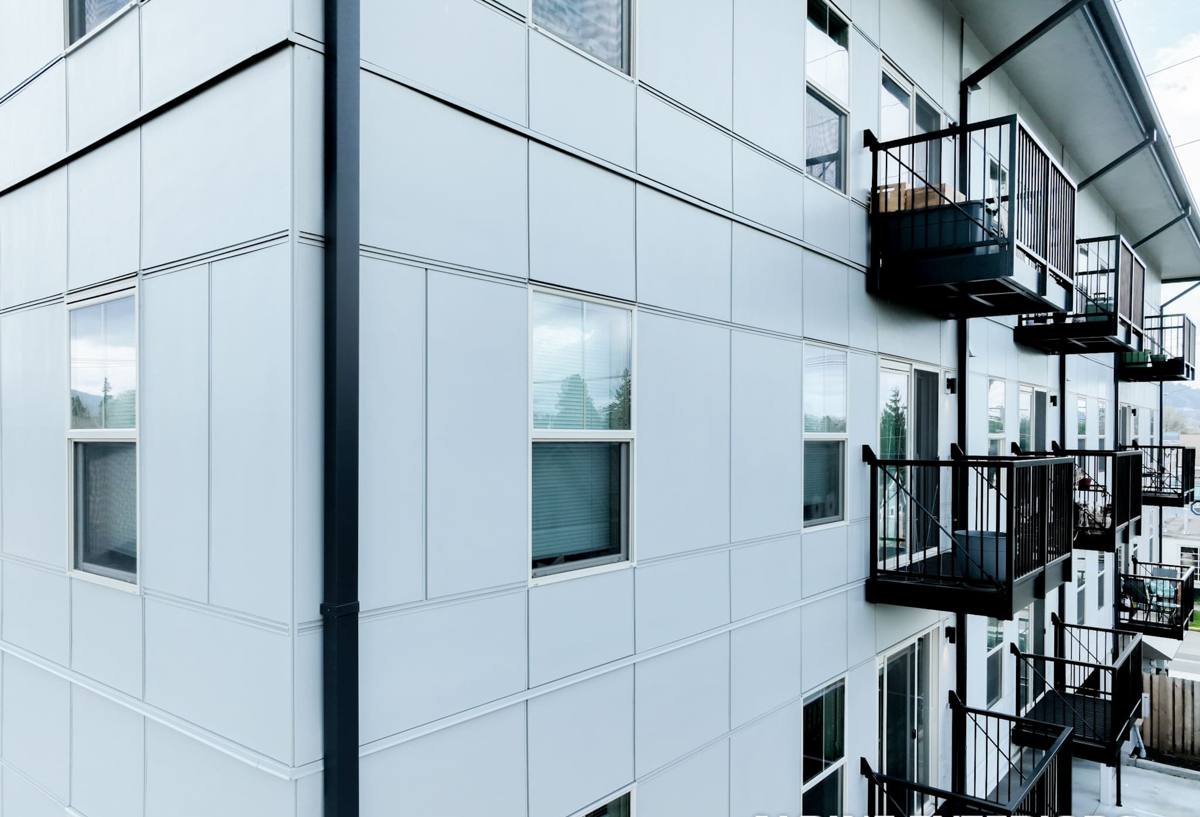
Fiber cement isn't a marketing choice for us — it's a response to what actually holds up under salt air and sustained moisture exposure. James Hardie's board is engineered from cement, sand, and cellulose fiber, which means it doesn't absorb water the way wood-based or wood-adjacent products can, and it won't rot, delaminate, or feed insects. For a neighborhood like Happy Valley, that matters more than curb appeal alone.
The HZ5 Engineering Difference
James Hardie makes climate-specific versions of its products, and the Pacific Northwest falls under their HZ5 zone — engineered for regions with sustained damp weather and freeze-thaw cycles. That's not a marketing label; it affects the product's moisture management and finish durability. We install HZ5-rated Hardie products on every job in this area, not a generic version meant for a drier climate.
Non-Combustible Matters Too
Fiber cement is also non-combustible, which is a real consideration during dry summer stretches when wildfire smoke and regional fire risk make headlines even here on the wet side of the state. It's not the primary reason we recommend it in Happy Valley, but it's a genuine added benefit homeowners often don't think about until we mention it.
What a Correct Installation Actually Involves
Most siding failures we get called out to inspect aren't a product problem — they're an installation problem. Fiber cement is forgiving of the climate, but not of shortcuts. A correct install in a salt-air, high-rain environment like Happy Valley includes:
- Proper drainage plane and weather-resistive barrier behind the siding, not just house wrap stapled up and left
- Rain screen gap where conditions call for it, so any moisture that does get behind the board can drain and dry rather than sit against the sheathing
- Correct flashing at every window, door, and roofline transition — this is where the vast majority of water intrusion actually starts
- Manufacturer-specified gaps and clearances at trim, corners, and the bottom starter course so the board isn't wicking water from standing moisture or snow
- Fasteners driven to Hardie's specification — not too shallow, not overdriven, which cracks the board's edge and creates a future crack point
- Caulking only where Hardie's install guide calls for it, with the right sealant — over-caulking traps moisture just as often as under-caulking lets it in
Skip any one of these and the siding itself can be flawless while the wall behind it slowly fails. That's why we treat the install spec as non-negotiable, not a set of suggestions to speed through.
Our Process on a Happy Valley Job
We start with a walk-around of the existing exterior, checking not just the visible siding condition but what's happening at penetrations — vents, hose bibs, light fixtures, deck ledger boards — since those are the spots most likely to be letting moisture in already. If there's existing damage, we identify how far it's spread into the sheathing before quoting the job, so there are no surprises once tear-off starts.
From there:
- We confirm product line and profile — lap, shingle, or panel — based on the home's style and what performs best given the amount of sun and shade the walls get
- We select a ColorPlus factory finish, which is baked on and warranted separately from the board itself, rather than a job-site paint that will need repainting on a normal cycle
- We remove old siding and inspect sheathing and framing, repairing anything compromised before a single new board goes up
- We install house wrap or drainage wrap, flashing, and rain screen materials to spec
- We hang and fasten the Hardie boards to manufacturer tolerances, including proper nailing patterns and joint treatment
- We do a final walkthrough with the homeowner, including care and touch-up notes specific to ColorPlus finishes
Signs Your Current Siding Is Already Losing the Battle
If your home in Happy Valley has vinyl, wood, or an older fiber cement product, a few warning signs are worth checking for before they turn into a bigger repair:
- Persistent green or black staining that returns within weeks of cleaning, especially on north- and west-facing walls
- Caulk lines that have cracked, shrunk, or pulled away from trim and window edges
- Soft spots or visible swelling near the bottom courses, close to grade or under decks
- Paint that's peeling or bubbling in sheets rather than just fading
- Musty smell in an adjacent interior room, which can indicate moisture has already reached the wall cavity
Any one of these on its own might just need attention. Several together usually mean the siding system as a whole has stopped doing its job.
What Affects Cost on a Happy Valley Project
Every home is different, but the factors that move a quote up or down are consistent. We'd rather walk you through these honestly than throw out a number that doesn't hold up once we're on site.
| Factor | Why It Matters |
|---|---|
| Existing siding removal | Tear-off and disposal of old material, plus any hazardous material handling if the home has old materials that require special disposal |
| Sheathing repair | Moisture damage found during tear-off has to be repaired before new siding goes on — this is the most common source of a mid-project cost change |
| Home size and wall complexity | Dormers, multiple gables, and lots of trim detail take more labor per square foot than a simple rectangular elevation |
| Product profile and finish | Lap siding, shingle-style panels, and specialty trim all price differently, and ColorPlus finish options vary by line |
| Site access | Tight lots, slopes, and limited staging space around Happy Valley properties can add time for scaffolding and material handling |
Why a Crew That Already Works This Neighborhood Matters
Happy Valley isn't generic exterior conditions applied at random — it's a specific set of exposure patterns, wind direction, and moisture behavior that a crew learns by working here repeatedly, not by reading a spec sheet once. We know which elevations in this part of Whatcom County typically take the worst of the driving rain, which lots hold shade long enough to grow moss aggressively, and where flashing details need extra attention because of how a particular roofline sheds water onto the wall below.
We also install James Hardie exclusively. We don't split our crews' expertise across vinyl one week and fiber cement the next. That focus means our installers aren't relearning fastening patterns, gap tolerances, or flashing details from a different product's manual — they're applying the same correct method on every job, which is exactly what keeps a fiber cement installation performing the way it's designed to.
Maintaining James Hardie Siding in a Salt Air, High-Moss Climate
Fiber cement is low-maintenance, not no-maintenance. A short seasonal routine keeps it performing for decades in Happy Valley conditions:
- Rinse siding with a garden hose (not a pressure washer aimed directly at seams) once or twice a year to clear salt residue and organic buildup before it stains
- Keep gutters clear so overflow doesn't run down the wall face and feed moss growth
- Trim back vegetation and tree limbs that keep a wall section shaded and damp longer than the rest of the house
- Inspect caulking at trim and penetrations annually, and re-caulk before a failed joint lets water behind the siding
- Touch up any chips or scrapes with Hardie's matched touch-up product promptly, rather than letting bare edges sit exposed
If you're weighing a siding replacement in Happy Valley, we're glad to come take a look and walk the exterior with you — no pressure, no sales script, just a straight assessment of what your home actually needs. Reach out below for a free estimate.