 Fairhaven Siding
 Metal Roofing Built for Lummi Island's Coastal Exposure
Lummi Island sits right in the path of everything Puget Sound weather can throw at a roof: salt-laden air off the water, wind-driven rain that finds every gap, and a wet season long enough to give moss a real head start every year. A roof out here isn't just shedding water — it's fighting corrosion and biological growth at the same time, year-round. Metal roofing, installed correctly, handles that combination better than most other materials available to island homeowners, which is why we get asked about it so often from residents and property owners on Lummi Island and throughout the Fairhaven and Whatcom County area.
This page is specifically about metal roofing for homes on Lummi Island — what the local conditions demand, what a properly done installation actually involves, and how our process protects your investment. If you're comparing materials generally, this isn't that page; this is about doing metal roofing right in this specific environment.
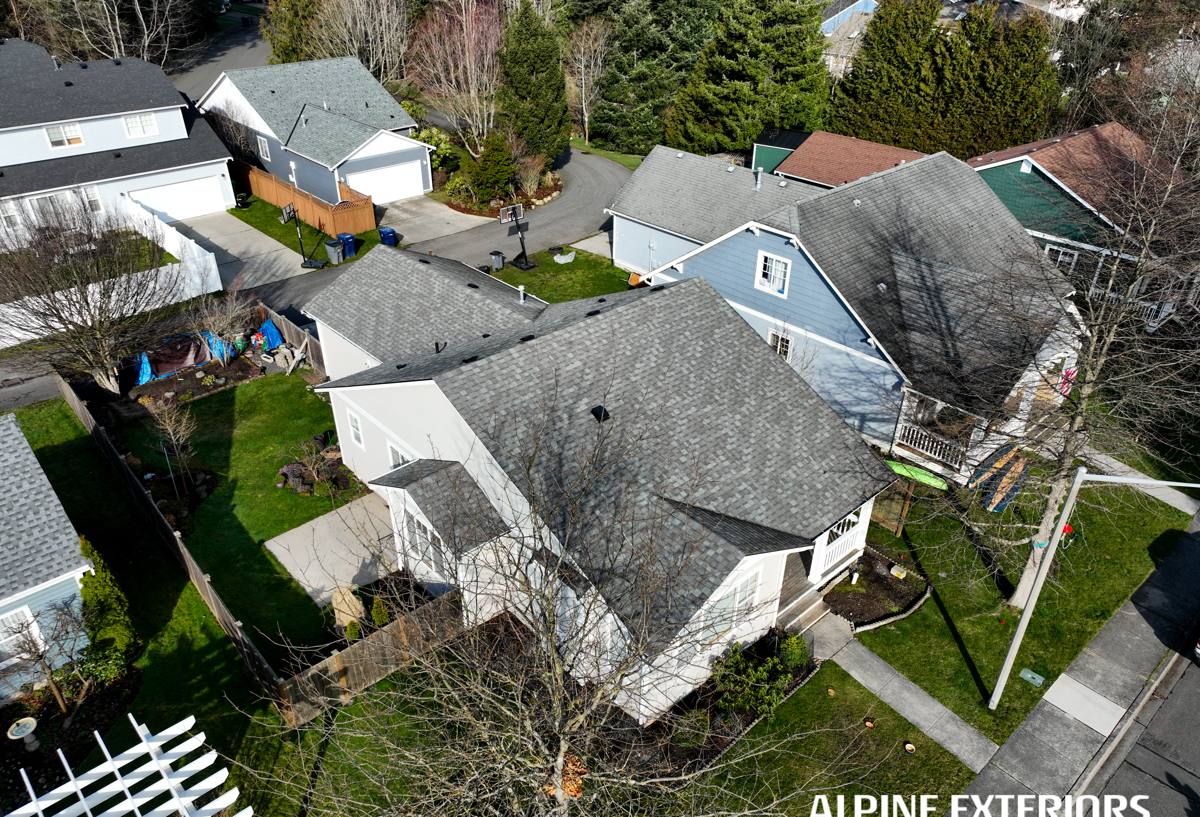
What Lummi Island's Climate Actually Does to a Roof
Three factors drive almost every roofing decision we make out here:
Salt Air and Corrosion
Proximity to saltwater means airborne salt settles on every exterior surface, including your roof. Over time, salt exposure accelerates corrosion on metal that isn't properly coated or isn't the right alloy for the environment. This isn't a reason to avoid metal roofing — it's a reason to be selective about which metal roofing system goes on a coastal home, and to make sure fasteners, flashing, and coatings are all rated for the exposure, not just the panel itself.
Driving, Wind-Blown Rain
Storms coming off the water don't just fall straight down — wind pushes rain sideways and up under laps, ridge caps, and flashing details that would be fine in a calmer climate. A roof here needs underlayment and flashing details engineered for wind-driven moisture, not just standard vertical rainfall.
Extended Moss Season
Shaded, damp conditions for much of the year create ideal moss and algae growth conditions, especially on north-facing slopes and anywhere tree cover keeps a roof from drying out between rains. Moss holds moisture against roofing material and, on the wrong substrate, can work into seams and fastener penetrations over time. Metal roofing gives moss far less to grip onto than a rougher, more porous surface, which is one of the practical reasons it performs well here — but panel type, finish, and slope still matter.
Why Metal Roofing Fits This Environment
Metal roofing isn't automatically the right call for every coastal home, but for Lummi Island's combination of salt exposure, wind-driven rain, and moss pressure, it has real, practical advantages when specified and installed correctly:
- Smooth, hard surfaces give moss and algae less to grab onto compared to more textured roofing materials.
- Properly coated steel or aluminum panels resist salt-driven corrosion far better than uncoated or poorly finished metal.
- Standing seam and other concealed-fastener profiles shed wind-driven rain more reliably than exposed-fastener systems.
- Metal roofing generally holds up to the freeze-thaw and wet-dry cycling common in this climate without the granule loss or cupping issues seen on some other materials.
- A correctly installed metal roof requires less frequent moss treatment and cleaning than porous roofing surfaces, which matters for island properties that aren't visited daily.
None of that is a guarantee — it depends entirely on material selection and installation quality, which is where most of the real difference between a roof that lasts and one that doesn't gets decided.
What a Correct Metal Roof Installation Involves Here
Panel and Coating Selection
Not every metal roofing product is built for saltwater exposure. We select panel materials and factory finishes rated for coastal/marine environments rather than defaulting to whatever is standard inland. This affects long-term corrosion resistance more than almost any other single decision on the job.
Fasteners and Flashing
Fasteners are often the first place corrosion shows up on a coastal metal roof, especially with exposed-fastener systems. We use fastener types and flashing metals compatible with the panel material to avoid galvanic corrosion — mixing incompatible metals at the coast accelerates deterioration in ways that aren't obvious until years later.
Underlayment for Wind-Driven Rain
Given how much of Lummi Island's weather comes in sideways, we treat underlayment and ice-and-water membrane at eaves, valleys, and penetrations as non-negotiable, not optional upgrades. This is the layer that saves a roof when wind pushes water somewhere the panels alone can't stop it.
Ventilation
Proper attic and roof ventilation keeps moisture from condensing under the metal from the inside, which matters just as much as keeping rain out from the outside. A roof that's watertight on top but poorly ventilated underneath can still develop rot and mold problems.
Slope and Detail Work at Transitions
Ridges, valleys, and roof-to-wall transitions are where the majority of leaks originate on any roof. On a coastal, moss-prone site, we pay particular attention to these details so water and debris don't have anywhere to pool or collect.
Comparing Metal to Other Common Roofing Options for This Climate
| Factor | Metal Roofing | Asphalt Shingle | Wood Shake |
|---|---|---|---|
| Moss/algae resistance | Strong — smooth surface, little to grip | Moderate — granules trap moisture | Weak — porous, holds moisture |
| Salt air corrosion risk | Low, if coating/fasteners are marine-rated | Not a factor (non-metal) | Not a factor (non-metal) |
| Wind-driven rain performance | Strong with concealed-fastener profiles | Moderate — depends on install quality | Weak — more failure points |
| Typical maintenance | Occasional moss check/wash | Periodic granule loss, moss treatment | Regular treatment against rot and moss |
| Upfront cost | Higher | Lower | Moderate to higher |
The upfront cost gap is real, and we won't pretend otherwise. What tends to close that gap over time is fewer maintenance calls, less frequent moss treatment, and a longer service life when the installation is done correctly for this specific environment.
Our Process for a Lummi Island Metal Roofing Project
- On-site assessment — we look at slope, tree cover, existing ventilation, and current moss/moisture patterns specific to your property.
- Material selection — we recommend panel type, gauge, and finish based on your home's exposure, not a one-size-fits-all default.
- Written estimate — clear scope, materials, and timeline before anything is scheduled.
- Tear-off and deck inspection — we check the roof deck for hidden moisture damage before installing anything new over it.
- Underlayment and flashing installation — the layer that matters most for wind-driven rain and long-term leak prevention.
- Panel installation — installed to manufacturer spec with fasteners and flashing matched to the panel material.
- Final walkthrough — we go over the finished roof and ventilation with you directly.
What to Ask Any Contractor Before Signing
- Is the panel finish and fastener type rated for marine/coastal exposure specifically?
- What underlayment is being used at eaves, valleys, and penetrations?
- Will the roof deck be inspected for moisture damage before new material goes on?
- Is ventilation being addressed, or just the roof surface?
- Does the crew have experience working on Lummi Island or similarly exposed coastal properties?
Why a Crew That Already Works Lummi Island Matters
Lummi Island access, logistics, and weather windows work differently than a typical mainland job in Fairhaven or elsewhere in Whatcom County. A crew that's already familiar with getting materials and equipment to the island, working around ferry schedules, and reading the specific wind and moisture patterns of an island roof isn't guessing — they're applying what they've already seen work and fail on comparable homes. That matters more on a coastal metal roofing job than on most other exterior work, because the margin for error on fastener choice, flashing details, and coating selection is narrower here than it is inland.
Maintenance After Installation
A correctly installed metal roof on Lummi Island still benefits from periodic attention:
- Visual check for moss buildup, especially on shaded or north-facing sections, once or twice a year.
- Keeping gutters and valleys clear of debris that can trap moisture against panel edges.
- Prompt attention to any scratched or damaged coating, since exposed base metal corrodes faster in salt air.
- Periodic inspection of fasteners and flashing at transitions, where wear shows up first.
None of this is intensive compared to other roofing materials, but skipping it entirely shortens the life of even a well-installed roof.
Get a Straight Answer for Your Property
Every Lummi Island roof faces this climate a little differently depending on tree cover, slope, and sun exposure. If you're weighing metal roofing for your home, we're happy to take a look and give you a straightforward, no-pressure estimate based on what your specific property actually needs — use the form below to get started.