 Fairhaven Siding
 Building New on Lummi Island Means Building for the Water
Lummi Island sits out in Rosario Strait, reachable only by the county ferry, and that isolation shapes everything about how a new home should be built here. Every window opening on a new-construction project on the island is exposed to salt-laden air moving off the water, wind-driven rain that comes in sideways during fall and winter storms, and a long stretch of the year — roughly October through April — when moss, algae, and general dampness sit against the building envelope longer than they would inland. None of that is a reason to avoid big glass or open floor plans. It's a reason to make sure the window openings are built correctly from the studs out, before siding, trim, or finish work ever goes on.
As a Fairhaven-based siding and exteriors crew serving Whatcom County, we treat new-construction window installation as an envelope job, not a glass job. The window unit itself matters, but the flashing, the sequencing, and the connection between the window and the surrounding wall assembly are what actually keep water out for the next thirty or forty years.
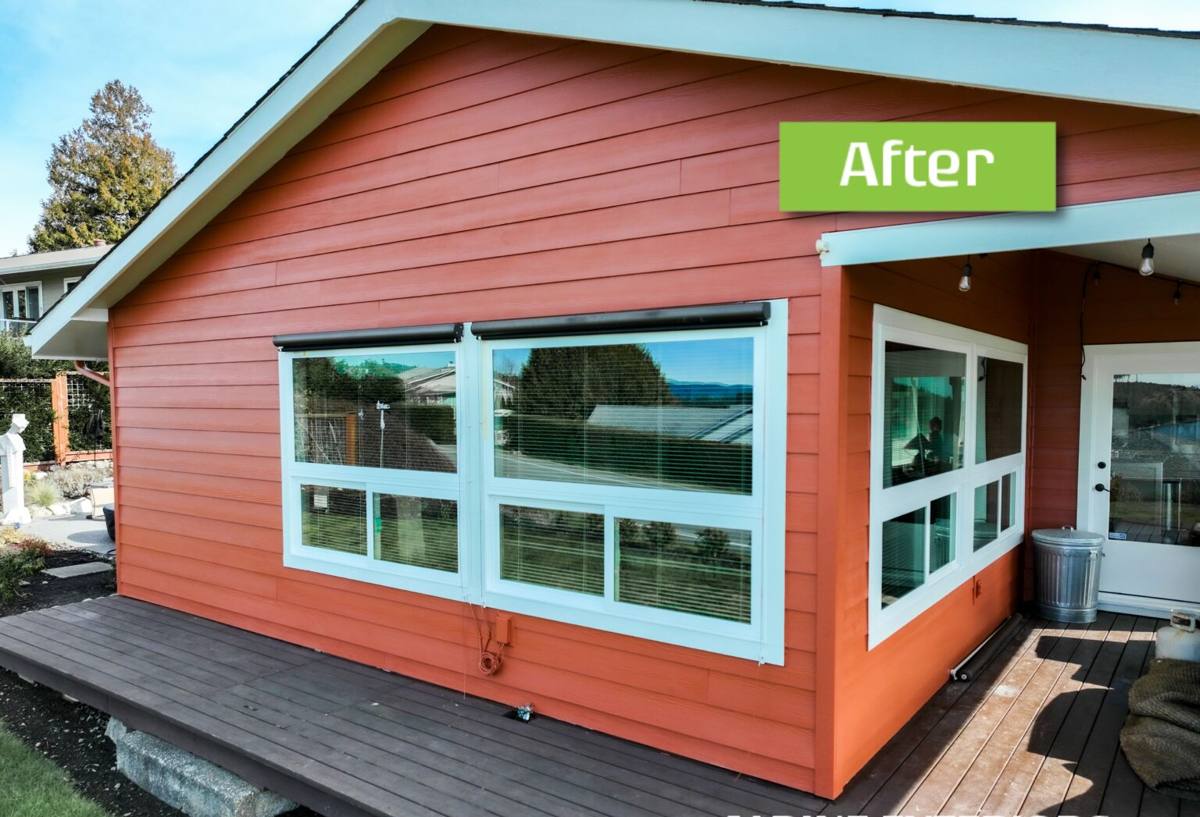
What Lummi Island's Climate Actually Does to a Window Opening
Salt Air and Metal Components
Homes close to the shoreline see accelerated corrosion on unprotected metal — screws, flashing tape edges, hinge hardware, and cheaper aluminum cladding all age faster in a marine environment than they would even a few miles inland. This doesn't mean every metal part needs to be exotic; it means the fasteners, flashing, and hardware specified for a Lummi Island build should be rated for coastal exposure, not just "standard" grade.
Wind-Driven Rain
Rain that falls straight down is easy to shed. Rain that's being pushed sideways by wind off the strait finds every shortcut in a window installation — a missed head flashing lap, a sill pan that wasn't sloped, a nailing fin that was caulked instead of properly flashed. New construction gives us the chance to build the water management right the first time, in the correct order, rather than retrofitting fixes after a homeowner notices staining on an interior wall.
Moss and Sustained Moisture
A long damp season means anything porous or poorly ventilated near a window opening stays wet longer. That affects how we detail sills, how much slope we build into a rough opening, and why we're careful about trapping moisture behind trim boards where it can sit against wood framing for months at a time.
What a Correct New-Construction Window Install Involves
New construction is the best possible time to get a window opening right, because there's no existing siding, trim, or interior finish to work around. The sequence matters as much as the products:
- Rough openings framed square, plumb, and sized correctly for the specified window unit — no field-trimming that compromises structural framing
- Sloped sill pan flashing installed before the window ever goes in, so any water that gets past the glass or frame drains back out, not into the wall cavity
- Weather-resistive barrier (house wrap) integrated with the flashing in the correct shingle-lap order — wrap behind the head flashing, over the side and sill flashing
- Window set, shimmed, and fastened per manufacturer specification, then sealed with the correct sealant at the correct joints — not every joint, and not the wrong ones
- Flashing tape and sealants rated for the temperature range and UV exposure they'll actually see on an exterior wall
- Interior air sealing at the rough opening, separate from the exterior water management — these are two different jobs that both need to happen
Skipping or misordering any one of these steps is how a brand-new house ends up with a moisture problem inside five to ten years, well before the siding or the window itself would normally need attention.
Window Product Considerations for a Marine, High-Rain Setting
We don't push one brand for every job — the right window depends on the home's design, budget, and how exposed the opening is. But for new construction on Lummi Island, a few practical factors carry more weight than they would on a more sheltered inland lot:
| Factor | Why it matters here |
|---|---|
| Frame material corrosion resistance | Salt air accelerates wear on unprotected metal hardware and fasteners over time |
| Water penetration rating | Wind-driven rain off the strait tests seals harder than a typical inland install |
| Cladding/finish durability | Vinyl, fiberglass, and clad-wood all behave differently under sustained coastal moisture and UV |
| Sill and drainage design | Units with built-in weep paths handle a long wet season better than flat-sill designs |
| Warranty structure | Understand what's covered for coastal/marine exposure before you buy, not after a claim |
We're glad to walk through specific manufacturer lines during an estimate. Our professional standard is to steer away from window systems whose sill design or hardware finish struggles in sustained coastal moisture — that's a maintenance and longevity call, not a knock on any one brand. Every product line has trade-offs, and part of our job is being honest about them before the order gets placed, not after.
How the Ferry and Job Logistics Factor In
Building on Lummi Island isn't the same logistics as a job in downtown Fairhaven or Bellingham. Materials, crew, and equipment all move on the county ferry schedule, which means the window install needs to be planned as part of a sequenced trip, not squeezed in around other jobs. We account for that up front: window orders are scheduled with enough lead time to land on the island alongside the rest of the framing and exterior crew's visit, so the crew isn't waiting on a delayed delivery mid-install with an open wall cavity exposed to weather. A crew that's used to working the island builds this into the plan instead of learning it the hard way.
Our Process for New-Construction Window Jobs
- Plan review and takeoff — we review the window schedule against the framing plans and flag any opening sizes or details that need attention before materials are ordered
- Material and logistics scheduling — window orders and crew visits are coordinated around ferry sailings so the install happens in one efficient sequence
- Flashing and water management install — sill pans, house wrap integration, and flashing go in following manufacturer and code-correct sequencing, before window units are set
- Window setting and fastening — units are shimmed square and fastened per spec, checked for smooth operation before final sealing
- Sealing and air-sealing — exterior sealant at the correct joints, interior air sealing handled separately so both systems work as intended
- Final walkthrough — every opening checked for operation, seal, and flashing lap before we consider the job complete
Why Local Experience on the Island Matters
A crew that's worked Lummi Island before understands things a mainland-only contractor has to learn on the job: how exposed a given lot is to prevailing wind and rain direction, how ferry timing affects a schedule, and how the island's damp season plays out compared to Fairhaven or Bellingham proper. That experience shows up in small decisions — where extra flashing attention is worth the time, which sill details hold up best against sustained marine moisture — that add up to a window installation that performs for decades instead of one that looks fine until the first hard winter storm finds its weak point.
We're a Whatcom County crew based out of Fairhaven, and Lummi Island new-construction work is a regular part of what we do, not an occasional trip out to the water. That matters when something needs a follow-up visit or when a builder needs a subcontractor who already understands the site conditions instead of pricing them in blind.
Cost Factors Worth Knowing Up Front
New-construction window costs vary a lot based on unit count, size, glazing package, and product line, so we won't quote a number without seeing the plans. What we can tell you is what tends to move the price on an island job specifically:
| Factor | Effect on cost |
|---|---|
| Number and size of openings | Larger and more numerous units increase both material and labor cost |
| Corrosion-resistant hardware upgrade | Modest upcharge, worth it for direct coastal exposure |
| Ferry logistics and scheduling | Well-planned trips keep costs predictable; last-minute changes add time |
| Custom or oversized units | Special-order lead times and pricing beyond stock sizes |
Get a Straight Estimate for Your Lummi Island Build
If you're planning a new build on Lummi Island and want the window openings done right the first time — properly flashed, correctly sequenced, and matched to what a marine climate actually demands — we're glad to take a look at your plans. Reach out for a free, no-pressure estimate using the form below, and we'll walk you through what your specific project needs.