 Fairhaven Siding
 Roofing Built for Marietta's Conditions, Not a Generic Climate
Marietta sits close enough to the water that homes here deal with a different roofing reality than a house twenty miles inland. Salt-laden air moves through the neighborhood off the bay, driving rain comes in sideways during winter storms, and the tree cover that makes this part of Fairhaven so pleasant also means shaded roof sections stay damp for days after a storm passes. A new roof installed here needs to be specified and installed with all three of those factors in mind, not just built to a generic code minimum.
We install roofs across Whatcom County, and Marietta jobs get treated differently from the start. The underlayment, fastener choice, ventilation layout, and edge detailing all shift slightly based on how exposed a given roof is to wind-driven rain and how much shade it sits under through the fall and winter.
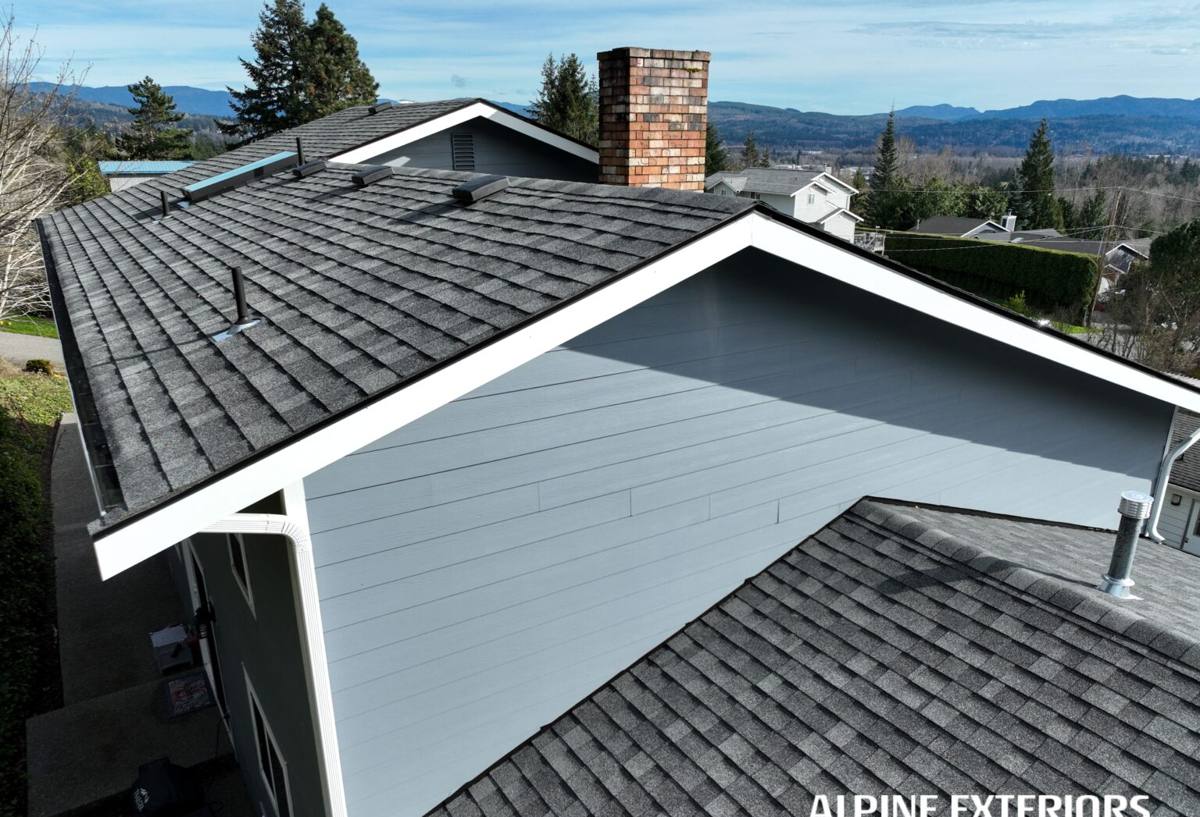
What Marietta Homes Actually Need From a New Roof
Corrosion-Resistant Fasteners and Flashing
Salt air accelerates corrosion on standard fasteners and flashing metals faster than most homeowners expect. A roof that would hold up fine twenty miles inland can show rust streaks and early fastener failure near the water within a handful of years if the wrong materials were used. We spec corrosion-resistant fasteners and flashing on Marietta roofs as a baseline, not an upgrade.
Wind-Driven Rain Protection at Every Penetration
Driving rain doesn't just fall straight down — it pushes sideways under shingle tabs, around pipe boots, and up under poorly lapped flashing. Every penetration point (vents, chimneys, skylights) is a place water can find its way in during a real storm. Proper lapping, sealed transitions, and self-adhering underlayment at vulnerable areas matter more here than they would in a drier climate.
Moss and Moisture Management
Whatcom County's long moss season is a fact of life on shaded roofs, and Marietta's tree canopy means plenty of roofs stay damp well after the rest of the neighborhood has dried out. Moss holds moisture against roofing material, works its way under shingle edges, and shortens the life of any roof that isn't detailed to shed water quickly and dry out between storms.
What a Correct New Roof Installation Involves
A new roof is more than laying shingles over the old deck. Done correctly, the job includes:
- Full tear-off of the existing roofing material and inspection of the deck underneath
- Repair or replacement of any damaged or soft decking before anything new goes down
- Ice-and-water shield or equivalent self-adhering membrane at eaves, valleys, and penetrations
- Synthetic or felt underlayment across the full field, matched to the roof's exposure
- Corrosion-resistant drip edge, step flashing, and counterflashing at all walls and penetrations
- Balanced intake and exhaust ventilation so the attic can actually dry out between rain events
- Correct fastening pattern and nail placement for the manufacturer's wind rating
- Final walk-through covering ridge lines, flashing details, and cleanup
Skipping any one of these steps is usually invisible on the day the job finishes. It shows up two, five, or ten years later as a leak, premature granule loss, or moss-driven rot — and by then it's a repair job instead of a five-minute fix during installation.
Choosing the Right Roofing Material for This Neighborhood
Most Marietta homes do well with a quality architectural asphalt shingle rated for high wind exposure, paired with proper ventilation and flashing. Metal roofing is a solid option for homeowners who want a longer service life and better shedding of moss and debris, though it comes with a higher upfront cost. We don't push one product line over another without first looking at the roof's exposure, the home's ventilation setup, and what the homeowner actually wants out of the investment.
| Factor | Architectural Asphalt Shingle | Standing Seam Metal |
|---|---|---|
| Typical lifespan | 20-30 years with proper install | 40-60 years |
| Moss resistance | Moderate — benefits from zinc/copper strips | High — sheds moss growth well |
| Salt air performance | Good with corrosion-resistant fasteners | Excellent with proper coating/finish |
| Upfront cost | Lower | Higher |
| Wind-driven rain handling | Good with correct underlayment/flashing | Very good — fewer seams and laps |
Neither option is "wrong" — the right call depends on how long the homeowner plans to stay in the home, budget, and how much of the roof sits under tree cover. We walk through this trade-off honestly during the estimate rather than steering toward whatever has the highest margin.
Why We're Selective About Certain Products
Some lower-tier shingle products and roofing systems look similar to better options on a spec sheet but behave differently once they're exposed to years of coastal moisture cycling. Our standard is to install products with a track record of holding up to sustained damp conditions and wind-driven rain, because a roof failure in this climate tends to show up as hidden deck rot before it ever shows up as a visible leak. That's a maintenance and liability trade-off we'd rather avoid for our customers, not a knock on any single manufacturer.
Ventilation: The Detail Most New Roofs Get Wrong
A new roof can be installed with perfect shingle work and still fail early if the attic underneath isn't ventilated correctly. Trapped moisture from household humidity, combined with Whatcom County's damp air, condenses on the underside of the roof deck and rots it from the inside — often long before the shingles above show any wear. Balanced intake at the soffits and exhaust at the ridge lets that moisture escape instead of collecting. On Marietta homes with heavy tree cover, we pay close attention to this because shaded, poorly ventilated attics are exactly where we find the worst hidden deck damage during tear-offs.
Our Installation Process
1. On-Site Assessment
We walk the roof and attic, note the exposure direction, existing ventilation, flashing condition, and any signs of moss or moisture staining. This is where we catch problems that a drive-by estimate would miss.
2. Written Estimate and Material Selection
We go over material options, what each one means for long-term maintenance in this climate, and give a clear written scope and price — no vague allowances that turn into surprise change orders.
3. Tear-Off and Deck Inspection
Old roofing comes off down to the deck. Any soft or damaged sheathing gets flagged and replaced before new material goes down — this is not an area to cut corners on a coastal roof.
4. Underlayment, Flashing, and Ventilation Install
Self-adhering membrane at vulnerable areas, full underlayment, corrosion-resistant flashing, and balanced ventilation components go in before a single shingle is laid.
5. Roofing Material Installation
Shingles or metal panels go on to manufacturer spec, with fastening patterns matched to the wind exposure of the specific roof plane.
6. Final Walk-Through and Cleanup
We review the finished roof with the homeowner, check ridge and flashing details together, and clear the site of debris and old material.
Cost Factors for a Marietta Roof Replacement
Every roof is priced based on its own specifics, but a few factors consistently move the number for homes in this area:
| Factor | Why It Affects Cost |
|---|---|
| Roof size and pitch | More material and steeper, harder-to-work pitches increase labor |
| Deck condition | Rot from past moisture intrusion means added sheathing repair |
| Material choice | Asphalt vs. metal changes both material and labor cost significantly |
| Number of penetrations | Each vent, skylight, and chimney needs its own flashing detail |
| Ventilation upgrades | Adding proper intake/exhaust where none existed adds scope |
| Tree cover and access | Heavy canopy can mean more debris removal and careful staging |
We don't quote a number without seeing the roof — anyone offering a firm price over the phone for a job like this is guessing.
Why Local Experience in Marietta Matters
A crew that already works this part of Fairhaven knows which roof orientations catch the worst of the wind-driven rain, which streets sit under enough tree cover to need extra attention to moss and ventilation, and how the salt air off the water tends to age roofing material faster than county averages would suggest. That local pattern recognition means fewer surprises during tear-off and a roof that's specified correctly the first time, instead of a generic install that needs correcting a few years in.
Signs Your Marietta Roof May Need Replacement Soon
- Granule loss showing up in gutters or at the base of downspouts
- Moss buildup that keeps returning even after cleaning
- Curling, cupping, or cracked shingles, especially on south- or west-facing slopes
- Daylight visible through the roof deck from inside the attic
- Rust staining around flashing, vents, or fasteners
- Soft spots or sagging when walking the roof
- Interior ceiling stains after heavy rain events
Catching these signs early usually means the difference between a planned replacement and an emergency tarp-and-scramble situation during the next winter storm.
If you're weighing a new roof for a home in Marietta, we're happy to walk the roof, look at the attic, and give you a straight answer on condition and options — no pressure, no obligation. Fill out the form below for a free estimate.