 Fairhaven Siding
 Marietta's Location Makes Siding Repair a Different Job
Marietta sits close to the water at the edge of Bellingham Bay, and that proximity changes what siding has to deal with day in and day out. Salt-laden air off the bay works differently on exterior materials than the drier air a few miles inland. Combined with Whatcom County's long, wet winters and the extended moss season that follows, Marietta homes tend to show siding wear earlier and in different places than homes on higher, drier ground. A repair that ignores that reality — patching the visible damage without addressing what caused it — tends to fail again within a season or two.
We're based just down the road in Fairhaven, and we've repaired enough siding in this stretch of Whatcom County to know the failure patterns are consistent: moisture that gets trapped rather than shed, fasteners and trim that corrode faster near the bay, and moss that holds dampness against the wall for weeks at a time during our wet months. Good repair work in Marietta has to plan for all three, not just cover them up.
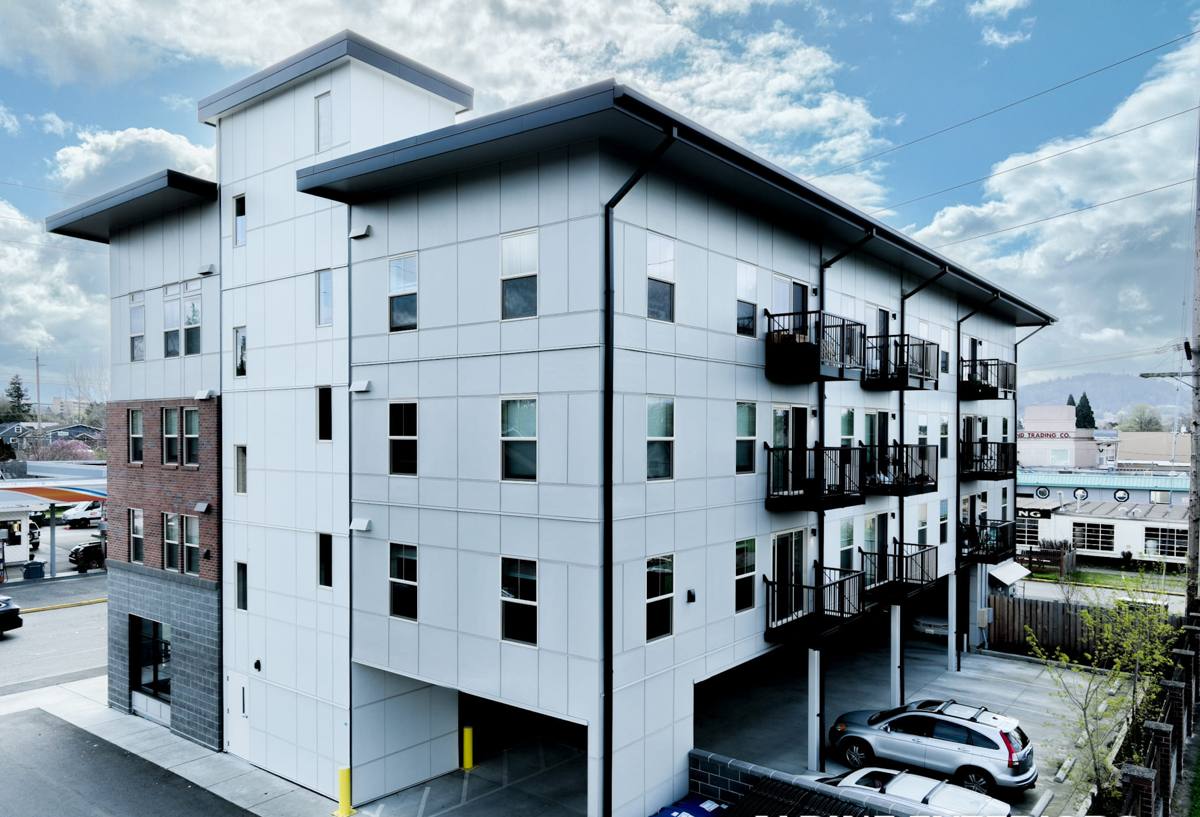
What Salt Air, Rain, and Moss Actually Do to Siding
Salt Air
Airborne salt accelerates corrosion on fasteners, flashing, and any metal trim components. Once a fastener starts to corrode, it loses grip, siding boards work loose, and small gaps open up that let water behind the panel. Salt exposure also breaks down some paint and caulk formulations faster than inland conditions would.
Driving Rain
Wind-driven rain off the bay doesn't just fall straight down — it gets pushed sideways into seams, butt joints, and anywhere caulk has started to crack. Once water gets behind siding, it doesn't dry out quickly in our climate, and that's when rot and delamination start, often invisibly, before any exterior sign appears.
Moss Season
Whatcom County's moss season can run the better part of the year on shaded, north-facing, or tree-lined walls. Moss holds moisture directly against the siding surface, keeps the material wet longer after every rain, and can work into seams and lap joints if left unaddressed. It's cosmetic at first, but it's also a moisture-retention problem that speeds up whatever's already going wrong underneath.
Signs Your Marietta Home Needs Siding Repair
Most siding problems give some warning before they become expensive. Here's what we tell Marietta homeowners to watch for between inspections:
- Soft, spongy, or springy spots when you press on the siding by hand
- Cracking or splitting concentrated at butt joints, corners, or seams
- Moss or dark streaking that comes back within weeks of being cleaned
- Paint that's peeling, bubbling, or chalking heavily, especially on shaded walls
- Visible gaps opening up at trim boards, corner posts, or window and door casings
- Swelling or discoloration concentrated in the lowest courses near grade
- Waviness or a rippled look across an otherwise flat section of wall
- Water stains, musty smells, or soft drywall on interior walls that back up to exterior siding
Any one of these on its own might be minor. Several together, especially clustered on the same wall, usually means moisture has already gotten past the surface and the repair needs to go deeper than a caulk gun and some paint.
What a Correct Siding Repair Actually Involves
Diagnosing Past the Visible Damage
Because water travels sideways and downward once it's behind siding, the damage you can see is rarely the full extent of it. A proper repair starts by pulling back siding beyond the visibly affected area to check the condition of the sheathing and weather-resistive barrier underneath. Patching only what's discolored on the surface, without checking what's behind it, is how the same repair ends up getting redone within a year or two.
Fixing the Cause, Not Just the Symptom
If a repair is needed because of a flashing detail that was never installed correctly, or a clearance issue where siding sits too close to grade, hardscape, or a roofline, replacing the boards without correcting that detail just resets the clock on the same failure. Every repair we do gets evaluated for the underlying cause — flashing, clearance, caulk joints, or a housewrap tear — before we close the wall back up.
Matching Material and Finish
A repair that's structurally sound but looks obviously patched isn't a job well done. Matching board profile, exposure, and finish color matters just as much as the water-management details underneath.
Repair or Full Replacement: How We Decide
Not every siding problem calls for full replacement, and not every problem should be treated as a quick patch either. We walk Marietta homeowners through the same factors on every call:
| Factor | Leans Toward Repair | Leans Toward Replacement |
|---|---|---|
| Extent of damage | Isolated to one wall or a small area | Recurring across multiple walls or elevations |
| Age of existing siding | Siding is well within its expected service life | Siding is near or past its expected lifespan |
| Moisture behind the panels | Sheathing and barrier test dry and sound nearby | Rot or soft sheathing found in multiple spots |
| Cause of the damage | A single fixable detail (one flashing point, one gap) | A systemic issue (original installation defects, chronic drainage problems) |
| Cost efficiency | Repair cost is a small fraction of full replacement | Repair scope starts approaching replacement cost anyway |
We'll tell you honestly which side of that table your home falls on. There's no benefit to us in talking a homeowner into a full replacement when a targeted repair will hold up, and there's no benefit in patching something that's going to keep failing.
Why Every Repair We Do Uses James Hardie Fiber Cement
We only install and repair with James Hardie fiber cement siding. We don't carry vinyl, LP SmartSide, Cemplank, Allura, primed spruce, or cedar, and that standard applies to repairs the same way it applies to full installations. If your existing siding is one of those other materials, we'll tell you plainly what we can and can't do, and why.
Vinyl and engineered wood products each have real advantages — vinyl is inexpensive and low-maintenance in mild conditions, and engineered wood can look and cost less than fiber cement up front. But in a bay-adjacent, high-moisture climate like Marietta's, those advantages come with trade-offs we're not willing to install: vinyl can warp or become brittle with age and offers limited long-term protection against sustained wind-driven rain at seams, while engineered wood products are more sensitive to prolonged moisture exposure at cut edges and joints if maintenance lapses even briefly. Cedar and primed spruce look excellent but demand a refinishing schedule that's hard to keep up with through a full Whatcom County moss season.
James Hardie fiber cement is non-combustible, dimensionally stable in wet-dry cycling, and available in HZ product lines engineered specifically for wetter climates. Its factory-applied ColorPlus finish holds color and resists the kind of chalking and peeling that field-applied paint struggles with here, which matters directly for repairs — a patched section finished in ColorPlus blends in and stays matched far longer than a repair relying on job-site paint. It also carries a strong transferable warranty when installed to manufacturer spec, which is part of why we standardized on it rather than offering a mix of products.
Our Siding Repair Process for Marietta Homes
- Initial assessment. A phone conversation or photos to understand scope before we schedule a visit.
- On-site inspection. We check the affected area and pull back siding at a few strategic points to see what's happening behind it, not just what's visible.
- Written scope and quote. You get a clear explanation of what's causing the damage, what needs to happen to fix it correctly, and a fixed price before any work starts.
- Repair day. Damaged material comes out, the sheathing and weather barrier get inspected and repaired as needed, flashing details get corrected where they're the root cause, and new Hardie material goes in matched to your existing profile and color.
- Sealant and finish work. Joints and penetrations are sealed to spec, not just caulked over.
- Final walkthrough. We review the completed repair with you before we consider the job done.
What Siding Repair Costs in Marietta
Costs vary enough by situation that a fixed number isn't honest to give upfront, but the main drivers are consistent from job to job:
| Cost Factor | Why It Matters |
|---|---|
| Extent of damage | A few boards costs far less than a full wall section |
| Accessibility | Second-story sections, tight side yards, or obstructed walls take more time |
| Flashing or sheathing repair | Fixing the root cause adds labor beyond just swapping boards |
| Color matching | Discontinued or heavily weathered colors can require more finish work to blend |
As a general guide, small, isolated patch repairs often land in the low hundreds of dollars, while repairs that involve flashing corrections, sheathing replacement, or larger sections of wall run higher. We'll always give you the real number for your specific situation before any work begins, not a rough estimate that changes once we open the wall.
Why a Crew That Already Works Marietta Matters
Siding repair in a bay-adjacent Whatcom County community isn't quite the same job as repair work a few miles inland. A crew that's already familiar with how moisture, salt exposure, and moss behave in Marietta specifically will spot the early warning signs faster, know which details tend to fail first in this location, and won't need to relearn the climate on your home. We also plan repair timing around the weather realistically — starting an open-wall repair right before a multi-day stretch of driving rain is how a simple job turns into a bigger one, and that's a call that's easier to make right when you already know the local pattern.
If you're seeing early signs of siding trouble on a Marietta home, it's worth getting it looked at before the next wet season adds to it. We offer a free, no-pressure estimate — use the form below to get started, and we'll tell you honestly what we find.