 Fairhaven Siding
 Building Decks for the Puget Waterfront Climate
The Puget area near Fairhaven sits close enough to the water that every deck we build here has to answer to salt air, near-constant fall and winter rain, and a moss season that can stretch from October into May. A deck design that works fine in a drier inland Whatcom County neighborhood can fail early here — soft spots in the decking, corroded fasteners, slick green film on the walking surface, and joists that rot from the top down before anyone notices a problem. Building correctly for Puget isn't about upgrading everything to the most expensive option; it's about knowing which parts of a deck take the worst of this climate and detailing those parts properly.
We build decks throughout the Fairhaven area, and Puget's mix of tree cover, marine moisture, and salt-laden air is a specific combination we plan for from the first conversation about layout and materials.
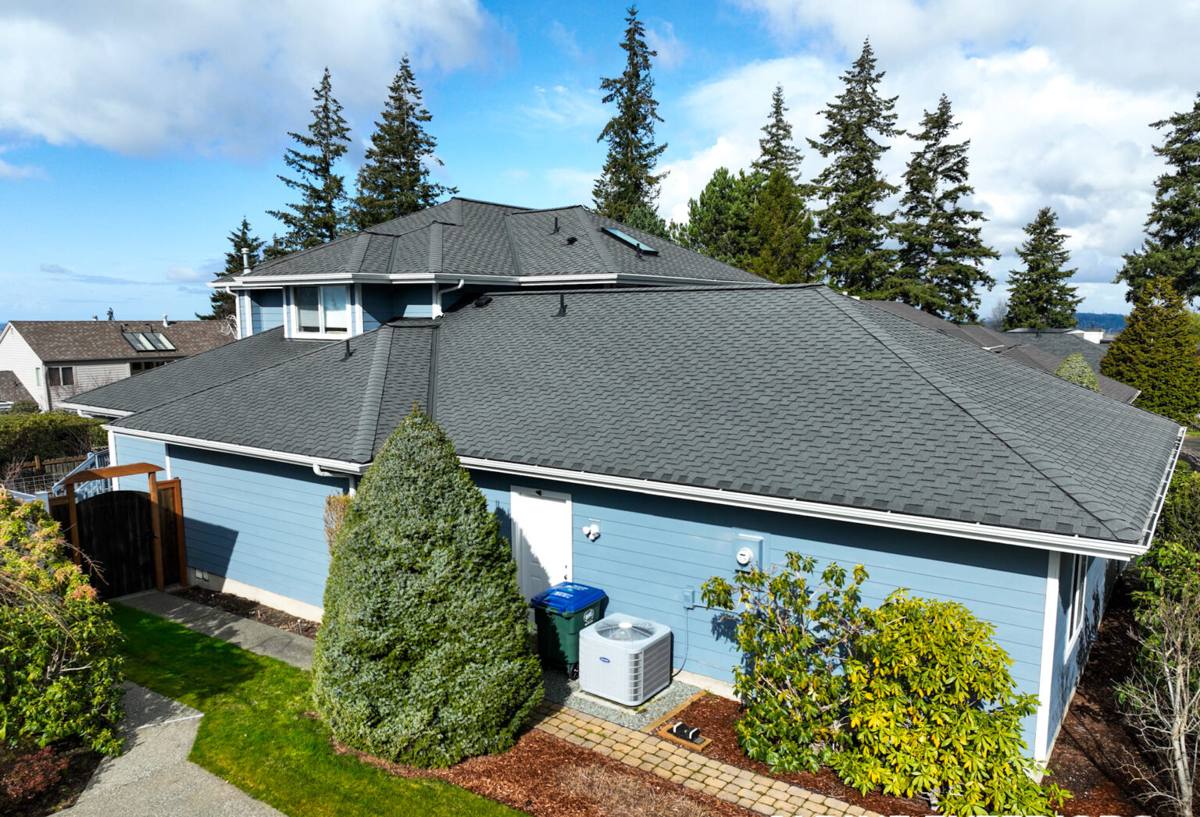
What the Climate Actually Does to a Deck
It helps to understand the failure pattern before talking about the fix. In Puget, three things work against a deck at the same time:
- Salt air accelerates corrosion on any fastener, bracket, or hardware that isn't rated for it — screws bleed rust streaks, joist hangers weaken at the nail holes, and railing hardware seizes up.
- Driving rain pushes water sideways under railings and against ledger boards and fascia, not just straight down onto the decking surface.
- Shade and moisture together create a long moss and algae season on horizontal surfaces, stair treads, and anywhere water sits instead of shedding.
None of these are exotic problems — they're the normal cost of building near the water in the Pacific Northwest. The issue is that a lot of decks, especially older ones or ones built to a minimum spec, aren't detailed to handle all three at once. That's where the early signs of trouble show up: a soft board near the house wall, a railing post that wiggles, or a stair tread that's slick every morning regardless of the weather.
Choosing Decking Material for This Location
There's no single "best" decking material — there's a best material for a given budget, sun exposure, and maintenance appetite. Here's how the common options actually perform in a shaded, salt-air, high-moisture setting like Puget:
| Material | Moisture Behavior | Moss/Algae Resistance | Maintenance |
|---|---|---|---|
| Pressure-treated wood | Absorbs and releases moisture; needs gaps to dry | Low — grain holds spores unless sealed regularly | Annual cleaning and re-sealing |
| Cedar | Naturally moisture-resistant, still needs finish upkeep | Moderate — better than treated pine, still needs cleaning | Periodic oiling or staining |
| Capped composite | Doesn't absorb water into the core | Higher — smoother cap sheds spores better | Occasional wash, no sealing |
| PVC decking | Fully sealed, no core absorption | Highest of the common options | Wash only, no sealing ever |
Composite and PVC cost more up front, and we'll say plainly that they're not required for a deck to be well-built — a properly detailed wood deck with correct drainage and regular maintenance holds up fine here too. The trade-off is maintenance time versus material cost, and that's a decision that belongs to the homeowner, not us. What we won't do is install any decking material without the fastening, gapping, and drainage details it needs to perform — that's where shortcuts actually cause failures, not the material choice itself.
A Note on Grain and Fastener Reactions
Some woods and some fastener metals react with each other under wet conditions, causing dark staining or accelerated corrosion at each screw hole. We match fastener type to decking material for this reason, not just for holding power.
What's Under the Boards Matters More Than the Boards
A deck's surface gets all the attention, but the framing underneath is what actually determines how long it lasts — and it's the part most likely to be under-built or under-protected in this climate.
Ledger Attachment and Flashing
Where a deck attaches to the house is the single most common failure point we see on rebuilds. Driving rain gets pushed against that wall, and if the ledger board isn't properly flashed with a code-compliant water barrier behind it, water tracks into the house framing — not just the deck. We flash every ledger connection correctly and use structural fasteners rated for exterior wet-use, not general construction screws.
Joists, Beams, and Post Bases
Joists need consistent airflow underneath and around them to dry out between rain events. We space and vent framing so it isn't sitting in trapped moisture, and we keep posts off the ground on proper post bases rather than buried or set directly in concrete, which traps water against the wood.
Footings for Long-Term Stability
Whatcom County soils vary block to block, and footing depth and size need to match both the deck's load and local frost and drainage conditions. We size footings to the actual structure, not a generic minimum.
Drainage and Moss Control by Design
Moss doesn't grow because a deck is old — it grows because water and shade sit together longer than they should. Good deck design fights that directly:
- Decking boards gapped correctly so water passes through instead of pooling on the surface
- A slight slope away from the house so water sheds instead of collecting near the ledger
- Stair treads and landings detailed the same way as the main deck surface — often overlooked
- Under-deck airflow so the framing dries between storms instead of staying damp for weeks
- Railing baseplates and post bases that don't trap standing water against the wood or metal
None of this eliminates moss entirely in a shaded, marine-air location — nothing does — but it stretches the time between cleanings and keeps the moss from working its way into joints and fastener holes where it does real damage.
Fasteners and Hardware Built for Salt Air
This is the detail that separates a deck that looks fine for five years from one that stays structurally sound for twenty. Standard coated deck screws and galvanized joist hangers can start showing corrosion within a few seasons this close to salt air. We use stainless steel or marine-rated hardware at the connections that matter most — ledger fasteners, joist hangers, structural screws, and railing hardware — because those are the parts holding the structure together, not just holding boards flat.
Our Deck Building Process
- On-site assessment — we look at sun and shade exposure, drainage slope, soil, and how close the deck sits to salt air and prevailing wind-driven rain.
- Design and material selection — layout, decking material, and railing style matched to budget and maintenance preference, with the climate-critical details (flashing, hardware, drainage) non-negotiable regardless of material tier.
- Permitting — we handle the local permit process for structural decks so the footings, framing, and railing height meet code.
- Framing and flashing — ledger flashing, joist layout, post bases, and footings built first and inspected before decking goes down.
- Decking and railing installation — boards gapped and fastened correctly, railings set plumb with corrosion-rated hardware.
- Final walkthrough — we go over basic care specific to the material installed, so maintenance starts on the right foot.
Permits and Local Considerations
Most decks attached to a house, or any deck above a certain height, require a permit in Whatcom County — this covers footing depth, structural framing, and railing height and spacing for safety. We handle that process as part of the build rather than leaving it to the homeowner, and we won't skip it to save time, since an unpermitted deck can become a real problem at resale or insurance time. If your Puget property has specific site constraints — slope, setbacks, tree cover — we work those into the design before we ever put a shovel in the ground.
Repair, Rebuild, or New Build — Knowing Which You Need
Not every deck problem in Puget means starting over. Sometimes it's a section of rotted decking over sound framing; sometimes the framing itself has failed and the surface just hasn't shown it yet. We check the framing first, not just the visible surface, because replacing decking over compromised joists just delays the real problem. If a deck's bones are solid, a resurfacing or partial rebuild can be the honest answer — we'll tell you which situation you're in before recommending a full rebuild.
Maintenance Checklist for Puget Homeowners
Even a well-built deck in this climate needs some regular attention. This is the baseline we recommend to homeowners after a build:
- Sweep debris off the deck surface regularly, especially in fall when leaves and needles trap moisture
- Clean moss and algae off the surface and stair treads at least once a year, more often in heavy shade
- Check railing posts and hardware annually for looseness or visible corrosion
- Re-seal or re-stain wood decking on the schedule the finish product recommends — don't wait for visible graying
- Keep gutters and downspouts near the deck clear so runoff isn't dumping extra water onto or under it
- Look under the deck once a year for standing water, soft framing, or blocked airflow
Why Local Experience with This Climate Matters
A deck built to a generic national spec sheet can still fail early in a place like Puget if the crew building it hasn't dealt with this specific combination of salt air, shade, and driving rain before. The difference shows up in the details that don't get inspected after the fact — the flashing behind the ledger, the fastener grade at each joist hanger, the gap width between boards. We build decks throughout the Fairhaven area and know which parts of a build need extra attention here versus a drier, inland site, and we don't cut corners on those details to hit a lower bid.
If you're planning a new deck in Puget, or want an honest look at whether an existing one needs repair or replacement, we're happy to come take a look and walk you through what we'd recommend. Fill out the form below for a free, no-pressure estimate.