 Fairhaven Siding
 Siding Replacement for Puget Homes
Puget sits close enough to the water that its homes take a different kind of weathering than siding fifteen miles inland. Salt-laden air off Bellingham Bay works on fasteners, caulk joints, and paint film year-round, while the long stretch of wet months between fall and spring keeps exterior walls damp far longer than most siding products are built to tolerate. Add in the shade from mature evergreens common to this part of Whatcom County, and you get a moss and algae season that can run eight or nine months out of twelve. Siding replacement here isn't a cosmetic upgrade — it's a decision about which material and which installation details will actually hold up against this specific mix of conditions.
This page covers what siding replacement should look like specifically for a Puget property: what the climate demands, what a correct tear-off and re-install involves, and why the crew doing the work matters as much as the material going on the wall.
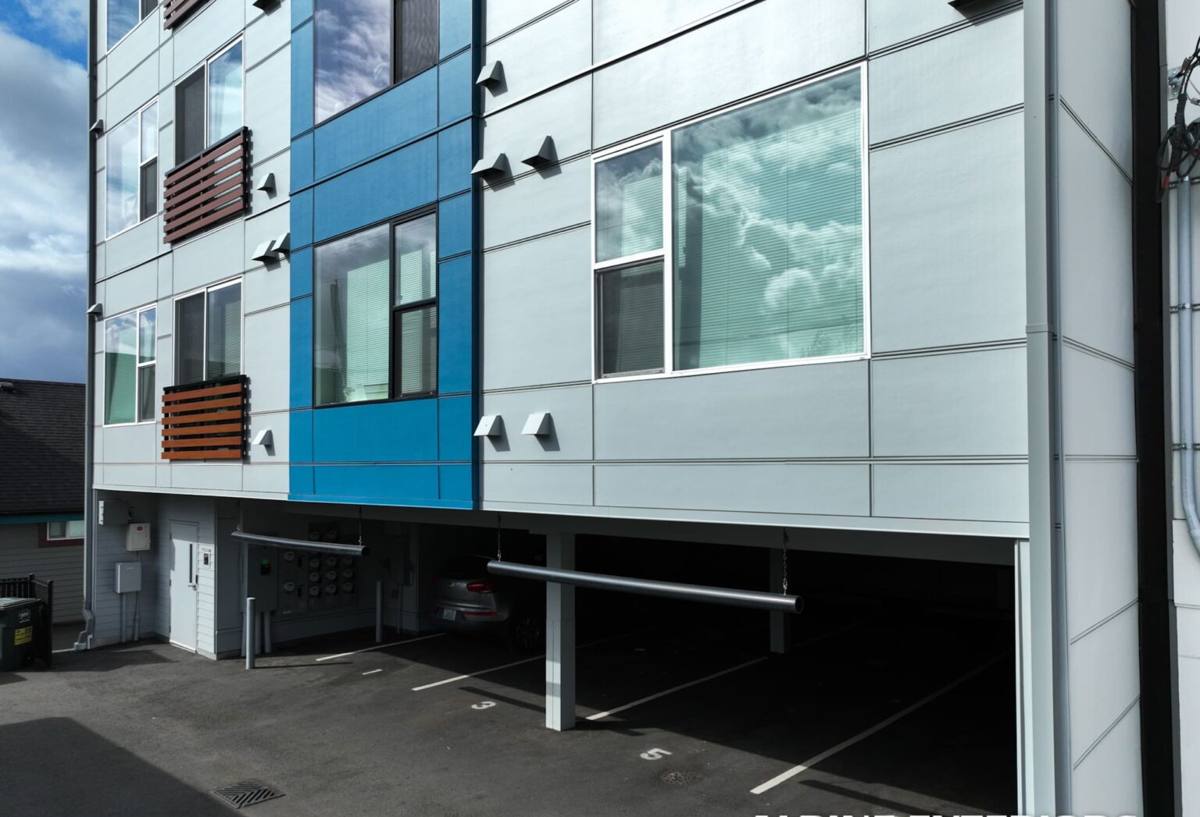
What Salt Air, Driving Rain, and Moss Actually Do to Siding
Each of these three conditions attacks siding in a different way, and Puget homes deal with all three at once.
Salt Air
Airborne salt is corrosive to exposed metal — nail heads, flashing seams, and any fastener that isn't fully sealed or coated for coastal exposure. On siding materials with a painted or primed surface, salt residue also accelerates the breakdown of the finish, leading to chalking and premature fading years before an inland home would show the same wear.
Driving Rain
Wind-driven rain off the water doesn't just wet a wall surface — it pushes moisture sideways and upward, finding any gap in the water-resistive barrier, any under-flashed window, or any siding seam that wasn't lapped correctly. A siding system that only manages water falling straight down will fail here. What matters is how the whole wall assembly — house wrap, flashing, seams, and siding — sheds water that's coming in at an angle.
Moss and Algae
Shade, humidity, and mild temperatures are exactly what moss and algae need to establish on a north-facing wall or anywhere siding stays damp between rain events. Beyond the appearance issue, moss holds moisture directly against the siding surface, which is a problem for any product that can absorb water or swell at the edges.
What a Correct Siding Replacement Involves
A siding replacement done right in Puget is not just stripping the old material and nailing up new panels. It's an opportunity to fix what's underneath, which is usually where long-term problems actually start.
- Full tear-off, not overlay: Installing new siding over old hides rot, trapped moisture, and failed flashing instead of fixing it. We remove down to the sheathing.
- Sheathing inspection and repair: Any water-damaged or soft sheathing gets identified and replaced before anything new goes back on the wall.
- Water-resistive barrier: A continuous, properly lapped weather barrier goes on before siding — this is the layer that actually keeps driving rain out if it gets past the siding itself.
- Flashing at every penetration: Windows, doors, hose bibs, light fixtures, and vents all need correctly integrated flashing so water is directed out and down, not behind the siding.
- Proper fastening and clearances: Correct nailing patterns, butt joint treatment, and ground/deck clearances so the bottom edge of the siding isn't sitting in standing moisture.
- Factory-finished material: Starting with a durable, factory-applied finish rather than field-applied paint or primer, since field finishes are the first thing salt air and UV exposure break down.
Skip any one of these steps and the new siding will look right for a season or two before the same underlying issues resurface — usually as bubbling paint, soft trim, or moss creeping back faster than it should.
Why We Install Only James Hardie Fiber Cement in Puget
We standardized on James Hardie fiber cement siding for every home we work on, and in an area like Puget the reasoning is straightforward. Fiber cement is not an organic wood product, so it doesn't feed moss and algae the way wood-based siding can, and it doesn't absorb and swell with repeated wetting the way engineered wood products do. It's also non-combustible, which matters given the dry-season wildfire smoke and ember exposure that reaches even wet coastal counties in late summer.
James Hardie's ColorPlus finish is baked on at the factory under controlled conditions, which gives it better adhesion and fade resistance than field-applied paint — a real advantage against the salt air and UV exposure Puget homes see. Hardie also engineers climate-specific product lines (HZ5 and similar), built around regional moisture and temperature patterns rather than a one-size-fits-all spec. Backed by a strong transferable warranty and a long installed track record in wet coastal climates like ours, it's the product we're willing to put our name behind.
We don't install vinyl, LP SmartSide, Cemplank, Allura, primed spruce, or cedar. Each of those has legitimate uses elsewhere, but given what this specific climate does to a wall over ten and twenty years, we've made fiber cement — specifically James Hardie — our standard, not an upsell option.
Our Process, Start to Finish
- On-site assessment: We walk the exterior, check current siding condition, look for existing moisture damage, and note trouble spots like north-facing walls, shaded areas, and grade-level clearance issues.
- Written estimate: A clear scope and price based on what we actually find, not a generic square-footage guess.
- Tear-off and inspection: Old siding comes off, sheathing gets inspected, and any repairs are flagged and discussed before we close the wall back up.
- Weather barrier and flashing: House wrap and flashing details go in correctly at every window, door, and penetration.
- Hardie installation: Panels, planks, or shingle-style siding installed to manufacturer spec — proper fastening, gapping, and joint treatment.
- Final walkthrough: We go over the finished work with you before calling the job done.
Cost Factors for Siding Replacement in This Area
Every Puget home is different, but the factors that move a siding replacement estimate up or down tend to be the same ones.
| Factor | Why It Matters Here |
|---|---|
| Amount of hidden water damage | Long wet seasons mean more homes need sheathing or framing repair once old siding comes off |
| Home size and wall complexity | More corners, dormers, and roof lines mean more flashing detail and labor time |
| Siding profile chosen | Lap, shingle, and panel styles carry different material and labor costs |
| Existing siding type | Some materials are more labor-intensive to remove than others |
| Shade and moss exposure | Heavily shaded walls may need extra prep or treatment before new siding goes on |
| Access and site conditions | Sloped lots, tight setbacks, or limited staging area affect labor time |
We give a firm, written number after we've actually looked at the house — not a phone estimate — because the hidden condition of the sheathing underneath old siding is usually the biggest variable.
Signs Your Puget Home May Need Siding Replacement Now
- Paint or finish peeling, bubbling, or chalking faster than a normal repaint cycle would explain
- Soft or spongy spots when you press on the siding, especially near the bottom courses
- Persistent moss or algae growth that returns within weeks of cleaning
- Visible gaps, warping, or separation at siding seams and butt joints
- Rust streaks running from fastener heads or metal flashing
- Rising energy bills alongside drafts near exterior walls
- Siding that's original to a home built more than 20-25 years ago and has never been replaced
Any one of these on its own might just need a repair. Several at once usually means the underlying wall assembly is compromised and a full replacement will save money over repeated patch jobs.
Why a Crew That Already Works Puget Matters
Siding installation isn't one-size-fits-all across a region — the right approach in a dry inland climate isn't necessarily the right approach for a home a short walk from saltwater. A crew that regularly works Fairhaven and the surrounding Whatcom County coastline already knows to pay closer attention to flashing details on north- and west-facing walls, to spec fasteners and hardware rated for salt exposure, and to plan installation timing around the wetter months rather than fighting them. That local pattern recognition is the difference between siding that looks good at handoff and siding that's still performing at year fifteen.
If you're weighing a siding replacement for a home in Puget, we're happy to walk the property, give you an honest read on what's actually going on underneath the current siding, and put together a straightforward, no-pressure estimate. There's a form below to get that conversation started.