 Fairhaven Siding
 Why Sudden Valley Roofs Wear on Their Own Schedule
Homes around Sudden Valley don't age the way roofs do in drier parts of the country, and they don't even age quite the way roofs do a few miles away in downtown Fairhaven. The combination that matters here is consistent: salt-tinged air moving in off the water, driving rain that hits shingles at an angle instead of straight down, and a moss season that runs longer than most homeowners expect. Any one of these on its own is manageable. Together, over ten or fifteen years, they shorten the working life of a roof that was never built with this specific mix in mind.
We've replaced enough roofs in this part of Whatcom County to know the failure patterns aren't random. They cluster on north-facing slopes that stay damp longest, in valleys where two rooflines meet, and around any penetration — a vent pipe, a chimney, a skylight — where flashing was installed to a national standard instead of a local one. A roof replacement done right here accounts for all of that up front, not after the first winter.
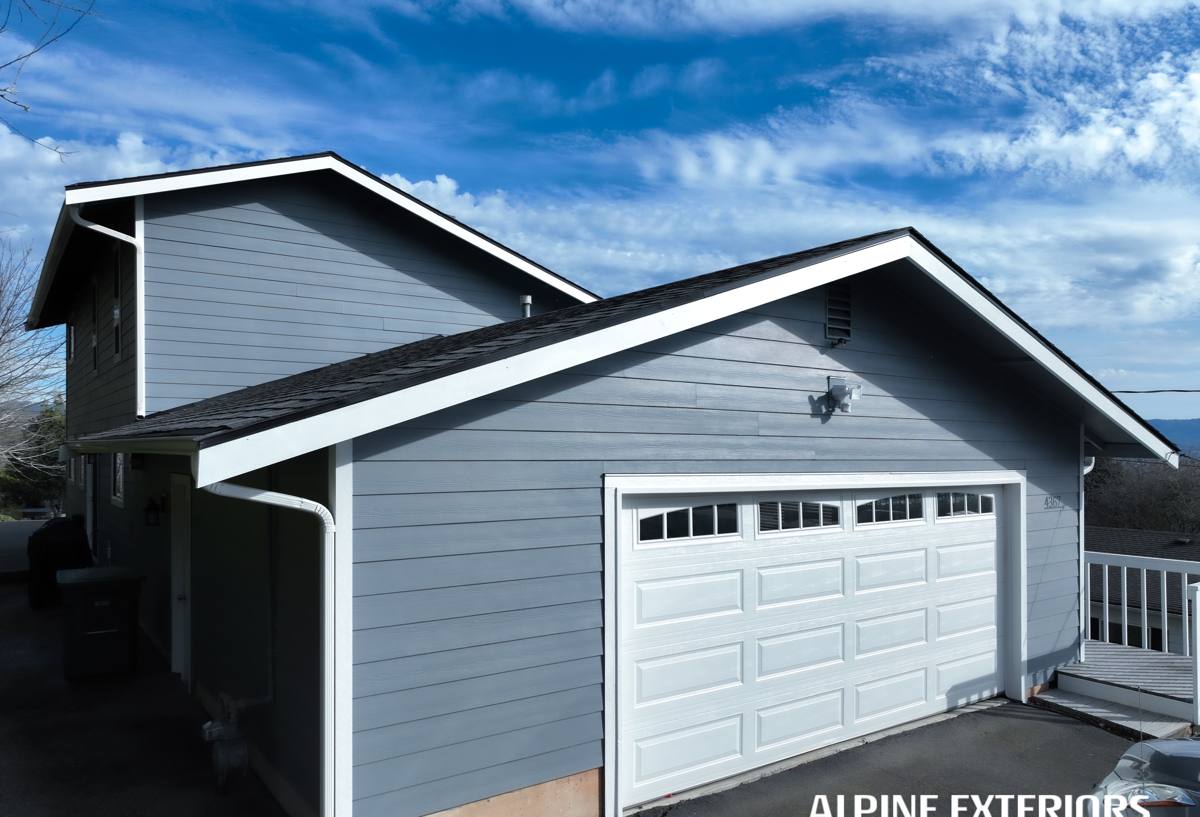
Signs a Sudden Valley Roof Has Moved Past Repair
Not every roof problem calls for a full replacement, and we'll tell you plainly if a repair is the more honest answer. But there's a point where patching becomes a temporary fix on a roof that's already lost its ability to shed water and resist moss the way it should. Common signs we look for:
- Granule loss heavy enough that you can see bare asphalt in the gutters or downspouts
- Moss that keeps returning within a season or two of cleaning, especially on shaded slopes
- Shingles that are cupping, curling at the edges, or cracking when walked on
- Soft spots in the decking, felt through the shingles or visible from the attic as staining
- Flashing around chimneys, vents, or valleys that's rusted, lifted, or was never properly stepped
- An age of 20+ years on standard asphalt shingles, or earlier if the roof has poor ventilation
If a roof is showing two or more of these at once, replacement is usually the more cost-effective path — repeated repairs on a roof at this stage tend to cost more over two or three years than doing the job once, correctly.
What a Correct Roof Replacement Actually Involves
A roof replacement isn't just stripping old shingles and laying new ones. In a climate like ours, the parts underneath the shingles matter as much as the shingles themselves.
Tear-off and decking inspection
We remove the existing roofing down to the deck rather than layering over it. This is the only point in the whole job where the plywood or board decking underneath can actually be inspected. Any section softened by long-term moisture — often found near valleys, eaves, or old flashing failures — gets replaced before anything new goes down. Skipping this step is the single most common shortcut that leads to early failure.
Underlayment built for wind-driven rain
Standard felt underlayment is fine in dry climates. Here, where rain regularly comes in sideways during winter storms, we use synthetic or ice-and-water-shield underlayment at eaves, valleys, and penetrations — the places wind-driven rain actually finds its way under shingles.
Ventilation
A roof that can't breathe traps moisture in the attic, which shows up later as premature shingle aging and, often, interior condensation issues. We check intake at the soffits and exhaust at the ridge and correct the balance if it's off, which it frequently is on older homes.
Flashing and valleys
Chimneys, skylights, and roof valleys are where most leaks start, not in the open field of shingles. Proper step flashing, counter-flashing, and valley metal — installed correctly rather than caulked over — is what actually keeps water out long-term.
Choosing Materials That Hold Up to Local Conditions
There's no single "best" roofing material for every home — it depends on the roof's pitch, the home's style, the budget, and how much moss and moisture exposure the specific slopes get. Here's how the common options compare for a home in this area:
| Material | Moss & moisture resistance | Wind/rain performance | Typical lifespan here |
|---|---|---|---|
| Architectural asphalt shingle | Good, especially algae-resistant lines | Strong when properly nailed and sealed | 20–30 years |
| 3-tab asphalt shingle | Fair — thinner profile holds moisture longer | Lower wind rating than architectural | 15–20 years |
| Standing seam metal | Excellent — sheds moss and debris naturally | Excellent | 40–50+ years |
| Composite/synthetic shake | Good, with proper ventilation | Strong | 30–40 years |
We don't push one material over another as a default. What we will say plainly: on heavily shaded, north-facing slopes that stay damp for weeks at a time, a premium algae-resistant shingle or metal roofing earns its cost back in fewer moss treatments and a longer service life. On sunnier, more exposed slopes, a well-installed architectural shingle is usually the more practical choice.
Ventilation and Moisture: The Part Homeowners Don't See
We bring this up separately because it's the most commonly overlooked factor in roof longevity, and it's invisible from the ground. A roof with correct intake and exhaust ventilation runs cooler in summer and drier in winter, which slows both shingle aging and moss regrowth. A roof with blocked soffit vents or an undersized ridge vent will grow moss faster than its neighbor even with identical shingles, because the deck underneath never fully dries out between rain events. Part of every replacement estimate we give includes an honest look at existing ventilation, not just the shingles on top.
Our Process for a Sudden Valley Roof Replacement
- On-site assessment. We walk the roof (or use a drone where pitch or access makes that safer), check the attic for ventilation and moisture signs, and measure for an accurate material quantity.
- Written estimate. A clear breakdown of tear-off, decking allowance, underlayment, materials, flashing work, and disposal — no vague lump-sum guessing.
- Scheduling around weather. We plan tear-off and dry-in for the driest available window and stage materials to minimize how long any section of deck is exposed.
- Tear-off and deck repair. Old roofing comes off, decking gets inspected and repaired as needed, and we confirm findings with you before covering anything up.
- Installation. Underlayment, flashing, ventilation corrections, and final roofing material installed to manufacturer spec.
- Cleanup and walkthrough. Magnetic sweep for nails, full site cleanup, and a walkthrough so you know exactly what was done and where.
Homes in Sudden Valley are often on private or community-association-maintained roads, and some have access guidelines for contractor work. We coordinate scheduling and any required notice ahead of time so the job doesn't stall on logistics that could have been sorted out in advance.
What Affects the Cost of a Roof Replacement
Two roofs of the same square footage can cost noticeably different amounts depending on a few factors that matter more here than in a mild, dry climate:
| Factor | Why it affects cost |
|---|---|
| Roof pitch and complexity | Steeper roofs and multiple valleys/dormers take longer and need more safety setup |
| Number of existing layers | Tear-off of two layers costs more in labor and disposal than one |
| Decking condition | Moisture damage found during tear-off adds material and labor to replace bad sections |
| Material choice | Standing seam metal and premium algae-resistant shingles cost more upfront than standard shingles |
| Ventilation corrections | Adding or upgrading soffit and ridge venting is easiest to do during a full replacement |
| Access and site conditions | Tree cover, driveway grade, and staging space affect equipment and crew time |
We'd rather walk you through these factors on your specific roof than quote a number that doesn't hold up once we're actually up there. Every estimate we give reflects what we find on your home, not a generic per-square rate.
Protecting the Investment After Installation
A new roof still needs some basic upkeep to reach its full lifespan in this climate. A short annual routine goes a long way:
- Clear gutters and downspouts before the fall rains start, so water has somewhere to go
- Check for moss buildup each spring, especially on shaded or north-facing slopes
- Trim back overhanging branches that keep sections of roof shaded and damp
- Have flashing and valleys visually checked every couple of years, particularly after major storms
- Address small leaks or lifted shingles promptly rather than waiting for the next dry season
None of this requires a professional visit every time, but a quick annual check catches small issues while they're still small.
Why Local Experience Matters for This Job
A roof replacement is a big enough job that the crew's familiarity with the area shouldn't be an afterthought. Knowing which slopes in Sudden Valley tend to hold moisture longest, how to schedule around Whatcom County's wetter months, and what a home in this kind of setting typically needs from its ventilation and flashing isn't something a crew figures out on your roof for the first time. It's the difference between a replacement that's built for how this area actually behaves year-round and one that's built for a national average.
If your roof is showing its age or you just want an honest read on where it stands, we're happy to take a look. Reach out for a free, no-pressure estimate — the form below gets you started.