 Fairhaven Siding
 Siding Built for the Sudden Valley Microclimate
Sudden Valley sits in a different pocket of weather than a lot of homeowners realize. Tucked against the timber along Lake Whatcom, homes here get shade, standing humidity, and slower drying times than more open parts of Whatcom County. Add in the driving rain that rolls through fall and winter, and a moss season that can stretch nearly year-round on north-facing walls, and you have a set of conditions that punishes the wrong siding choice fast. We install siding in Sudden Valley regularly, and the pattern is consistent: the homes that hold up are the ones where the crew understood the site conditions before the first piece went up, not after.
This page is specifically about siding installation for Sudden Valley properties — what the local climate demands, what a correct installation actually involves, and why the crew doing the work matters as much as the material itself.
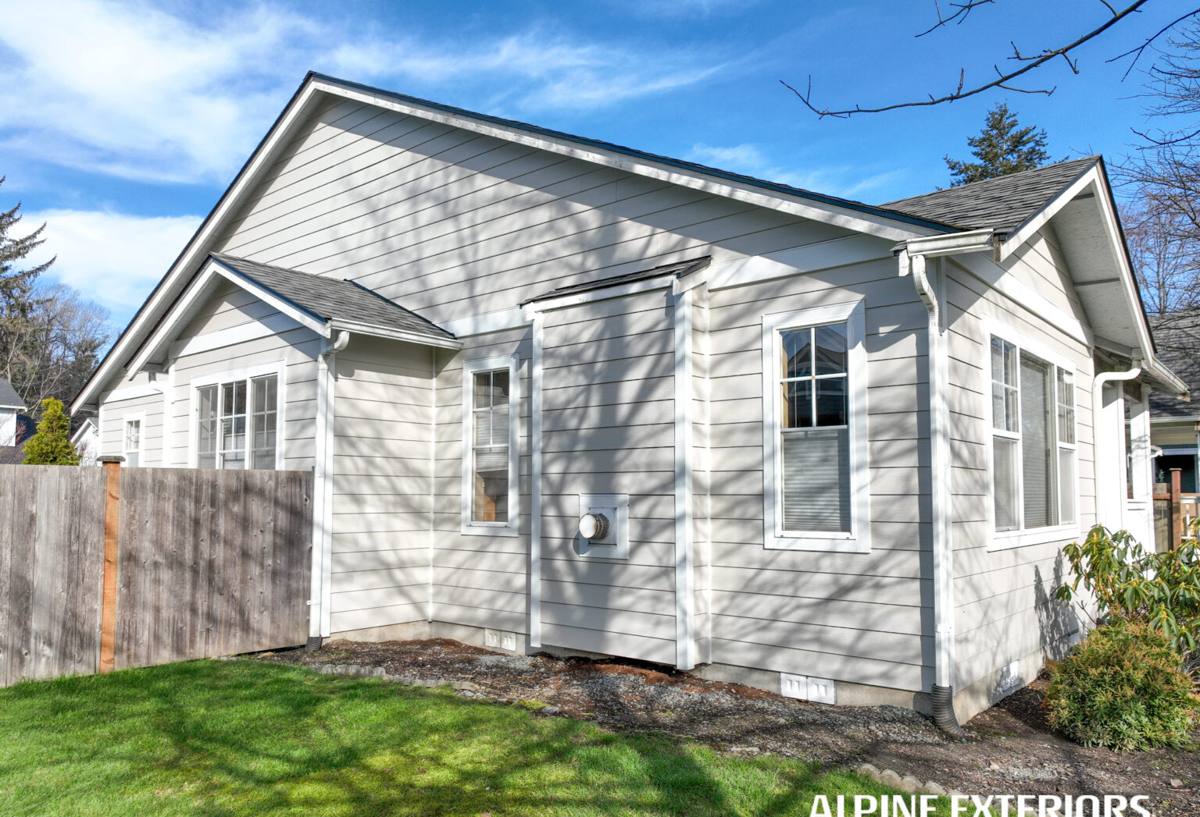
What Sudden Valley's Climate Does to Siding
Shade and Slow Drying
A lot of Sudden Valley lots back up to trees or sit close to neighboring tree lines. That's part of the appeal of living there, but it also means less direct sun hitting exterior walls, especially on the north and east sides. Less sun means siding surfaces stay damp longer after rain. Materials that absorb moisture, or siding installed without enough of a drainage gap behind it, don't get the chance to dry out between storms the way they would on a sunnier lot.
Driving Rain and Wind-Driven Moisture
Storms coming off the Salish Sea and up through the county don't just fall straight down — wind pushes rain sideways into wall assemblies, seams, and trim joints. Over a season, that adds up to real water exposure at every horizontal lap, corner, and penetration point. Flashing details and caulk joints that are "close enough" on a drier property are a liability here.
Moss, Mildew, and Organic Growth
Cool, moist, shaded surfaces are exactly what moss and mildew need to take hold. Once organic growth establishes itself on a wall, it holds moisture against the surface even longer, which accelerates whatever damage process is already underway underneath. Siding that can't handle sustained dampness without swelling, delaminating, or rotting is fighting a losing battle against this cycle.
Salt Air's Regional Role
While Sudden Valley itself is inland from the water, the broader Whatcom County climate — including the marine air that moves in off the Sound — still contributes to the general moisture load and corrosion pressure on fasteners, flashing, and metal trim across the region. It's one more reason we spec corrosion-resistant fastening hardware on every job in this area, not just on waterfront homes.
Why We Only Install James Hardie Fiber Cement
Given everything above, we made a standing decision years ago: we install James Hardie fiber cement siding exclusively. We don't install vinyl, LP SmartSide, primed spruce, cedar, or other fiber cement brands like Cemplank or Allura. That's not a marketing position — it's a direct response to what we see fail on homes in exactly this kind of climate.
Vinyl siding can warp and its seams open under wide temperature swings and wind-driven rain, giving water a path behind the panel where it has no way to dry in a shaded, humid spot like Sudden Valley. Wood-based products, including engineered wood siding and primed spruce or cedar, depend heavily on maintained paint film and sealed edges to keep moisture out — miss a recoat cycle in a shaded, slow-drying location and the substrate can start absorbing water at cut ends and joints. Other fiber cement brands aren't necessarily bad products, but we don't have field history with them in this climate, and we're not willing to install something on a homeowner's largest asset that we can't stand behind with confidence.
James Hardie's fiber cement is non-combustible, dimensionally stable in swings of moisture and temperature, and available in HZ5 formulations engineered for colder, wetter climate zones like ours. The ColorPlus factory finish is baked on under controlled conditions, which gives it better fade and moisture resistance at the surface than field-applied paint, and it carries a strong transferable warranty when installed to Hardie's specifications. For a property fighting shade, standing moisture, and moss for most of the year, that combination is what actually holds up.
What a Correct Installation Involves
Hardie siding performs the way it's rated to perform only when it's installed correctly. In a moisture-heavy setting like Sudden Valley, a few details matter more than usual:
- Weather-resistive barrier and drainage plane: A properly lapped house wrap with a rainscreen or drainage gap behind the siding lets any moisture that gets past the cladding drain and dry instead of sitting against the sheathing.
- Correct fastening: Hardie panels and lap siding need to be fastened per manufacturer spec — proper fastener type, spacing, and depth. Overdriven or misplaced fasteners create entry points for water and voids the warranty.
- Flashing at every penetration: Windows, doors, hose bibs, light fixtures, and vents all need proper flashing integration with the water-resistive barrier, not just a bead of caulk.
- Clearances at grade and roof lines: Hardie specifies minimum clearance from the ground, roofing, and decks. Skipping this is one of the most common causes of moisture damage at the bottom courses of a wall, especially on lots with limited drainage.
- Joint and seam treatment: Butt joints, corners, and trim intersections need to be sealed and finished per spec so water can't track in at the seams — a bigger deal here given how long surfaces stay wet between storms.
- Field-cut edge sealing: Any cut edge of a Hardie panel needs to be primed and sealed before installation, since raw cut edges are more vulnerable to moisture uptake than the factory-finished face.
Our Process for Sudden Valley Homes
1. On-Site Assessment
We look at the specific exposure of your home — how much shade it gets, which walls take the brunt of wind-driven rain, existing moss or moisture staining, and the condition of the sheathing underneath the current siding once it's off. Sudden Valley lots vary a lot in tree cover and orientation, so this step isn't a formality.
2. Tear-Off and Substrate Check
Removing the old siding is also when we find out what's actually going on underneath — soft sheathing, missing or failed flashing, or water staining that tells us where a previous installation let moisture in. We address what we find before anything new goes up.
3. Weather Barrier and Drainage Plane Installation
This is the layer that does the real waterproofing work over the life of the siding. We install it correctly the first time because it's nearly impossible to fix once the cladding is on.
4. Hardie Installation to Spec
Panels or lap siding go on per James Hardie's fastening, clearance, and joint requirements — not shortcuts, not "how we've always done it." This is also what keeps the manufacturer warranty intact.
5. Trim, Caulking, and Final Detail
Corners, trim boards, and penetrations get finished and sealed, and we walk the whole exterior looking specifically at the details that matter most in a shaded, wet-prone spot like this one.
Why Hiring a Crew That Knows Sudden Valley Matters
A siding crew that mostly works drier, sunnier neighborhoods can do a technically fine installation and still leave a Sudden Valley home vulnerable, simply because they didn't account for how slowly these walls dry or how much wind-driven rain a shaded, tree-lined lot actually takes. Knowing to add drainage capacity on the shaded elevations, to double-check clearance where a deck or landscaping bed sits close to the wall, or to flag a moss-prone north wall for extra attention at the seams — that comes from having done the work here before, not from a general siding background.
Cost Factors for Sudden Valley Siding Projects
Every home is different, but a few factors consistently move the price on Sudden Valley jobs specifically:
| Factor | Why It Matters Here |
|---|---|
| Existing moisture damage | Shaded, slow-drying walls are more likely to have hidden sheathing damage that needs repair before new siding goes on |
| Access and lot layout | Tree cover, slopes, and tighter lots common in Sudden Valley can affect staging and scaffolding needs |
| Drainage plane upgrade | Adding or upgrading a rainscreen gap on heavily shaded elevations adds labor but pays off in dry-out performance |
| Trim and detail complexity | Homes with more window and roofline penetrations need more flashing and sealing work |
| Siding profile and color | Lap width, panel style, and ColorPlus finish choice affect material cost independent of labor |
Signs Your Sudden Valley Home May Need New Siding
- Persistent moss or dark staining that returns shortly after cleaning, especially on shaded walls
- Soft or spongy spots when you press on the siding, particularly near the bottom courses
- Paint that's peeling or bubbling repeatedly in the same spots
- Visible warping, buckling, or gaps at seams and corners
- A musty smell near exterior walls or noticeably higher indoor humidity in rooms along shaded elevations
If you're weighing a siding project for a Sudden Valley property, we're glad to walk the exterior with you, point out what we're seeing, and put together a straightforward, no-pressure estimate — just fill out the form below.