 Fairhaven Siding
 Siding Repair Built for Columbia's Coastal Climate
The Columbia area sits close enough to the water that its houses take a different kind of beating than homes further inland in Whatcom County. Salt-laden air off Bellingham Bay, wind-driven rain that hits walls sideways instead of straight down, and a moss season that can run most of the year all put steady pressure on exterior siding. When siding starts failing here, it's rarely one dramatic event — it's the slow accumulation of small, unaddressed problems that finally show up as a soft spot, a stain, or a section that's pulling away from the wall.
This page is about one job: repairing existing siding on homes in and around Columbia. Not a full re-side, not a general overview of siding types — just what it actually takes to fix damaged siding correctly in this specific neighborhood's conditions, and why the repair itself matters as much as the product underneath it.
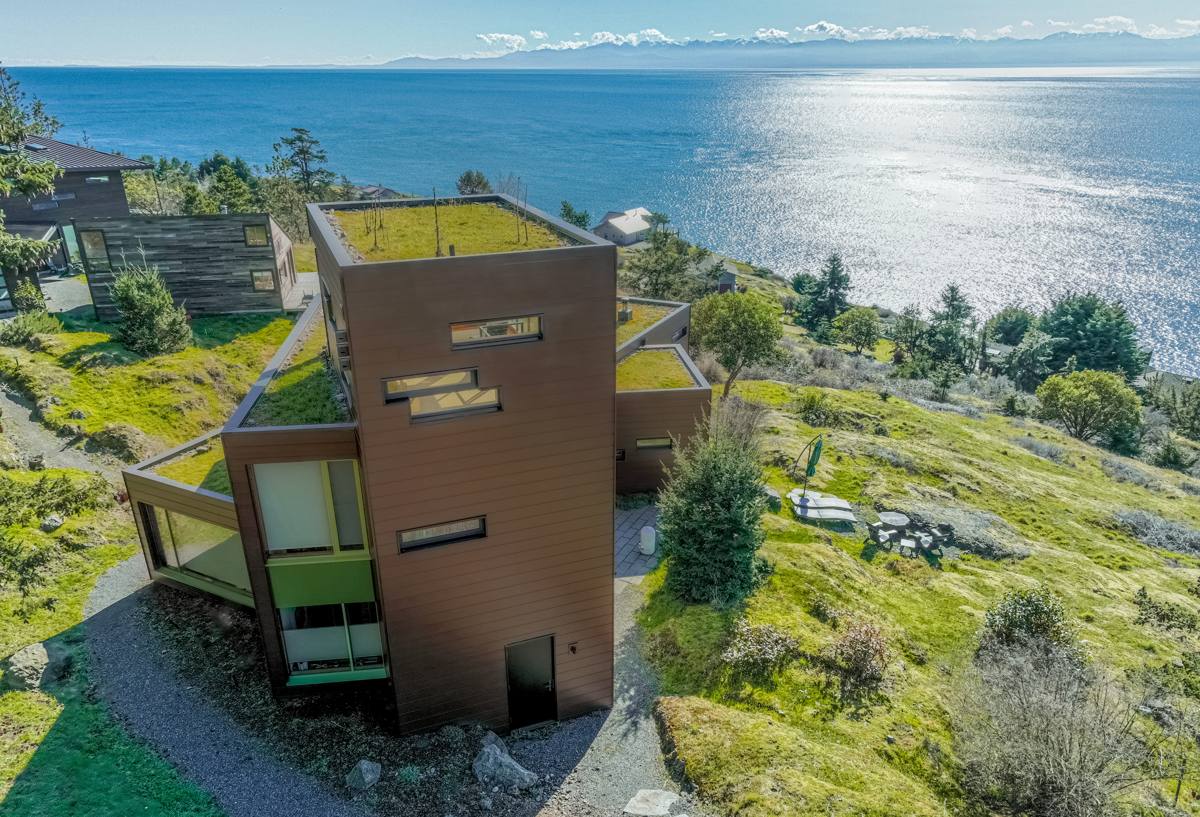
What Columbia Homes Are Up Against
Salt Air
Proximity to salt water accelerates corrosion on anything metal — nail heads, flashing, fasteners, trim caps. On siding systems where the fasteners or flashing weren't rated for a coastal environment, corrosion shows up as rust streaking, staining, or fasteners that lose their grip years before they should. A repair that just patches the visible siding without checking the fasteners and flashing underneath it is a repair that fails again.
Driving Rain
Fairhaven's exposure to wind off the water means rain doesn't just fall on siding, it gets driven into laps, seams, and butt joints under pressure. Siding systems depend on gravity and overlap to shed water — when wind forces rain sideways or upward, water finds every gap in caulking, flashing, and trim that a calmer climate would never expose. This is why so much siding damage in Columbia starts at joints, corners, and penetrations (hose bibs, vents, light fixtures) rather than in the middle of a flat wall.
Moss and Sustained Moisture
Whatcom County's long wet season means moss and algae get a real foothold on siding that stays shaded or doesn't dry out between rains — north-facing walls, areas under tree canopy, and low sections near grade are the usual spots. Moss itself doesn't eat siding, but it holds moisture against the surface for extended periods, which is exactly the condition that lets water find its way behind panels, into seams, and into fastener holes.
Signs Your Siding Needs Repair, Not Just a Look
Most siding problems give warning signs well before they become structural. Homeowners in Columbia should treat any of the following as a reason to have siding inspected, not just watched:
- Soft or spongy spots when you press on a panel, especially near the bottom courses or around windows
- Visible gaps, cracks, or separation at seams, corners, or trim joints
- Persistent staining or streaking that doesn't wash off, particularly below fasteners or flashing
- Bubbling, peeling, or bulging paint or finish, which often signals moisture trapped behind the surface
- Thick moss or algae growth that keeps returning shortly after cleaning
- Panels that have visibly warped, bowed, or pulled away from the wall
- Interior signs — a musty smell, discoloration on interior walls, or unexplained drafts near exterior walls
Any one of these can be minor on its own. Two or three together, especially clustered in one area, usually mean water has been getting behind the siding for a while.
Repair or Replace? How We Make That Call
Not every damaged section needs a full re-side, and we don't push a replacement when a targeted repair will genuinely hold up. The honest answer depends on how contained the damage is and what's happening underneath the surface.
| Situation | Usually a Repair | Usually a Replacement |
|---|---|---|
| Damage location | Isolated to one wall, corner, or a handful of panels | Spread across multiple walls or the whole exterior |
| Underlying sheathing | Dry, solid when probed | Soft, spongy, or visibly rotted |
| Siding material | Still available or closely matchable | Discontinued color/profile, or non-Hardie product we won't extend |
| Age of existing siding | Under roughly two-thirds of its expected service life | Near or past its expected service life |
| Root cause | Identifiable and fixable (bad caulk joint, single failed flashing point) | Systemic — original installation lacked proper flashing/drainage plane |
We inspect before we quote either way. If a repair is the honest recommendation, that's what we propose — we don't upsell a full re-side to a homeowner who doesn't need one.
What a Correct Siding Repair Actually Involves
A repair that just covers the visible damage without addressing the cause is a repair you'll pay for again in a few years. Done correctly, a siding repair in a coastal, high-moisture area like Columbia includes several steps that aren't optional, even if they're not visible once the job is finished.
Diagnose Before Touching Anything
We remove enough siding around the damaged area to see what's actually happening — whether the sheathing is dry, whether the weather-resistive barrier is intact, and whether flashing at windows, doors, or penetrations is doing its job. Patching over a hidden moisture problem is the single most common way a "repaired" section fails again within a year or two.
Fix the Water Path, Not Just the Symptom
Most siding failures trace back to water getting in somewhere specific — a missing kick-out flashing, a caulked joint that should have been flashed, a fastener that penetrated the drainage plane wrong. The repair has to correct that path, not just replace the panel that showed the stain.
Match Material and Fastening Correctly
New panels need to match the existing siding's profile, exposure, and finish as closely as possible, and they need to be fastened with corrosion-resistant fasteners appropriate for a salt-air environment. Mismatched fastener metal is a common source of the rust streaking we see on repairs done by crews unfamiliar with coastal conditions.
Reseal and Finish Properly
Joints get sealed with the right sealant for the material and exposure, and any factory finish that was disturbed gets addressed so the repaired section doesn't stand out or weather differently than the surrounding siding.
Our Process for a Columbia Siding Repair
- On-site inspection — We look at the damaged area and probe the surrounding siding and trim to see how far the problem actually extends, not just where it's visible.
- Diagnosis — We identify the water path or mechanical cause, and check flashing, caulking, and fastener condition in the surrounding area.
- Honest scope and estimate — We tell you plainly whether this is a contained repair or something that points to a bigger issue, with a clear explanation either way.
- Repair — We remove only what needs to come off, correct the underlying cause, and install matched material with proper fastening and flashing.
- Finish and walkthrough — We seal, finish, and walk the repair with you so you know exactly what was done and why.
Why We Only Patch With James Hardie Fiber Cement
This company installs and repairs exclusively with James Hardie fiber cement siding — we don't install or patch with vinyl, LP SmartSide, Cemplank, Allura, primed spruce, or cedar. That standard applies to repair work the same as it applies to full installs, and there's a practical reason for it beyond preference.
Fiber cement is non-combustible and dimensionally stable, meaning a Hardie repair holds its shape and finish consistently in the wet, salty, moss-prone conditions Columbia sees year-round, without the swelling, warping, or repeated moisture absorption that wood-based and some engineered products are prone to. Hardie's ColorPlus factory finish is also formulated to resist fading and hold color uniformly, which matters when we're trying to match new material into an existing wall — a mismatched patch is its own kind of eyesore.
When existing siding on a home is a different product entirely, we'll say so plainly and explain the trade-offs of patching it versus transitioning that section, or eventually the whole exterior, to Hardie. We won't quietly extend a product we don't stand behind just to make one wall match.
Checklist: What to Ask Before You Hire a Siding Repair Contractor
- Will you inspect behind the damaged siding before quoting the repair, or just replace what's visible?
- What caused the damage, and does the repair address that cause or just the symptom?
- What fastener and flashing materials will you use, given the salt-air exposure here?
- Can you match the existing siding's profile and finish, or will the repaired section be visibly different?
- Do you carry liability insurance and will the repair come with any workmanship warranty?
- Have you worked on homes in Columbia or similarly exposed parts of Fairhaven before?
Why a Crew That Already Works Columbia Matters
Siding repair is a diagnostic job as much as an installation job. A crew that's worked this specific stretch of Whatcom County's coastline already knows where water tends to enter homes exposed to driving rain off the bay, which corners and penetrations fail first in a salt-air environment, and how aggressively moss reestablishes itself on shaded walls here. That local pattern recognition is the difference between a repair that fixes the actual problem and one that just looks fixed until the next wet season.
It also means a faster, more accurate diagnosis on-site — less time spent theorizing about what might be happening behind the wall, more time spent confirming it and fixing it right the first time.
If you're seeing staining, soft spots, gaps, or moss buildup on your Columbia home's siding, we're happy to come take a look. The estimate is free, there's no pressure to do more work than the house actually needs, and you'll get a straight answer about whether you're looking at a repair or something bigger.