 Fairhaven Siding
 Edgemoor's Setting Puts Extra Stress on Siding
Edgemoor sits close to Bellingham Bay, on wooded, established lots that give homes shade, privacy, and a straight shot of marine air off the Salish Sea. That combination is beautiful to live in and hard on exterior siding. Salt-laden air moves inland on the prevailing wind, driving rain comes in sideways during fall and winter storms, and heavy tree canopy keeps siding damp and shaded long after a storm has passed. None of these factors are dramatic on their own. Together, over years, they're exactly the conditions that turn a small siding problem into a expensive one.
We repair siding in Edgemoor regularly, and the failure patterns we see here are consistent enough that we can usually tell, before we even get out of the truck, roughly what we're going to find on the north and west-facing walls.
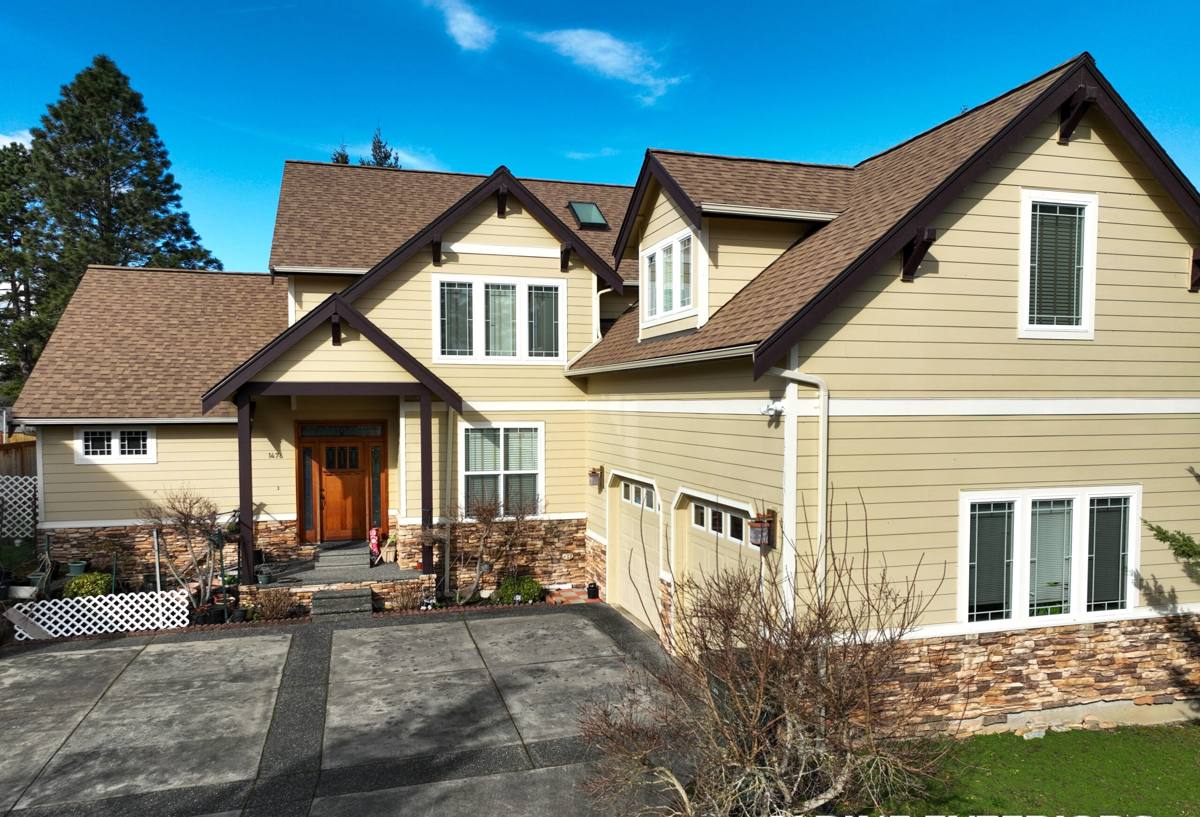
What Salt Air, Rain, and Moss Actually Do to Siding
Salt Air and Fastener Corrosion
Airborne salt accelerates corrosion on anything metal — nail heads, flashing, screws, and staples. Once a fastener starts to rust, it loses grip and can work loose, or the rust stain bleeds through paint and caulking. On older or lower-grade siding, corroded fasteners are one of the most common reasons a panel or board starts to separate from the wall.
Wind-Driven Rain and Water Intrusion
Whatcom County storms don't just fall — they blow. Driving rain forces water into any gap in the siding envelope: open seams, failed caulk joints, poorly lapped panels, or trim that's pulled away from the wall. Once water gets behind the siding, it doesn't dry quickly in a shaded, humid neighborhood like Edgemoor. That trapped moisture is what causes rot in the sheathing underneath, not just cosmetic damage to the siding face.
Moss, Shade, and Trapped Moisture
Tree cover keeps siding out of direct sun for long stretches, which is good for fade resistance but bad for drying time. Moss and algae take hold on the shaded, damp sides of a house and hold moisture against the surface. On materials that aren't dimensionally stable or properly sealed, that constant damp cycle is what triggers swelling, cracking, and paint failure well before the siding is actually worn out.
Signs Your Edgemoor Home Needs Siding Repair
Most siding failures give warning signs well before they become structural. Walk your exterior, especially the north and west walls, and look for:
- Soft or spongy spots when you press on siding near the bottom edges or around windows
- Visible rust streaks running down from nail heads or trim fasteners
- Persistent moss or dark green-black staining that comes back within weeks of cleaning
- Cracked, bubbled, or peeling paint concentrated on one or two walls rather than the whole house
- Gaps, warping, or boards that have pulled away from the wall line
- Caulk joints around windows, corners, or trim that have cracked, shrunk, or separated
- Musty smell or visible staining on interior walls that share an exterior wall with a shaded or downhill side of the house
Any one of these on its own may be minor. Two or more in the same area usually means water has already gotten past the surface.
Why "Just Patch It" Often Fails Long-Term
A lot of siding repair calls we get in Edgemoor start with a homeowner wanting the smallest possible fix — caulk the gap, replace one board, paint over the stain. Sometimes that's genuinely the right scope. Often it isn't, for a specific reason: the damage visible on the surface is rarely the full extent of what's happened underneath.
This is especially true on homes with older cedar, primed spruce, or vinyl siding, where water that got behind one section has usually traveled and affected sheathing or framing beyond the spot that looks bad. Patching only the visible damage without opening up and checking what's behind it means the rot keeps working under a fresh-looking patch. We won't do that kind of repair, because it costs the homeowner more in the long run than doing it right the first time.
There's also a matching problem. Discontinued cedar profiles, sun-faded vinyl, and older LP SmartSide runs are difficult or impossible to match exactly, so a "quick patch" often leaves a visibly different panel on the wall — which is part of why we steer repair conversations toward a correct, lasting fix rather than a cosmetic band-aid.
What a Correct Repair Involves
A repair done right isn't just about replacing what's cracked or stained. It's about finding out why that section failed and making sure the fix addresses the cause, not just the symptom.
| Quick Patch | Correct Repair |
|---|---|
| Covers or caulks the visible damage | Removes affected material to check sheathing and framing underneath |
| Reuses existing flashing and house wrap | Repairs or replaces damaged flashing and water-resistive barrier |
| Matches paint color only | Matches or corrects the drainage plane so water sheds away from the wall, not just the color |
| Addresses one board or panel | Checks adjacent sections for the same moisture exposure before calling the job done |
| Short-term appearance fix | Solves the underlying water or corrosion problem |
In practice that means: pulling back siding far enough to see actual sheathing condition, checking for soft or discolored wood, correcting flashing details at windows, trim, and butt joints, and only then closing the wall back up with new material installed to current best practice — proper lapping, fastening, and clearances so water sheds instead of collecting.
Why We Repair and Rebuild With James Hardie Fiber Cement
We install and repair siding with James Hardie fiber cement exclusively. We don't install LP SmartSide, vinyl, Cemplank, Allura, primed spruce, or cedar, and in a repair context that matters: when a section of siding on an Edgemoor home has failed due to moisture or corrosion, replacing it with the same material that failed usually means the same failure returns on the same timeline.
Fiber cement doesn't rot, and it isn't a food source for moss or algae the way untreated wood is. James Hardie's HZ5 product line is engineered for the freeze-thaw and moisture cycles common to the Pacific Northwest, and the factory-applied ColorPlus finish resists the fading and peeling that shaded, damp walls are hardest on. For a repair section to blend in and hold up as well as the surrounding siding, it needs to be installed to the same standard — correct clearances, proper fastening, and flashing details that account for wind-driven rain, not just a caulk gun and a patch.
When a repair area is large enough, or the existing material is old enough that a true match isn't realistic, we'll be direct with you about whether a broader Hardie replacement on that wall makes more sense than chasing a patch that won't hold up under Edgemoor's conditions.
Repair vs. Replace: What Actually Drives the Decision
| Factor | Favors Repair | Favors Replacement |
|---|---|---|
| Extent of moisture damage | Isolated to one section, sheathing intact | Found in multiple areas or rot has spread into framing |
| Age and condition of existing siding | Siding is sound overall, still has service life left | Siding is near end of life or discontinued and hard to match |
| Underlying material | Original James Hardie fiber cement installed correctly | Cedar, vinyl, or LP SmartSide with recurring moisture issues |
| Cause of failure | Isolated flashing or caulk failure, easily corrected | Systemic issue — wrong original install, chronic shade/moisture |
| Long-term cost | Lower upfront cost, addresses a contained problem | Higher upfront cost, avoids repeat repair calls in a few years |
Our Process for Edgemoor Repair Jobs
Inspection
We look at more than the spot you called about. Because Edgemoor's shaded, waterfront-adjacent lots tend to stress the same walls the same way across a property, we check north and west exposures, areas under heavy tree cover, and anywhere flashing or trim meets the siding, so nothing gets missed and re-quoted later.
Honest Scope
You get a clear explanation of what we found, what caused it, and whether a targeted repair or a broader section replacement is the right call — with the reasoning, not just a number.
Execution
Repairs are done to the same fastening, flashing, and clearance standards as new installation. We're not interested in a fix that looks fine for one season and fails again in the next round of winter storms.
Follow-Up
We stand behind the work. If something about the repair doesn't perform the way it should, you can reach the crew that actually did it.
Why a Crew That Already Works Edgemoor Matters
Siding repair is a trade where local experience genuinely changes the outcome. A crew that already works the Bellingham and Fairhaven area knows which wall orientations take the worst of the driving rain, how much shade and moss exposure to expect on wooded lots, and what correct flashing and drainage details hold up against Whatcom County's wind and moisture patterns specifically — not just siding repair in general. That's the difference between a patch that looks fine at handoff and a repair that's still doing its job in five winters.
If you're seeing moss that keeps coming back, a soft spot near the base of a wall, or rust streaking on your siding, we'd rather take a look before it becomes a bigger job. Reach out for a free, no-pressure estimate — we'll tell you honestly what we find and what it would take to fix it right.