 Fairhaven Siding
 Why Silver Beach Siding Wears the Way It Does
Silver Beach sits close enough to the water that homes here take a different kind of beating than siding a few miles inland. The combination that matters most is salt-laden air moving in off Bellingham Bay, long stretches of driving rain through fall and winter, and a moss and algae season that can run eight or nine months out of the year in shaded, north-facing exposures. None of these on their own is unusual for Whatcom County. Together, applied to the same wall assembly year after year, they're what separates a siding job that looks good for two decades from one that starts failing at year eight.
Salt air is corrosive to exposed metal fasteners and trim, and it accelerates the breakdown of lower-grade paint films faster than inland exposure does. Driving rain — rain that comes in sideways with wind, not just straight down — finds every gap in flashing, every under-caulked joint, and every place where siding was set too close to grade or trim. And moss doesn't just look bad; a mat of moss and algae holds moisture against a wall surface long after a dry spell has started elsewhere in the yard, which matters enormously depending on what the siding underneath is actually made of.
What This Means for a Silver Beach Home Specifically
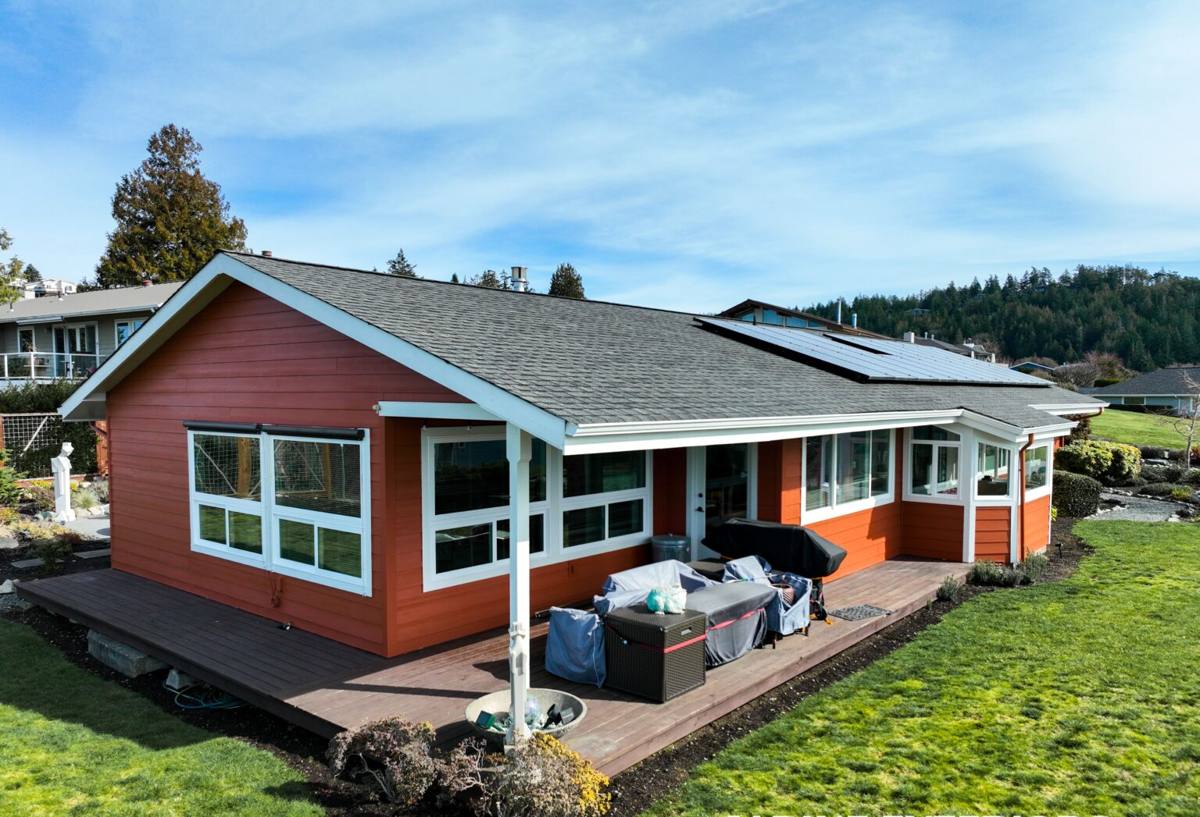
If your siding is original to the house, or it's a product that wasn't chosen with this specific exposure in mind, you're likely to see problems concentrated in predictable spots: north and west-facing walls that stay damp longer, areas near ground level where splash-back keeps the bottom courses wet, and corners or window trim where caulk has dried out and pulled away. A siding replacement in Silver Beach isn't just a cosmetic refresh — it's a chance to correct whatever original build decisions didn't account for this microclimate, and to put a material and installation detail package on the house that's actually engineered for it.
Common Signs Replacement Is Due, Not Just Repair
- Soft or spongy spots when you press on siding, especially near the bottom courses or under windows
- Paint that's failing in sheets or bubbling rather than just fading evenly
- Persistent moss or algae growth that returns within weeks of cleaning
- Visible gaps, warping, or cupping in individual boards or panels
- Rising interior heating bills with no other clear cause, which can point to a compromised weather barrier
- Rot or staining at butt joints, corners, and anywhere trim meets siding
Why We Install Only James Hardie Fiber Cement Here
We don't install vinyl, LP SmartSide, cedar, primed spruce, Cemplank, or Allura. That's not a marketing line — it's a standard we hold because of exactly the conditions described above. Fiber cement doesn't feed moss and algae the way wood-based products can, and it doesn't warp, swell, or delaminate under repeated wetting the way engineered wood siding is prone to when a coating breach lets moisture into the substrate. Vinyl has its own issues in this climate: it expands and contracts more than fiber cement across our temperature swings, and salt-air exposure tends to leave it looking chalky and brittle well before a fiber cement product shows comparable wear.
James Hardie's HZ5 product line is engineered specifically for climates like ours — Pacific Northwest weather with sustained moisture exposure — and it's paired with a factory-applied ColorPlus finish that's baked on and warranted against fading and peeling in a way field-applied paint simply can't match over the long run. That combination is why it's the only siding system we put on a home, in Silver Beach or anywhere else in the Fairhaven area.
What Homeowners Give Up With Other Materials — Fairly Stated
To be clear about trade-offs rather than oversell our position: vinyl is genuinely less expensive up front, and it's a reasonable product in drier climates or on budget-driven projects. Wood-based engineered sidings can look very close to real wood at a lower installed cost than fiber cement. Cedar has an appearance many homeowners genuinely prefer. None of those are false claims. What we've found, installing and repairing siding across Whatcom County's wet, salt-exposed communities, is that those trade-offs cost more in maintenance, repainting, and premature replacement than the upfront savings are worth here specifically. That's a judgment call about this climate, not a claim that those products are defective.
What a Correct Siding Replacement Actually Involves
The siding itself is only part of the job. Most premature failures we're called to diagnose in this area trace back to what's underneath the visible surface, not the surface material itself.
The Assembly, Layer by Layer
A correct replacement starts by stripping the old siding down to the sheathing and inspecting for hidden rot, especially around window and door openings and at the bottom plate. Any compromised sheathing gets replaced before anything else happens — covering over rot with new siding just hides the problem for a few more years. Next comes a weather-resistive barrier installed with proper shingle-lap sequencing so water sheds outward at every seam. Flashing goes in at every horizontal transition: window heads, door heads, roof-to-wall intersections, and deck ledgers, all lapped correctly so water can't work its way behind the cladding. Only after that foundation is right does the Hardie siding itself go on, fastened per manufacturer spec, with the correct gap at grade and at trim to allow drainage and airflow.
Details That Matter More in a Salt-Air, High-Rain Environment
- Stainless or hot-dip galvanized fasteners rather than standard coated fasteners, to resist salt-air corrosion
- Proper clearance between the bottom of the siding and grade, decks, and roof lines to reduce splash-back saturation
- Caulking and sealant products rated for sustained UV and moisture exposure, applied only where Hardie's install spec actually calls for it — over-caulking traps moisture as often as it keeps it out
- Careful attention to inside and outside corners, which are the first place driving rain finds a way in
- Ventilation detailing that lets any incidental moisture dry outward instead of getting trapped against the sheathing
Our Process for a Silver Beach Project
The steps are the same discipline we apply everywhere, but the specifics get tuned to this exposure.
- On-site assessment. We look at which walls take the most weather, check for existing moisture damage, and evaluate the current weather barrier and flashing condition before quoting anything.
- Scope and product plan. We spec the Hardie product line, panel profile, and ColorPlus color that fits the home and this exposure, and we tell you plainly if we think a repair rather than full replacement is the honest answer for your situation.
- Tear-off and sheathing inspection. Old material comes off, sheathing gets inspected and repaired as needed, and we document anything we find before covering it back up.
- Weather barrier and flashing install. This is the step that determines whether the job lasts 10 years or 40, and it's where we spend the most careful attention.
- Hardie siding installation. Installed to manufacturer spec, with fastening, clearances, and corner detailing set for this climate.
- Final walkthrough. We go over the finished work with you, point out anything you should watch for, and cover basic maintenance expectations.
Cost Factors on a Silver Beach Replacement
Every home is different, and we won't quote a number without seeing the house, but the factors that move a Silver Beach project's price are fairly consistent.
| Factor | Why It Matters Here |
|---|---|
| Extent of hidden sheathing damage | Salt air and driving rain accelerate hidden rot; more repair work means more cost, but it's not optional to skip |
| Wall exposure and orientation | North and west-facing walls exposed to weather may need more flashing and detail work than sheltered elevations |
| Home size and complexity | More corners, dormers, and trim transitions mean more labor-intensive flashing and cutting |
| Hardie product line and profile chosen | HZ5 lap siding, panel siding, and shingle profiles carry different material and labor costs |
| Access and site conditions | Slopes, tight lot lines, and proximity to the water can affect staging and scaffolding needs |
Why a Crew That Already Works This Area Matters
Siding installation isn't a one-size-fits-all trade. A crew that's replaced siding on homes elsewhere in Whatcom County but hasn't spent real time in the specific salt-air, high-moisture pocket that includes Silver Beach and the broader Fairhaven area is more likely to under-detail flashing and fastener choices that don't matter as much in a drier microclimate but matter a great deal here. Local experience means recognizing which walls on a given lot are going to take the worst of the weather before the first board comes off, not discovering it three years after the job is done.
It also means being straightforward about what a home actually needs. Not every Silver Beach home needs full replacement — sometimes what looks like widespread failure is really isolated damage at a few flashing points, and an honest contractor tells you that instead of selling a bigger job than the house requires.
Maintenance After Replacement
Correctly installed Hardie siding is low-maintenance, not no-maintenance. In this climate, a few habits go a long way toward getting the full lifespan out of the investment:
- Rinse siding annually, and more often on shaded or north-facing walls where moss and algae take hold fastest
- Keep gutters clear so overflow doesn't run down the siding face and concentrate moisture in one spot
- Trim back vegetation that keeps a wall section shaded and damp longer than the rest of the house
- Check caulking at trim and corners every couple of years and have any cracked or missing sealant addressed promptly
- Watch for any soft spots, staining, or paint failure and call it in early — small flashing fixes are cheap; water damage that's had years to spread isn't
Ready to Talk About Your Home
If you're weighing repair against full replacement, or you just want an honest read on how your current siding is holding up against Silver Beach's salt air, rain, and moss, we're glad to take a look. The estimate is free, there's no pressure to move forward, and you'll get a straight answer about what your home actually needs — use the form below to get started.