 Fairhaven Siding
 Board & Batten Siding for Silver Beach Homes
Silver Beach sits close enough to Bellingham Bay that salt air, wind-driven rain, and shade-driven moss growth are just part of owning a home here. That combination is hard on siding, and it's especially hard on siding that isn't installed with those conditions in mind. If you're considering board and batten for a home in this neighborhood, the vertical-plank-and-strip look is only half the decision — the other half is making sure the material and the installation can actually hold up to a Whatcom County winter and a marine-influenced summer, year after year.
We install board and batten siding using James Hardie fiber cement exclusively. This page walks through what that means for a Silver Beach home specifically: the climate factors that matter, what a correct installation involves, and how our process is built around the realities of this part of Fairhaven.
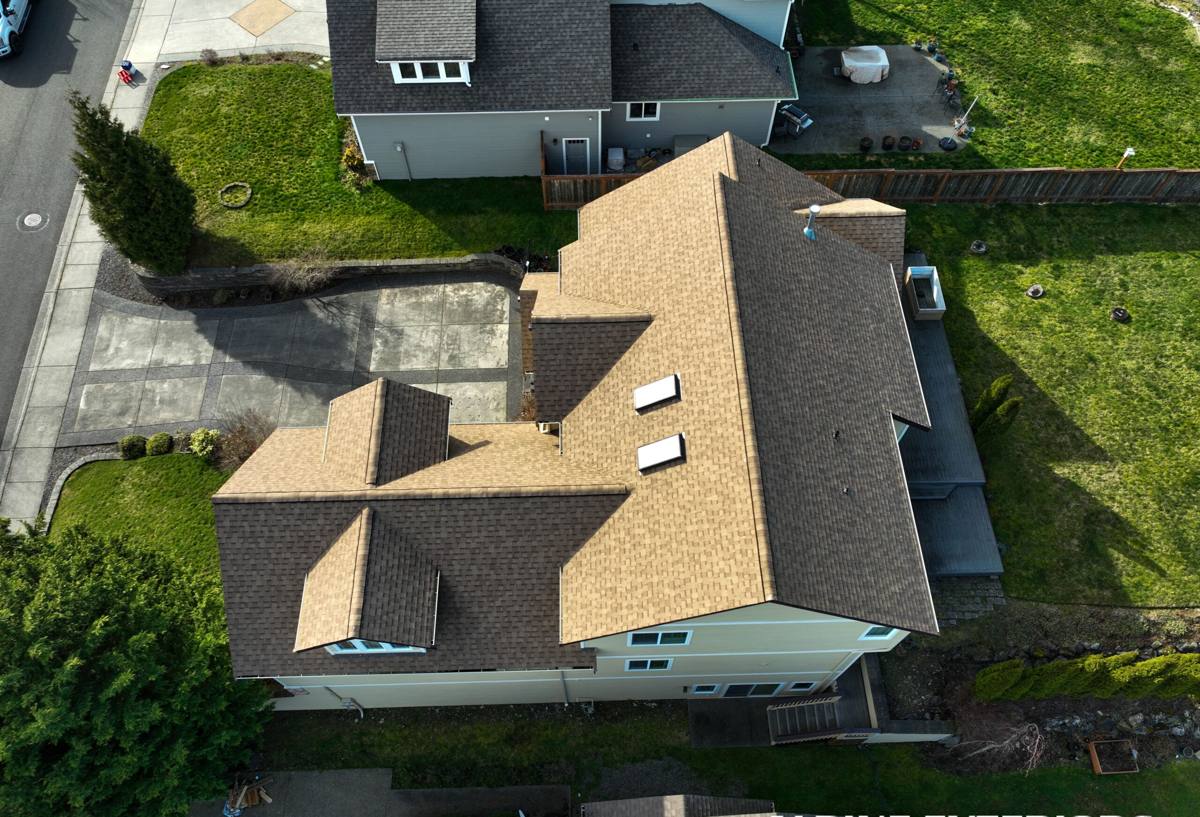
Why Silver Beach's Climate Is Tough on Vertical Siding
Board and batten's vertical lines and exposed seams make it a beautiful style, but that same profile means more joints and more edges exposed to weather than a standard lap siding job. In a neighborhood this close to the water, that matters in a few specific ways:
Salt Air and Metal Fasteners
Homes near Bellingham Bay deal with airborne salt that accelerates corrosion on fasteners, flashing, and trim hardware. Board and batten uses more vertical battens and more fastening points than a lap profile, so every one of those connections is a potential weak spot if the wrong fastener or flashing detail is used.
Driving Rain and Wind Exposure
Storms coming off the water don't just fall straight down — they drive rain sideways into wall assemblies. Board and batten depends on the battens and the gaps behind them to manage water correctly. If the water-resistive barrier, flashing, and gap spacing aren't right, driving rain finds its way behind the boards instead of running off them.
Moss and Shaded Wall Sections
Between tree cover and the long stretches of overcast weather typical of this part of Washington, north- and west-facing walls in Silver Beach often stay damp for extended periods. Moss and algae take hold on siding that can't dry out, and on wood-based or wood-look products that moisture retention eventually leads to swelling, rot, or paint failure at the seams.
What a Correct Board & Batten Job Requires Here
Board and batten isn't just battens nailed over flat panels — done right, it's a layered water-management system. For a Silver Beach home, that system needs to account for the moisture load described above from the start, not as an afterthought.
- A continuous, properly lapped water-resistive barrier behind the entire assembly
- Rainscreen gap or furring strips so air can circulate and walls can dry between storms
- Corrosion-resistant, manufacturer-approved fasteners rated for coastal/marine exposure
- Flashing at every window, door, and roofline intersection — not caulk standing in for flashing
- Correct batten spacing and fastening pattern per the manufacturer's engineering, not "close enough"
- Factory-finished material at the field cut lines properly sealed, so cut edges don't become the first failure point
Skip any one of these and the siding may look right for a season or two before problems show up — usually at the seams and joints, which is exactly where board and batten has the most of them.
Why We Use James Hardie for This Application
Board and batten's exposed-joint design is one of the clearest cases for why material choice matters as much as installation quality. We install James Hardie fiber cement — specifically their HZ10 product line, engineered for the wetter, more moderate climates found in the Pacific Northwest — and we don't install vinyl, LP SmartSide, primed spruce, cedar, or other fiber cement brands. Here's the reasoning specific to this style and this location:
Non-Combustible, Dimensionally Stable Material
Fiber cement doesn't expand and contract with moisture the way wood-based products do. In a vertical batten application, that stability matters at every seam — less movement means less stress on caulking, fasteners, and paint lines over time.
Factory-Applied ColorPlus Finish
Board and batten shows color and texture uniformly across large flat surfaces, so a factory-baked finish with a real warranty against peeling and fading holds up better under scrutiny than field-applied paint, especially on walls that see direct salt spray or prolonged shade and dampness.
Moisture Resistance at the Core
Because fiber cement doesn't absorb and hold water the way engineered wood products can, it's far less prone to the swelling and edge deterioration that shows up first at board and batten's exposed joints — which is precisely where a Silver Beach home takes the most weather exposure.
We've explained on other pages why we don't install LP SmartSide or vinyl siding, and it comes down to the same theme: maintenance burden and moisture behavior over a 20-30 year timeline, not a knock on any single product's marketing. For board and batten in a marine-influenced neighborhood, that timeline matters more than usual because of how many seams are in play.
Our Process for a Silver Beach Board & Batten Project
- On-site assessment — We look at your home's specific exposure: which walls face the water and prevailing wind, where moss and staining already show up, and where past moisture damage may already exist behind the current siding.
- Tear-off and sheathing inspection — Once old siding is removed, we check the sheathing for rot or soft spots before anything new goes up. This step gets skipped by crews trying to move fast, and it's the single most common source of "new siding, old problem" callbacks.
- Water-resistive barrier and flashing — Properly lapped house wrap, correctly integrated window and door flashing, and a rainscreen gap sized for our climate.
- Hardie board and batten installation — Installed to manufacturer fastening and spacing specs, with corrosion-resistant fasteners appropriate for coastal exposure.
- Trim, caulking, and touch-up — Factory-matched caulk at seams and cut edges, sealed per Hardie's application guidelines so the finish and the warranty both hold.
- Final walkthrough — We go over the finished work with you before we consider the job done.
Cost Factors for Board & Batten in This Neighborhood
Every home's number is different, but these are the factors that most often move the estimate for a Silver Beach board and batten project:
| Factor | Why It Matters Here |
|---|---|
| Wall exposure to wind and salt spray | West- and water-facing walls may need extra flashing and fastener attention |
| Condition of existing sheathing | Moisture-damaged sheathing found during tear-off adds repair scope |
| Home height and complexity | More gables, dormers, and trim intersections mean more flashing detail work |
| Existing siding type | Removal complexity varies between old cedar, vinyl, or previous fiber cement |
| Color and trim selection | ColorPlus finish options and trim coordination affect material cost |
| Access and staging | Lot layout, tree cover, and setback distances affect labor time |
What to Check Before Hiring Anyone for This Job
Board and batten's seams make bad installation easy to hide at first and expensive to fix later. Before hiring a contractor for this specific style in this specific area, it's worth confirming:
- They carry James Hardie certification or documented manufacturer training on fiber cement installation
- They can explain their rainscreen and flashing approach in specific terms, not just "we seal everything up"
- They've worked on homes with direct or near-direct water exposure, not just inland lots
- They use fasteners rated for coastal/corrosive environments, not standard interior-grade hardware
- They inspect and address sheathing condition before re-siding, not just over the old surface
- Their warranty covers workmanship separately from the manufacturer's material warranty
Why Local Experience with Silver Beach Conditions Matters
A crew that mainly works inland Whatcom County homes hasn't necessarily dealt with the specific combination Silver Beach presents: salt-laden air, direct wind exposure off the bay, and the shaded, slow-drying wall sections common on tree-lined lots closer to the water. Board and batten's exposed seams punish shortcuts faster than a lap profile would, and the fixes for water intrusion behind battens are more invasive than fixes for a lap siding leak. Getting the flashing, gap spacing, and fastener choice right the first time isn't optional here — it's the difference between siding that looks good for two decades and siding that needs seam repairs within a few years.
If you're weighing board and batten for a home in Silver Beach, we're happy to take a look, walk you through what your specific walls and exposure would need, and give you a straightforward, no-pressure estimate using the James Hardie system we stand behind.