 Fairhaven Siding
 Storm Season on the Water: Why Silver Beach Roofs Wear Differently
Silver Beach sits close enough to the water that its roofs take on a mix of stresses you don't see a few miles inland. Salt-laden air off the bay accelerates corrosion on exposed metal — nail heads, flashing, gutter fasteners — long before the shingles themselves show their age. Add Whatcom County's driving, wind-pushed rain and a moss season that can run eight or nine months out of the year, and you have a roof that's under low-grade attack almost year-round, punctuated by the occasional windstorm that turns small weaknesses into real leaks.
That combination is why storm damage repair here isn't just "patch the hole and move on." A roof that took wind damage in Silver Beach has usually already been softened up by months of trapped moisture under moss mats or slow corrosion at the flashing. A proper repair has to account for both the acute damage from the storm and the underlying condition that let it happen.
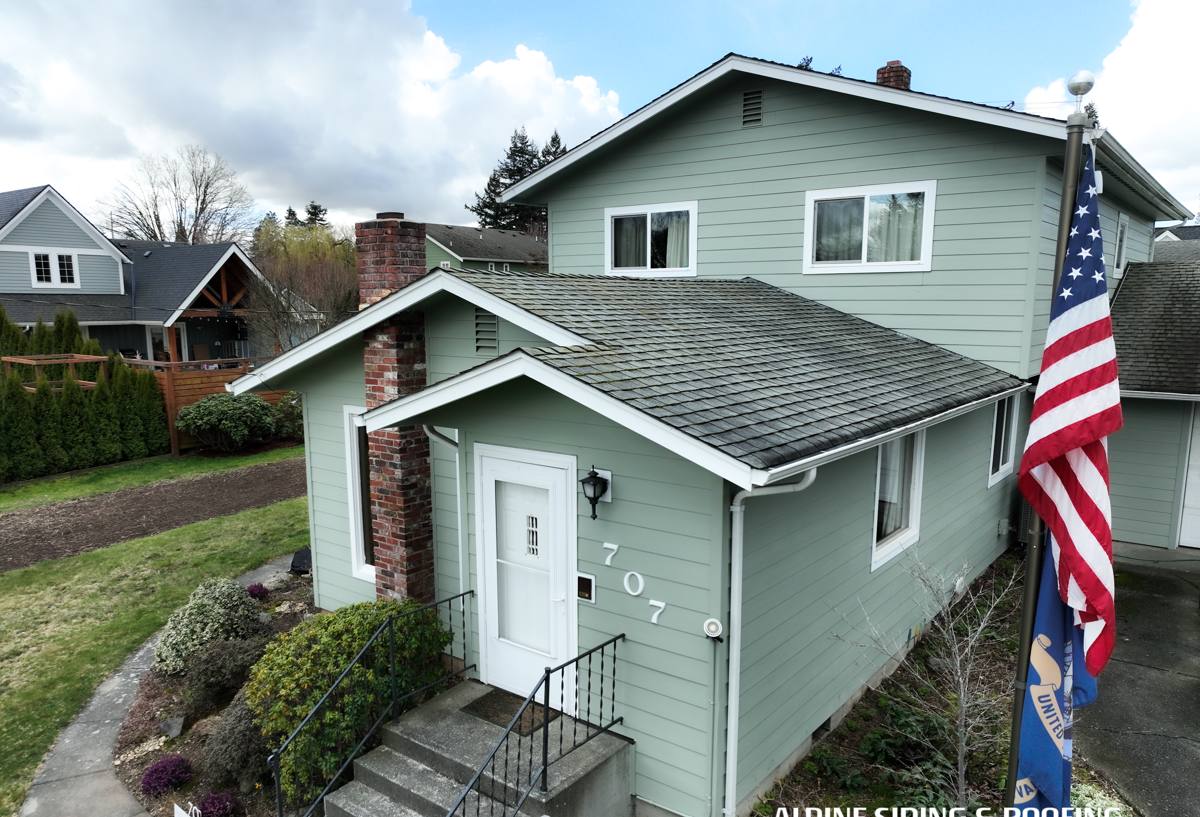
What Actually Counts as Storm Damage
Homeowners often assume storm damage means a hole punched clean through the roof. In practice, most of what we get called out for is quieter than that — and easier to miss until it's caused real interior damage.
Wind Damage
High winds off the water can lift shingle tabs, crease them, or tear them loose entirely without leaving anything obviously missing from the roofline. A shingle that's been lifted and re-seated by wind may look fine from the ground but no longer seals properly, which means it will fail the next time rain drives in at an angle.
Wind-Driven Rain Intrusion
This region's rain rarely falls straight down. When it comes in sideways during a storm, it can work its way under shingle edges, around chimney flashing, and through gaps at roof-to-wall transitions that would never leak in calm weather. This is one of the most common causes of interior water stains after a storm, and it's frequently mistaken for "the roof is old" when the real issue is a specific failed flashing point.
Debris Impact
Branches and wind-thrown debris can crack shingles, dent metal flashing, or knock granules loose in a way that shortens the roof's remaining life even if there's no visible puncture.
Moss and Trapped Moisture
Moss isn't storm damage on its own, but it sets the stage for it. Moss mats hold water against the roofing material, keep it from drying out between rains, and can lift shingle edges just enough that a storm's wind and rain finish the job. Roofs with heavy moss buildup are consistently the ones that suffer the worst storm damage in this area.
What a Correct Storm Damage Repair Involves
The biggest mistake in storm repair is treating it as a cosmetic fix — replacing what's visibly damaged and stopping there. A repair that's actually going to hold up starts with figuring out how far the damage extends beneath the surface.
- Decking inspection: Once shingles are pulled back at the damaged area, we check the plywood or OSB decking underneath for soft spots, delamination, or rot before anything new goes down.
- Flashing condition: Around chimneys, vents, and roof-to-wall junctions, flashing is checked for corrosion and proper lap — a lot of "mystery leaks" trace back to flashing that was never the storm's fault to begin with.
- Underlayment continuity: The felt or synthetic underlayment beneath the shingles needs to be intact and properly lapped in the repaired section, not just covered over.
- Material matching: We match shingle profile, color, and weight as closely as possible so a repair doesn't stand out as an obvious patch, and so it performs the same as the surrounding roof.
- Code-compliant fastening: Nail pattern and placement matter more in a high-wind, high-moisture area than most people realize — under-nailed shingles are a repeat-failure waiting to happen.
Anything less than this — a bead of sealant over a crack, a few shingles nailed down without checking what's underneath — tends to fail again within a season or two, especially with Silver Beach's exposure to the next round of weather off the water.
Our Storm Damage Repair Process
- Inspection and documentation. We walk the roof (or use a ladder-and-camera inspection where pitch or safety makes that the better call) and document the damage with photos, which also serves you well if you're filing an insurance claim.
- Honest scope assessment. We tell you plainly whether this is a targeted repair or whether the damage — or the roof's underlying condition — points toward a larger repair or eventual replacement. We're not going to recommend a full tear-off when a proper section repair will hold.
- Written estimate. You get a clear breakdown of what's being replaced and why before any work starts.
- Repair work. Decking, underlayment, flashing, and shingles are addressed in that order, with matched materials.
- Cleanup and final check. Debris and old material are hauled off, and we do a final water test or close visual check at flashing points before calling it done.
Working With Your Insurance Claim
Storm damage repair often overlaps with an insurance claim, and we're glad to work alongside that process — but we're not going to pad a claim or "find" damage that isn't there to help you hit a deductible. What we can do is give you an honest, documented assessment of what the storm actually caused versus what's pre-existing wear, which is exactly the kind of clear information an adjuster needs. If your policy requires an independent estimate, our written scope and photos are built to stand on their own.
Repair or Replace? Cost Factors to Weigh
Not every storm-damaged roof needs the same answer. These are the factors that actually move the decision, not just square footage.
| Factor | Favors Repair | Favors Replacement |
|---|---|---|
| Extent of damage | Localized to one section or slope | Multiple areas or widespread granule loss |
| Roof age | Under roughly half its expected service life | Nearing or past typical lifespan for the material |
| Decking condition | Solid, dry decking under the damaged area | Soft spots, rot, or repeated moisture staining found in multiple areas |
| Moss history | Minimal or well-managed moss growth | Long-term heavy moss with visible shingle lifting across the roof |
| Matching materials | Original shingle line still available or close match exists | Discontinued product with a noticeable mismatch |
Broadly, a straightforward section repair on a roof in reasonable shape tends to run a few hundred to a couple thousand dollars depending on size and access; a full replacement is a much larger investment. We'll walk you through exactly where your roof falls on that spectrum rather than pushing one option by default.
Reducing Repeat Storm Damage in Silver Beach
Because this area's climate keeps working on a roof between storms, a few maintenance habits go a long way toward keeping repairs rare instead of routine.
- Have moss removed and treated before it mats down and lifts shingle edges — earlier in the season is easier and cheaper than after months of growth.
- Keep gutters and downspouts clear so wind-driven rain has somewhere to go instead of backing up under the roof edge.
- Trim back branches that overhang the roofline to reduce debris impact risk during wind events.
- Have flashing around chimneys and vents checked periodically for salt-air corrosion, since it fails quietly and often before the shingles do.
- After any significant windstorm, do a quick visual check (or have one done) even if you don't see obvious damage from the ground — early catches are cheaper than delayed ones.
Why Hiring a Crew That Already Works Silver Beach Matters
A contractor who works this specific stretch of Whatcom County knows what a storm-damaged roof here typically looks like underneath the surface — where salt air tends to hit flashing hardest, how long moss has usually had to work on a roof before a storm exposes the weakness, and what materials actually hold up to the area's wind-driven rain. That local pattern recognition means a faster, more accurate diagnosis instead of a generic repair that doesn't account for what this climate does to a roof over time.
If you've got storm damage on your Silver Beach home — or you're not sure whether what you're seeing is storm damage or just wear that's finally showing — we're happy to take a look and give you a straight answer. Reach out for a free, no-pressure estimate using the form below.