 Fairhaven Siding
 Storm Damage in Birchwood: A Different Kind of Wear
Birchwood roofs don't fail the way roofs fail in drier parts of the country. Out here, the damage is usually slow before it's sudden. A windstorm off Bellingham Bay lifts a few shingles nobody notices, salt-laden air corrodes fasteners and flashing over a few seasons, and a long wet winter lets moss get a foothold in the granules. Then one storm with sustained wind and driving rain finds every weak point at once, and what looked like a fine roof the week before is suddenly leaking into the attic.
We work on roofs throughout Whatcom County, and Birchwood comes with its own combination of exposure: proximity to the water, mature tree cover that drops debris and holds moisture, and a moss season that runs longer here than in most inland neighborhoods. Storm damage repair in this area isn't just about patching what broke in the last windstorm — it's about understanding why that spot failed and whether the rest of the roof is heading the same direction.
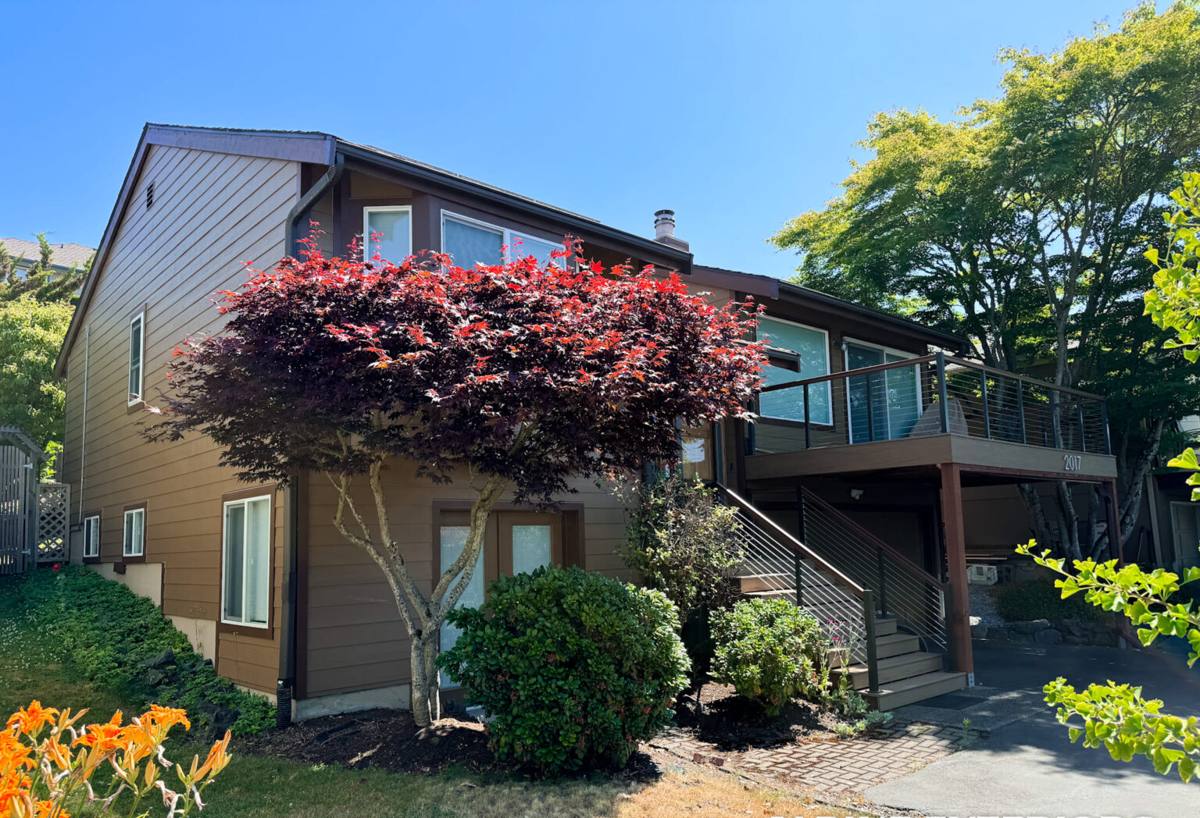
What Actually Counts as Storm Damage
Homeowners often picture storm damage as a tree limb through the roof deck. That happens, but it's the least common version. More often we're called out for:
- Wind-lifted or creased shingles, especially along ridges, edges, and any roof plane facing the prevailing weather
- Wind-driven rain forced up under shingles or through aging flashing at chimneys, vents, and wall intersections
- Granule loss and shingle bruising from wind-blown debris and moss-laden branches
- Gutter and downspout damage that backs water up under the roof edge
- Soft spots or staining in the attic sheathing from a slow leak that started weeks before anyone noticed
That last one is the trap. A roof can look intact from the ground after a storm while water is already tracking along the sheathing and framing. This is why we always inspect the attic side, not just the shingles, when we're called out after weather.
Signs a Birchwood Roof Needs a Post-Storm Inspection
Not every storm requires a service call, but a few signs mean it's worth getting eyes on the roof before the next system rolls through:
- Shingle pieces, granules, or flashing fragments in the yard or gutters after wind
- A new ceiling stain, even a small one, following heavy rain
- Visible daylight or gaps at ridge lines, valleys, or around roof penetrations
- Gutters pulling away from the fascia or sagging with debris
- A musty smell in the attic or upper floor that wasn't there before
- Moss buildup that's thickened noticeably — moss holds moisture against the roof surface and works into seams over time
If any of these show up after a storm, the right move is a straightforward inspection, not guesswork from the ground.
What a Proper Storm Repair Involves
Assessment Before Anything Gets Fixed
We start on the roof and in the attic, tracing water paths rather than just patching the visible damage. A shingle that blew off is easy to spot; the flashing seam that let water in three feet away is the part that actually needs attention. Repairing the obvious damage while missing the real entry point is how homeowners end up calling again after the next storm.
Matching the Repair to the Roof
Spot repairs only work when the replacement materials match the existing roof's age, exposure, and granule wear closely enough that the patch doesn't become the next weak point. On an older roof, we'll tell you honestly if the surrounding shingles are too brittle or worn for a clean tie-in, because nailing new shingles into a failing field just moves the problem.
Flashing and Sealant Get Real Attention
In a salt-air environment, metal flashing corrodes faster than people expect, and it's frequently the actual source of a "roof leak" that gets blamed on the shingles. Storm repair on a Birchwood roof should always include a look at chimney flashing, step flashing along walls, and vent boots — these are common failure points and cheap to address correctly compared to the water damage that follows if they're ignored.
Moss and Debris Cleared as Part of the Job
If moss contributed to the failure, we clear it as part of the repair rather than leaving it to keep holding moisture against the new work. This isn't cosmetic — moss roots work into shingle mat and lifts tabs over time, which is exactly the kind of vulnerability that turns a minor storm into a real leak.
Repair or Replace? Honest Cost Factors
Storm damage doesn't automatically mean a new roof, but it's worth being clear-eyed about when a repair is the right call versus when it's a stopgap.
| Factor | Points Toward Repair | Points Toward Replacement |
|---|---|---|
| Roof age | Under 10-12 years, asphalt shingle | Nearing or past manufacturer's expected service life |
| Damage extent | Isolated to one area or slope | Multiple slopes or recurring leaks in different spots |
| Underlying condition | Sheathing sound, granule loss minimal elsewhere | Widespread granule loss, brittle shingles, soft decking found |
| Moss/algae history | Light, manageable buildup | Heavy, long-term moss with visible mat lifting |
| Insurance scope | Adjuster approves targeted repair | Adjuster's own assessment supports full replacement |
We'll always give you our honest read on which side of that table your roof falls on, including telling you when a repair is the more sensible near-term choice even if a replacement is coming eventually.
Our Process for Storm Damage Calls
1. Inspection and Documentation
We inspect the roof, attic, and any interior damage, and document what we find with photos. This record is useful whether you're filing an insurance claim or just want a clear picture of the roof's condition before deciding on repair scope.
2. A Straight Answer on Scope
You get a written explanation of what's damaged, what's causing it, and what we recommend — repair, partial replacement, or full replacement — along with the reasoning, not just a number.
3. The Repair Itself
Work is sequenced to get the roof weathertight first if there's active exposure, then completed properly rather than rushed. We use fasteners and flashing details suited to a marine, moss-prone climate, not just whatever gets a shingle back in place.
4. Cleanup and Walkthrough
Debris, old materials, and displaced granules are cleared from the yard and gutters, and we walk the completed repair with you before we consider the job done.
Working With Your Insurance Claim
Many storm repairs in this area go through homeowners insurance, and the documentation step matters here more than people expect. A clear record of the damage — photos, cause, and scope — makes the claims conversation with your adjuster more straightforward. We're happy to provide that documentation and meet an adjuster on site if that's useful, though the claim itself is between you and your insurer. We won't promise a claim outcome; we'll give you an honest assessment you can use in that process.
Why Local Storm Experience Matters in Birchwood
A roofing crew that regularly works Birchwood and the surrounding Fairhaven area already knows which storm directions cause the most trouble on which roof orientations, how fast moss reestablishes in the shade of mature trees near the water, and how salt exposure ages flashing compared to more inland parts of Whatcom County. That local pattern recognition shortens the diagnosis — we're not guessing at what a coastal Washington roof has been through, we're confirming it.
It also means we're realistic about timing. Storm season and moss season overlap for a good stretch of the year here, and a repair scheduled with that in mind holds up better than one done without accounting for what's coming next on the calendar.
Reducing Storm Damage Between Now and the Next System
A few maintenance habits go a long way toward keeping storm damage minor instead of major:
- Keep gutters and downspouts clear so wind-driven rain has somewhere to go
- Trim back branches that overhang the roof, since they drop debris and hold moisture that feeds moss
- Have moss treated or removed before it thickens into mat rather than after
- Schedule a roof check-up after any storm with sustained high wind, even if nothing looks obviously wrong
- Address small flashing or sealant issues promptly — they're inexpensive to fix early and expensive to ignore
If a recent storm has you wondering about your roof, or you've noticed moss, staining, or missing shingles after this season's weather, we're glad to take a look. Fill out the form below for a free, no-pressure estimate and we'll give you a straight answer on what your Birchwood roof actually needs.