 Fairhaven Siding
 Custom Windows Built for Sunnyland's Coastal Climate
Sunnyland sits close enough to Bellingham Bay and the Fairhaven waterfront that homes here take on a specific kind of weather beating. It's not just rain — it's salt-laden air pushing off the Salish Sea, wind-driven storms that hit window seals sideways instead of straight down, and a gray, damp stretch of the year long enough for moss and algae to gain a foothold on anything that stays wet. Windows in this neighborhood work harder than windows a few miles inland, and a lot of the older wood and early-generation vinyl units still in Sunnyland homes were never built with that specific combination of stressors in mind.
Custom windows aren't just about getting an odd-sized opening filled. In a neighborhood like this, "custom" also means matching the unit to the exposure — which side of the house takes the weather, how much direct salt spray it sees in a winter storm, and how the opening was framed originally. A window that performs fine on a sheltered inland lot can fail early on a Sunnyland home facing the bay.
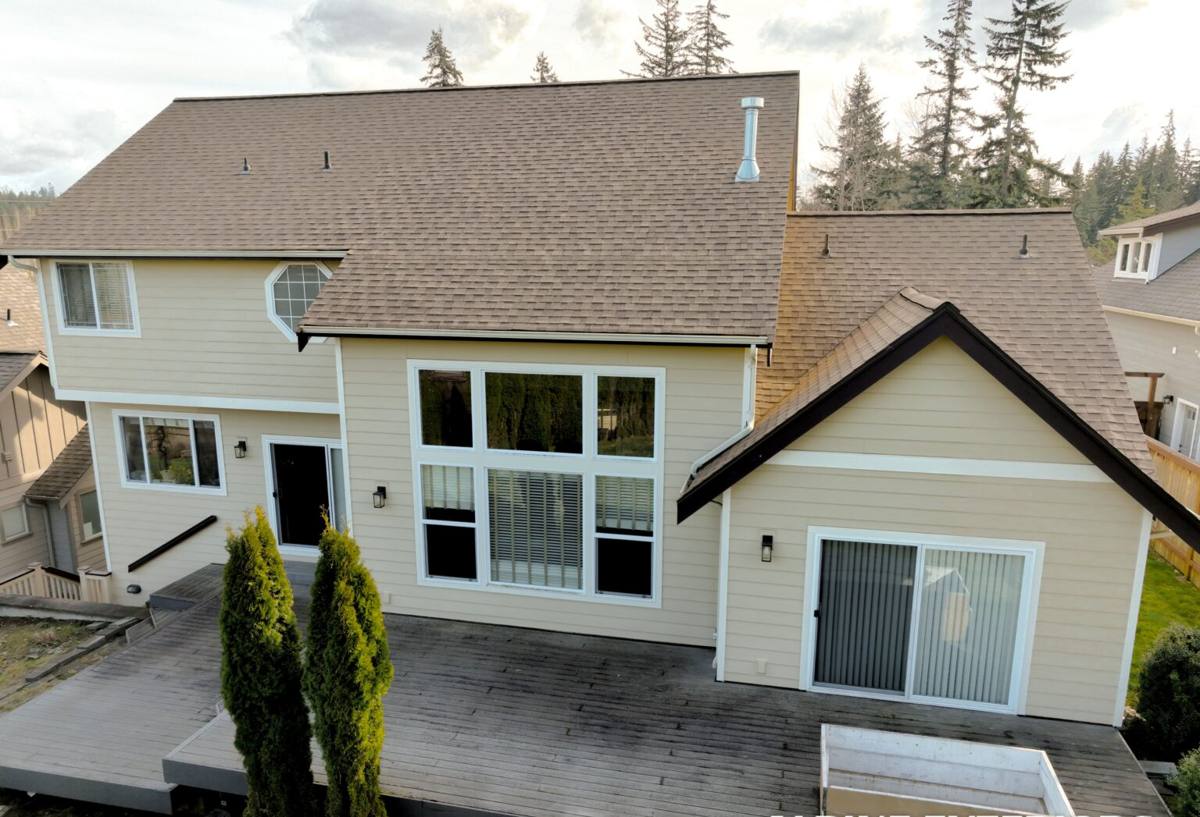
What Salt Air, Driving Rain, and Moss Season Actually Do
Salt Air
Airborne salt is corrosive to unprotected metal hardware, screws, and some lower-grade aluminum components. Over years, it accelerates pitting and corrosion on hinges, locks, and cranks, and it can dull or degrade certain finishes faster than the manufacturer's stated lifespan assumes for an inland install.
Driving Rain
Whatcom County storms frequently come in sideways off the water rather than falling straight down. That matters because a window's weakest point for water intrusion is almost always the perimeter — the flashing, the sill pan, and the sealant joints — not the glass itself. Wind-driven rain finds gaps that vertical rain never would, which is why installation quality matters as much as the window unit.
Moss Season
Whatcom County's long wet season keeps moss, algae, and mildew active for much of the year, especially on north-facing walls and anywhere shaded by mature trees or neighboring structures — common around Sunnyland's older lots. Moss holds moisture against sills and trim, and if a window's drainage path is blocked or poorly designed, that trapped moisture works into wood trim, sheathing, and eventually framing.
Signs a Sunnyland Home Needs Window Attention
Most window failures show themselves gradually. Homeowners often live with small symptoms for a year or two before realizing they add up to a real problem. Watch for:
- Fogging or a permanent haze between panes of double-glazed units — a sign the seal has failed
- Soft or discolored wood on the sill, jamb, or exterior trim
- Windows that are noticeably harder to open, close, or lock than they used to be
- Visible moss, algae, or black staining building up on sills or beneath the window
- A cold draft near the frame even when the window is fully latched
- Paint or finish that's bubbling, peeling, or chalking faster on one side of the house than others
- Rising heating bills without any other obvious cause
- Condensation forming on the interior glass or frame during cold, damp stretches
Any one of these on its own might just mean maintenance is due. Several together, especially on a wall that faces prevailing weather, usually means the window itself is past the point where caulk and weatherstripping will solve it.
What "Custom" Means for a Fairhaven-Area Home
A custom window isn't automatically more expensive or more elaborate — it means the unit is built or selected to fit the actual opening and actual exposure of your house, rather than forcing a standard size into a space it doesn't quite match. In a neighborhood with a mix of older bungalows, mid-century houses, and newer builds, opening sizes and framing depths vary a lot more than people expect.
Custom work typically covers:
- Precise field measurement of the existing opening, including out-of-square conditions common in older framing
- Matching sightlines and grid patterns so a replacement doesn't look out of place next to original windows on the same wall
- Selecting frame material and hardware finish based on which side of the house the window sits on
- Sizing for retrofit (insert) or full-frame replacement, depending on the condition of the existing frame and sill
- Coordinating trim and exterior finish work so the new window integrates with existing siding rather than looking patched in
Retrofit vs. Full-Frame Replacement
When the existing frame, sill, and surrounding wall are still sound, a retrofit (insert) window can be the right call — it's less invasive and less disruptive. But if there's any rot, water staining, or soft framing around the opening, a full-frame replacement is the only way to actually fix the problem instead of sealing a compromised frame back up. We check for this before quoting either option, not after.
Material and Glass Options for This Exposure
| Option | How It Handles Salt Air & Rain | Maintenance | Best Use in Sunnyland |
|---|---|---|---|
| Vinyl | Won't corrode or rot; performs well against salt air and moisture | Low — occasional cleaning | Most homes; strong value for coastal exposure |
| Fiberglass | Very stable in temperature swings and moisture; resists warping | Low | Homes wanting a slimmer profile or paintable frame |
| Aluminum-clad wood | Exterior handles weather well; interior wood needs protection from condensation | Moderate | Historic-style homes wanting a wood interior look |
| Solid wood | Attractive but most vulnerable to prolonged damp and salt exposure without diligent upkeep | High — regular refinishing | Only where upkeep is a firm commitment |
Glass matters as much as frame material. Dual-pane, low-E glass with an argon fill is the practical baseline for this climate — it manages condensation better and holds up to the temperature swings between a cold, wet night and a sunny afternoon. For west- and south-facing walls that see more direct storm exposure, we also look at impact-resistant or heavier-gauge glass packages, and for street noise near busier stretches of Fairhaven, upgraded acoustic glass is worth discussing.
What a Correct Installation Actually Involves
The single biggest factor in whether a window lasts 10 years or 30 in this climate isn't the brand — it's the installation. A premium window installed poorly will leak before a mid-range window installed correctly. On a Sunnyland job facing wind-driven rain, we treat the following as non-negotiable:
- A properly sloped sill pan so any water that gets past the outer seal drains outward, not into the wall
- Correctly lapped flashing tape sequenced so water always sheds downward and outward, shingle-style
- A continuous weather-resistive barrier tie-in, so the window integrates with the house wrap rather than interrupting it
- Backer rod and exterior sealant sized and placed for the actual joint width — not just a bead of caulk over the gap
- Shimming and fastening that keeps the frame square and doesn't rack the sash out of true
- Interior air sealing, separate from the exterior weatherproofing, to control condensation and drafts
Skipping any one of these doesn't usually cause an immediate problem — it causes a slow one, showing up as a soft sill or interior staining two or three winters later. That delay is exactly why installation quality is hard for homeowners to judge at the time of the job.
Our Process, Start to Finish
- On-site assessment — We look at the existing windows, the condition of the framing and sill, and the specific exposure of each wall before recommending retrofit or full-frame replacement.
- Measurement and product selection — Openings are field-measured, and material, glass package, and hardware are matched to that wall's actual weather exposure, not a one-size-fits-all spec.
- Written estimate — You get a clear, itemized quote with no pressure to decide on the spot.
- Installation — Old units are removed, the opening is inspected for hidden damage, and any rot or compromised framing is addressed before the new window goes in — not covered up behind it.
- Weatherproofing and finish — Flashing, sealant, and trim work are completed to shed water correctly, and exterior finish is matched to the surrounding siding.
- Final walkthrough — We check operation, seal, and finish with you before calling the job done.
Cost Factors to Expect
Every home is different, but the factors that actually move the price on a Sunnyland job are consistent:
| Factor | Why It Affects Cost |
|---|---|
| Retrofit vs. full-frame | Full-frame replacement involves more labor and often exterior siding repair |
| Hidden rot or water damage | Framing repair adds cost but is far cheaper than deferring it |
| Frame material | Vinyl is typically the most economical; wood and clad options cost more |
| Glass package | Upgraded low-E coatings, impact resistance, or acoustic glass add cost per unit |
| Custom sizing or shape | Non-standard openings and specialty shapes require custom manufacturing lead time and cost |
| Number of openings | Whole-house projects typically bring a better per-window cost than single replacements |
We'd rather walk your specific windows and give you real numbers than quote a broad range that doesn't reflect your house.
Why a Crew That Already Works Sunnyland Matters
A contractor who works across Fairhaven and the surrounding Bellingham neighborhoods regularly sees how houses in this specific microclimate actually age — which walls take the worst of the weather off the bay, which sill designs hold up and which don't, and how moss and moisture behave differently here than they do a few miles inland in less exposed parts of Whatcom County. That's not something you get from a general product catalog. It comes from doing the work here, on homes with the same exposure your house has, and seeing the results years later.
It also means practical familiarity with permitting through the local jurisdiction, realistic scheduling around the wetter months, and a straight answer about which parts of a job are worth spending more on for this climate and which aren't.
If your Sunnyland home has windows showing any of the signs above, or you're planning ahead for a renovation, we're glad to take a look and give you a straightforward, no-pressure estimate — just fill out the form below to get started.