 Fairhaven Siding
 Why York's Climate Is Genuinely Hard on Siding
York sits close enough to the water that salt-laden air is a constant, not an occasional visitor. Combine that with the driving, wind-pushed rain that comes through Whatcom County off the Salish Sea, and you have two forces working on a home's exterior nearly every month of the year. Add a moss season that can run from early fall through late spring in the shaded, tree-lined lots common around Fairhaven, and you get a siding environment that punishes anything with a weak moisture-management system or a finish that can't hold up to salt exposure.
This isn't a marginal difference from siding conditions inland. Salt air accelerates corrosion on fasteners and trim metal, driving rain finds every gap in flashing and caulk that a calmer climate would forgive, and moss holds moisture against a wall system for days at a time once it establishes itself. None of that is exotic weather — it's just persistent, and persistence is what wears out siding that wasn't built or installed for it.
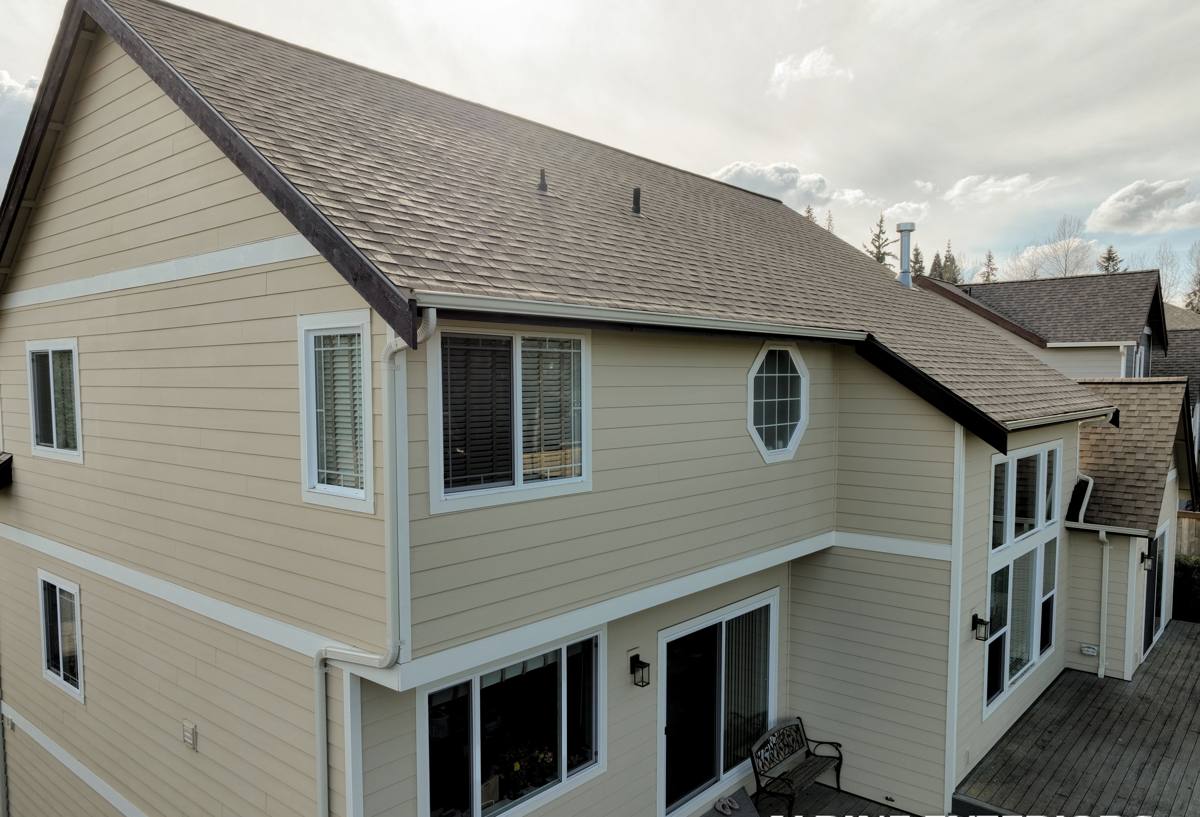
What Local Homes Actually Need From Their Siding
A siding system in York needs to do three things well, continuously, without babysitting:
- Resist moisture intrusion at every seam, corner, and penetration — not just shed rain on a flat wall
- Hold a factory finish that doesn't chalk, fade, or lift under salt exposure and UV cycling
- Discourage moss and algae growth, or at least not give it an easy foothold in joints and laps
James Hardie fiber cement checks these boxes better than the alternatives we've worked with, which is a large part of why we standardized on it rather than offering a menu of siding brands. It's non-combustible, it's dimensionally stable in wet-dry cycling (it doesn't swell and shrink the way wood-based products can), and its ColorPlus factory finish is engineered to hold color and resist the kind of surface breakdown that salt air causes faster than it would inland.
Choosing the Right Hardie Product Line for York
James Hardie makes several product lines, and picking the right one for a specific house matters more than most homeowners realize. Not every Hardie product is engineered the same way for every climate zone.
HZ5 vs. HZ10 Engineered Formulations
Hardie engineers its fiber cement for different climate zones. Homes in our part of Washington should be getting the formulation engineered for wetter, more humid, freeze-thaw-relevant conditions — not a formulation built for a dry southwestern climate. This isn't a marketing distinction; it affects how the board handles moisture cycling over decades. Part of what we check on every York estimate is that any prior work, or any material being quoted, matches the correct HZ engineering for our zone.
Lap Siding, Panel, and Trim Choices
HardiePlank lap siding is the most common choice for York's mostly traditional and craftsman-influenced homes, and it does the heavy lifting on moisture shedding when installed with correct laps and clearances. HardiePanel vertical siding shows up on accent gables, porch details, and some more modern builds. HardieTrim finishes out corners, fascia, and window/door surrounds in a material that won't rot the way dimensional lumber trim does after a few wet seasons.
| Product | Best Use on York Homes | Why It Fits This Climate |
|---|---|---|
| HardiePlank Lap Siding | Primary wall cladding | Layered laps shed driving rain when installed with correct exposure and clearance |
| HardiePanel Vertical Siding | Gables, accents, modern facades | Fewer horizontal seams where wind-driven rain and moss tend to collect |
| HardieTrim Boards | Corners, fascia, window/door surrounds | Won't absorb and hold moisture like wood trim, resists rot at joints |
| ColorPlus Factory Finish | All exposed faces | Baked-on finish resists salt-air fading and chalking better than field-applied paint |
Where Installation Quality Actually Determines Performance
Fiber cement siding's reputation lives or dies on installation detail, not just the product itself. In a climate like York's, a handful of details separate a system that performs for decades from one that develops moisture problems within a few years.
Flashing and Water Management
Every window head, door head, deck ledger, and roof-to-wall transition needs flashing that directs water out and away from the wall assembly, not just caulk relying on adhesion. Caulk fails; properly lapped flashing doesn't rely on a bead of sealant staying intact through years of salt-air UV exposure and freeze-thaw cycling.
Fastening and Clearances
Hardie specifies exact fastener types, spacing, and embedment depth, and it specifies minimum clearances from grade, roof lines, and horizontal surfaces like decks and patios. Skipping these — nailing too high or too low, or letting the bottom edge of the siding sit too close to grade or a deck surface — is one of the most common ways a fiber cement job fails early, and it has nothing to do with the material itself.
Fastener and Trim Metal Corrosion
Salt air corrodes the wrong fasteners and flashing metals faster than most homeowners expect. We use fastener and flashing materials rated for coastal-adjacent exposure, not whatever is cheapest at a general supply house. This is a small line-item cost difference that has an outsized effect on how the wall system ages.
Joint Treatment and Caulking
Butt joints between planks, and the seams around trim, need the right sealant applied correctly — not over-caulked in a way that traps moisture, and not under-sealed in a way that lets it in. This is a detail that's easy to rush and hard to inspect once the job is buttoned up, which is exactly why it matters who's doing the work.
Moss: The Detail Most Installers Ignore
Moss doesn't damage Hardie siding the way it can damage wood, but it does hold moisture against the wall longer than a clean, well-ventilated surface would, and it can mask early signs of a flashing or caulking problem underneath. On shaded York lots, that matters more than on an open, sun-exposed site.
- Keep gutters and downspouts clear so roof runoff isn't sheeting down the wall face
- Trim back vegetation and tree cover that keeps a wall face shaded and damp for long stretches
- Rinse siding periodically rather than letting moss and algae establish in laps and joints
- Avoid pressure-washing directly into laps and seams — it can force water past well-installed flashing
- Have joints and caulking checked every few years, since moss growth can hide a developing gap
Our Process on a York Job
The process doesn't change dramatically from house to house, but the details we check for do, based on what we've seen wear out fastest in this specific area.
- Assessment — we look at existing siding condition, trim and flashing details, moss/moisture patterns on the specific lot, and any prior repair work that may have introduced weak points
- Product and line selection — matching the correct HZ engineering, plank vs. panel choice, and trim package to the house's exposure and style
- Tear-off and substrate check — we don't cover over rot, damaged sheathing, or failed weather barrier; problems get addressed before new siding goes on
- Weather barrier and flashing install — this is the layer that does the real water-management work, and it's the layer that gets rushed on a corner-cutting job
- Siding install to Hardie's fastening and clearance specs — including deck, grade, and roof-line clearances specific to the site
- Trim, caulking, and finish detailing — the joints and transitions that determine how the job ages, not just how it looks on day one
- Final walkthrough — checking clearances, fastener lines, and joint work before we call it done
What Drives Cost on a York Siding Job
We don't quote prices without seeing the house, but these are the factors that actually move a bid up or down, so you know what you're paying for and why two quotes might differ.
| Cost Factor | Why It Matters |
|---|---|
| Substrate condition | Rotted sheathing or framing found at tear-off adds real repair cost before new siding goes on |
| Number of corners, trim details, and stories | More cuts, more trim work, and more staging time to do it correctly |
| Product line and finish selection | ColorPlus finishes and specialty profiles cost more than base lap siding, but reduce future repainting |
| Flashing and water-management scope | Doing flashing correctly at every penetration takes more labor than caulk-and-cover shortcuts |
| Access and site conditions | Tight lots, mature landscaping, or difficult staging add time on many York properties |
Why a Crew Already Working in York Is Worth Something
A crew that's done multiple jobs in this specific area already knows which corners of a house take the worst of the driving rain, which lots hold moss longest, and which fastener and flashing choices have actually held up here versus elsewhere in Whatcom County. That's not something you can fully substitute with a general specification sheet — it's pattern recognition built from seeing how houses in this exact microclimate age over time. It also means faster, more accurate assessments, because we're not learning the area's quirks on your job.
Why We Only Install James Hardie
We don't offer a menu of vinyl, LP SmartSide, or other fiber cement brands alongside Hardie. We standardized on one product because it lets us build deep, specific expertise in one system's installation requirements, warranty process, and long-term behavior — rather than spreading that knowledge thin across several products with different moisture-management rules, fastening specs, and finish systems. In a climate as demanding as York's, that specialization is what keeps installation quality consistent from job to job.
If you're weighing a siding replacement or repair in York and want a straight answer on what your home actually needs, we're happy to take a look and put together a free, no-pressure estimate.