 Fairhaven Siding
 Metal Roofing Built for York's Weather, Not Just Its Roofs
York sits close enough to the water that salt air is part of daily life, and close enough to the hills and tree cover that moss, moisture, and shade are just as constant. That combination is hard on roofing in general, but it's especially hard on the wrong kind of metal roof. A panel system that isn't fastened, flashed, and coated with this specific climate in mind will show corrosion, streaking, or loosened seams years before it should. We install metal roofing for York homes with that reality built into every decision, from the fastener type to the underlayment layer nobody sees once the job is done.
This page covers what actually goes into a correct metal roof installation in this part of Whatcom County — not a generic rundown of metal roofing in general, but what matters specifically for homes dealing with driving rain off the water, a long moss season, and the slow corrosive drip of salt-laden air.
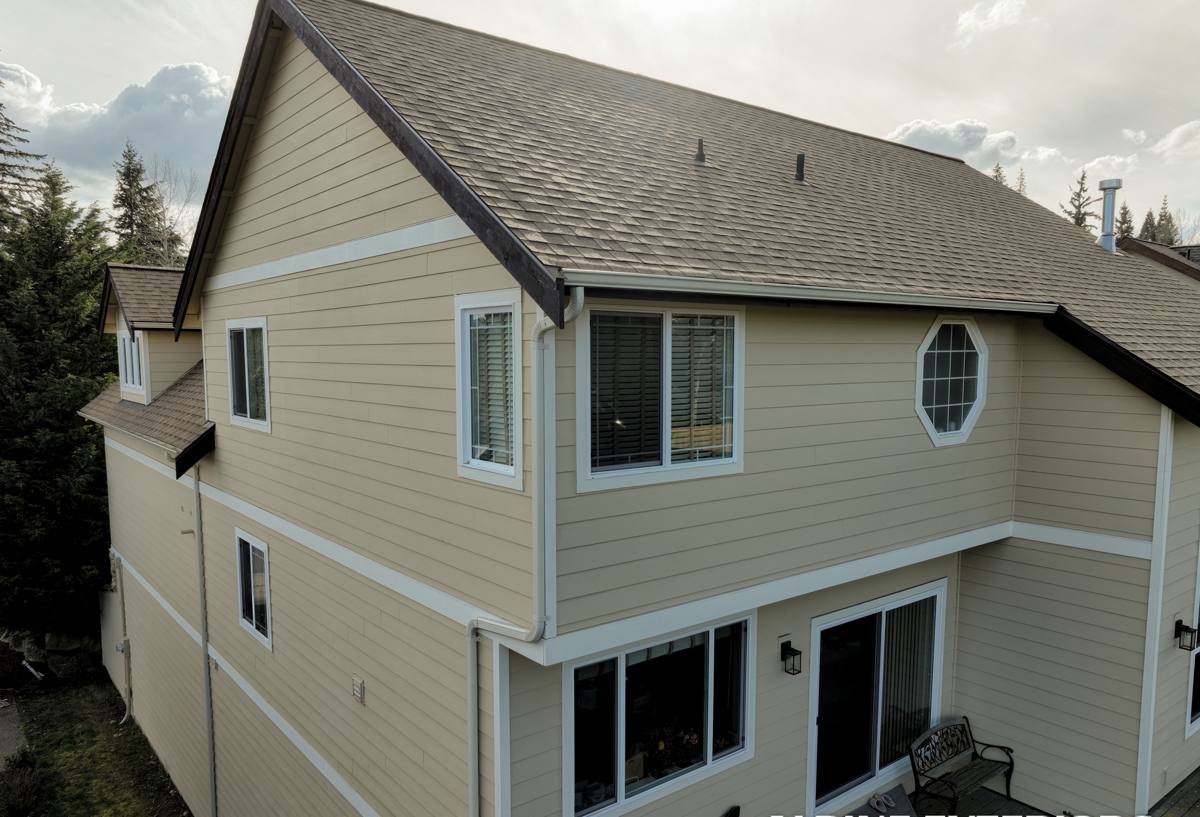
Why York Roofs Face a Tougher Fight Than Most
Three things stack up against roofing in this neighborhood, and they compound each other:
Salt Air
Proximity to the bay means airborne salt settles on every exterior surface, including the roof. Bare or poorly coated fasteners and cut edges are where this shows up first — small rust spots that spread if the metal or coating wasn't rated for a marine-influenced environment to begin with.
Driving Rain
Storms here don't always come straight down. Wind-driven rain gets pushed sideways under ridge caps, around chimney flashing, and into any seam that was lapped the wrong direction. A metal roof sheds water fast when it's dry outside, but a rushed installation with shortcuts at the penetrations will leak in exactly the weather it's supposed to handle best.
A Long Moss Season
Shaded lots and steady moisture give moss months to establish itself. On composition shingles, moss roots into the granules and lifts them. On a correctly installed metal roof, moss has nothing to grip — but debris still collects in valleys and behind chimneys, and if that debris isn't accounted for in the roof's design and drainage, it holds moisture against the panels far longer than it should.
Signs a York Roof Is Ready for a Metal Upgrade
Homeowners usually call us for one of a few reasons:
- Composition shingles are past their expected service life and showing granule loss or curling edges
- Moss keeps coming back within a season or two of cleaning, even after treatment
- Streaking or dark staining along the roofline that won't wash off
- Interior water stains that show up during wind-driven storms specifically, not steady rain
- Rising interest in a roof that won't need full replacement again in 15-20 years
Not every one of these means you need metal roofing specifically — sometimes a shingle re-roof with better ventilation solves the problem. Part of our job during the estimate is telling you honestly which situation you're in, not just recommending the higher-cost system by default.
Metal Roofing Systems We Install
"Metal roofing" covers a few different products, and the right one depends on the home's roofline, budget, and how visible the roof is from the street or from neighboring properties on a sloped lot.
Standing Seam
Concealed fasteners, raised interlocking seams, and long panel runs with few horizontal joints. This is the system we recommend most often for homes in this area because the fasteners aren't exposed to weather or salt air at all — they're hidden under the seam, which removes the single most common failure point on lower-grade metal roofs.
Exposed-Fastener Panels
A more budget-friendly option using screws with rubber washers driven through the panel face. It can perform well on secondary structures like shops or garages, but the washers degrade over time and need inspection and occasional replacement — something we're upfront about before anyone chooses this system for a primary residence in a salt-air location.
Metal Shingles and Shakes
Interlocking panels shaped to resemble traditional shingle or shake profiles. These work well on homes where the owner wants the durability of metal without changing the visual character of the roofline, which matters on some of the older home styles found in and around York.
| System | Fastener Exposure | Typical Lifespan | Best Fit |
|---|---|---|---|
| Standing Seam | Concealed | 40-70 years | Primary homes, coastal exposure |
| Exposed-Fastener Panel | Exposed, gasketed | 25-40 years | Shops, garages, budget projects |
| Metal Shingle/Shake | Concealed | 40-60 years | Traditional-look homes wanting metal's durability |
What a Correct Installation Actually Involves
Metal roofing has a reputation for being low-maintenance, and it is — but only if the installation underneath the visible panels is done right. Most metal roof problems we're called to fix on older installs trace back to shortcuts taken in three areas.
Underlayment and Moisture Barriers
Metal panels are not the moisture barrier — the underlayment is. We use synthetic or self-adhered underlayment rated for the temperature swings and long wet stretches typical of this region, with extra layers at eaves, valleys, and any low-slope transitions where standing water is more likely.
Flashing and Penetrations
Chimneys, vents, skylights, and wall transitions are where wind-driven rain finds its way in. Flashing has to be formed and layered so water is directed out and over the layer below it, every time, at every penetration — there's no shortcut version of this step that holds up.
Fasteners and Coatings for Salt Air
We spec fasteners and panel coatings rated for coastal and marine-influenced exposure, not the generic hardware that's fine further inland. This is the detail that separates a metal roof that still looks new after two decades near the water from one that's rust-streaked after five years.
Moss, Moisture, and the Long Game
Metal roofing doesn't stop moss from landing on your roof — moss spores travel on the wind and don't care what material they land on. What metal roofing does is remove the surface moss needs to actually take root and spread, since there's no granule layer or shingle mat for it to grip. Debris in valleys and behind chimneys still needs periodic clearing, and we design drainage paths and flashing specifically so that debris doesn't collect and hold moisture against the panel surface during Whatcom County's wetter months. A roof that sheds water and debris efficiently is doing more for its own longevity than any coating or treatment applied after the fact.
Our Process for York Homeowners
On-Site Assessment
We start by walking the existing roof, checking the deck condition underneath, and looking at how the current roof handles water at valleys, penetrations, and the eaves facing prevailing wind and rain direction. This tells us what the new system needs to correct, not just replace.
Material and System Selection
Based on that walk-through, your home's exposure, and your budget, we go through the realistic options — including telling you when a lower-cost system genuinely won't hold up here, rather than upselling by default.
Installation
Tear-off, deck inspection and repair where needed, underlayment, flashing, and panel installation, done in a sequence that never leaves the deck exposed to an incoming storm overnight longer than necessary.
Final Walk-Through
Before we consider the job finished, we walk the roof and the ground perimeter with you, cover maintenance basics specific to your system, and make sure you know what a normal-looking seam and flashing job is supposed to look like.
What It Costs and What Actually Drives the Price
Metal roofing costs more upfront than composition shingles, and the range depends heavily on the specifics of your roof, not just square footage.
| Cost Factor | Why It Matters |
|---|---|
| Roof pitch and complexity | Steep or cut-up rooflines with multiple valleys and penetrations take more labor and flashing detail |
| System type | Standing seam runs higher than exposed-fastener panel; metal shingle falls in between |
| Deck condition | Rot or damage found during tear-off adds repair costs before new roofing goes on |
| Access and staging | Tree cover, tight lot lines, or difficult crane/lift access affect labor time |
| Coating and gauge | Heavier gauge metal and marine-grade coatings cost more but last longer near the water |
We give straightforward, itemized estimates rather than a single lump number, so you can see exactly what you're paying for and where there's room to adjust scope if budget is a factor.
A Maintenance Checklist for Metal Roofs Near the Bay
A correctly installed metal roof needs far less upkeep than shingles, but "far less" isn't "none." A short annual routine keeps small issues from becoming expensive ones:
- Clear debris from valleys and behind chimneys before the wet season sets in
- Check gasketed fasteners on exposed-fastener systems for wear every couple of years
- Look for rust streaking at cut edges, fastener heads, or flashing seams
- Confirm gutters and downspouts are clear so water leaving the roof has somewhere to go
- After any major windstorm, do a visual check for lifted flashing or loosened panel edges
Why a Crew That Already Works in York Matters
Roofing crews unfamiliar with this stretch of Whatcom County tend to spec materials and fastening schedules built for drier, calmer climates, then find out the hard way when a wind-driven storm off the bay exposes the gaps. We already know what salt air does to unrated fasteners, what a long moss season does to a poorly ventilated roof, and how driving rain behaves against a roofline here versus further inland. That's not a sales pitch — it's the difference between a roof that needs revisiting in five years and one that doesn't need attention again for decades.
If you're weighing a metal roof for a home in York, we're glad to come take a look, walk you through what your specific roof needs, and give you a straightforward, no-pressure estimate. Use the form below to get started.