 Fairhaven Siding
 Board & Batten Siding in Bellingham: A Profile That Has to Earn Its Keep
Board and batten is one of the most requested siding profiles in Fairhaven and the surrounding Bellingham area, and it's easy to see why. The vertical boards and raised battens create strong shadow lines that suit the craftsman, farmhouse, and modern cottage styles common on this side of Whatcom County. But board and batten isn't just a look. Done right, it's a system of panels, trim, fasteners, and drainage details that all have to work together. Done wrong, it's one of the easier profiles to get wrong in a marine climate, because every vertical seam and every batten face is another opportunity for water to find its way behind the cladding.
This page is about that one job, in this one area: what board and batten siding needs to survive Bellingham's weather, what a correct installation actually involves, and why we only install it in James Hardie fiber cement.
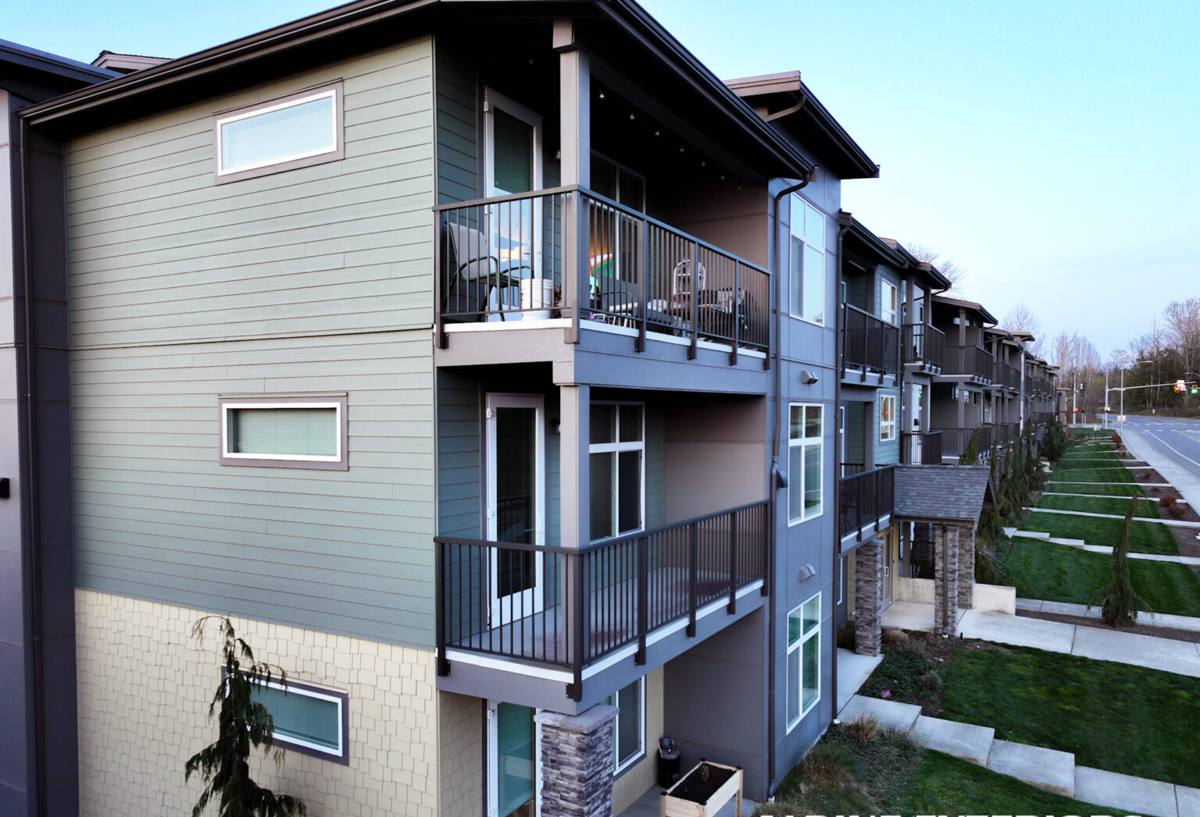
What Bellingham's Climate Does to Vertical Siding
Fairhaven and greater Bellingham sit right on Bellingham Bay, which means salt air is a constant, low-grade stressor on every exterior surface in the area — not just metal and hardware, but paint films, caulk joints, and the fastener heads holding your siding on. Add in Whatcom County's long wet season, frequent driving rain off the water, and the shaded, moisture-holding conditions that let moss and algae take hold on north-facing walls and rooflines, and you have a climate that's genuinely tougher on siding than most of the country realizes.
Salt Air and Coastal Exposure
Salt-laden air accelerates corrosion on exposed fasteners and metal flashing, and it breaks down lower-grade paint and coatings faster than inland conditions would. Board and batten has more exposed vertical trim and more fastener penetrations per square foot than a lap profile, so the quality of the coating and the fastener spec matters more here than it does on other siding types.
Driving Rain and Wind-Driven Moisture
Storms coming off the Salish Sea don't just fall straight down — wind drives rain sideways into walls, and vertical board and batten seams run parallel to that water path. If the battens aren't properly spaced and back-primed, and if there's no drainage plane behind the panels, water finds the seams and works its way in over time.
Moss and Shade
Bellingham's tree cover and long overcast stretches keep north- and west-facing walls damp for extended periods, which is exactly what moss and algae need to establish. On siding with a weak factory finish, that growth stains and etches the surface. On siding with a durable factory finish, it wipes off without damaging the substrate underneath.
Why Board and Batten Fits Bellingham's Homes — and Why It's Unforgiving
The strong vertical lines of board and batten pair naturally with the craftsman bungalows, farmhouses, and updated cottages common throughout Fairhaven and Bellingham's older neighborhoods. It also reads well on newer builds going for a modern-rustic look. That's the upside.
The trade-off is that board and batten has more linear feet of seams, more trim-to-panel transitions, and more fastener penetrations than a standard lap siding job of the same square footage. Every one of those details is a potential water entry point if it's not detailed correctly. That's not a reason to avoid the profile — it's a reason to be precise about who installs it and how.
What a Correct Board & Batten Installation Actually Requires
A board and batten job that's going to hold up on this coastline isn't just panels and battens nailed to the wall. It's a full assembly, and every layer matters.
| Component | What It Does | Why It Matters in Bellingham |
|---|---|---|
| Weather-resistant barrier (WRB) | Provides a continuous secondary water barrier behind the cladding | Backstops the driving rain that gets past the outer siding layer |
| Rainscreen / drainage gap | Lets any moisture that reaches the WRB drain and dry out | Critical for a vertical profile with more seams; keeps damp battens from staying wet |
| Flashing at penetrations and transitions | Directs water away from windows, doors, and horizontal trim | Prevents the wind-driven rain common off the bay from tracking behind trim |
| Fastener spec and placement | Holds panels and battens securely without splitting or over-driving | Corrosion-resistant fasteners matter more in salt air; correct placement avoids cracked panels |
| Factory finish (paint system) | Protects the substrate and battens from UV, moisture, and biological growth | A weak finish fails first under Bellingham's moss and algae pressure |
Skip or shortcut any one of those layers and the siding may look fine for a year or two before problems show up — usually as staining, soft spots at the base of boards, or paint failure along the battens.
What a Correct Job Looks Like, Step by Step
- Existing siding and sheathing inspected and any moisture-damaged material replaced before new siding goes on
- Continuous WRB installed with properly lapped and taped seams
- Rainscreen furring or a drainage-rated house wrap installed to create a drying gap behind the panels
- Window, door, and roofline flashing integrated with the WRB, not just caulked over
- Panels installed with correct fastener type, spacing, and penetration depth per manufacturer specs
- Battens set with proper spacing to allow expansion and drainage, not tight-nailed flush
- All cut edges and field-cut panel faces sealed or primed per manufacturer requirements
- Trim, corners, and transitions detailed to shed water outward, not trap it
- Final walk-through checking caulk joints, fastener seating, and finish consistency
Why We Only Install James Hardie Board & Batten
We don't install board and batten in vinyl, engineered wood, or primed spruce, and we won't cut a panel out of a lower-tier fiber cement product just to hit a lower price. For a profile with this many seams and this much trim exposed to salt air and driving rain, the substrate and finish quality aren't optional upgrades — they're the difference between siding that lasts and siding that needs attention in five years.
James Hardie's board and batten system pairs HardiePanel vertical siding with HardieTrim battens, both built from non-combustible fiber cement engineered specifically for climates like this one. The ColorPlus factory finish is baked on and warrantied against fading and peeling, which matters directly for the moss and algae issue: a durable finish lets you wash growth off the surface instead of it eating into the substrate. Hardie's HZ5 product line is formulated for the Pacific Northwest's wet, moderate climate specifically, and the system carries a strong transferable warranty when installed to spec — which is why the installation details above aren't negotiable for us.
We won't put our name on a board and batten job in a product we don't believe will hold up on this coastline. That's the whole reason we standardized on one manufacturer instead of offering a menu of options.
Our Process for Bellingham Board & Batten Projects
We start with an on-site assessment of your existing siding and sheathing, because you can't spec a correct install without knowing what condition the wall is actually in. From there we walk through panel and batten spacing, color, and trim details specific to your home's exposure — a south-facing wall that takes full sun and rain doesn't need the exact same detailing as a shaded north wall prone to moss. We handle removal of the old siding, any necessary sheathing repair, WRB and rainscreen installation, and the full Hardie panel and batten install, followed by a final inspection before we call the job done.
Because we work Fairhaven and greater Bellingham regularly, we're already familiar with the permitting expectations and the kind of exposure differences that show up block to block near the water versus further inland — that's not something a crew driving in from out of the area picks up on the first job.
Maintenance and Longevity in This Climate
Properly installed Hardie board and batten needs less maintenance than wood or engineered wood alternatives, but "less" doesn't mean "none." In this climate, plan on periodically rinsing off moss and algae buildup on shaded walls before it stains, checking caulk joints at trim and penetrations every couple of years, and keeping an eye on any spot where landscaping or gutters direct extra water toward the wall. None of that is heavy lifting, but it's the kind of upkeep that keeps a correctly installed system performing for decades instead of just looking good for a few years.
Why Hiring a Crew That Already Works Bellingham Matters
Board and batten's vulnerabilities — seams, trim penetrations, fastener corrosion — are the same details that separate a five-year problem from a thirty-year install. A crew that works Fairhaven and Bellingham regularly has already seen how salt air, driving rain, and moss season play out on real homes here, and details their work accordingly instead of applying a generic spec that might be fine somewhere drier or further from the coast. That local pattern recognition is worth more on a vertical profile than on almost any other siding type, simply because there are more places for a shortcut to hide.
If you're considering board and batten for a home in Fairhaven or Bellingham, we're happy to take a look and talk through what your home's exposure actually calls for. Reach out for a free, no-pressure estimate using the form below.