 Fairhaven Siding
 Why Bellingham Roofs Wear Differently Than Roofs Inland
A roof in Bellingham does not age the same way a roof in Spokane or Yakima does. Being close to the water means homes here deal with salt-laden air, near-constant humidity, long stretches of driving rain off the Sound, and a moss and algae season that can run most of the year in shaded, north-facing sections of a roof. None of these factors are dramatic on their own, but stacked together over ten or fifteen years they shorten the useful life of a roofing system that was never really built with this climate in mind.
Whatcom County's cool, damp weather also means roofs rarely get the hard drying-out period that helps roofing materials shed moisture and organic growth in drier parts of the state. Moisture sits. Moss takes root in granule loss and shaded valleys. Fasteners and flashing exposed to salt air corrode faster than the same materials would twenty miles inland. A roof replacement done for a Bellingham home needs to account for all of this from the start, not just match what was there before.
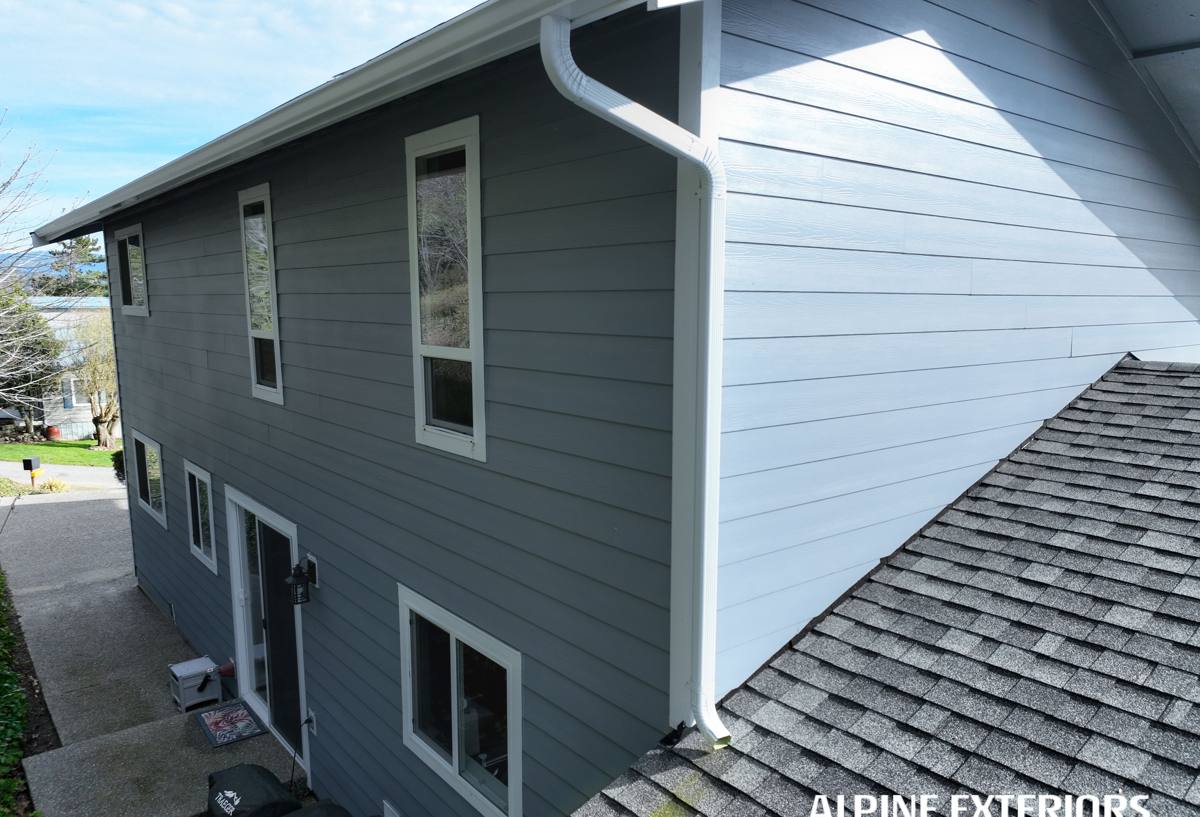
Signs a Bellingham Roof Has Reached the End of Its Life
Most roof replacements do not start with a dramatic leak. They start with smaller signs that add up over a few seasons. Homeowners in Fairhaven and the surrounding Bellingham neighborhoods should watch for:
- Granules collecting in gutters or at downspout outlets, a sign the shingle surface is breaking down
- Moss or algae streaking that keeps coming back within a few months of cleaning
- Shingles that are cupping, curling at the edges, or visibly brittle
- Soft spots or slight sagging when walked on or viewed from the ground
- Daylight visible through the roof deck from inside the attic
- Rusted, lifted, or missing flashing around chimneys, vents, and valleys
- Interior ceiling stains, especially after a heavy rain event
Any one of these on its own might point to a repair rather than a full replacement. Several of them together, or a roof that is already fifteen to twenty-five years old depending on material, usually means it is more cost-effective to replace the system than to keep patching it.
What a Correct Roof Replacement Actually Involves
It Is Not Just New Shingles
A roof replacement done right is a system, not a single layer swapped for another. Skipping any part of the system is where premature failures come from, especially in a wet climate like this one.
Tear-Off and Deck Inspection
We remove the old roofing material down to the deck rather than layering over it. This lets us actually see the plywood or sheathing underneath, replace any boards that have rotted or delaminated from years of trapped moisture, and confirm the deck is sound before anything new goes down. Covering over a compromised deck just hides a problem that gets more expensive later.
Underlayment and Water Barriers
Given how much driving rain this region sees, underlayment choice matters more here than it would in a drier climate. Ice-and-water barrier or a high-quality synthetic underlayment at eaves, valleys, and penetrations gives the roof a second line of defense if wind-driven rain gets under the top layer of shingles.
Flashing
Flashing around chimneys, skylights, sidewalls, and roof valleys is where most leaks actually originate, not in the open field of the roof. Salt air accelerates corrosion on lower-grade or older flashing, so we replace flashing as part of a full roof replacement rather than reusing it.
Ventilation
Proper intake and exhaust ventilation keeps the attic from trapping moist air, which reduces condensation on the underside of the deck and helps prevent the kind of trapped dampness that feeds rot and moss growth from below. A roof that looks fine on top but is poorly ventilated underneath will not last as long as it should.
Material Options for Bellingham's Climate
There is no single correct roofing material for every home, but some options handle this region's moisture and salt exposure better than others. The table below is a general guide, not a recommendation to skip a conversation about your specific roof, exposure, and budget.
| Material | Typical Lifespan Here | Moss/Algae Resistance | Considerations for Coastal Whatcom County |
|---|---|---|---|
| Architectural asphalt shingle | 20-30 years | Moderate; algae-resistant granule options help | Good value; choose algae-resistant rated shingles for shaded, north-facing slopes |
| 3-tab asphalt shingle | 15-20 years | Lower | Lower upfront cost but shorter service life in this climate |
| Standing seam metal | 40-60+ years | High; sheds moss and moisture well | Higher upfront cost, strong performance in driving rain, needs coastal-rated fasteners near salt air |
| Composite/synthetic shake | 30-50 years | High | Good moisture resistance without the maintenance burden of real wood shake |
We generally steer homeowners away from untreated wood shake or shingle roofing in this specific coastal environment. It is not that the product is inherently bad, but constant moisture and salt air create an ongoing maintenance burden and moisture-retention risk that most homeowners do not want to sign up for long term. If that look matters to you, a composite shake product gets you closer to that appearance with far less upkeep.
Moss, Algae, and Salt Air: What Actually Slows These Down
No roofing material is fully immune to moss and algae in this climate, but a few things make a measurable difference: adequate roof slope and drainage so water does not sit, canopy management so tree cover does not shade the roof all day, algae-resistant shingle granules where applicable, and copper or zinc strip installations near ridgelines on some roofs to slow regrowth. None of these are a substitute for periodic gentle cleaning and inspection, but they reduce how often that maintenance is needed.
Salt air mainly affects metal components: fasteners, flashing, vents, and any exposed metal trim. Using fasteners and flashing rated for coastal or marine exposure, rather than standard-grade hardware, is a small cost difference upfront that avoids early corrosion later.
Our Roof Replacement Process
- On-site inspection — we walk the roof and attic, check the deck condition, ventilation, flashing points, and current material condition, and take photos to review with you.
- Written estimate — a clear breakdown of material options, scope of work, and cost, so you can compare choices without guessing.
- Scheduling around the weather — we plan tear-off and dry-in around forecast windows rather than starting a job we can't get watertight before rain moves in.
- Tear-off and deck repair — old material removed, deck inspected, any damaged sheathing replaced.
- Underlayment, flashing, and ventilation installed — the parts of the system that do the real work of keeping water out over time.
- New roofing material installed — per manufacturer specifications, which matters for both performance and warranty coverage.
- Final walkthrough — cleanup, magnetic sweep for stray fasteners, and a review of the finished roof with you before we consider the job done.
Permits, Timing, and Working in Whatcom County
Roof replacements in Bellingham and unincorporated Whatcom County generally require permitting, and requirements can vary by jurisdiction and by the scope of work. A contractor who works this area regularly already knows the local permitting process and inspection expectations, which keeps the job moving instead of stalling on paperwork. Timing also matters more here than in drier regions — the window between storm systems in fall and winter is often the deciding factor in how a tear-off gets scheduled, and a crew unfamiliar with the local weather pattern is more likely to get caught with an open roof deck in the rain.
Why It Matters That the Crew Already Works Bellingham
A roof replacement is one of those projects where local experience shows up directly in the outcome. A crew that regularly works Bellingham and the greater Fairhaven area already understands which roof orientations get hit hardest by moss, how far to plan around a rain system, what flashing and fastener grade holds up near the water, and how local permitting works. That is different from a crew that mostly works drier inland areas and treats coastal exposure as an afterthought.
Before hiring anyone for a roof replacement, it is worth asking a few direct questions and comparing answers.
- Are you licensed and insured to work in Washington State, and can you provide proof?
- Do you tear off down to the deck, or do you ever install over existing layers?
- What underlayment and flashing do you use as standard, not as an upgrade?
- How do you handle ventilation as part of a replacement, not just the shingles?
- What is the manufacturer's warranty, and what is your own workmanship warranty?
- How do you plan installation timing around rain in this area?
- Can you walk me through your process for a home similar to mine?
A contractor who answers these clearly and specifically, without vague reassurances, is generally one worth trusting with the job.
Get a Straightforward Estimate
If your roof is showing wear, holding onto moss it shouldn't, or is simply old enough that you're wondering whether repair still makes sense, we're happy to come take an honest look. There's no pressure and no obligation — just a clear walkthrough of what we see and what your realistic options are, using the estimate form below.