 Fairhaven Siding
 Why Roofs in Bow Wear Faster Than You'd Expect
A roof over in Bow is doing a different job than a roof forty miles inland. The combination of salt-laden air off the water, wind-driven rain that comes in sideways instead of straight down, and a moss season that can run most of the year puts real, measurable stress on roofing materials, fasteners, and flashing. Homeowners are often surprised to learn their roof is failing years ahead of its rated lifespan, and it's almost never one big dramatic problem — it's a slow accumulation of small ones.
Salt Air and Metal Fatigue
Airborne salt is corrosive to unprotected or poorly coated metal. Nails, flashing, drip edge, and roof vents that aren't rated for coastal exposure can start rusting years before they should, and once a fastener corrodes it loses grip and lets a shingle or panel work loose. This is one of the most common reasons we find otherwise "young" roofs already leaking at the edges and penetrations.
Driving Rain and Wind-Driven Water
Northwest storms don't just fall on a roof — they push into it. Wind-driven rain finds every gap in flashing, every underlayment seam that wasn't lapped correctly, and every nail hole that wasn't sealed. A roof that would perform fine in a calm, dry climate can leak within a season or two here if the underlayment and flashing details weren't built for sideways rain.
The Long Moss Season
Between the marine humidity and the tree cover common on Bow lots, moss and algae have a long growing window. Moss doesn't just look bad — it holds moisture against the roofing material, lifts shingle edges as it grows, and clogs the granule surface that's supposed to shed water. Left unchecked, it shortens the life of an otherwise sound roof by years.
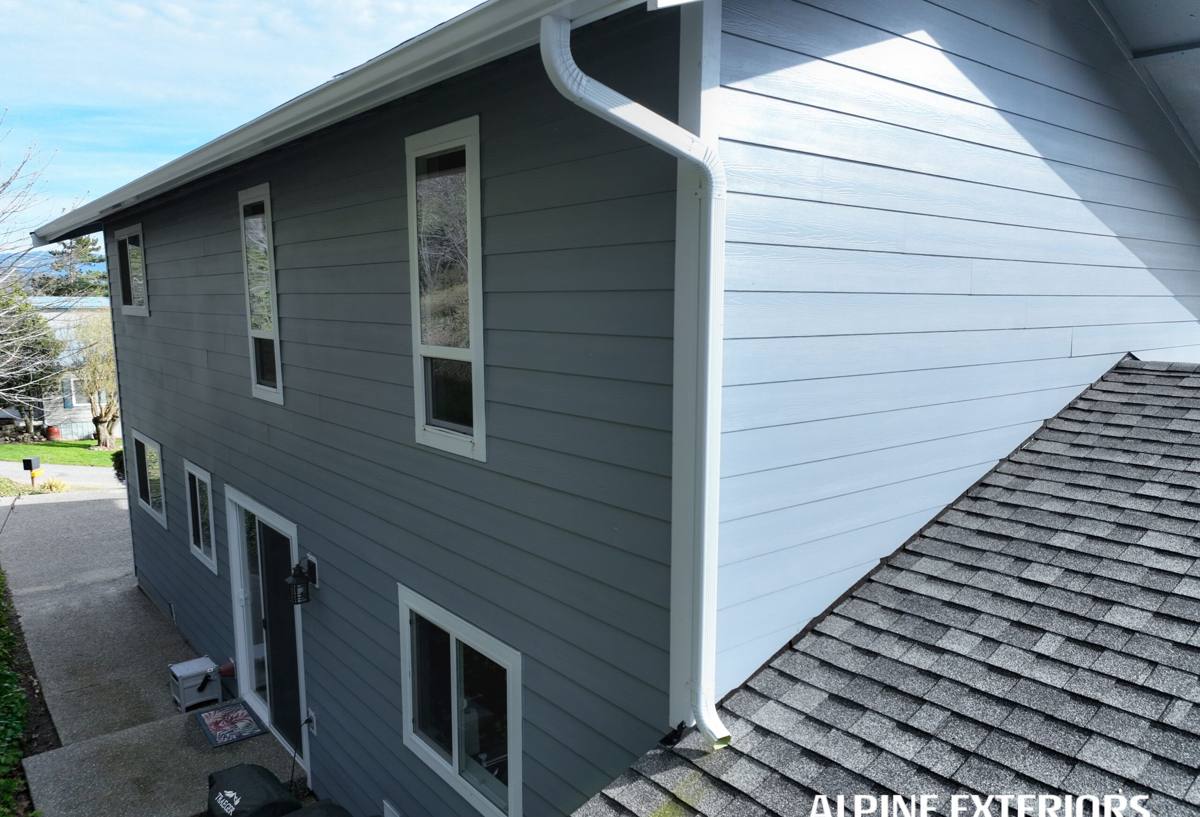
Signs a Bow Home Needs a New Roof, Not Another Repair
Not every roofing problem calls for a full replacement, but there's a point where patching stops making financial sense. We look for a combination of the following before recommending a full tear-off:
- Granule loss heavy enough to see bare asphalt on multiple slopes
- Soft or spongy decking felt underfoot, usually a sign of long-term moisture intrusion
- Repeated leaks in different spots after previous repairs
- Moss growth thick enough that shingle tabs are visibly lifted
- Flashing that's rusted, cracked, or was never properly integrated with the roofing material
- Roof age past 20-25 years for asphalt in this climate, even if it "looks okay" from the ground
If your roof only shows one or two of these, a targeted repair may still be the right call — we'll tell you honestly rather than push a replacement you don't need yet.
What a Correct New Roof Installation Actually Involves
A new roof is only as good as what's underneath the material you can see. Most premature roof failures we get called out for trace back to shortcuts taken in the layers homeowners never inspect.
Tear-Off and Deck Inspection
We remove the old roofing down to bare decking rather than layering over it. That's the only way to actually see the plywood or plank sheathing underneath — soft spots, delamination, or rot from years of trapped moisture don't show up until the old material is off. Damaged decking gets replaced before anything new goes down; installing new roofing over a weak deck just guarantees an early failure.
Underlayment and Ice & Water Shield
Underlayment is the roof's real waterproofing layer — the visible material on top is largely there to shed water and protect the underlayment from sun and wear. We use synthetic underlayment across the field of the roof and self-adhered ice-and-water membrane at eaves, valleys, and other spots where wind-driven rain is most likely to get pushed backward under the shingles. This is one of the details most likely to get skipped on a cut-rate job, and it's one of the most important for a climate like this one.
Flashing Details That Actually Stop Leaks
Most roof leaks don't happen in the open field of shingles — they happen at transitions: chimneys, skylights, sidewalls, valleys, and pipe penetrations. Correct step flashing, counter-flashing, valley metal, and pipe boots — properly lapped and integrated with the underlayment, not just caulked over top of old flashing — are what actually keep water out long term.
Ventilation Balance
A roof needs balanced intake at the soffits and exhaust at the ridge to let moisture escape from the attic space. Get this wrong and you trap warm, moist air against the underside of the decking, which accelerates rot and, in some conditions, encourages moss and mildew from the inside out. We calculate ventilation based on your attic's square footage rather than guessing.
Choosing a Roofing Material for This Climate
There's no single "best" roofing material — the right choice depends on your home's exposure, your budget, and how much long-term maintenance you're willing to do. Here's how the common options actually compare for a coastal, moss-prone, wet-winter climate like Bow's.
| Material | Moss & Algae Resistance | Wind-Driven Rain Performance | Typical Lifespan Here | Ongoing Maintenance |
|---|---|---|---|---|
| Architectural asphalt shingle (algae-resistant) | Good, with copper/zinc strips or granule treatment | Very good when flashed correctly | 20-25 years | Low to moderate — periodic moss checks and gutter cleaning |
| Standing seam metal | Excellent — few surfaces for moss to root into | Excellent | 40-50+ years | Low, but coastal-grade fasteners and coatings matter |
| Cedar shake | Requires diligent upkeep to resist moss in a damp, shaded climate | Good when properly installed and maintained | 20-30 years with maintenance | High — regular treatment and moss removal needed |
Cedar shake can be a beautiful, traditional look, but on shaded or heavily treed Bow lots it demands a real maintenance commitment to keep moss from taking hold in the wood grain. We'll always give you our honest read on what a given roof plan and tree cover will actually require in upkeep before you commit to a material — that's a decision that should be made with full information, not sales pressure.
Our Installation Process, Start to Finish
- On-site inspection and estimate. We walk the roof (or ladder-inspect where pitch requires it), check the attic for ventilation and moisture signs, and give you a written estimate with material options.
- Material selection and scheduling. We order material sized to your roof and schedule around Northwest weather windows — we don't tear off a roof and leave decking exposed to an incoming system.
- Tear-off and deck repair. Old material comes off, decking is inspected and repaired as needed, and debris is contained and hauled off.
- Underlayment, flashing, and installation. Ice-and-water membrane, synthetic underlayment, new flashing, and the roofing material go on in that order, with attention to every valley, penetration, and edge.
- Ventilation and ridge work. Ridge vents and any needed soffit venting are installed or corrected as part of the job, not treated as an afterthought.
- Final walkthrough and cleanup. We do a magnetic sweep for stray fasteners, clean the site, and walk the finished roof with you before calling the job done.
Protecting the New Roof After Installation
A correctly installed roof still benefits from a little seasonal attention, especially with the moss pressure common in this area. Simple habits go a long way toward getting the full lifespan out of the investment.
- Keep gutters and downspouts clear so water isn't backing up under the eaves during heavy rain
- Have overhanging branches trimmed back where practical to reduce shade, debris, and moss pressure on the roof surface
- Rinse off accumulated needles and debris from valleys once or twice a year rather than letting them compost in place
- Address any small moss growth early with a proper roof-safe treatment rather than pressure washing, which can strip granules and shorten shingle life
- Schedule a quick visual check after major windstorms to catch lifted flashing or displaced material before it becomes a leak
Why Hiring a Crew That Already Works in Bow Matters
Roofing crews that mostly work drier, inland climates sometimes underbuild for what this coastline actually throws at a roof — lighter underlayment, minimal flashing, standard fasteners instead of corrosion-resistant ones. A crew that regularly works Bow and the surrounding Fairhaven area already knows which details can't be skipped here: where wind-driven rain tends to find weak spots, how much moss pressure a shaded, tree-lined lot will see, and which fastener and flashing grades hold up against salt air instead of failing early. That familiarity shows up in fewer callbacks and a roof that performs the way it's supposed to in year ten, not just in year one.
What a Fair Estimate Should Include
Roofing quotes can vary widely, and the lowest number on paper isn't always the best value once you account for what's actually included. A trustworthy estimate should spell out the material brand and grade, underlayment type, whether ice-and-water shield is included and where, flashing scope, ventilation work, decking repair terms, disposal, and warranty coverage — both the manufacturer's material warranty and our workmanship warranty. If a quote is vague on any of these, it's worth asking why before signing anything.
Every roof and every lot is a little different, and the right approach depends on your home's exposure, tree cover, and current roof condition. If you'd like an honest, no-pressure look at what your roof actually needs, use the form below to request a free estimate.