 Fairhaven Siding
 Siding in Columbia Has a Harder Job Than It Looks Like
Columbia sits close enough to the water and to Fairhaven's marine air that its homes take a different kind of beating than siding a few miles inland. Salt-laden air, driving rain that comes in sideways off Bellingham Bay during winter storms, and a moss season that can stretch for months all work against whatever material is on your walls. Siding that would hold up fine in a drier climate can fail here in half the time if it wasn't built, or installed, for this environment.
This page is specifically about James Hardie fiber cement siding for Columbia homes — what the local climate demands from a siding system, what a correct installation actually involves, and why we only put James Hardie on homes in this part of Whatcom County.
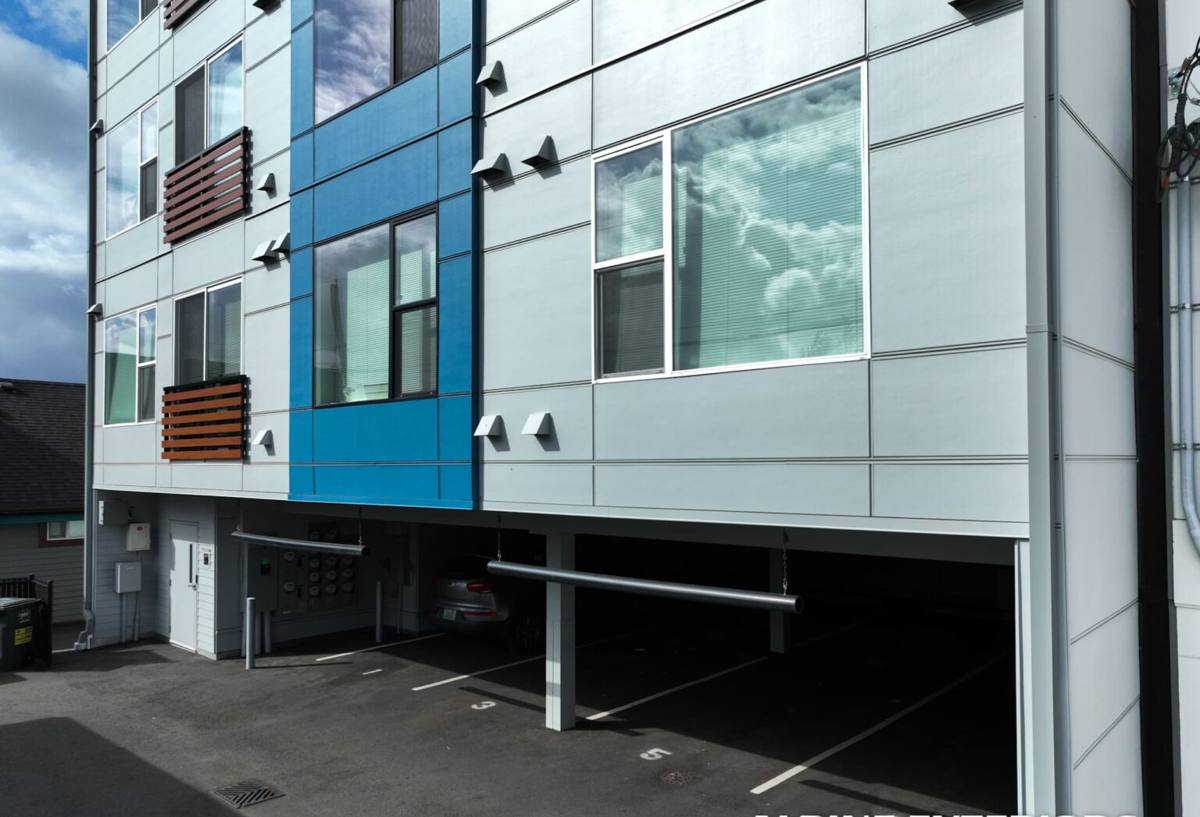
What Salt Air, Rain, and Moss Actually Do to Siding
It helps to understand the mechanisms at work, because they explain almost every siding failure we see in this area.
Salt Air
Airborne salt is hygroscopic — it pulls moisture out of the air and holds it against whatever surface it lands on. On wood-based sidings, that means the surface stays damp longer than it should, which accelerates rot at seams, fastener heads, and butt joints. On metal fasteners and trim, salt air speeds up corrosion. Over years, this is a slow, steady process that homeowners often don't notice until paint starts failing or a soft spot shows up at a corner board.
Driving Rain
Wind-driven rain doesn't just wet the surface of your siding — it gets forced sideways and upward into laps, joints, and any gap around trim, windows, or penetrations. A siding system's water-shedding design, and how carefully it was flashed and caulked, matters more here than in a climate where rain mostly falls straight down.
Moss and Algae
Whatcom County's long wet season and filtered coastal light are ideal for moss and algae growth on north-facing and shaded walls. Beyond the cosmetic staining, moss holds moisture directly against the siding surface for extended periods, which is exactly the condition that leads to rot in wood-based products and paint failure on painted surfaces.
Why We Install Only James Hardie Siding in Columbia
We don't install LP SmartSide, vinyl, Cemplank, Allura, primed spruce, or cedar. That's not a marketing position — it's a standard we hold because of what these three climate stressors do over a 20-30 year window, which is how long we expect siding to last.
James Hardie fiber cement is a cement, sand, and cellulose fiber composite. It doesn't have the wood-fiber cores that give products like LP SmartSide and cedar their moisture sensitivity, and it doesn't have the thermal expansion and UV-brittleness issues that come with vinyl. A few specifics that matter for a coastal Whatcom County home:
- Non-combustible — fiber cement doesn't burn, which is a real consideration during dry summer wildfire smoke seasons even in a generally wet climate.
- Engineered for Pacific Northwest exposure — Hardie's HZ5 product line is formulated and tested for the moisture and temperature swings common in this region, as opposed to a one-size-fits-all product.
- Factory-applied ColorPlus finish — baked-on color and a resin coating that resists moisture and UV damage far better than field-applied paint, which is one of the first things to fail on cedar and primed spruce in a marine climate.
- Dimensionally stable — fiber cement doesn't swell, cup, or warp with moisture cycling the way wood-based sidings can, which keeps joints and caulk lines intact longer.
We're not claiming other products are junk. LP SmartSide, vinyl, and cedar all have legitimate uses and loyal installers. Our position is narrower: given what salt air, driving rain, and moss season do to a home in the Columbia/Fairhaven area over decades, fiber cement with a factory finish is the material we're willing to warranty our workmanship against.
What a Correct Hardie Installation Involves
The product only performs as well as the installation behind it. Most siding failures we're called out to inspect in this area trace back to installation shortcuts, not the material itself.
Water Management Behind the Siding
A correct install starts with a drainable weather-resistive barrier and, in most cases, a rainscreen gap that lets any water that gets past the siding drain and dry out instead of sitting against the sheathing. This matters more here than almost anywhere else in the state given how much wind-driven rain Columbia sees.
Flashing and Joint Treatment
Every window, door, and horizontal transition needs proper flashing so water is directed out and away rather than absorbed into a joint. Butt joints between boards should be flashed or backed, not just caulked and hoped for.
Fastening
James Hardie specifies fastener type, spacing, and placement, and those specs change depending on exposure and wind zone. Corrosion-resistant fasteners are non-negotiable this close to salt air — the wrong fastener will rust and stain the siding face within a few years.
Clearances and Caulking
Hardie requires minimum clearances from grade, roofing, decks, and other surfaces so the bottom edge of the siding isn't sitting in standing water or splash-back. Caulking is used at specific joints per manufacturer detail — not as a substitute for proper flashing.
Our Process for a Columbia Siding Project
- On-site assessment — we walk the exterior, check for existing moisture damage, and evaluate wall assemblies, trim condition, and exposure on each elevation.
- Scope and estimate — a written plan covering removal, any sheathing repair, water-resistive barrier and rainscreen approach, Hardie product line and profile, color, and trim details.
- Tear-off and inspection — old siding comes off so we can inspect sheathing for hidden rot before anything new goes up; this step catches problems that would otherwise get sealed behind new siding.
- Weather barrier and drainage plane installation — installed to manufacturer and code requirements before any Hardie board goes up.
- Hardie siding installation — following manufacturer fastening, clearance, and flashing specifications for our wind and exposure zone.
- Final detailing and walkthrough — trim, caulking at specified joints, cleanup, and a walkthrough so you know exactly what was done and what maintenance, if any, to expect.
What Affects Siding Project Cost
Every home is different, so we won't quote numbers without seeing the job, but these are the factors that most often move a Columbia siding project's cost up or down.
| Factor | Why It Matters | Typical Impact |
|---|---|---|
| Wall area and home height | More square footage and multi-story access both add material and labor time | Moderate to high |
| Existing siding removal | Tear-off of old wood, vinyl, or damaged material adds disposal and labor | Low to moderate |
| Sheathing or framing repair | Hidden rot found during tear-off must be repaired before new siding goes on | Varies widely |
| Trim complexity | Homes with lots of corners, gables, and window trim take more detail work | Moderate |
| Rainscreen/drainage upgrade | Adding a rainscreen gap where one doesn't exist improves long-term performance | Low to moderate |
| Product line and finish | Panel, lap, and shingle profiles, plus ColorPlus color selection, price differently | Low to moderate |
| Site access | Tight lots, landscaping, or difficult staging can slow the job down | Low |
Signs Your Current Siding Is Already Losing the Fight
If you're not sure whether your siding still has years left in it, these are the warning signs we look for first on a Columbia home:
- Soft or spongy areas when you press on the siding, especially near the bottom edge or corners
- Paint that's peeling, bubbling, or repeatedly needing repainting sooner than expected
- Persistent moss or algae staining that comes back quickly after cleaning
- Visible gaps, cupping, or warping at board joints or trim
- Rust streaks running down from fastener heads
- Musty smells or visible staining on interior walls near exterior corners
- Noticeably higher heating bills without another clear explanation
Why It Matters to Hire a Crew That Already Works in Columbia
Siding installation isn't just following a manual — it's making judgment calls about wind exposure, wall orientation, and drainage detailing that change from one property to the next. A crew that regularly works Columbia and the broader Fairhaven area already knows how this microclimate behaves: which elevations take the worst of the driving rain, how aggressive the moss growth gets on shaded walls, and how much clearance and drainage detail actually holds up here versus what's written as a bare code minimum.
That local familiarity also shows up in smaller, practical ways — knowing realistic timelines around Whatcom County's wet season, sequencing work to avoid exposing open walls during a stretch of driving rain, and understanding what inspectors in this jurisdiction expect to see on a fiber cement installation.
Maintenance in a Marine Climate
One reason we standardized on James Hardie is that it asks for less upkeep than the alternatives, but "less" isn't "none." In a salt-air, high-moss environment like Columbia's, we recommend:
- Rinsing the exterior periodically to clear salt residue and organic buildup before it stains
- Trimming back vegetation and tree cover that keeps walls shaded and damp
- Checking caulked joints every couple of years and re-caulking where it's cracked or pulled away
- Watching for and addressing moss regrowth on north-facing walls before it spreads
None of this is heavy labor — it's the kind of light maintenance that keeps a correctly installed Hardie system looking and performing the way it's supposed to for decades.
Get a Straight Answer for Your Home
If you're weighing a siding replacement in Columbia, we're happy to walk your property, point out what we see, and give you a straightforward, no-pressure estimate for James Hardie siding built for this exact climate. Use the form below to get started.