 Fairhaven Siding
 Siding in Columbia Has to Work Harder Than Siding Inland
Columbia sits close enough to the water and to Bellingham Bay's weather patterns that its homes take on a different kind of punishment than a house twenty miles inland. Whatcom County as a whole gets a lot of rain, but the combination that matters most for siding here is specific: salt-laden air moving off the water, wind-driven rain that hits walls sideways instead of just falling straight down, and a moss and algae season that runs long because the surfaces rarely get a chance to fully dry out between storms. Any one of those factors is manageable. All three together, over years, is what separates a siding job that looks good for two decades from one that starts showing problems in five or six years.
When we talk about siding installation for Columbia specifically, we're talking about a system that has to resist moisture intrusion at every seam and fastener, shed driving rain rather than absorb it, and hold up to salt exposure without the finish chalking, fading, or corroding at the hardware. That's a narrower set of requirements than "install siding," and it's why the product choice and the install details both matter more here than they would somewhere drier and calmer.
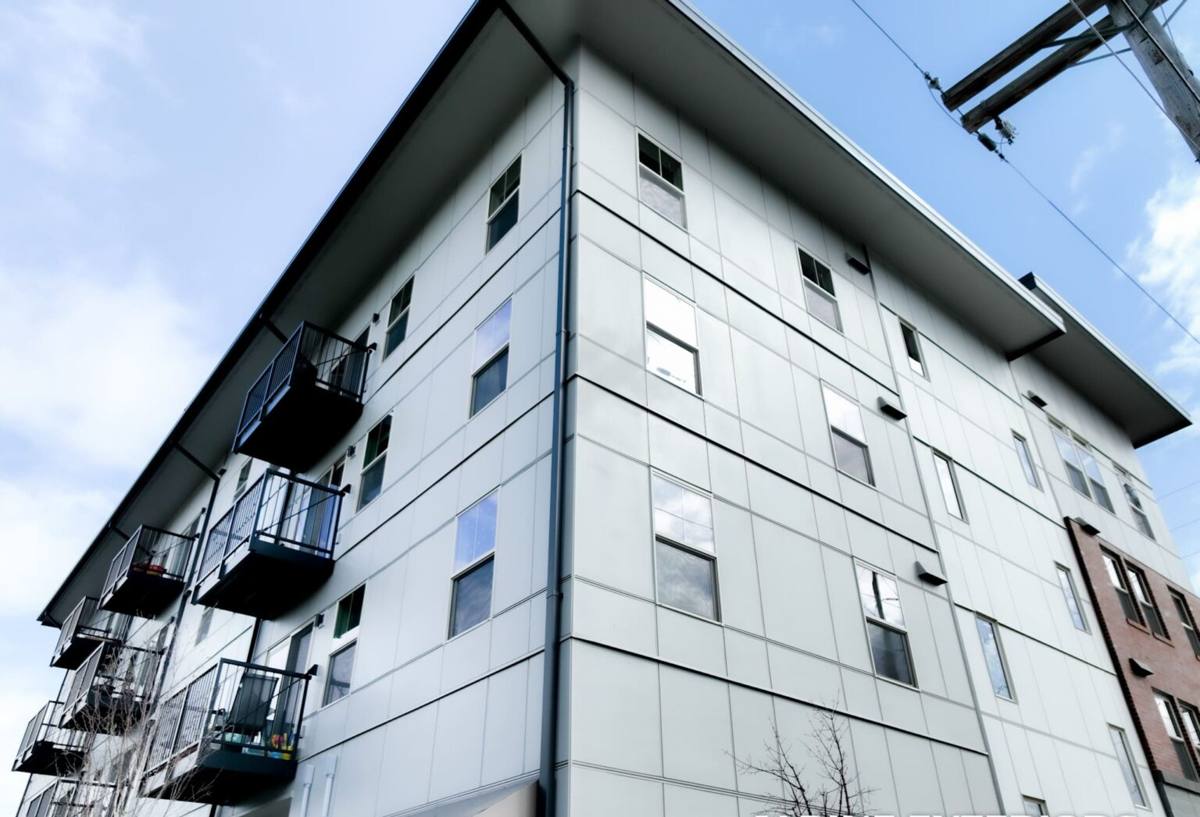
What Salt Air, Driving Rain, and Moss Actually Do to Siding
Salt Air
Salt in the air settles on exterior surfaces and accelerates corrosion on anything metal — fasteners, flashing, trim edges. On painted wood and composite products, salt residue can also interfere with how a finish weathers, contributing to earlier fading or a chalky surface that needs more frequent recoating. Products with a factory-applied, baked-on finish handle this far better than field-applied paint, because the finish bond is more uniform and more resistant to breakdown.
Driving Rain
Wind off the water doesn't let rain fall politely straight down — it pushes it sideways into wall assemblies, driving water up under laps and into any gap where the installation wasn't tight. This is a bigger deal than most homeowners realize: siding failure is rarely about the face of the material failing. It's almost always about water getting behind it, at a seam, a nail hole, a window flashing detail, or a butt joint that wasn't sealed and backed correctly.
Moss and Algae Season
Shaded north and west-facing walls in Columbia, especially near trees or close-set structures, stay damp longer after each rain event. That extended damp window is exactly what moss and algae need to establish. On absorptive siding materials, that growth can take hold in the material itself, not just on the surface, which shortens the material's working life and makes it look neglected faster than it should. On a material that doesn't absorb moisture the same way, growth stays mostly surface-level and is far easier to knock back with routine cleaning.
Why We Install Only James Hardie Fiber Cement
We don't install vinyl, LP SmartSide, cedar, primed spruce, Cemplank, or Allura. That's not a marketing position — it's a standard we hold because of what we've seen these climate factors do to those products over time in this part of Washington. Vinyl can warp and become brittle with UV and temperature cycling, and its seams are a weak point for wind-driven rain. Wood-based products, including engineered wood like LP SmartSide, depend on an intact factory coating to keep moisture out; once that coating is compromised at a cut edge or fastener hole, the substrate underneath is vulnerable to swelling and rot, which is a real risk in a climate this consistently wet. Cedar is a beautiful, legitimate material, but it's also high-maintenance — it needs regular refinishing to hold up against UV, moisture, and the biological growth that thrives in a moss-heavy microclimate like Columbia's.
James Hardie fiber cement is non-combustible, dimensionally stable, and doesn't have an organic substrate for moisture to feed rot into. The ColorPlus finish is baked on in a factory-controlled process, which gives it better fade and chip resistance than field-applied paint and holds up more consistently against salt exposure. Hardie also engineers specific product lines for different climate zones — the HZ5 line is built for the wetter, colder regions of the country, which fits Fairhaven's climate profile directly. None of this means Hardie is maintenance-free or immune to a bad install. It means that when it's installed correctly, it gives Columbia homes the best realistic combination of durability, low maintenance, and long-term appearance retention available in siding today.
What a Correct Hardie Installation Actually Involves
The material is only half the equation. A huge share of siding failures we get called out to inspect aren't material failures at all — they're installation failures. Getting it right in a climate like Columbia's means:
- A continuous water-resistive barrier installed and lapped correctly behind the siding, so any moisture that does get past the cladding has a drainage path instead of a way into the wall assembly.
- Proper flashing at every window, door, and roof-to-wall intersection — these transitions are where the large majority of water intrusion actually starts.
- Correct fastener type, spacing, and placement per Hardie's published installation specs, using fasteners rated to resist the corrosion that salt air accelerates.
- Proper clearance and gapping at the bottom of the siding, around penetrations, and at butt joints, so the material can handle normal expansion and contraction without trapping water.
- Caulking only where Hardie specifies it — over-caulking joints that are meant to allow drainage can trap moisture instead of shedding it.
- Correct overlap on horizontal laps, sized to shed wind-driven rain rather than just vertical rainfall.
Skip any one of these and you can end up with a wall that looks correct for a year or two before problems show up — usually right around the areas most exposed to wind-driven rain, which in Columbia tends to be west and southwest-facing walls.
Our Process for a Columbia Siding Installation
1. On-Site Assessment
We look at the existing siding and sheathing condition, wall orientation relative to prevailing wind and rain, existing moss or algae patterns, and any trouble spots around windows, decks, or roof intersections. This tells us whether we're dealing with a straightforward re-side or whether there's underlying moisture damage that needs to be addressed before new siding goes on.
2. Prep and Water Management
Old siding comes off, sheathing gets inspected and repaired as needed, and the water-resistive barrier and flashing go in first. This step is where most of the long-term performance of the job actually gets decided — it happens before a single piece of visible siding is installed.
3. Installation to Spec
Hardie panels or lap siding go up following manufacturer installation guidelines exactly — fastener pattern, clearances, lap sizing, and flashing integration at every penetration. We don't shortcut these details to save time, because in Columbia's climate the shortcuts are exactly what shows up as problems a few years later.
4. Final Inspection and Walkthrough
Before we call the job done, we walk the exterior with the homeowner, check all trim and caulk lines, and confirm drainage paths and clearances are correct at grade, decks, and other transitions.
Comparing Siding Options for a Salt-Air, High-Rain Climate
| Factor | Vinyl | Wood / Engineered Wood | James Hardie Fiber Cement |
|---|---|---|---|
| Moisture resistance | Seams vulnerable to wind-driven rain | Depends on intact factory coating | Non-absorptive substrate, engineered HZ5 line for wet climates |
| Salt air performance | Can become brittle over time | Coating can degrade, exposing substrate | Factory-baked finish resists fade and chalking |
| Moss/algae resistance | Surface growth, easy to clean | Growth can affect substrate over time | Surface growth mostly, cleans off without damaging material |
| Maintenance | Low, but limited repair options | Regular refinishing needed | Low; occasional wash, repaint on a longer cycle |
| Fire resistance | Combustible | Combustible | Non-combustible |
What Drives Cost on a Columbia Siding Job
Every home is different, but the factors that move the price on a Hardie installation in Columbia are fairly consistent:
| Cost Factor | Why It Matters |
|---|---|
| Wall condition underneath | Rot repair or sheathing replacement adds labor and material before new siding can go on |
| Home size and complexity | More corners, gables, and window/door openings mean more flashing and cutting |
| Siding profile chosen | Lap siding, panel siding, and shingle-style products vary in material and labor cost |
| Trim and accessory scope | Fascia, soffit, and trim replacement alongside siding affects total project size |
| Access and site conditions | Tight lots, decks, or landscaping near the walls can add setup time |
We give straightforward, honest estimates based on what's actually on your walls, not a generic per-square-foot number that ignores your home's real condition.
Why a Crew That Already Works Columbia Matters
A contractor who works Columbia and the surrounding Fairhaven area regularly knows which walls take the worst of the wind-driven rain, where moss tends to establish first, and how salt exposure tends to show up on hardware and finishes over time in this specific pocket of Whatcom County. That local pattern recognition affects real decisions on your job — where to be extra careful with flashing, which orientation needs the most attention to lap sizing, and what kind of moisture problems to check for on a tear-off before assuming the sheathing underneath is fine. It's the difference between a generic installation and one that's actually calibrated to what this location does to a house.
A Simple Checklist Before You Hire Anyone for This Job
- Ask what siding product they install and why — and be wary of a contractor who installs "whatever you want" with no professional standard behind it.
- Confirm they follow manufacturer-specified installation details, not just "how we've always done it."
- Ask how they handle flashing at windows, doors, and roof intersections specifically.
- Ask about their experience with homes in your immediate area, not just the broader region.
- Get a written scope that spells out prep work, not just the visible siding install.
- Confirm what warranty coverage applies to both material and labor, and get it in writing.
If your Columbia home's siding is showing moss buildup, fading, soft spots, or you're just planning ahead for a replacement, we're happy to take a look and give you a straightforward, no-pressure estimate — no obligation, just an honest read on what your home actually needs.