 Fairhaven Siding
 Why Downtown Bellingham Roofs Take a Different Kind of Beating
Roofs in downtown Bellingham don't fail the way roofs do in drier parts of the country. The damage here is rarely one dramatic event — it's usually a combination of things working on a roof at the same time. Wind off Bellingham Bay drives rain sideways under shingle laps that would stay dry in a straight-down rain. Salt-laden air off the water accelerates corrosion on exposed fasteners, flashing, and metal roofing edges. And because the marine climate keeps roofs damp for long stretches of the year, moss and moisture-loving growth get a real foothold, especially on north-facing slopes and shaded sections near mature trees.
None of that is unusual for Whatcom County. It's just the trade-off of living somewhere this green and this close to the water. But it does mean a storm-damage repair here has to account for more than the immediate hole or torn shingle — it has to hold up against everything that comes after it.
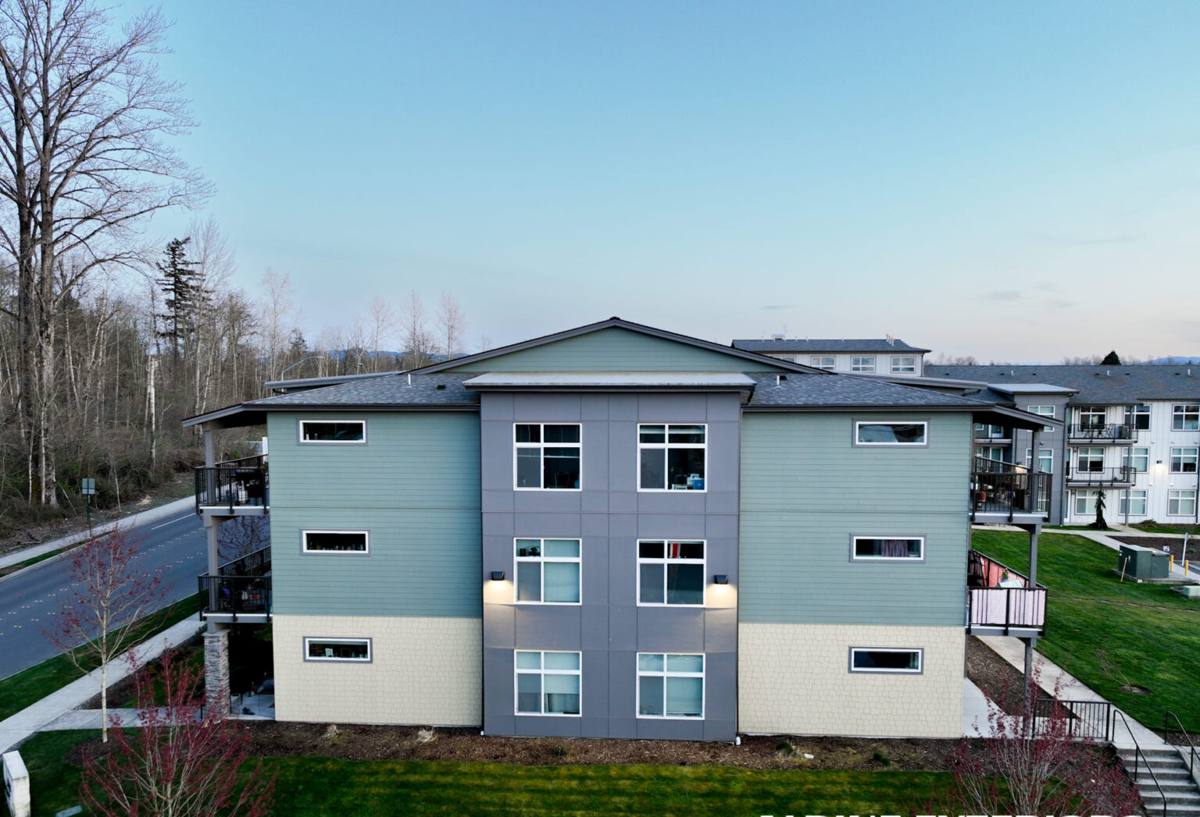
What Counts as Storm Damage on a Bellingham Roof
"Storm damage" covers more than a single wind event. On the roofs we see downtown, it typically shows up as one of a few patterns:
- Wind-lifted or torn shingles — tabs cracked or missing after a gusty front, especially along ridges and roof edges where wind uplift is strongest.
- Flashing failures — driving rain finds the weak point around chimneys, skylights, dormers, and roof-to-wall transitions faster than it finds anything else.
- Gutter and downspout overflow damage — moss and needle debris clog gutters during heavy rain, water backs up under the roof edge, and fascia or sheathing starts to rot from the inside.
- Impact damage — branches or limbs coming down in wind, common near mature trees found throughout the older lots downtown and in Fairhaven.
- Moss-driven deterioration — not a single storm, but months of trapped moisture under moss mats that lift shingle edges and hold water against the roof deck.
Sudden Damage vs. Slow Damage
The first three items above are what people usually picture when they hear "storm damage" — something breaks, water gets in, you need it fixed fast. The last one, moss-driven deterioration, is slower and easier to ignore. But it's often the bigger repair by the time it's noticed, because by then the deck underneath may already be soft. A good storm-damage inspection checks for both: the obvious break and the quieter problem sitting under the moss next to it.
The Roofs We Actually See Downtown
Downtown Bellingham and the surrounding older neighborhoods have a mixed roofscape — steep-pitched roofs on older homes, moderate pitches on more recent construction, and a fair number of low-slope roofs on converted, mixed-use, and commercial buildings closer to the core. Each of these behaves differently in a storm.
Steep and Moderate-Pitch Residential Roofs
These shed water and moss more readily than flat roofs, but they're also more exposed to wind uplift along ridges and rakes. Older homes in this area sometimes have layered roofing history — a repair here needs to check what's actually underneath the top layer, not just patch what's visible.
Low-Slope and Flat Roofs
Flat and low-slope roofing holds water longer by design, which means ponding, membrane seams, and drain points are the first places to fail after a storm. Salt air speeds up wear on exposed metal edging and fasteners on these roofs faster than it does on steeper residential roofs, so hardware condition matters as much as the membrane itself.
What a Correct Storm Repair Actually Involves
A repair that only addresses what's visible from the ground usually comes back as a callback within a year or two. A repair done right has a few distinct stages, and skipping any of them is where most bad roof repairs go wrong.
- Stop the water first. If there's an active leak, that gets tarped or temporarily sealed before anything else — protecting the interior and the roof deck matters more than a perfect first visit.
- Full-roof assessment, not just the damaged spot. Wind and rain rarely damage only one section. We check the whole roof plane, not just the area the homeowner noticed.
- Deck inspection under the damaged area. If the sheathing has softened from trapped moisture, replacing shingles over it without replacing the deck is a repair that fails again.
- Flashing and underlayment repaired to current standards, not just patched with sealant. Sealant is a stopgap, not a fix, in a climate this wet.
- Material matching. Where a full section replacement isn't warranted, we match shingle type, color, and exposure as closely as the existing roofing allows.
- Moss and debris addressed at the source, including gutters and any contributing tree cover, so the repair isn't undone by the same conditions that caused the original damage.
Our Process for Storm Calls in Downtown Bellingham
When a storm call comes in from a downtown home or building, the process is straightforward and doesn't change based on who's watching:
- Same-window response for active leaks. If water is actively getting in, that's treated as urgent — a tarp or temporary seal comes before a full estimate.
- On-site assessment that includes the roof, the attic or ceiling below if accessible, gutters, and flashing points — not a drive-by estimate.
- A written explanation of what's actually wrong, in plain terms, before any work starts — including photos where useful and a clear repair-vs-replace opinion.
- An honest scope — we tell you when a targeted repair is the right call and when a patch would just be delaying a bigger job.
- Cleanup that includes debris and displaced material, not just the fix itself.
Repair vs. Replacement: What Actually Decides It
Storm damage doesn't automatically mean a new roof, and it doesn't automatically mean a small patch either. The right call depends on a handful of factors that matter more than how big the visible damage looks.
| Factor | Points Toward Repair | Points Toward Replacement |
|---|---|---|
| Roof age | Well within its expected service life | Already near or past its expected lifespan |
| Extent of damage | Localized to one section or slope | Spread across multiple slopes or the whole roof |
| Deck condition | Solid, dry sheathing under the damage | Soft, rotted, or repeatedly wet sheathing |
| Moss/moisture history | First occurrence, well-maintained roof otherwise | Chronic moss and trapped-moisture damage over years |
| Material availability | Existing shingle or roofing still available to match | Product discontinued or badly weathered next to it |
| Cost relative to remaining life | Repair cost is a small fraction of a full roof | Repair cost approaches a meaningful share of replacement |
As a broad range, a straightforward localized repair on a residential roof often runs a few hundred to around a couple thousand dollars, depending on how much decking, flashing, and material matching is involved. Larger storm repairs — multiple sections, structural deck work, or extensive flashing replacement — can run higher. We give a firm number after we've actually seen the roof, not before.
Moss, Moisture, and Salt Air: The Long Game
A storm repair that ignores what caused the vulnerability in the first place is only a temporary fix. In this part of Whatcom County, that usually means dealing with three ongoing conditions:
Moss
Moss holds moisture directly against roofing material for months at a time. It lifts shingle edges as it grows, which is exactly where wind and driving rain look for an opening during the next storm. Where moss growth has already contributed to the damage, we address it as part of the repair rather than leaving it to regrow into the same spot.
Driving Rain
Wind-driven rain off the bay pushes water uphill under laps and around fasteners in ways that vertical rain never tests. That's why flashing detail and underlayment quality matter more here than in drier, calmer climates — they're doing more work, more often.
Salt Air
Proximity to the water means faster corrosion on exposed metal — nail heads, flashing, gutter hardware, and any exposed fasteners on low-slope roofing. Corroded fasteners lose their grip well before they look obviously bad, which is part of why a repair should include a hardware check, not just a shingle check.
Why Hiring a Crew That Already Works Downtown Bellingham Matters
Storm-damage repair is one of the areas where local experience shows up directly in the quality of the fix. A crew that regularly works roofs in and around downtown Bellingham and Fairhaven already knows the common roof ages and construction patterns in these older neighborhoods, how the local moss and moisture cycle behaves through the wetter months, and what flashing details tend to fail first on the building types common here — from older single-family homes to low-slope commercial roofs closer to the core.
That familiarity also matters for practical reasons: knowing which materials are appropriate for this climate, understanding City of Bellingham permitting requirements when a repair crosses into replacement territory, and being able to respond quickly because the crew isn't traveling in from outside the area. A storm repair delayed by distance or unfamiliarity with local conditions is a repair that costs a homeowner more water damage in the meantime.
What to Do Right After Storm Damage
If you've just discovered roof damage after a storm, a few steps in the right order protect both the home and your insurance position, if you end up filing a claim.
- Move anything valuable out from under an active leak and place a container to catch dripping water.
- Photograph the damage from inside and, if it's safe to do so from the ground, from outside — don't get on the roof yourself.
- Avoid walking on a wet or storm-damaged roof; loose or lifted material is easy to miss and easy to slip on.
- Call a local roofing contractor for a temporary tarp or seal if the leak is active — don't wait for a full estimate before stopping water intrusion.
- Keep receipts and notes if you make any temporary repairs yourself, in case of an insurance claim.
- Get a written assessment before agreeing to a full replacement — a legitimate repair should be considered and ruled out, not skipped.
If a recent storm has left you with a leak, missing shingles, or a roof you're just not sure about anymore, we're glad to take a look. Estimates are free and there's no pressure to move forward — just an honest read on what your roof actually needs, from a crew that works these downtown Bellingham and Whatcom County roofs regularly. Use the form below to get started.