 Fairhaven Siding
 Board & Batten Siding for Edgemoor Homes
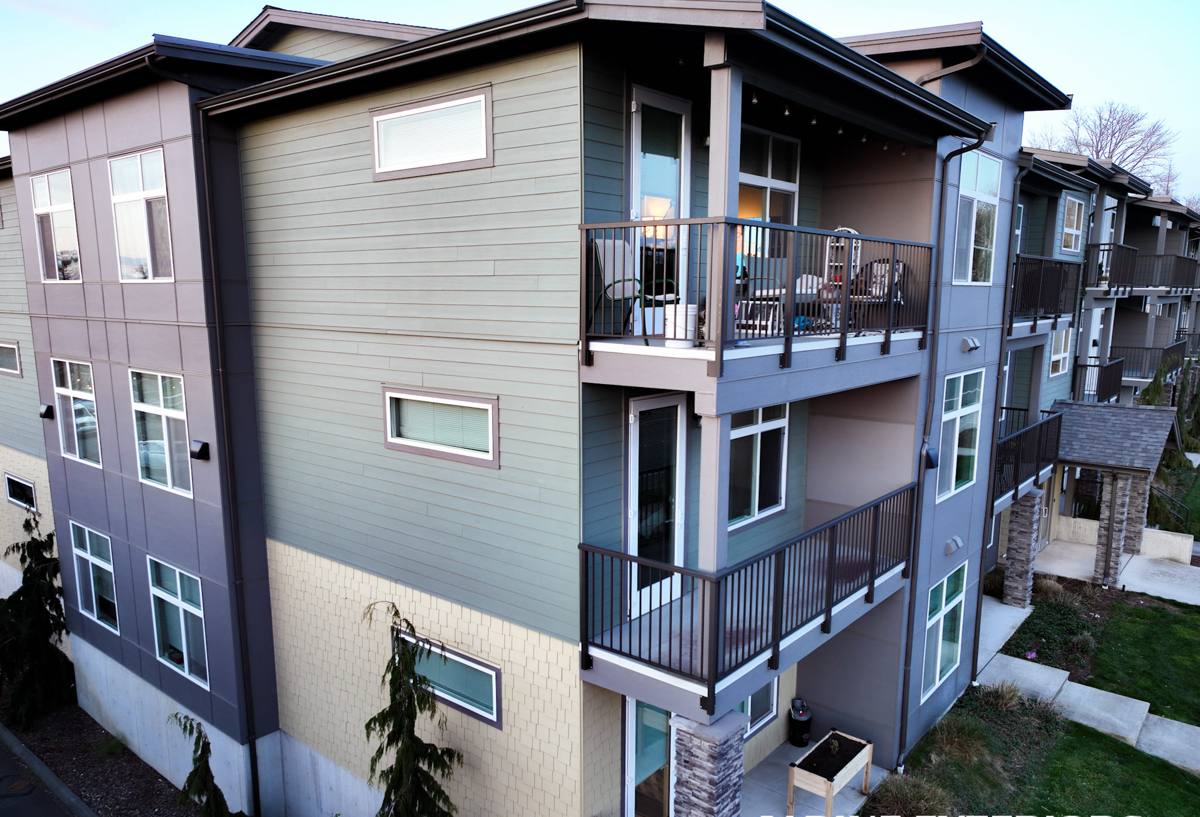
Edgemoor sits on the bluffs and slopes above Bellingham Bay, just north of Fairhaven, and it's one of the more distinctive pockets of siding work we do in Whatcom County. The homes here run from older, established properties to newer builds designed to take advantage of the water views, and a lot of them lean on board and batten siding — either as a full exterior or as an accent on gables, dormers, and entry features. It's a clean, vertical profile that reads as modern-farmhouse or craftsman depending on the trim details, and it holds up well visually against the mix of Douglas fir, stone, and glass that shows up in this neighborhood's architecture.
Board and batten is also one of the least forgiving siding profiles when it's installed wrong. The vertical seams, the battens themselves, and the exposure this style typically gets on bluff-facing walls all create more opportunities for water to find a way in than a standard horizontal lap job. On a site like Edgemoor, where wind off the bay pushes rain sideways into walls for a good part of the year, the margin for error is smaller than most homeowners assume.
Why Edgemoor's Climate Is Hard on Vertical Siding
Three things work against exterior siding here, and board and batten is exposed to all of them more directly than lap siding is.
Salt Air
Homes close to Bellingham Bay get a steady dose of salt-laden air, especially on west- and south-facing elevations. Salt is corrosive to exposed metal fasteners and flashing, and it accelerates the breakdown of finishes that aren't built to handle it. Battens, because they're a separate fastened component running the full height of the wall, add more nail heads and more seams for salt exposure to work on over time.
Driving Rain
Wind off the water doesn't just drop rain on a wall — it drives it into vertical seams under pressure. Board and batten depends on the batten overlapping the gap between boards to shed that water, and on a properly built drainage plane behind it to handle anything that gets past the batten. When that drainage plane is missing or poorly detailed, water tracks down behind the siding instead of running off the face of it.
A Long Moss Season
Western Washington's wet season runs long, and north-facing or shaded walls in Edgemoor's tree-lined lots stay damp for extended stretches. Moss and algae take hold on any siding surface that can't dry out, and on vertical board and batten, growth tends to concentrate at the base of boards and along batten edges where moisture sits longest. Left alone, that constant dampness shortens the life of the substrate underneath, no matter what it's made of.
What Correct Board & Batten Installation Involves
The board and batten look is simple. Getting it to actually perform for 30-plus years in this climate is not. A correct installation has several layers working together, most of which you never see once the job is done.
- A drainage plane behind the siding. A weather-resistant barrier plus a rainscreen gap lets any water that gets past the face of the siding drain out and lets the wall assembly dry.
- Proper flashing at every penetration and transition. Window and door heads, roof-to-wall intersections, deck ledgers, and any wall penetration need flashing detailed to shed water down and out, not into the wall.
- Correct fastening pattern. Boards and battens need to be fastened into framing at the manufacturer's specified spacing — not just wherever it's convenient — so the assembly holds up to wind load without working loose.
- Sized and sealed joints. Vertical butt joints, especially on taller walls, need to be planned and flashed, not just butted and caulked.
- Clearance at grade and hard surfaces. Board and batten run down to a deck, patio, or soil line without the right clearance will wick moisture no matter how good the product is.
Any one of these done wrong shows up eventually as staining, soft spots, or paint failure at the seams — usually years after the crew that did it has moved on.
Why We Install Only James Hardie Board & Batten Systems
We standardized on James Hardie fiber cement across every job we do, including board and batten, and we don't install LP SmartSide, vinyl, Cemplank, Allura, primed spruce, or cedar. That's a deliberate call, not a brand preference, and it's worth explaining honestly rather than just asserting it.
Cedar
Real wood board and batten looks great and plenty of people love it, but it's an organic material in a climate that stays wet for months at a time. Cedar needs consistent refinishing to keep water out, and in a salt-air, high-moss environment like Edgemoor, that maintenance interval tightens up. We'd rather not put a product on a house that punishes an owner for falling a year behind on upkeep.
Primed Spruce and Engineered Wood (including LP SmartSide)
These products perform reasonably well when the wood substrate is fully sealed at every cut edge and joint, forever. That's an installation-sensitivity problem more than a material flaw — miss one field-cut edge, and moisture has a way in. Given how many cut edges a board and batten job generates, we don't think it's the right product for this climate.
Vinyl
Vinyl board and batten exists, but it's a thin extruded profile that reads differently up close than true board and batten, and it doesn't hold paint or take repair well if a section is damaged. On homes where the vertical siding is a visible design feature, the appearance gap matters.
What We Use Instead
James Hardie's board and batten systems pair fiber cement panels with HardieTrim battens, or use individual Hardie boards with battens over the seams, all installed with a rainscreen. Fiber cement is non-combustible, doesn't rot, and doesn't feed moss the way wood substrates do. Panels and trim come with a factory ColorPlus finish backed by a written finish warranty, so the color isn't relying on field-applied paint to survive salt air and driving rain.
Our Process From Estimate to Finished Job
1. On-Site Assessment
We walk the exterior, check current siding and trim condition, look at grading and drainage around the foundation, and check for existing moisture damage — especially at window heads, roof intersections, and any area that's stayed shaded or damp.
2. Scope and Estimate
We put together a written scope covering tear-off (if needed), drainage plane and rainscreen, flashing details, the specific Hardie board and batten configuration, and finish color. No surprise change orders for work that should have been scoped up front.
3. Tear-Off and Sheathing Check
Old siding comes off and we inspect the sheathing underneath. Any soft or water-damaged sheathing gets repaired before anything new goes back up — covering damaged sheathing with new siding just hides a problem instead of fixing it.
4. Weather Barrier and Rainscreen
We install the water-resistive barrier and rainscreen furring, then flash every window, door, and penetration before a single board goes up.
5. Board & Batten Installation
Hardie boards and battens go up per manufacturer fastening spec, with proper clearance at grade, decks, and hard surfaces, and sealed joints where the product calls for it.
6. Final Walkthrough
We walk the finished job with the homeowner, check caulk lines and trim details, and make sure everything matches the agreed scope before we call it done.
Board & Batten vs. Other Siding Profiles for Edgemoor Homes
Board and batten isn't the only option for this style of home, and it isn't always the right one for every wall. Here's how it stacks up against the other profiles we're commonly asked about for similar Fairhaven-area homes.
| Profile | Best Use | Moisture Exposure Risk | Typical Maintenance |
|---|---|---|---|
| Board & Batten (Hardie) | Full exteriors or accent gables on modern-farmhouse and craftsman homes | Moderate — depends heavily on rainscreen and flashing quality | Occasional wash-down; repaint on ColorPlus cycle if desired |
| Horizontal Lap (Hardie) | Whole-house siding, more forgiving on complex wall shapes | Lower — horizontal laps naturally shed water down the wall | Occasional wash-down; repaint on ColorPlus cycle if desired |
| Cedar Board & Batten | Homeowners set on a natural wood look | High — organic material, many exposed edges | Refinishing every few years, more often near the bay |
| Vinyl Board & Batten | Budget-driven projects, less design emphasis on the siding | Moderate, but poor repairability if damaged | Low maintenance, but fades and cannot be repainted easily |
On a lot of Edgemoor homes, the answer isn't all one profile — board and batten on gables and feature walls, lap siding on the main body. We'll tell you honestly if that's the better call for your specific house rather than pushing one look across the whole exterior.
Signs Your Current Siding Needs Attention
If you're not sure whether your board and batten siding is still doing its job, a few warning signs are worth checking before they turn into a bigger repair.
- Soft or spongy spots when you press on boards, especially near the bottom courses
- Paint that's bubbling, peeling, or flaking along batten edges and seams
- Persistent moss or algae growth that comes back within weeks of cleaning
- Visible gaps or warping at butt joints
- Staining or discoloration below window sills or roof-to-wall intersections
- Interior signs — musty smell, peeling interior paint, or soft drywall near exterior walls
None of these automatically mean a full re-side is needed, but they're worth a professional look rather than waiting for the problem to spread.
Maintenance & Longevity in a Marine Climate
Correctly installed James Hardie board and batten is genuinely low-maintenance, but "low-maintenance" isn't "no-maintenance" — especially this close to the water. An occasional rinse to knock off salt residue and organic buildup, keeping gutters clear so water isn't dumping down the wall face, and trimming back vegetation that keeps a wall shaded and damp all go a long way. Because the ColorPlus finish is factory-applied and warranted, you're not on the hook for a repaint cycle the way you would be with cedar or field-primed wood — but keeping an eye on caulking at joints and penetrations every year or two is worth the ten minutes it takes.
Why a Crew That Already Works Edgemoor Matters
Board and batten performance in this location comes down to details — rainscreen execution, flashing at wall penetrations, fastening into real framing, and clearance at grade — that don't show up in a quick visual estimate. A crew that's worked the bluffs above Bellingham Bay and the surrounding Fairhaven area knows what wind-driven rain does to a west-facing wall here, how aggressively moss establishes on shaded elevations in this climate, and where salt exposure tends to concentrate damage first. That's the difference between a board and batten job that looks right for one season and one that's still tight and clean fifteen years from now.
If you're weighing board and batten siding for a home in Edgemoor or elsewhere around Fairhaven, we're happy to take a look and give you a straightforward, no-pressure estimate — just fill out the form below.