 Fairhaven Siding
 Edgemoor's Siding Challenge: Salt Air, Rain, and Moss
Edgemoor sits close enough to the water that homes here take on a different kind of weather than siding a few miles inland ever has to deal with. Salt-laden air moves in off Bellingham Bay and settles on exterior walls day after day, accelerating corrosion on fasteners and finishes that weren't built to handle it. Add in Whatcom County's long, driving-rain winters and the shaded, damp conditions that let moss and algae take hold on north- and west-facing walls, and you've got a climate that is genuinely hard on a home's exterior. Siding that performs fine in a drier part of the state can fail years early here.
This is the reality we design around when we work on Edgemoor homes. It's not about picking a product off a brochure — it's about understanding what salt exposure, sustained moisture, and shade do to different siding materials over ten, twenty, thirty years, and choosing a system that's built to take it.
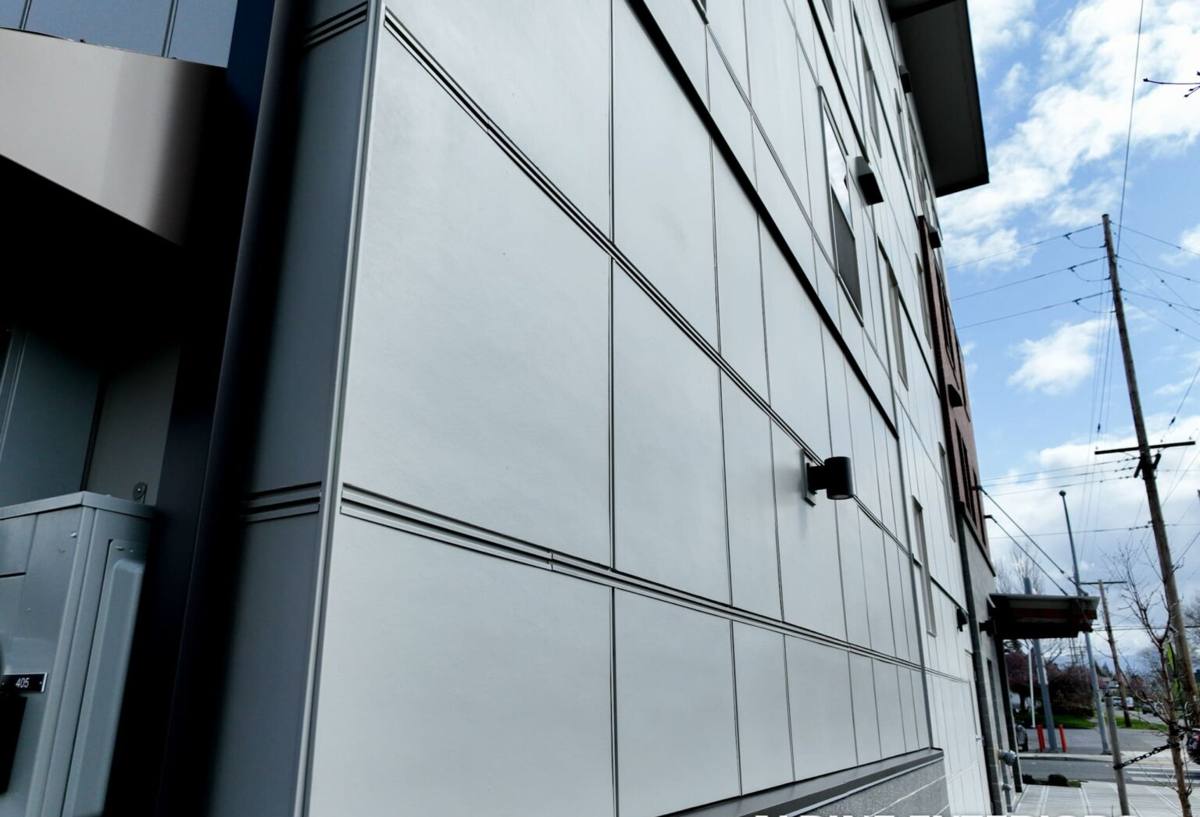
Why Fiber Cement Fits Edgemoor Homes
Fiber cement siding is a mix of cement, sand, and cellulose fiber, fired and cured into a rigid, dimensionally stable board. That composition matters directly for a home like yours in this location:
- It doesn't rot. Unlike wood or wood-composite siding, there's no organic material for moisture to break down, which matters when a wall stays damp for days at a time during a typical Whatcom County winter.
- It resists moss and mildew better than wood. The surface doesn't hold moisture the way cedar or untreated wood does, so the shaded, damp walls common in Edgemoor's tree-covered lots stay cleaner longer.
- It's not attractive to insects. Salt air and moisture-softened wood is a combination that draws pests; fiber cement gives them nothing to work with.
- It holds paint and factory finish exceptionally well. Salt exposure is hard on coatings — it accelerates fading and chalking on lower-quality paint systems. A factory-applied finish engineered for UV and moisture exposure holds up dramatically longer than field-applied paint on wood or engineered wood.
- It's non-combustible. Not a coastal-specific benefit, but a real one — fiber cement carries a Class A fire rating, which matters for insurance and peace of mind regardless of where the house sits.
We install James Hardie fiber cement exclusively, and part of the reason is that Hardie engineers its HZ5 product line specifically for the Pacific Northwest's climate zone — moisture behavior, freeze-thaw cycling, and coastal exposure are built into the product spec, not treated as an afterthought.
What Fiber Cement Doesn't Solve on Its Own
It's worth being straight about this: the siding board itself is only part of what keeps a coastal-adjacent home dry and healthy. A great product installed with poor flashing, wrong fastener spacing, or no drainage plane behind it will still let water in. That's true of any siding material, fiber cement included. The install details below matter as much as the product choice.
What a Correct Fiber Cement Installation Involves
Fiber cement siding is unforgiving of shortcuts in a way that's easy to miss until years later, when a poorly flashed window or an over-driven fastener starts letting water behind the wall. On a home exposed to Edgemoor's rain and salt air, getting these details right the first time isn't optional.
| Installation Detail | Why It Matters Here |
|---|---|
| Weather-resistant barrier and rain screen gap | Creates a drainage path behind the siding so wind-driven rain that gets past the cladding can escape instead of soaking framing |
| Correct fastener type and spacing | Coastal air corrodes the wrong fastener metal over time; Hardie specifies fastener types and placement that resist that corrosion and prevent panel cracking |
| Proper clearance from grade, decks, and roofs | Keeps siding from sitting in standing water or snow load, a common cause of premature edge damage |
| Flashing at windows, doors, and penetrations | The single most common source of hidden water intrusion on any siding job, coastal or not |
| Factory-primed and factory-painted (ColorPlus) panels | Field-applied paint fails faster under UV and salt exposure than Hardie's baked-on finish |
| Caulking only where specified | Over-caulking traps moisture; under-caulking lets it in — Hardie's install guide is specific about where sealant belongs |
Every one of these is a place where a crew unfamiliar with fiber cement — or unfamiliar with this specific climate — tends to cut corners without realizing it. None of it shows up as a problem on install day. It shows up five or ten years later as staining, soft trim, or a warranty claim that gets denied because the installation didn't follow spec.
James Hardie Compared to Other Siding Options
We get asked why we don't offer vinyl, LP SmartSide, or other fiber cement brands as alternatives. Here's the honest comparison, specific to a salt-air, high-rain environment like Edgemoor's:
| Material | How It Holds Up Here |
|---|---|
| Vinyl siding | Low upfront cost, but it expands, contracts, and can warp or crack in sustained wind and temperature swings; seams and panel edges give moisture a path in over time |
| LP SmartSide (engineered wood) | Wood-based, so it depends entirely on an intact factory coating to keep moisture out; any breach — a scratch, a poorly sealed cut edge — exposes the wood substrate to rot in a wet climate |
| Other fiber cement brands (Allura, Cemplank, etc.) | Similar base material to Hardie, but we've standardized on one product line so our crews install to one spec, one warranty structure, and one finish system every time — consistency we can stand behind |
| James Hardie fiber cement | Climate-engineered HZ5 formulation for the Pacific Northwest, factory ColorPlus finish, non-combustible, and a strong transferable warranty when installed to spec |
We're not going to tell you vinyl or engineered wood siding is a bad product across the board — plenty of homes wear it fine in drier, milder climates. Our position is narrower: for a home taking on Whatcom County's rain and Edgemoor's salt air year after year, we don't think those trade-offs are worth it, and we've chosen to install only the product we're confident will hold up here.
Our Process for Edgemoor Projects
- On-site assessment. We walk the home, check the current siding and sheathing condition, note drainage patterns, sun/shade exposure on each wall, and any moisture damage already present.
- Written estimate and product plan. You get a clear scope — which Hardie product (lap, panel, or shingle-style), which ColorPlus color, and what the tear-off and prep involves.
- Removal and substrate check. Old siding comes off and we inspect sheathing and framing underneath before anything new goes up. Hidden rot or moisture damage gets addressed before it's covered again.
- Weather barrier and rain screen installation. This is the layer that does the real work of keeping the wall assembly dry over time.
- Hardie installation to manufacturer spec. Fastener placement, clearances, and flashing details follow Hardie's published installation guide, not shortcuts.
- Final inspection and walkthrough. We check caulking, trim, and finish details with you before calling the job done.
Cost Factors for Fiber Cement Siding in Edgemoor
There's no honest flat number for siding a home — too much depends on the specifics. What actually moves the price:
| Factor | Effect on Cost |
|---|---|
| Home size and wall complexity | More corners, dormers, and trim detail means more labor and cut waste |
| Current siding removal | Tear-off of old material, especially if it reveals sheathing repairs, adds time and cost |
| Hardie product selection | Lap siding, panel systems, and shingle-style profiles carry different material and labor costs |
| Trim and accessory work | Fascia, soffit, and trim replacement alongside siding affects total project scope |
| Access and site conditions | Steep lots, mature landscaping, or limited access can add labor time |
We give every Edgemoor homeowner a written, itemized estimate after an in-person look at the house — not a phone-quote guess. That's the only way to give you a number you can actually plan around.
Maintenance in a Salt-Air, Moss-Prone Climate
Fiber cement is low-maintenance compared to wood, but "low-maintenance" isn't "no-maintenance," especially this close to the water. A simple annual routine keeps it performing the way it's supposed to:
- Rinse the exterior once or twice a year to clear salt residue, especially on walls facing open water or prevailing wind
- Trim back vegetation and tree branches that keep walls shaded and damp, which is what invites moss growth
- Walk the exterior after major storms and check caulking around windows, doors, and trim for gaps or cracking
- Watch for any staining or soft spots at the base of walls or near grade, which can signal a drainage or flashing issue worth addressing early
- Avoid pressure washing directly into seams or under panel edges — a garden hose and soft brush is enough for routine cleaning
None of this is heavy lifting, but skipping it in a climate like this one is how small issues turn into expensive ones.
Why a Crew That Already Works Edgemoor Matters
Siding installation isn't uniform across Washington. A crew that mostly works drier, inland areas doesn't necessarily think about rain screen gaps, fastener corrosion resistance, or moss-prone shade patterns the same way a crew that works Whatcom County's coastline every week does. We're based in Fairhaven, and Edgemoor is part of the territory we work regularly — we've seen what happens to siding installed without those details accounted for, and we build every job to avoid it.
That local familiarity also means we know what's realistic for scheduling around this region's weather windows, how to sequence a tear-off so a home isn't exposed during a stretch of heavy rain, and what site conditions to expect on the kind of sloped, tree-lined lots common in this part of Bellingham.
If you're weighing a siding replacement or repair for a home in Edgemoor, we're glad to come take a look and walk you through what we'd recommend — no pressure, no upsell, just a straight assessment and a written estimate. Reach out through the form below to set up a free estimate.