 Fairhaven Siding
 Edgemoor's Siding Problem Is Different From Most Neighborhoods
Edgemoor sits on the wooded bluffs just north of Fairhaven, with many homes looking out over Bellingham Bay and others tucked back under a heavy canopy of mature evergreens. That combination — salt-laden marine air on one side of the neighborhood and deep, near-permanent shade on the other — puts siding through two different kinds of stress at the same time. Homes closer to the water deal with wind-driven salt spray and constant damp air off the bay. Homes further back under the trees deal with limited sun exposure, dripping branches, and moss that never fully dries out between rains.
Most siding products are engineered for an average climate, not for a neighborhood that hands out two different punishing conditions depending on which side of the street you're on. That's the context we bring to every Edgemoor estimate, and it's why we don't treat this as a generic siding job.
Why We Install Only James Hardie Fiber Cement
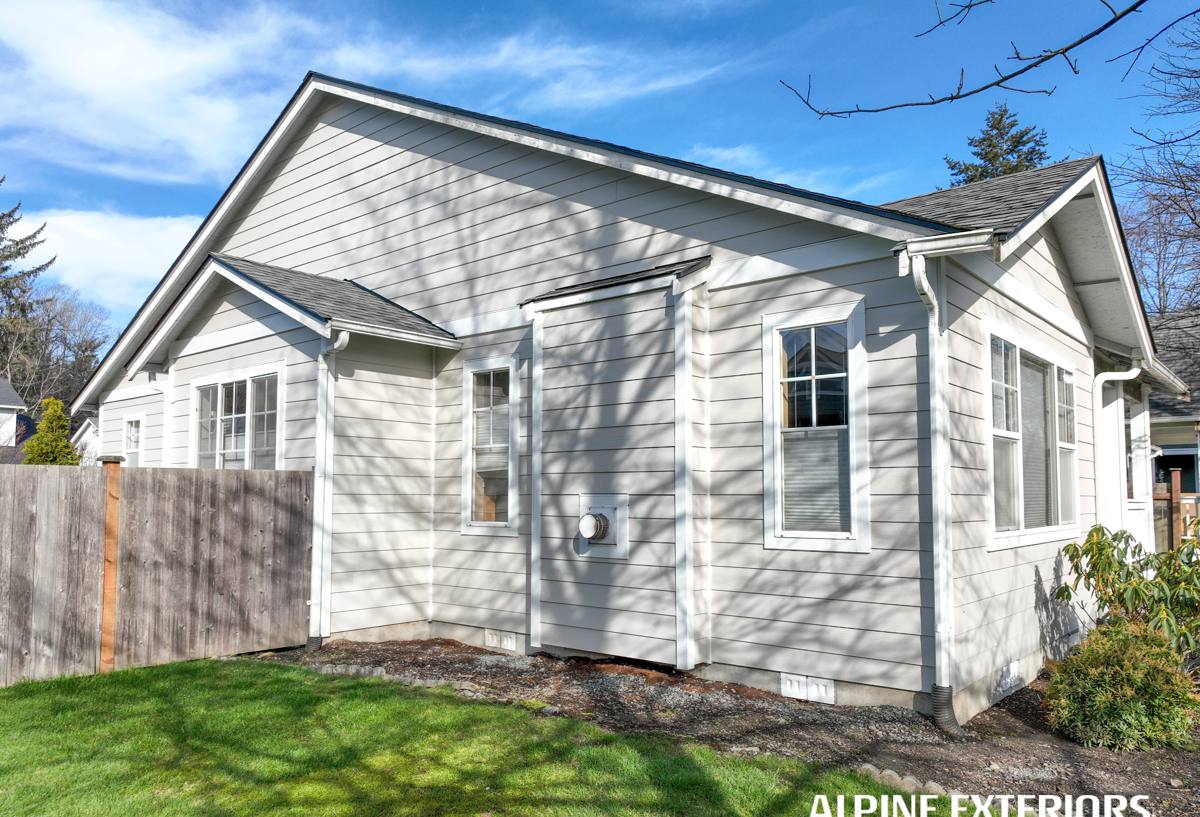
We made a decision years ago to install James Hardie fiber cement siding exclusively — no vinyl, no LP SmartSide, no Cemplank, no Allura, no primed spruce or cedar. That's not a marketing position, it's a practical one. Fiber cement is non-combustible, dimensionally stable in wet-dry cycling, and holds a factory-applied finish far longer than site-primed wood or engineered wood products. For a neighborhood like Edgemoor, where siding sits under trees for months at a time and takes salt air the rest of the year, those properties aren't optional extras — they're the baseline requirement.
We're not going to tell you every other product is junk. Vinyl is inexpensive and low-maintenance in mild climates. Engineered wood has a warmer look for some buyers. But we've seen how those products perform specifically in wet, shaded, coastal-adjacent conditions like Edgemoor's, and we stopped installing anything that struggles there. James Hardie is what we put on Whatcom County homes because it holds up to this specific climate, not climate in general.
What Hardie Gets Right for This Site Condition
- Fiber cement doesn't absorb moisture and swell the way wood-based products can, which matters under year-round tree drip
- ColorPlus factory finish resists the fading and chalking that site-applied paint shows first in salt air
- Non-combustible material, which matters given Washington's increasing wildfire-season air quality and ember exposure concerns even on the wet side of the state
- A finish system designed to be washed rather than repainted, which suits a moss-prone, shaded lot
The HZ5 Product Line and Why It's the Right Fit Here
James Hardie engineers its siding in climate-specific "HZ" formulations. HZ5 is built for regions with significant moisture exposure and freeze-thaw cycling — which describes most of western Washington, and Edgemoor's bluff-and-canopy microclimate in particular. The difference from a generic formulation isn't cosmetic; it affects how the material handles repeated wetting, drying, and the salt exposure that waterfront-adjacent lots see from wind off the bay.
We spec HZ5 by default for Fairhaven and Edgemoor jobs. It's not an upgrade we upsell — it's the correct baseline for this part of Whatcom County, and using anything less engineered for the climate is how homeowners end up with premature finish failure on the windward side of the house.
Moss, Shade, and the Maintenance Question
Homes tucked under Edgemoor's tree canopy face a specific problem: north-facing walls and anything shaded by fir or cedar canopy rarely get enough direct sun to dry out fully between rain events. Over a few seasons, that creates ideal conditions for moss and algae growth on siding, especially at butt joints and under window trim where water lingers longest.
Fiber cement doesn't feed mold and moss the way wood fiber products can, since it's cement-based rather than organic. That doesn't mean moss won't grow on the surface in a heavily shaded spot — it can, the same as it grows on a roof or a deck. What it means is that moss on Hardie siding is a surface issue you can wash off, not a sign the substrate underneath is breaking down. That distinction matters a lot after five or ten years under a tree canopy.
Simple Moss Prevention Steps We Recommend
- Keep tree branches trimmed back from exterior walls where practical, to improve airflow and sun exposure
- Clean gutters regularly — overflow during heavy rain is a major contributor to staining on north and shaded walls
- Rinse heavily shaded siding sections annually with a garden hose, not a pressure washer aimed directly at joints or trim
- Address any standing moss promptly rather than letting it build up over multiple seasons
What Correct Installation Actually Involves
James Hardie siding fails prematurely almost exclusively because of installation mistakes, not product defects. In a climate like Edgemoor's, the margin for error is smaller than in a drier region, because any water that gets behind the cladding has more opportunities to sit there before drying out.
A correct install includes a proper weather-resistive barrier, correctly lapped and flashed at every penetration, rainscreen or drainage gap where the wall assembly calls for it, factory-cut edges primed or capped where field-cut, and fastener placement that follows Hardie's published spec exactly — not "close enough." Manufacturer specs also dictate minimum clearance between the bottom of the siding and grade, decks, and roof lines, which is often overlooked on sites with mature landscaping crowding the foundation, a common condition on older Edgemoor lots.
Common Installation Mistakes We Correct or Avoid
| Mistake | Why It Matters in This Climate |
|---|---|
| Face-nailing without following stud layout | Loose panels flex and open joints to wind-driven rain off the bay |
| Missing or improper flashing at trim and window heads | Water intrusion behind siding stays wet longer under tree shade |
| Siding installed tight to grade or decking | Wicking moisture from soil or standing water accelerates finish wear |
| Unsealed or unpainted field-cut edges | Cut edges are the most vulnerable point for moisture absorption |
| Skipping a drainage plane on a shaded, slow-drying wall | Trapped moisture behind cladding has no way to escape |
Our Process for an Edgemoor Job
Every job starts with a walk of the property, not a drive-by estimate. On a wooded or bluff lot, that means checking sun exposure per elevation, looking at existing moss or moisture staining patterns, and inspecting the current wall assembly for hidden water damage before we ever talk about color or product line.
| Cost Factor | Why It Affects Edgemoor Jobs Specifically |
|---|---|
| Site access | Sloped, wooded, or narrow bluff-lot driveways can limit material staging and add labor time |
| Tear-off condition | Older siding on shaded walls often hides sheathing damage that needs repair before re-siding |
| Trim and elevation complexity | Multi-story bluff homes with extensive window trim take longer per square foot |
| Exposure side | Bay-facing walls may warrant additional flashing detail versus tree-sheltered walls |
| Color selection | Custom or dark ColorPlus finishes can affect lead time versus common stock colors |
From there, we scope the job to the actual wall assembly in front of us rather than a generic package. That includes deciding where a rainscreen gap is warranted, confirming flashing details at every trim piece, and specifying HZ5 as the baseline product line unless the site condition calls for something more specific.
Color Choices for Wooded and Waterfront Lots
ColorPlus finishes are baked on in a controlled factory environment, which gives more consistent, longer-lasting color than field-applied paint — a real advantage on a shaded wall where paint would take longer to cure properly anyway. For heavily wooded Edgemoor lots, mid-tone and darker colors tend to hide the natural shadowing and dappled light better than stark white. For bay-facing elevations, lighter or more reflective tones can help reduce visible salt-film buildup between washings. Neither is a rule — it's a conversation we have on-site once we've seen the actual exposure.
Questions Worth Asking Any Siding Contractor in Edgemoor
- Have you installed siding in this specific neighborhood or similar bluff/wooded lots before?
- Which HZ product line are you specifying, and why for this site?
- What's your flashing and drainage-plane detail at windows, trim, and wall penetrations?
- How do you handle field-cut edges — sealed, primed, or capped?
- What does the warranty cover, and is it transferable if the home sells?
- Can you show me your minimum clearance detail at grade, decks, and roof lines?
Warranty and Long-Term Value
James Hardie backs its products with a long, transferable limited warranty when installed to spec — a meaningful detail in a neighborhood where homes tend to change hands with buyers who care about exterior condition. Because the warranty terms assume correct installation, the contractor doing the work matters as much as the product itself. A crew that already understands Edgemoor's mix of salt exposure and tree shade is less likely to make the installation errors that would put that warranty at risk down the line.
If you're weighing a siding replacement on an Edgemoor or Fairhaven property, we're happy to walk the exterior with you, look at your specific sun and wind exposure, and put together a straightforward, no-pressure estimate — no obligation, just a clear look at what your home actually needs.