 Fairhaven Siding
 New-Construction Windows Are a Different Job Than a Replacement
When a house in Edgemoor is going up from the studs out, the windows go in before the exterior is closed up — not after. That's a fundamentally different job than pulling an old window out of a finished wall and dropping a new one into the same opening. On a new build, the window is part of the water-management system for the entire wall. It gets flashed, lapped with the weather-resistive barrier, and tied into the siding assembly in a specific order, and every layer after it depends on that order being right. Get the sequence wrong and you don't find out for a year or two, usually as a stain on drywall below a window or rot showing up when the trim finally gets pulled off.
We install new-construction windows as part of the exterior envelope on builds and additions in and around Edgemoor, working alongside the general contractor rather than as an isolated trade. That matters more here than it does in a lot of places, because of what this part of Whatcom County does to a wall.
What Edgemoor's Location Does to a Window Opening
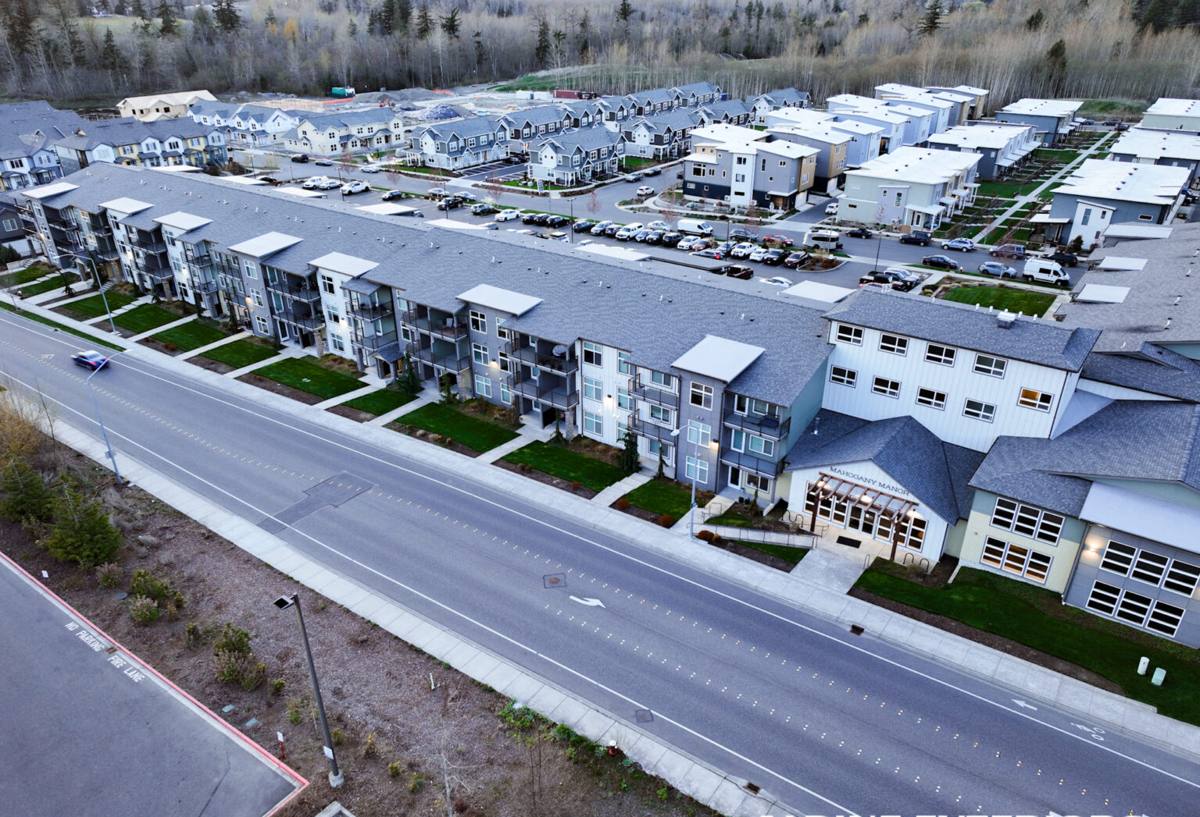
Edgemoor sits close to Bellingham Bay, and that proximity brings a specific combination of stresses that inland Whatcom County builds don't deal with to the same degree. Salt-laden air off the water accelerates corrosion on anything metal — fasteners, flashing, hinge hardware, weep screeds — faster than it would a few miles inland. Wind off the water also drives rain sideways into window openings during winter storms, which means a window that's only "sealed" with a bead of caulk around the trim is going to leak sooner rather than later. And the long, wet, low-sun stretch from fall through spring that Whatcom County gets grows moss on anything horizontal that holds moisture, including window sills and the tops of trim boards that don't shed water cleanly.
None of that means new-construction windows in Edgemoor need to be exotic or expensive. It means the ordinary steps — sill pans, correctly lapped flashing, drainage paths that stay open, corrosion-resistant fasteners — actually have to be done, not just gestured at, because this site condition doesn't forgive shortcuts the way a sheltered inland lot might for a few extra years.
Elevated and Wooded Lots
A lot of new construction in this part of Bellingham sits on elevated or wooded lots with real wind exposure and tree cover that keeps siding and trim damp longer after a storm. That combination — more wind-driven rain, slower drying — is exactly the profile where flashing details either work or don't. It's also why we pay close attention to how a rough opening drains before a single piece of trim goes on.
What a Correct New-Construction Window Install Actually Involves
The window unit itself is often the least important variable in whether an installation performs. The flashing and sequencing around it is what determines whether the wall stays dry for the next thirty years.
Sill Pan and Flashing Sequence
Every rough opening gets a sloped sill pan before the window ever sets in place, so any water that gets past the window — and some always will, eventually — has somewhere to go besides the framing. Flashing tape goes on in a specific shingle-lap order: sill first, then jambs, then head, each layer overlapping the one below it so water is always directed outward and down, never trapped behind a lap. The window's nailing flange gets integrated into the weather-resistive barrier the same way, with the WRB cut and lapped over the top flashing rather than just taped flat against it.
Fasteners and Hardware
Given the salt air this close to the bay, we use corrosion-resistant fasteners — stainless steel or coated, depending on the application — at every point where metal contacts the frame or flashing. Standard zinc-coated screws that would be fine on a dry inland site are the kind of detail that shows up as rust streaks and a loosening frame a few years earlier here than they should.
Sealant Is a Backup, Not the Plan
Caulk and sealant have their place — mainly at the interior air-seal line, using backer rod so the sealant isn't asked to bridge a gap it wasn't designed for. But sealant is a backup layer, not the primary water-management strategy. A window that depends on an unbroken bead of exterior caulk to stay dry is a window that will eventually leak, because caulk fails before flashing does. We flash for drainage first and seal for air control second.
Choosing the Right Window Material for a Coastal Build
Frame material matters less than installation quality, but it's not irrelevant on a site with this much salt air and moisture exposure. Here's how the common options generally compare for a new build in this part of Whatcom County.
| Material | Coastal Durability | Maintenance | Typical Cost Position |
|---|---|---|---|
| Vinyl | Good; won't corrode, but dark colors can expand/contract more in temperature swings | Low — occasional cleaning | Lower |
| Fiberglass | Very good; dimensionally stable, holds up well to moisture and temperature cycling | Low | Mid to upper |
| Wood-clad (wood interior, clad exterior) | Good on the exterior face if the cladding and flashing are done right; the wood core is the risk point if water gets behind it | Moderate — interior wood finish upkeep | Upper |
| Bare wood exterior | Weakest fit for this exposure without diligent, ongoing maintenance | High | Varies |
Our default recommendation for new construction this close to the bay is vinyl or fiberglass for the exterior-facing material, specifically because there's no exposed wood surface for salt air, driving rain, and moss to work on year after year. Wood-clad units can absolutely work here — the appeal is real — but we're upfront that they ask more of the flashing detail and of the homeowner's maintenance schedule than a fiberglass or vinyl unit does. That's a trade-off, not a defect in the product, and it's one we'll walk through honestly rather than talk you out of if it's what you want.
Our Process on New-Construction Jobs in Edgemoor
We coordinate directly with the general contractor and the framing schedule, because window installation on a new build has to land at a specific point — after the WRB is on and rough openings are framed correctly, before siding closes everything in. We check rough opening sizing and squareness before the windows arrive, so there are no surprises the day of install. Flashing goes on in the sequence above, unit by unit, with the sill pan and drainage path checked before the window ever sets.
Before siding covers the flashing, we do a final check of every opening — laps, fasteners, and drainage — because that's the last point anyone gets an unobstructed look at the flashing for the life of the house. Once siding goes on, those details are hidden for good, which is exactly why we don't treat that step as routine.
Common Mistakes We Catch on New Builds
Most of the water problems we get called out to diagnose in Whatcom County trace back to a handful of repeat issues, and they're worth watching for whether we're your installer or someone else is:
- No sill pan, or a sill pan that isn't sloped toward the exterior
- Flashing tape lapped in the wrong order, trapping water instead of shedding it
- Sealant used in place of flashing rather than alongside it
- Standard fasteners used where corrosion-resistant hardware is called for
- Weep holes or drainage gaps caulked shut during trim or siding work
- No rainscreen gap maintained where siding ties into the window flange
- Installation that skips the manufacturer's documented method, which can also void the window warranty
Any one of these can look fine on install day and cause problems two or three winters later, once the wall has taken enough driving rain to expose the gap.
Energy Code and Performance in This Climate
Washington's energy code sets minimum performance requirements for new-construction windows, and Whatcom County's marine climate makes U-factor (how much heat the window loses) the number worth paying attention to, more than solar heat gain, which matters more in sunnier climates than this one. We spec and install windows that meet or exceed current code minimums as a baseline, and we'll talk through where it makes sense to go beyond the minimum — larger window walls facing the water, for instance, are worth a better-performing unit than a small bathroom window on the north side.
Condensation resistance is also worth a conversation on a coastal, moisture-heavy site like this. A window with a poor thermal break can fog or sweat on the interior during cold, damp stretches, which is a comfort and moisture issue inside the house, separate from the exterior flashing work.
Why a Crew That Already Works Edgemoor Matters
A crew that's done window installs on new builds around Fairhaven and the rest of Whatcom County isn't guessing at how much wind-driven rain a bay-facing wall will see, or how fast bare fasteners corrode this close to salt water, or how long moss takes to establish on a sill that doesn't drain. Those are things you learn from doing the work here repeatedly, not from a manufacturer's install manual written for a generic climate zone. It shows up in small decisions — which fastener to spec, how much extra lap to build into the head flashing, where a rainscreen gap actually needs to be maintained versus where it's optional — that don't cost more to get right, but do cost a lot to fix later once siding is covering them.
It also matters for accountability. When the same crew handles the window flashing and the siding that ties into it, there's no gap between trades to point fingers across if something leaks down the road. We stand behind the whole envelope, not just our piece of it.
If you're building or adding on in Edgemoor and want the window package done right the first time, we're happy to walk the plans with you and give a free, no-pressure estimate — just fill out the form below.