 Fairhaven Siding
 Why Marietta's Coastal Exposure Changes the Siding Equation
Marietta sits low and close to the water on Bellingham Bay, in the same weather system that soaks all of Whatcom County but gets an extra dose of salt-laden wind off the shoreline. That combination — wind-driven rain, salt in the air, and long stretches of gray, shaded, damp weather — is harder on exterior siding than almost anything else in the Pacific Northwest. Siding here doesn't just need to look good; it needs to survive year-round moisture exposure without trapping water behind it, without corroding its own fasteners, and without turning green six months after it goes up.
We work Marietta and the greater Fairhaven area regularly, which matters more than it sounds like. A crew that's used to installing in a mild inland climate will often use the same details here that work fine fifty miles away and fail in five years near the bay. The right product and the right installation details are both non-negotiable in this location — one without the other still leads to problems.
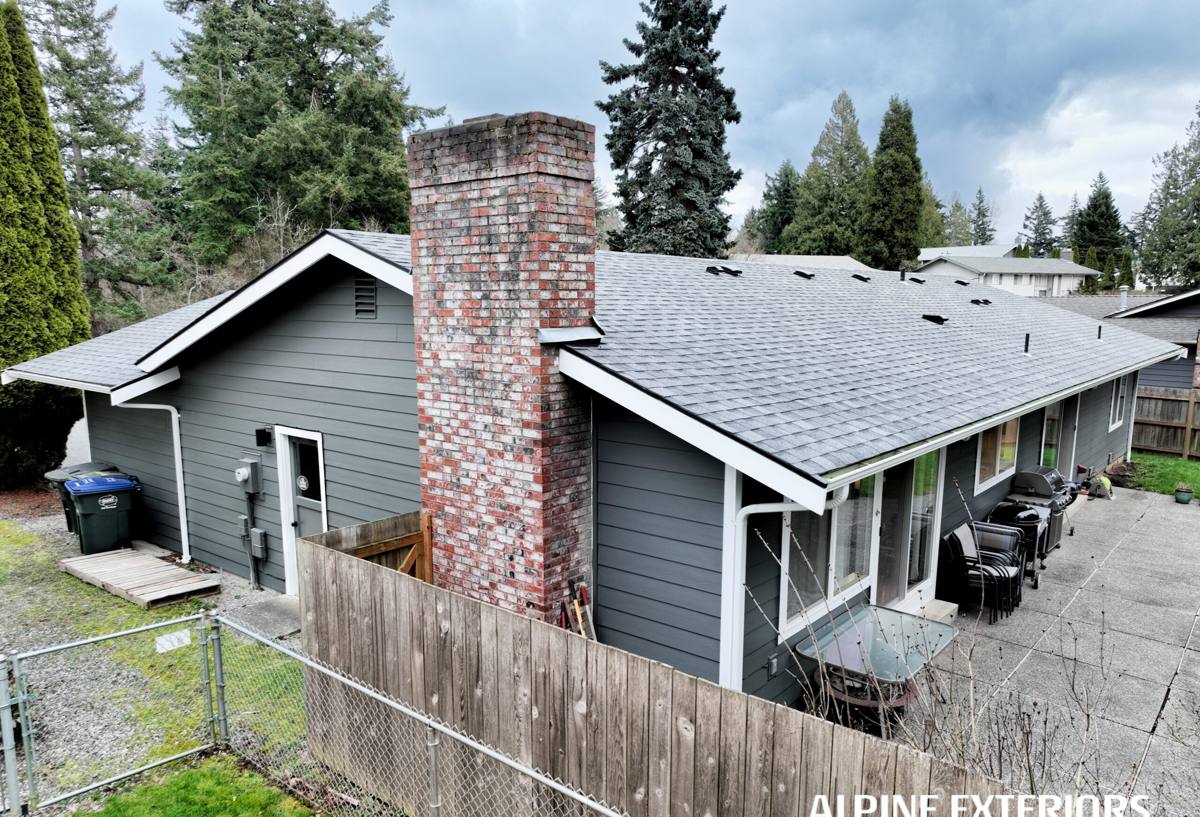
What Salt Air, Driving Rain, and Moss Season Actually Do to a Wall System
Salt and Wind-Driven Moisture
Salt air carries fine airborne moisture that settles on every exterior surface, including into seams, laps, and fastener heads. Over time it accelerates corrosion on anything that isn't rated for coastal exposure — uncoated steel fasteners, cheap trim nails, and bare-metal flashing all suffer faster near the water than they would twenty miles inland. Wind-driven rain makes this worse by forcing moisture sideways into joints and laps that a calmer climate would never test.
Moss, Algae, and Shade
Whatcom County's long wet season, combined with the tree cover and shaded lots common around Fairhaven and Marietta, keeps siding damp for extended stretches, which is exactly what moss and algae need to establish themselves. Once organic growth gets a foothold in a porous or absorbent siding material, it holds moisture against the wall even longer, which shortens the service life of the material underneath it and any paint or finish on top of it.
Freeze-Thaw and Seasonal Cycling
Marietta doesn't see extreme winters, but it does see repeated cycles of saturation, cold snaps, and drying. A siding product that absorbs water swells and contracts with those cycles; over years that movement stresses joints, caulk lines, and paint film. A product engineered to resist water absorption in the first place avoids that cycle entirely.
Why This Crew Installs Only James Hardie Fiber Cement
We made a standing decision to install James Hardie fiber cement siding exclusively, and we don't install vinyl, LP SmartSide, Cemplank, Allura, or bare wood siding. That's not a marketing position — it's a reflection of what holds up in this specific climate without turning into a maintenance project for the homeowner.
Non-Combustible, Engineered Material
Fiber cement is made from cement, sand, and cellulose fiber, which makes it non-combustible and dimensionally stable in a way that wood-based and vinyl products aren't. James Hardie also manufactures climate-specific product lines (their HZ5 formulation is engineered for wetter, harsher climates like ours), rather than a single generic version sold everywhere in the country.
ColorPlus Factory Finish
Most of what fails first on siding in a wet coastal climate is the finish, not the substrate underneath it. James Hardie's ColorPlus finish is baked on in a factory-controlled process rather than field-applied with a brush or sprayer on site, which gives it more consistent coverage and better adhesion than most job-site painting can achieve — a real advantage when the siding is going to sit in salt air and rain for decades.
A Warranty That Actually Transfers
James Hardie backs its siding with a long non-prorated product warranty, and the ColorPlus finish carries its own separate finish warranty. Both are transferable to a subsequent homeowner if the house sells, which matters to buyers and to resale value in a market where siding condition gets noticed during inspection.
We're not going to tell you competing products are junk — LP SmartSide, vinyl, and other fiber cement brands all have legitimate uses and plenty of installed examples that look fine. Our reasoning is narrower: given what Marietta's climate does to a wall over twenty or thirty years, we'd rather stand behind one system we know inside and out than offer a menu of products with different moisture behavior, different warranty terms, and different installation tolerances.
What a Correct Installation Looks Like on a Marietta Home
Drainage Plane and Rainscreen Gap
Every wall needs a water-resistive barrier behind the siding, and in a climate this wet we install with a rainscreen gap wherever the wall assembly allows for it. That gap lets any moisture that does get past the siding drain and dry out instead of sitting against the sheathing, which is one of the biggest differences between a siding job that lasts and one that leads to hidden rot behind the wall.
Flashing at Every Penetration
Windows, doors, vents, hose bibs, light fixtures, and any other penetration through the siding is a place water will find if flashing isn't installed correctly. In driving rain, gravity alone doesn't move water where you'd expect — wind pushes it sideways and up under laps. Every penetration gets flashed and integrated with the drainage plane before the siding ever goes on, not caulked over afterward as a substitute.
Fastening, Clearances, and Joint Treatment
James Hardie publishes specific fastener, clearance, and joint-treatment requirements for a reason, and following them is what keeps the manufacturer's warranty intact. That includes corrosion-resistant fasteners appropriate for coastal exposure, correct clearance from grade, decks, and roof lines so the siding isn't sitting in standing water or snow, and factory-primed cut edges that get sealed and painted before they're exposed to weather.
Here's what we check on every Marietta job, whether it's a full re-side or a repair:
- Weather-resistive barrier installed and lapped correctly behind the siding
- Rainscreen gap or drainage path present where the wall assembly supports it
- Flashing installed at every window, door, vent, and other penetration before siding goes on
- Minimum clearance maintained from grade, roofing, decks, and walkways
- Corrosion-resistant fasteners rated for coastal/marine exposure
- All field-cut edges primed, caulked, and painted to match the factory finish
- Joints and laps installed to manufacturer specification, not just "tight enough"
- Installation documented to keep the manufacturer's warranty valid
Comparing Siding Materials for Marietta's Climate
Every siding material is a set of trade-offs. Here's how the main options stack up specifically against what Marietta's salt air, rain, and moss season demand:
| Factor | James Hardie Fiber Cement | Vinyl Siding | Engineered Wood (LP-style) |
|---|---|---|---|
| Moisture/rot resistance | Cement-based, does not rot; resists water absorption when installed correctly | Doesn't rot itself, but panels can warp and joints can let water behind them | Wood-fiber core is more moisture-sensitive; edge sealing is critical |
| Salt air performance | Engineered climate-specific formulations (HZ5) for wetter, coastal regions | Generally stable but can become brittle and fade faster with UV and salt exposure | Performs best where moisture exposure is lower and controlled |
| Fire resistance | Non-combustible | Combustible (petroleum-based product) | Combustible, though treated for some fire resistance |
| Finish longevity | Factory-baked ColorPlus finish, separate finish warranty | Color is through-body but can fade and chalk over time | Requires field-applied or factory coating, sensitive to edge sealing |
| Ongoing maintenance | Occasional washing; repaint intervals are long | Low maintenance but can crack and is hard to color-match when repaired | Requires more diligent caulking/paint upkeep to prevent moisture intrusion |
| Warranty structure | Long non-prorated product warranty, transferable | Varies widely by manufacturer and product tier | Varies; often more installation-sensitive to keep valid |
Our Process, Start to Finish
- Walkthrough and assessment. We look at the existing siding, wall assembly, moisture history, and any problem areas specific to the home's exposure to wind and rain.
- Scope and product selection. We confirm the right James Hardie panel or plank profile and ColorPlus color for the home, and outline what tear-off, repair, or new water-resistive barrier work is needed underneath.
- Written estimate. You get a clear scope of work and price before anything is scheduled — no surprise change orders for things we could have caught during the walkthrough.
- Prep and moisture check. Old siding comes off, sheathing gets inspected for hidden rot or damage, and any deteriorated material is addressed before the new assembly goes on.
- Installation to manufacturer specification. Drainage plane, flashing, fastening, clearances, and joint treatment are all installed to keep the warranty intact — not shortcuts to save an afternoon.
- Final walkthrough. We go over the finished job with you, including care and maintenance expectations specific to Marietta's climate.
What Affects the Cost of a Marietta Siding Project
We don't publish blanket prices because the honest answer is "it depends," but these are the real factors that move the number up or down on a project in this area:
- Total square footage of siding and the home's number of stories
- How much of the existing wall assembly needs repair before new siding goes on, especially if hidden moisture damage is found
- Panel versus lap profile, and any trim, corner, or accent detail work
- Access and site conditions — tight lots, mature landscaping, and multi-story sections all add labor time
- Whether it's a full re-side or a targeted repair/replacement of a damaged section
The only way to get an accurate number is a walkthrough of the actual house, but we'll always explain what's driving the price, not just hand you a total.
Maintenance: What Marietta Homeowners Should Expect After Install
Correctly installed James Hardie siding is low-maintenance, not zero-maintenance. In a climate like this, we recommend an occasional rinse-down to keep salt residue and organic growth from building up, especially on shaded sides of the house where moss is more likely to take hold. Keeping gutters clear and vegetation trimmed back from the walls also goes a long way toward keeping siding dry and reducing the conditions moss and algae need to establish. Beyond that, the ColorPlus finish is designed to hold its color and coverage for years without a repaint being part of the routine.
Why Hiring a Crew That Already Works in Marietta Matters
A siding installation is only as good as the details nobody sees once the job is finished — the flashing behind the trim, the gap behind the panels, the fasteners holding it all on. Those details need to be right for this specific climate, not a generic climate somewhere else in the country. A crew that already works Marietta and the surrounding Fairhaven area has seen how salt air, driving rain, and moss season actually affect siding here over time, and installs accordingly from the first panel to the last.
If you're weighing a siding project on a Marietta home, we're glad to walk through it with you — no pressure, no obligation. Request a free estimate below and we'll take a look at what your home actually needs.