 Fairhaven Siding
 Why Birchwood Roofs Wear Differently Than Roofs Inland
Birchwood sits close enough to Bellingham Bay and the rest of Whatcom County's coastline that salt-laden air is a constant, low-grade stress on anything metal on your roof — fasteners, flashing, valleys, vent caps. Add the region's driving rain, which doesn't just fall straight down but gets pushed sideways into laps, seams, and transitions during fall and winter storms, and you have a roof assembly that's tested far harder than the same roof would be fifty miles inland. Then there's moss. The combination of shade from mature conifers, persistent moisture, and mild temperatures gives moss and algae a season that runs most of the year here, not just a few weeks in spring.
None of this means metal roofing is a poor fit for Birchwood — it's actually one of the better answers to these exact conditions. But it means the details of the install matter more here than they would in a drier, sunnier climate. A metal roof done right in this neighborhood should shrug off salt corrosion, shed wind-driven rain without back-up under the panels, and resist moss far longer than composition shingles. A metal roof done wrong — wrong fasteners, wrong underlayment, wrong attention to ventilation — will show problems years earlier than the manufacturer's warranty implies.
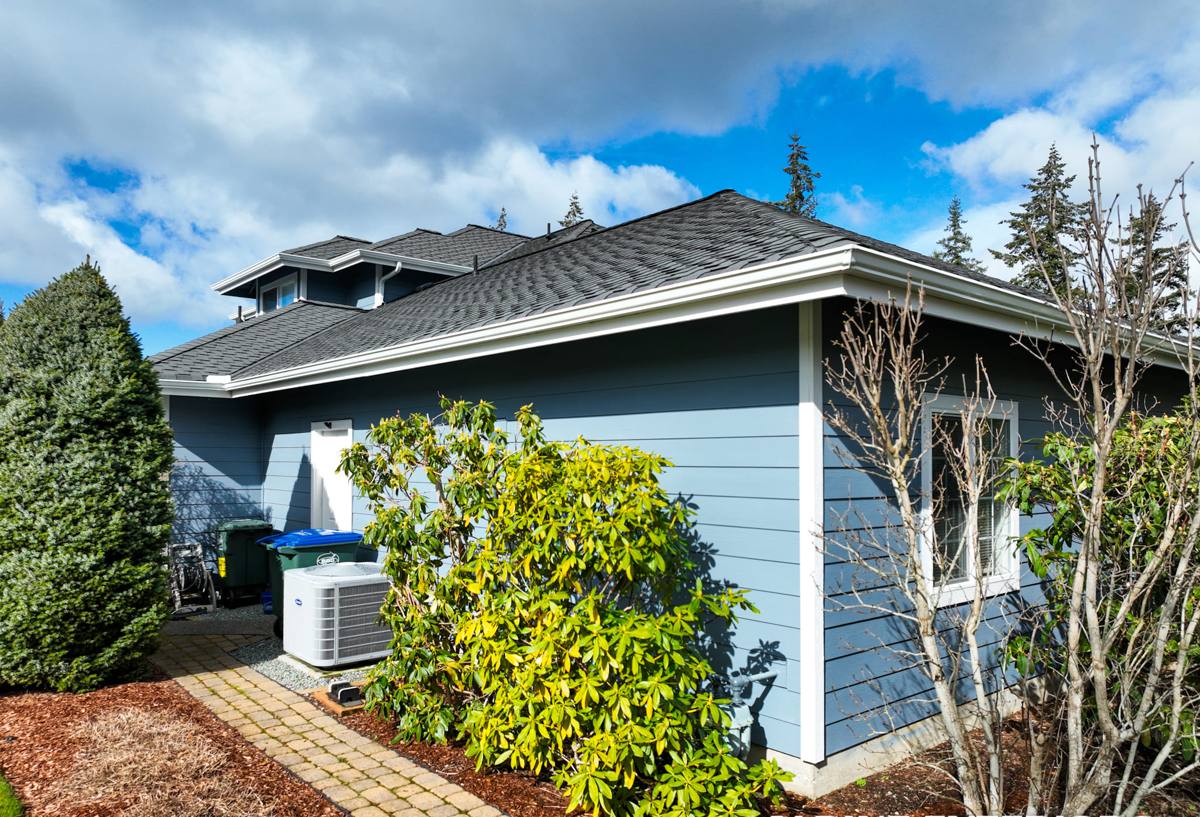
What a Correct Metal Roof Install Requires Here
Coastal-Grade Fasteners and Flashing
Standard fasteners and flashing that work fine in a drier climate can start streaking with rust within a few years this close to salt water. We spec fasteners and flashing rated for coastal exposure — stainless steel or coated fasteners with rubber-gasket washers that stay flexible instead of cracking, and flashing metal that's compatible with the panel material so you don't get galvanic corrosion where two dissimilar metals touch.
Underlayment and Ventilation
Metal panels are only as good as what's underneath them. In a climate with this much sustained rain, we install a high-temperature synthetic or self-adhered underlayment at eaves, valleys, and penetrations — the same principle roofers call ice-and-water protection, except here it's doing double duty against wind-driven rain, not ice. Ventilation matters just as much: a roof deck that can't breathe traps moisture underneath the metal, which is exactly the environment that grows mold and accelerates deck rot, even though the metal on top looks fine.
Panel Profile and Seam Type
Standing seam panels, where the seams are raised and mechanically locked, keep water moving off the roof without ever exposing a fastener to the weather. That's the profile we recommend for most Birchwood homes given the rain load. Exposed-fastener panels can still be a sound, more budget-friendly choice on the right roof, but the fasteners themselves become the maintenance point over time and need to be checked periodically for seal failure.
Choosing the Right Metal Roofing System for Your Home
There isn't one "best" metal roof — there's a best fit for your roof's pitch, your budget, and how long you plan to own the home. Here's how the main options compare for a Birchwood property:
| System | Best For | Maintenance | Relative Cost |
|---|---|---|---|
| Standing seam steel or aluminum | Most Birchwood roofs; long-term owners; homes exposed to prevailing wind and rain | Low — no exposed fasteners to reseal | Higher upfront |
| Exposed-fastener metal panel | Simpler rooflines, outbuildings, budget-conscious projects | Moderate — fastener seals need periodic checks | Mid-range |
| Stone-coated steel | Homeowners who want a shingle or tile look with metal's durability | Low to moderate | Mid to higher |
| Aluminum vs. steel (either profile) | Aluminum for maximum corrosion resistance near the bay; steel where budget matters more than absolute salt resistance | Aluminum: very low corrosion maintenance | Aluminum typically higher |
Aluminum is worth a serious look for homes closest to the water — it doesn't rust the way steel can if a coating is ever compromised, which matters given how much salt spray this stretch of coastline carries.
Our Installation Process
Every Birchwood metal roofing project follows the same core sequence, adjusted for your roof's specific pitch, penetrations, and condition:
- On-site assessment. We check the existing roof, deck condition, ventilation, and any moss or moisture damage before quoting anything.
- Tear-off and deck inspection. Old roofing comes off and the deck gets inspected for soft spots or rot — common under long-neglected moss growth — and repaired before anything new goes down.
- Underlayment installation. Self-adhered membrane at eaves, valleys, and penetrations, synthetic underlayment across the field.
- Panel installation. Panels are set, seamed or fastened per the manufacturer's coastal-exposure specifications, working from eave to ridge.
- Flashing, trim, and penetrations. Chimneys, vents, and skylights get flashed with compatible metal and sealed against wind-driven rain specifically, not just vertical rainfall.
- Final walkthrough. We review the finished roof with you, including what routine maintenance will look like going forward.
Moss, Algae, and What Metal Changes About Maintenance
Metal roofing doesn't give moss the same foothold that composition shingles do — there's no granule surface for spores to root into — but it isn't moss-proof. Debris that collects in valleys or against a chimney can still hold moisture long enough for growth to start, especially under the shade cover common in this neighborhood. The fix is simple and infrequent compared to a shingle roof: keep valleys and gutters clear, and if you want extra insurance, zinc or copper strips near the ridge release trace metal ions in rainfall that discourage moss regrowth downslope.
Compared to asphalt shingles, which typically need moss treatment and granule-loss monitoring every year or two in this climate, a correctly installed metal roof in Birchwood should need only an annual visual check and gutter cleaning — not a moss removal service.
Signs Your Current Roof Is Ready for a Metal Upgrade
- Shingles showing granule loss or curling at the edges, especially on slopes that face prevailing wind and rain
- Moss that returns within months of cleaning, even after treatment
- Rust staining or corrosion around existing metal flashing, vents, or valleys
- Visible sagging, soft spots, or staining on the underside of the roof deck in the attic
- A roof approaching or past the manufacturer's expected lifespan for its material
- Rising interest in reducing long-term maintenance rather than re-treating the same problems every year
Why It Matters That We Already Work Birchwood
A crew that only occasionally works this side of Whatcom County has to relearn the same lessons on every job — which slopes catch the worst wind-driven rain, how much shade a given lot actually gets and what that means for moss timing, and which flashing details hold up against salt air and which don't. A crew that already works Birchwood regularly has that knowledge built in before the first panel goes up, along with familiarity with local permitting and inspection expectations. That translates into fewer surprises mid-project and a roof detailed for the conditions it will actually face, not generic conditions from a manufacturer's spec sheet written for a different climate.
Questions Worth Asking Before You Sign
- Is the fastener and flashing hardware rated for coastal or high-corrosion exposure?
- What underlayment is being used at eaves, valleys, and penetrations, and is it rated for wind-driven rain?
- Is the roof deck being inspected and repaired as part of the tear-off, or only replaced if it's visibly failed?
- What's the manufacturer's warranty on the panel finish specifically, versus the labor warranty on the installation?
- Does the crew have recent references or completed work in Birchwood or nearby Fairhaven neighborhoods?
Cost Factors to Expect
Metal roofing costs more upfront than asphalt shingles, and the final number depends on panel material, profile, roof complexity, and the condition of the deck underneath. Standing seam typically costs more than exposed-fastener panel systems because of the labor and specialized tooling involved, but it pays that back over time in lower maintenance and a longer service life. A roof with multiple valleys, dormers, or penetrations takes longer to flash correctly and will cost more than a simple gable roof of the same square footage. The most honest way to get a real number is a site visit — anyone quoting a firm price over the phone for a job they haven't seen is guessing.
If you're weighing metal roofing for a home in Birchwood, we're glad to walk the roof with you and give you a straight, no-pressure estimate — what your roof actually needs, what it doesn't, and what it will cost to do it right for this climate. The form below gets that conversation started.