 Fairhaven Siding
 Why Roofs in Silver Beach Take a Beating
Homes in Silver Beach sit inside one of the wetter, greener corners of Whatcom County, and that combination is hard on a roof. Moist air moving in off Bellingham Bay keeps humidity high for much of the year, tree cover across the neighborhood holds shade and moisture on north-facing slopes, and the region's long, low-intensity rain season means roofs rarely get a real chance to dry out between storms. Add in driving rain that comes sideways off the water during winter systems, and you've got conditions that push water into places a roof in a drier climate would never have to defend.
The practical result is a shorter effective lifespan for roofs that aren't installed with this climate specifically in mind. Moss gets a foothold on shaded slopes and works under shingle tabs. Fasteners and flashing see more wet-dry-wet cycling, which accelerates corrosion on lower-grade metal. Attics that aren't ventilated correctly trap moisture that condenses against the underside of the deck. None of this means Silver Beach needs an exotic roofing solution — it means the installation details that get skipped elsewhere can't be skipped here.
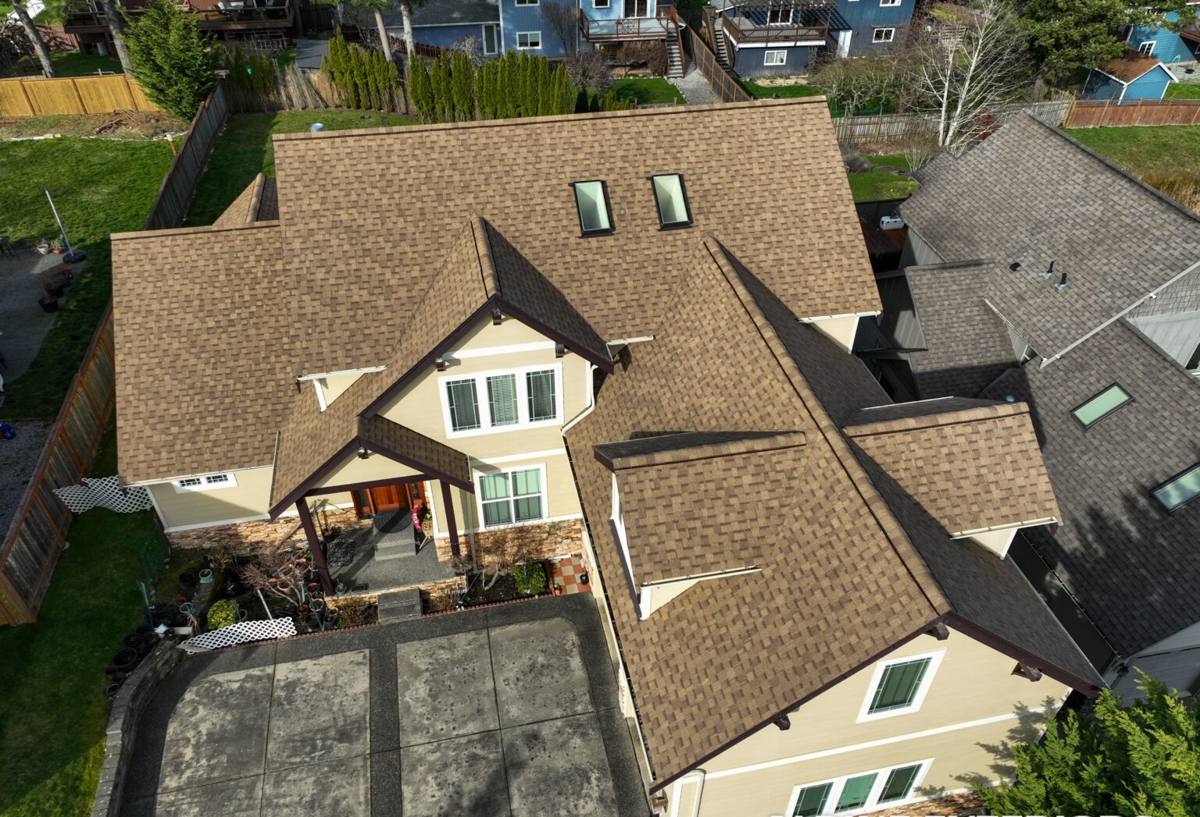
Signs It's Time for a New Roof
Most homeowners call us after noticing one or two visible problems, but by the time a roof is leaking, the underlying materials have usually been compromised for a while. Worth checking for:
- Shingles that are cupping, curling, or losing granules in patches (visible as bald-looking spots)
- Moss or thick algae staining that keeps coming back within a season of cleaning
- Soft or spongy spots when walking the roof, or sagging visible from the street
- Daylight, water stains, or musty smell in the attic, especially near the ridge or valleys
- Flashing around chimneys, skylights, or vents that's rusted, lifted, or resealed with visible caulk patches
- A roof that's 20+ years old, since even a well-maintained asphalt roof in this climate is nearing the end of its service life by then
One or two of these usually means a repair. Several at once, or a roof past its expected lifespan, usually means replacement is the more honest recommendation — patching an old roof in this climate tends to buy a year or two at best.
What a Correct New Roof Installation Actually Involves
"New roof" gets used loosely. A correct installation is a sequence of steps, and skipping any one of them is where premature leaks come from — especially in a climate that doesn't forgive shortcuts.
Tear-Off and Deck Inspection
We remove the old roofing down to the deck rather than layering over it. That's the only way to actually see the plywood or OSB underneath. In this area, we regularly find sections of decking softened by long-term moisture intrusion that were completely hidden under the old shingles. Any soft or delaminated decking gets replaced before anything new goes down — installing new roofing over a compromised deck just hides the problem for another few years.
Underlayment and Flashing
Given how much sustained wet weather this area sees, we treat underlayment as a real waterproofing layer, not a formality. That means synthetic underlayment across the field and self-adhering ice-and-water shield at the vulnerable points — eaves, valleys, and around every penetration. New flashing goes in at chimneys, skylights, sidewalls, and vents rather than reusing old pieces, since flashing is a common failure point on older roofs and it's inexpensive to replace compared to the labor of a tear-off already underway.
Ventilation
Attic ventilation is where a lot of otherwise good roofing jobs quietly fail in this region. Balanced intake at the eaves and exhaust at the ridge keeps the attic temperature and humidity closer to outdoor conditions, which reduces condensation on the underside of the deck and helps prevent the freeze-thaw and moisture cycling that shortens shingle life. We size and balance ventilation to the specific roof rather than defaulting to whatever vent was there before.
Choosing the Right Roofing Material for This Climate
There's no single "best" roofing material — the right choice depends on budget, roof pitch, tree cover, and how long the homeowner plans to stay in the house. Here's how the common options actually compare for a moss-prone, high-rainfall neighborhood like Silver Beach:
| Material | Typical Lifespan | Moss/Moisture Performance | Maintenance |
|---|---|---|---|
| Architectural asphalt shingle | 25–30 years | Good with proper ventilation and periodic cleaning; algae-resistant shingle options help on shaded slopes | Occasional moss/debris removal |
| Standing seam metal | 40–50+ years | Excellent — sheds water and moss has little to grip onto | Very low; periodic fastener/sealant checks |
| Synthetic/composite shingle | 30–40 years | Good; resists moisture absorption better than wood-based products | Low |
| Cedar shake | 20–30 years with upkeep | Requires diligent maintenance in wet, shaded conditions | High — regular treatment and moss control needed |
For most Silver Beach homes we recommend architectural asphalt with algae-resistant granules as the practical middle ground, or standing seam metal for homeowners who want to minimize long-term maintenance and are willing to pay more upfront. We'll walk through the trade-offs for your specific roof rather than pushing one product line.
Our New Roof Installation Process
- On-site inspection and estimate — we walk the roof and attic, note deck condition, ventilation, and any problem areas, and give a written estimate with material options.
- Material selection — we go over the trade-offs above based on your budget, roof pitch, and how much shade the roof sees.
- Scheduling around weather — we plan installation windows with realistic weather buffers, since a rushed tear-off in an unexpected downpour is how decking gets damaged.
- Tear-off and deck repair — full removal of old materials, deck inspection, and replacement of any compromised sections.
- Underlayment, flashing, and ventilation installation — the waterproofing and airflow work described above.
- Roofing material installation — installed to manufacturer specification, including proper nailing patterns and exposure for wind and rain resistance.
- Final walkthrough and cleanup — magnetic sweep for debris, gutter check, and a walkthrough so you know exactly what was done.
Cost Factors to Expect
Every roof is priced individually, but the main variables that move the number are consistent:
| Factor | Why It Matters |
|---|---|
| Roof size and pitch | Steeper roofs take longer and require more safety setup, adding labor cost |
| Deck condition | Rotten or soft decking found during tear-off adds material and labor not visible in an initial quote |
| Material choice | Metal and composite products cost more upfront than asphalt but can lower lifetime cost through longevity |
| Number of penetrations | Chimneys, skylights, and vents each need individual flashing work |
| Access and tree cover | Roofs with limited access or heavy overhead branches take longer to tear off and stage safely |
Broadly, a full asphalt shingle replacement on an average single-family home runs in the mid four figures to low five figures; metal roofing typically runs higher. We give firm numbers only after seeing the roof in person, since anyone quoting a whole-house price sight unseen is guessing.
Moss, Algae, and Long-Term Roof Care
A correctly installed roof still needs some basic upkeep in this climate to hit its full lifespan. We give every new-roof customer the same short list:
- Have moss removed before it builds up thick mats — a light, early treatment is far less disruptive than scraping established growth off shingles
- Keep overhanging branches trimmed back to reduce shade and debris buildup on the roof
- Clean gutters at least twice a year so water isn't backing up under the eaves
- Check attic ventilation isn't blocked by insulation or storage after any attic work
- Have flashing and sealant points looked at every few years, since these fail well before the roofing material itself does
Why Hire a Crew That Already Works in Silver Beach
A roofing crew that mostly works drier inland climates will size ventilation, choose underlayment, and detail flashing differently than one that works Whatcom County's marine layer and moss season every week. We know which slopes in this neighborhood hold shade and moss longest, how much ice-and-water shield is actually warranted at the eaves here versus what code minimums require, and where older Silver Beach homes tend to have deck or flashing issues hiding under the shingles. That local pattern recognition is what keeps a new roof performing at year fifteen instead of just at the final walkthrough.
If your roof is showing its age or you just want an honest opinion on where it stands, we're happy to take a look. Reach out for a free, no-pressure estimate using the form below — we'll tell you straight whether you need a new roof now, later, or not at all.