 Fairhaven Siding
 Roof Repair Built for the York Neighborhood's Weather
Homes in the York area of Fairhaven take a different kind of beating than roofs a few miles inland. The proximity to Bellingham Bay means salt-laden air moves through the neighborhood most days of the year, and that air doesn't just make things smell like the coast — it accelerates corrosion on exposed metal, breaks down sealants faster than manufacturers' charts predict, and works its way into any gap in a roof system that isn't detailed correctly. Add in Whatcom County's long stretch of driving rain and an extended moss season that can run from fall well into spring, and you have a climate that punishes shortcuts. A roof repair here isn't just patching a leak — it's addressing the specific combination of salt exposure, wind-driven moisture, and biological growth that defines this part of Fairhaven.
We work on roofs in York regularly, which means we're not guessing at how this neighborhood's weather behaves. We know which slopes catch the worst of the wind off the bay, which roof styles trap moss longest, and where flashing tends to fail first because we've already been called back to fix work that didn't account for any of it.
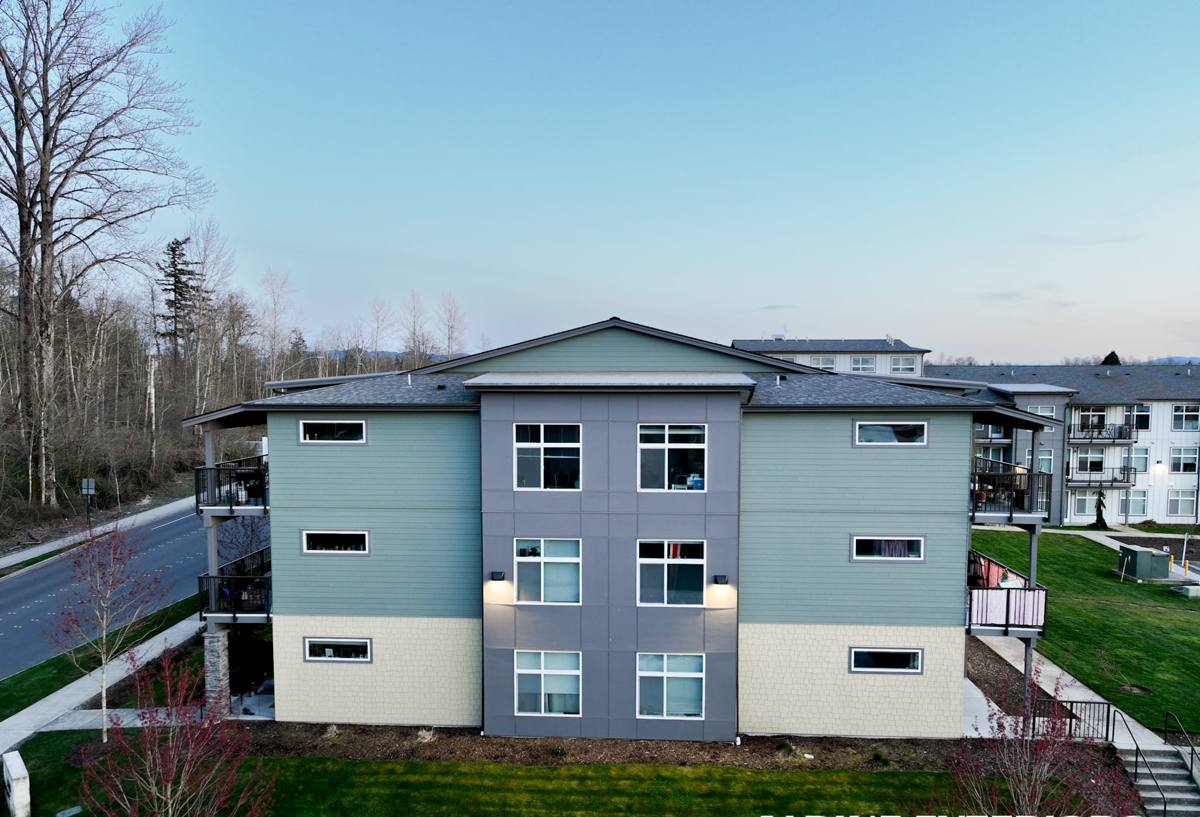
What This Climate Actually Does to a Roof
Salt Air and Metal Components
Flashing, fasteners, gutter hardware, and vent boots all contain metal, and metal near the water corrodes faster than the same materials would ten or twenty miles inland. Galvanized fasteners that would last decades in a dry climate can start rusting and backing out years early here. Once a fastener loosens or a piece of flashing pits through, water has a path into the roof deck — and by the time it shows up as a stain on a ceiling, it's usually been happening for a while.
Driving Rain and Wind-Driven Moisture
Fairhaven doesn't just get a lot of rain — a good portion of it arrives sideways during winter storms off the water. That matters because a roof can shed rain falling straight down just fine while still failing under wind-driven rain, which finds its way under shingle edges, through under-lapped flashing, and into any seam that was sealed rather than properly lapped. Repairs that only address the visible gap and ignore how water moves under wind pressure tend to fail again within a season or two.
Moss and Organic Growth
The combination of shade, moisture, and mild temperatures in this part of Whatcom County creates ideal conditions for moss, and moss is more than a cosmetic problem. It holds moisture directly against roofing material, lifts shingle edges as it grows, and works its roots into granule loss areas, which speeds up wear on exactly the parts of the roof that are supposed to shed water. A roof with heavy moss coverage usually has damage happening underneath that isn't visible until the moss is cleared.
Signs a York-Area Roof Needs Repair
- Granules collecting in gutters or at downspout outlets — a sign of accelerated shingle wear
- Dark streaking or thick moss growth concentrated on north-facing or shaded slopes
- Rust staining below metal flashing, vents, or valleys
- Soft spots or sagging noticeable when walking the roof or viewed from the ground
- Water stains on interior ceilings, especially near chimneys, skylights, or roof valleys
- Curling, cracked, or lifted shingle edges, particularly on wind-exposed slopes
- Visible daylight or gaps in the attic where roof meets wall or chimney
Any one of these on its own might be minor. Several together usually mean the roof has more than one point of failure, and a proper repair needs to address all of them, not just the one that happens to be leaking right now.
What a Correct Repair Actually Involves
Diagnosis Before Patching
A repair that just covers the spot where water is showing up inside the house often misses where the water is actually getting in — roofs shed water downhill, so a stain on a ceiling can trace back to a flashing failure several feet upslope. We trace the path before we patch anything, because a patch in the wrong spot buys a homeowner a few dry months and then the same call again.
Flashing and Underlayment
Most of the repeat leaks we see trace back to flashing — around chimneys, skylights, roof-to-wall transitions, and valleys — rather than the field shingles themselves. Correct repair means removing and replacing failed flashing with new step flashing, counterflashing, or valley metal properly lapped with the underlayment, not smearing sealant over a gap and calling it fixed. Sealant has its place as a secondary defense, but it's not a substitute for correctly lapped materials, and in a climate with this much wind-driven rain, that distinction matters more than it would somewhere drier.
Matching Materials
Shingle color and profile change over the years, and a repair patch that doesn't reasonably match the surrounding roof stands out and can affect how well it seals into the existing course pattern. We match as closely as current products allow and are upfront when an exact match isn't possible, rather than installing something that looks obviously different or ties in poorly.
Repair or Replace: Honest Cost Factors
Not every roof problem needs a full replacement, and not every leak should be treated as "just a small repair." The table below covers the factors that actually tip the decision one way or the other.
| Factor | Leans Toward Repair | Leans Toward Replacement |
|---|---|---|
| Roof age | Under roughly two-thirds of expected material lifespan | At or past the material's typical service life |
| Extent of damage | Isolated to one flashing detail or a small shingle area | Multiple slopes or repeated failures in different spots |
| Deck condition | Solid, dry sheathing under the damaged area | Soft, delaminated, or water-stained decking |
| Repair history | First or second repair on this roof | Third or more repair attempt in a few years |
| Moss/moisture extent | Surface growth, manageable with cleaning and treatment | Moss embedded under shingle edges across large areas |
Repair costs vary widely depending on what's actually wrong — a single flashing fix is a fraction of the cost of reworking a whole valley or replacing a section of decking that's gone soft. We'll always tell you plainly if what you're describing sounds like a repair job or if we think you're better off putting that money toward a longer-term fix, even if that's not the answer that gets us the bigger job.
Our Repair Process
Inspection
We walk the roof (weather permitting) or inspect from a ladder and, where needed, from the attic side, looking at flashing, penetrations, valleys, and the general condition of the roofing material — not just the spot you called about.
Straight Answer, Written Estimate
You get a clear explanation of what's actually causing the problem and a written estimate before any work starts. If we find something during inspection that changes the scope, we tell you before touching it, not after.
The Repair Itself
We remove damaged material back to solid substrate, replace flashing and underlayment as needed, and install matching roofing material correctly lapped and fastened for this region's wind and rain exposure.
Cleanup and Walkthrough
Debris and old material leave the site, gutters get checked for anything that fell in during the work, and we walk you through what was done before we call it finished.
Why a Crew That Already Works York Matters
A roofer who mostly works drier, inland areas can still do competent work, but they're applying general rules to a roof that's dealing with above-average salt exposure and moss pressure. A crew that's already worked on roofs in this part of Fairhaven knows which slope orientations in the neighborhood hold moss longest, which older flashing details tend to fail first in this air, and how much margin to build into a repair so it holds up through a full winter of wind-driven rain rather than just until the next dry spell. That local pattern recognition is the difference between a repair that lasts and one that's a temporary fix.
Being local also means a faster response when a leak shows up mid-storm and a straightforward callback if something about the repair needs a second look — you're not waiting on a crew that has to drive in from well outside the area.
After the Repair: Keeping a York Roof Sound
- Clean moss growth at the first signs each season rather than letting it establish under shingle edges
- Keep gutters and downspouts clear so water isn't backing up under the roof edge
- Have flashing and sealant checked every couple of years, since salt air ages these faster than inland exposure
- Trim back overhanging branches that keep sections of the roof shaded and slow to dry
- Address small leaks right away — in this climate, a small gap becomes a bigger repair fast once wind-driven rain finds it
Get a Straight Answer on Your Roof
If you're dealing with a leak, moss buildup, or damaged flashing on a York-area home, we're glad to take a look and tell you honestly whether you're looking at a repair or something bigger — no pressure either way. Use the form below to request a free estimate and we'll get back to you to schedule a time to come out.