 Fairhaven Siding
 Why Sehome Homes Need Siding That's Built for This Climate
Sehome sits close enough to the water and the tree cover of the greater Fairhaven and Bellingham area to catch the worst of what Whatcom County weather has to offer. Salt-laden air drifts in off the bay, driving rain comes sideways during fall and winter storms, and the long stretch of gray, damp months between October and April creates ideal conditions for moss and algae to take hold on anything that stays wet. Add in mature tree canopy on many Sehome lots — which means more shade, more standing moisture, and more organic debris landing on exterior walls — and you have a neighborhood where siding either holds up to sustained moisture exposure or it starts failing years ahead of schedule.
This isn't a theoretical concern. It's the reason we install James Hardie fiber cement siding exclusively and don't offer vinyl, LP SmartSide, primed wood, or other fiber cement alternatives. In a climate like this one, the material you choose determines whether your siding is a twenty-year problem or a decades-long non-issue.
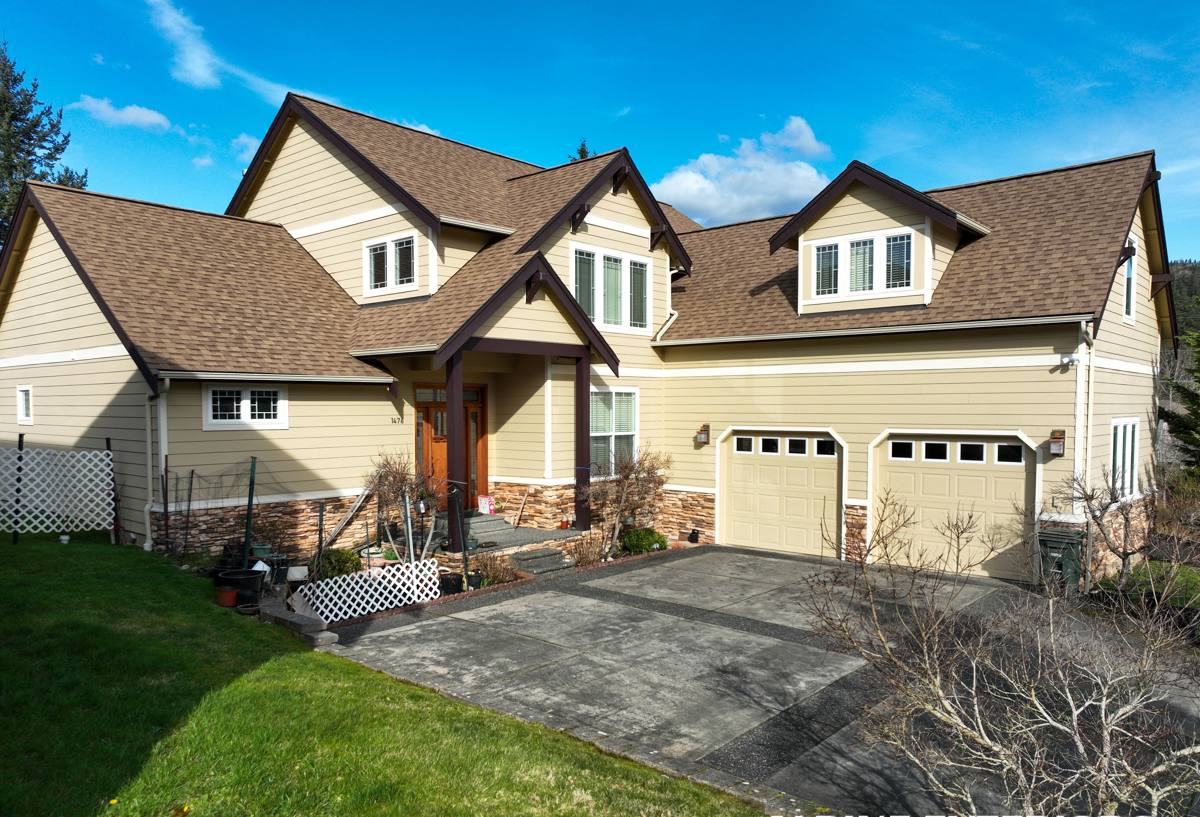
What Salt Air, Rain, and Moss Actually Do to Siding
Salt Air
Airborne salt is corrosive to metal fasteners and trim, and it accelerates the breakdown of lower-grade coatings. Paint films that would last a decade further inland can chalk, fade, or lift years sooner when they're regularly exposed to salt-bearing wind. Vinyl siding can also become brittle faster in coastal-adjacent air, and wood trim exposed to salt spray tends to weather unevenly.
Driving Rain
Whatcom County storms rarely fall straight down. Wind-driven rain gets pushed sideways and upward into laps, seams, and trim joints — the exact places where a siding system either sheds water or lets it in. Products and installations that aren't engineered for wind-driven moisture tend to show their weaknesses first at butt joints, around windows, and at the bottom edge of the wall.
Moss and Algae
Shade, humidity, and organic debris are moss's favorite conditions, and Sehome's tree-lined streets provide plenty of all three. Moss and algae don't just look bad — sustained growth holds moisture against the siding surface, which is exactly what accelerates rot in wood-based products and breaks down lower-grade coatings over time.
Why James Hardie Is the Right Fit for This Neighborhood
James Hardie fiber cement is manufactured from cement, sand, and cellulose fiber — a composition that doesn't absorb and swell with moisture the way wood-based siding does, and doesn't become brittle or distort with temperature swings the way vinyl can. For a marine-influenced climate like Fairhaven and Sehome's, that stability matters more than almost any other performance factor.
James Hardie also engineers its product line by climate zone. The HZ5 formulation used in the Pacific Northwest is specifically built to resist moisture damage and hold up in wetter, cooler regions — it's not the same product sold in the arid Southwest. That regional engineering is one of the clearest, most practical reasons we standardized on Hardie rather than a generic fiber cement product.
The factory-applied ColorPlus finish is the other half of the equation. It's baked on under controlled conditions and backed by its own finish warranty, which means the color layer isn't relying on a field-applied coat of paint to survive salt air and years of rain. Field-painted siding — whether it's fiber cement, wood, or trim — depends entirely on surface prep and paint quality, and that's a maintenance burden that shows up faster in a climate like this one.
What a Correct Installation Involves
James Hardie siding performs the way it's rated to perform only when it's installed to the manufacturer's specifications. In a high-moisture area like Sehome, the installation details matter even more than usual, because any shortcut becomes a moisture entry point.
- Correct water-resistive barrier and flashing sequencing behind the siding, so water that reaches the wall plane drains back out instead of getting trapped
- Proper flashing and head/leg caulking at every window, door, and penetration
- Minimum clearance gaps at the foundation, roofline, and deck attachments so siding isn't sitting in standing water or snow
- Correct fastener type, spacing, and depth — over-driven or under-driven nails compromise the plank's ability to move and shed water properly
- Proper lap and butt joint treatment, including factory-primed cut edges sealed in the field
- Ventilation behind the cladding where the wall assembly calls for a rainscreen gap
Every one of these details is invisible once the job is finished — but they're the difference between siding that shrugs off forty years of Whatcom County storms and siding that starts showing staining, soft spots, or paint failure within the first decade.
Signs Your Current Siding Is Struggling With This Climate
If you're evaluating whether it's time to replace siding on a Sehome home, these are the signs we look for during an inspection:
- Persistent moss or algae growth that returns quickly after cleaning, especially on north-facing or shaded walls
- Soft, spongy, or delaminating spots, particularly near ground level, around window sills, and under deck ledgers
- Paint that's peeling, bubbling, or chalking faster than expected for its age
- Visible gaps, warping, or buckling at seams and corners
- Stains running downward from nail heads or trim joints, which usually point to trapped moisture or fastener corrosion
Any one of these can be a maintenance item. Several together, especially on an older wood or vinyl-clad home, usually mean the siding system as a whole is past the point where patching makes sense.
Our Process for a Sehome James Hardie Installation
1. On-Site Evaluation
We walk the exterior, check the current siding and trim condition, look at drainage paths, roofline transitions, and any problem areas specific to the lot — tree cover, shaded walls, grade slope toward the foundation.
2. Product and Color Selection
We help you choose the right Hardie plank profile, texture, and ColorPlus color for the home, factoring in HOA or neighborhood character where relevant and how the finish will read against Sehome's mix of mature landscaping and coastal light.
3. Tear-Off and Prep
Old siding comes off down to the sheathing where needed, damaged sheathing or framing is addressed before anything new goes up, and the water-resistive barrier and flashing are installed correctly the first time.
4. Installation to Manufacturer Spec
Planks, fasteners, clearances, and joint treatment all follow James Hardie's published installation requirements — not a shortcut version of them. This is also what keeps the manufacturer's warranty intact.
5. Final Walkthrough
We review the finished job with you, confirm caulking and trim details, and go over basic care so the siding performs the way it's designed to for decades.
What Affects the Cost of a Hardie Siding Project
| Factor | Why It Matters |
|---|---|
| Home size and wall complexity | More corners, dormers, and trim details mean more cutting, flashing, and labor time |
| Current siding removal | Tear-off of old wood, vinyl, or damaged fiber cement adds labor and disposal cost |
| Sheathing or framing repair | Moisture damage found during tear-off needs to be fixed before new siding goes on |
| Plank profile and texture | Lap width, smooth vs. cedar-texture finish, and panel type affect material pricing |
| Trim and accessory scope | Fascia, soffit, corner boards, and window trim can be bundled into the project or left as-is |
| Site access | Sloped lots, tight setbacks, and mature landscaping common in Sehome can affect staging and labor time |
We give straightforward, itemized estimates rather than vague ballpark figures, so you know what you're paying for and why.
Why Hiring a Crew That Already Works in Sehome Matters
Siding installation isn't one-size-fits-all, even within a single city. A crew that regularly works Fairhaven and the surrounding Bellingham neighborhoods already understands how local microclimates, tree cover, and lot grading affect where water collects and which walls take the worst weather exposure. That local pattern recognition shortens the inspection process, helps catch problems a generic estimate might miss, and means the flashing and drainage decisions on your project are informed by what actually holds up here — not by installation habits developed in a drier or milder climate.
It also means faster, more accountable service if a warranty question or a minor touch-up ever comes up down the road, since we're not driving in from out of the area to handle it.
Caring for James Hardie Siding in a Wet Climate
- Rinse siding periodically with a garden hose to keep moss spores and debris from establishing, especially on shaded or north-facing walls
- Trim back tree branches and shrubs that keep siding damp or block airflow
- Keep gutters clear so overflow doesn't run down the wall face
- Inspect caulking around windows, doors, and trim annually and touch up as needed
- Address any impact damage or cracked planks promptly rather than letting moisture get behind them
None of this is heavy maintenance — it's the kind of basic upkeep that keeps a well-installed Hardie system performing at its best for the long haul, even in a climate that's tough on exteriors.
If your Sehome home's siding is showing its age, or you're planning ahead for a replacement, we're happy to walk the exterior with you and give you a straightforward, no-pressure estimate for James Hardie siding built for this climate. Use the form below to get started.