 Fairhaven Siding
 Why Sehome Siding Takes a Different Kind of Beating
Sehome sits close enough to Bellingham Bay and the Fairhaven waterfront that homes here deal with a specific combination of conditions most inland siding never sees: salt-laden air moving in off the water, long stretches of driving rain that comes sideways more often than straight down, and a moss and algae season that can run eight months or longer under the Pacific Northwest's tree cover and cloud ceiling. None of these forces is dramatic on its own. What wears out siding in this part of Whatcom County is the accumulation — years of moisture finding the same joints and laps, salt air slowly working on fasteners and finishes, and shade-loving growth holding dampness against the wall long after a storm has passed.
This is why a siding replacement in Sehome isn't just a cosmetic upgrade. Done right, it's a chance to correct the moisture management mistakes that are common in older installations and put a material and system on the house that's actually built for this specific exposure.
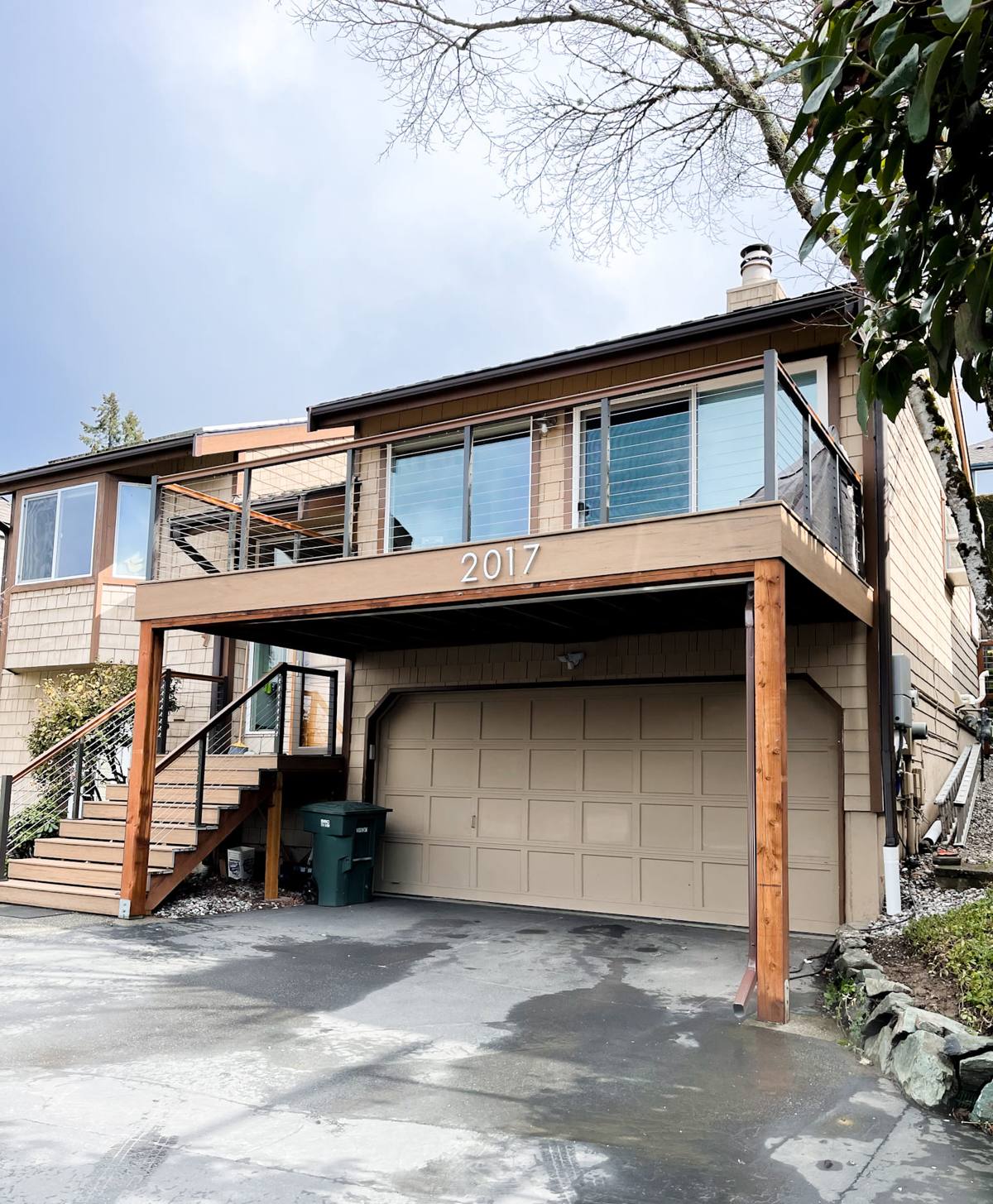
What Local Homes Actually Need From a Replacement
Homes in this part of Fairhaven typically need three things from a siding system that a generic install doesn't always deliver:
- A drainage plane that actually drains. Rain will get behind siding eventually — the question is whether it has somewhere to go. A correctly installed water-resistive barrier and rainscreen gap matter more here than in drier climates.
- Fasteners and flashing that won't corrode from salt exposure. Standard fasteners can pit and stain over time this close to the bay. Corrosion-resistant hardware and properly lapped flashing at every penetration are not optional upgrades — they're baseline requirements.
- A surface that resists moss, algae, and mildew without constant babysitting. Siding that stays damp under shade and tree cover needs a factory finish that sheds growth and cleans up easily, not a porous surface that gives moss something to hold onto.
What a Correct Siding Replacement Job Involves
Tear-Off and Inspection
The old siding comes off down to the sheathing, and that's the point where problems either get found or get buried for another decade. In coastal Whatcom County homes, it's common to find soft or delaminated sheathing near window sills, deck ledgers, and lower wall sections where water has been finding a way in slowly. A proper tear-off includes stopping to address any rot or compromised framing before a single new piece of siding goes up — covering it over is the single most common shortcut that leads to a repeat job in a few years.
Weather-Resistive Barrier and Rainscreen
Over the repaired sheathing, a correctly lapped weather-resistive barrier goes on shingle-style, top to bottom, so water is always directed outward and down. In a high-moisture, salt-air environment like Sehome's, we install furring strips to create a rainscreen gap behind the siding — a small air space that lets any moisture that does get past the cladding dry out instead of sitting against the wall.
Flashing at Every Penetration
Windows, doors, hose bibs, light fixtures, vents — every place something interrupts the wall plane is a place water can get in if flashing is missing or installed backward. This is detail work, not a place to move fast, and it's where a lot of the difference between a siding job that lasts 30-plus years and one that fails at year eight actually shows up.
Installation to Manufacturer Spec
Correct fastener spacing, proper gaps at joints and trim for expansion, factory-cut and factory-primed edges kept intact, and caulking only where the manufacturer specifies it — not as a substitute for proper flashing. Installed off-spec, even a premium siding product can trap water or fail its warranty.
Why We Only Install James Hardie in This Climate
We install James Hardie fiber cement siding exclusively — we don't offer vinyl, LP SmartSide, Cemplank, Allura, primed spruce, or cedar, and in a climate like Sehome's, that's a deliberate call, not a sales preference. Fiber cement doesn't absorb water the way wood-based products can, so it isn't feeding the kind of slow rot that shows up in damp, shaded wall sections after a decade of Whatcom County winters. It's also non-combustible, which matters given the wildfire smoke seasons the region has seen in recent summers, even though the primary local threat here is moisture, not fire.
Hardie's ColorPlus factory finish is baked on and warranted against peeling and cracking, which counts for more here than in a dry climate — repainting siding on a home exposed to driving rain and salt air is a bigger, more frequent job than most homeowners want to sign up for. And Hardie's HZ5 product line is engineered specifically for climates with more moisture exposure, which describes Sehome and the rest of coastal Whatcom County about as well as any spec sheet could.
We're not going to tell you other products are junk — vinyl is inexpensive and low-maintenance in the right setting, and cedar has real appeal for homeowners who want a natural look and are willing to maintain it. But for the conditions this neighborhood actually deals with, we've made Hardie our standard, and we stand behind that on every job we take.
How Our Process Works
- On-site assessment. We look at your current siding, check for moisture damage at trim, corners, and penetrations, and talk through what we find before recommending a scope of work.
- Written estimate. You get a clear breakdown of materials, labor, and any sheathing or framing repair we expect to need — no surprise change orders for problems we should have caught up front.
- Tear-off and repair. Old siding and building wrap come off, damaged sheathing gets replaced, and we confirm the wall is sound before moving forward.
- Barrier, rainscreen, and flashing installation. This is the step that determines how the house performs in ten or twenty years of Pacific Northwest weather, and we don't rush it.
- Hardie siding installation. Installed to manufacturer spec, with corrosion-resistant fasteners and proper joint treatment throughout.
- Final walkthrough and cleanup. We review the finished work with you and make sure the site is left clean.
Comparing Siding Materials in a Coastal Whatcom County Setting
| Material | Moisture Behavior | Salt Air Durability | Maintenance in This Climate |
|---|---|---|---|
| James Hardie Fiber Cement | Non-combustible, dimensionally stable, doesn't absorb and swell | Strong — factory finish resists salt-driven fading and wear | Occasional rinse; no repainting for the length of the finish warranty |
| Vinyl | Doesn't rot, but can warp or become brittle with age and temperature swings | Can fade and chalk faster under UV and salt exposure over time | Low, but limited repair options if damaged or faded unevenly |
| Cedar | Absorbs moisture; prone to rot and moss growth if not maintained | Weathers and grays quickly near salt air | Regular staining/sealing required, especially in shaded, damp areas |
| Primed Wood/Composite (e.g., LP SmartSide) | Engineered to resist swelling but still wood-based; edge exposure is a risk point | Moderate — coating and edge sealing become more critical | Periodic inspection of seams and cut edges, repainting over time |
Signs Your Sehome Home May Need Siding Replacement Soon
- Soft, spongy, or bubbling spots when you press on the siding, especially near the bottom courses or under windows
- Persistent moss or dark streaking that comes back within weeks of cleaning
- Paint that's peeling, cracking, or failing faster than a normal repaint cycle would explain
- Visible gaps, warping, or separation at seams and corners
- A musty smell in a room along an exterior wall, which can point to moisture getting in behind the siding
- Siding that's more than 20-25 years old and has never been fully inspected behind the surface
What Drives the Cost of a Replacement
Every home is different, but a few factors consistently move the price on a Sehome siding replacement:
| Factor | Why It Matters |
|---|---|
| Extent of sheathing/framing repair | Hidden moisture damage found at tear-off adds material and labor beyond the base siding job |
| House size and wall complexity | More corners, gables, and trim details mean more cutting, flashing, and labor time |
| Siding profile and color | Lap width, shingle-style panels, and custom ColorPlus finishes vary in material cost |
| Access and site conditions | Tight lots, slopes, or landscaping close to the house can add setup and protection time |
| Trim and accessory work | Replacing fascia, trim boards, and soffit alongside siding is more efficient than doing it later |
Why Hiring a Crew That Already Works Sehome Matters
Siding installation isn't uniform across climates, and a crew that mostly works drier regions can miss details that matter here — rainscreen gaps, flashing sequencing at penetrations, and fastener choices suited to salt air exposure. A contractor who works Fairhaven and the surrounding Whatcom County neighborhoods regularly has already seen how local moisture and salt exposure affect wall assemblies over time, and builds installations to hold up to that specific combination rather than a generic spec.
Local familiarity also means realistic scheduling around the region's wetter months, knowing how to sequence tear-off and dry-in to limit a home's exposure to rain mid-project, and understanding which older Sehome-area homes are more likely to need sheathing repair based on age and original construction methods.
Maintenance After Installation
One advantage of a correctly installed Hardie system in this climate is how little upkeep it asks for afterward. An occasional rinse to keep salt residue and organic buildup from accumulating, a yearly walk-around to check caulking at trim joints, and prompt attention to any landscaping that starts crowding the wall and holding moisture against it are about all it takes. That's a meaningful difference from wood-based sidings that need a repainting or resealing cycle to keep performing in this kind of weather.
Ready to Talk About Your Sehome Home?
If your siding is showing its age or you're just not sure what condition it's in behind the surface, we're happy to take a look and give you an honest read on what your home needs. Fill out the form below for a free, no-pressure estimate.