 Fairhaven Siding
 Why Lummi Island Siding Wears Differently Than Inland Homes
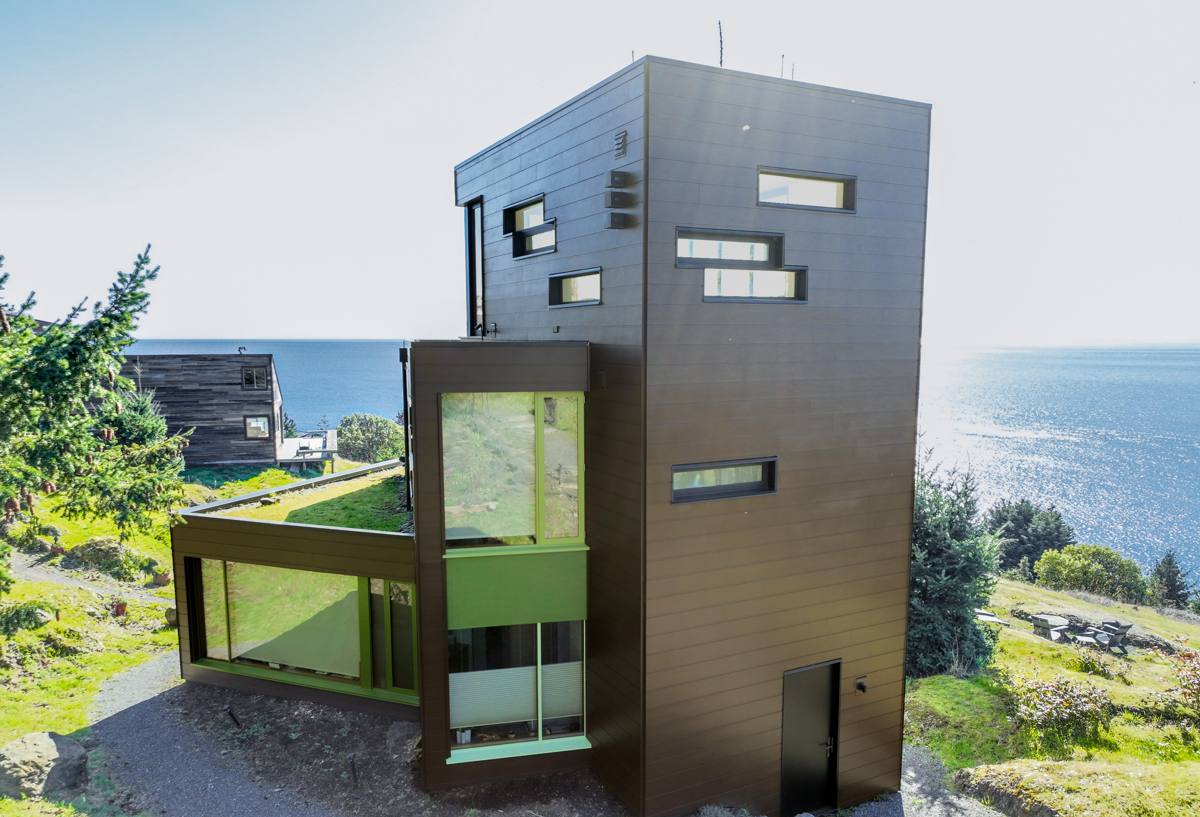
A house on Lummi Island sits in a different weather system than one ten miles inland in Whatcom County. Wind off the Sound carries salt spray that settles on exterior walls and slowly attacks anything not built to shed it. Add driving rain that comes in sideways during fall and winter storms, and siding on this island takes on moisture loads that inland siding simply doesn't see. Add a moss season that can stretch from October well into spring under the tree cover common on many island lots, and you have three separate stresses working on the same wall at once: salt, water, and organic growth.
None of that is unique to any one house — it's the baseline condition for the whole island. But it means siding repair here isn't just cosmetic patchwork. A repair that doesn't account for how water actually moves on a Lummi Island wall will fail again, often faster than the original damage took to appear.
Signs Your Siding Needs Repair, Not Full Replacement
Most siding problems we see on the island are localized — a section near a downspout, a corner exposed to prevailing wind, an area shaded by trees where moss gets a foothold. Catching these early is what keeps a repair a repair instead of a replacement.
- Soft or spongy spots when you press on the siding, especially near the bottom courses or around window trim
- Visible cracking, chipping, or lifted edges on individual boards or panels
- Dark streaking or green-black growth that keeps returning to the same spot after cleaning
- Paint or factory finish that's peeling, bubbling, or chalking unevenly in one area rather than across the whole wall
- Gaps at seams, corners, or trim where caulking has shrunk, cracked, or pulled away
- Soft trim boards or visible rot at butt joints, inside corners, or anywhere two materials meet
- Warping or buckling that shows up in raking light, particularly on walls that face prevailing wind and rain
If what you're seeing is confined to a wall section or two and the sheathing behind it is still sound, repair is almost always the right call — both on cost and on disruption to the house.
When Repair Isn't Enough
Sometimes what looks like a local problem is a symptom of something bigger — a failed water-resistive barrier, long-term moisture trapped behind the siding, or damage that's spread further than the visible surface suggests. Part of doing this job honestly is telling a homeowner when a small repair would just be covering up a bigger problem, rather than quoting a patch that won't hold.
What a Correct Siding Repair Actually Involves
Matching the Existing Material
A repair only looks right if the replacement section matches the surrounding siding in profile, exposure, and color. With factory-finished fiber cement, that means sourcing the correct plank width and finish rather than improvising with whatever's on hand. A mismatched patch is the fastest way to make a repaired wall look worse than the damage did.
Checking What's Behind the Siding
Any time siding comes off for repair, that's the moment to look at what's underneath — the water-resistive barrier, the flashing at windows and penetrations, and the sheathing itself. On a house exposed to the kind of driving rain Lummi Island gets, damaged siding is often a sign that water found a way behind the cladding at some point. Replacing the visible board without addressing a failed flashing detail or a gap in the barrier just resets the clock on the same failure.
Fastening and Sealing
Corrosion-resistant fasteners matter everywhere, but they matter more in a salt-air environment. The wrong fastener can rust, streak the siding, and eventually let the board work loose. Caulking and sealant at joints and trim need to be rated for the exposure and applied at the right joints — not everywhere, since fiber cement systems are designed with specific gaps that need to stay open to shed water correctly.
Repair or Replace? Weighing the Decision
Homeowners often aren't sure whether a repair is worth it or whether they should be planning for a full re-side. The honest answer depends on how much of the wall is affected and what's causing the damage.
| Factor | Repair Makes Sense | Full Replacement Makes Sense |
|---|---|---|
| Extent of damage | Isolated to one or two wall sections | Recurring across most elevations |
| Underlying cause | Localized flashing or fastener failure | Widespread barrier or sheathing failure |
| Siding material | Still a product worth extending the life of | Original material has ongoing maintenance burden |
| Age of siding | Well within expected service life | Near or past the end of its practical lifespan |
| Color/profile match | Replacement material still available | Discontinued or badly weathered, hard to match |
We'll always tell you honestly which side of that table your house falls on. A repair that's likely to fail again within a couple years isn't a good use of your money, and we'd rather say so upfront.
Why We Repair With James Hardie Fiber Cement
We install and repair with James Hardie fiber cement exclusively — not vinyl, not LP SmartSide, not cedar or primed spruce. For a marine climate like Lummi Island's, that standard exists for practical reasons, not brand preference. Fiber cement doesn't absorb moisture the way wood-based products can, so it doesn't swell, rot, or feed the moss and mildew growth that thrives in a wet, shaded island environment. It's non-combustible, which matters on a rural island with limited fire response. And Hardie's ColorPlus factory finish is baked on and warranted against fading and cracking in a way field-applied paint typically isn't — an advantage when you're trying to match a repaired section to siding that's already weathered a few Whatcom County winters.
When a repair calls for new material, using the same climate-engineered HZ product line as the original installation gives the patched section the best chance of aging at the same rate as the rest of the wall, instead of standing out or failing early.
Getting a Crew and Materials to Lummi Island
Lummi Island is only reachable by ferry, which changes how a repair job has to be planned. Materials, tools, and crew all have to be staged and timed around the ferry schedule, and a contractor who doesn't work the island regularly can lose a half-day or more just getting set up. A crew that already knows the ferry timing, has a routine for hauling fiber cement and equipment over, and doesn't treat the island as a special trip gets more actual repair work done per visit — which matters when you're paying for labor time, not travel time.
Our Process for a Lummi Island Repair Job
- On-site inspection to identify not just the visible damage but the likely cause — flashing, fastening, moisture intrusion, or simple wear
- Honest assessment of repair versus replacement, with the reasoning explained, not just a number
- Written estimate covering material, labor, and any underlying issues found once siding is opened up
- Scheduling coordinated around ferry timing so the crew arrives ready to work a full day
- Removal of damaged siding and inspection of the water-resistive barrier, flashing, and sheathing behind it
- Repair or replacement of any compromised components before new siding goes back on
- Installation of matching James Hardie material with correct fastening, joint gaps, and sealant
- Final walk-through so you can see the completed repair and ask questions before we leave
Protecting Your Siding After the Repair
A good repair holds up longer with a little seasonal attention, especially in an environment that doesn't give siding much of a break between rain events.
- Rinse salt residue off exterior walls periodically, particularly on elevations facing open water
- Keep gutters and downspouts clear so runoff doesn't concentrate against one section of wall
- Trim back branches and vegetation that keep a wall shaded and damp longer than it needs to be
- Address moss or algae growth early with a gentle wash rather than letting it establish and spread
- Have caulking and trim checked every year or two, since sealant is the first thing to give out in this climate
If you're seeing damage on a Lummi Island home and want a straight answer on whether it's a repair or something bigger, we're happy to take a look. Fill out the form below for a free, no-pressure estimate — we'll tell you what we actually find, not just what's easiest to quote.